
The Boy in the Box: How DNA Named Joseph Augustus Zarelli
For 65 years, the battered boy found in a J.C. Penney bassinet box was known only as America's Unknown Child. But when modern genetic genealogy finally broke the silence, the DNA revealed a name, a prominent family, and a chilling new mystery.


The Bassinet Box in the Woods
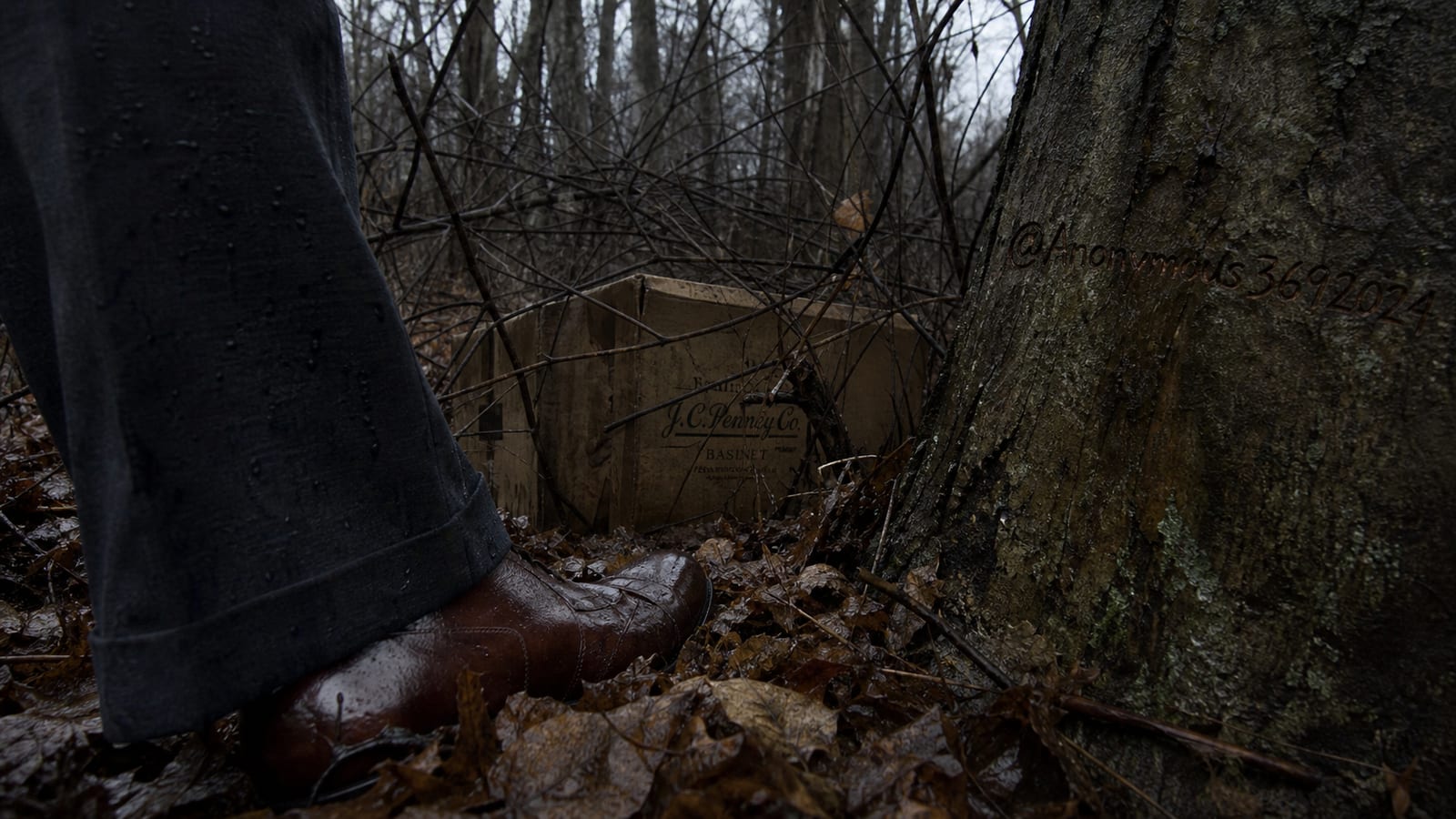
The bitter chill of late February 1957 hung heavy over the Fox Chase neighborhood of Philadelphia. At the time, the area along Susquehanna Road was a secluded, wooded expanse often used by locals as an illegal dumping ground. Discarded trash, rusting appliances, and overgrown underbrush formed a quiet graveyard for forgotten things. On February 23, a La Salle College student tramping through the damp woods to check his rabbit traps spotted a large cardboard box lying on its side. At first glance, he thought a discarded doll was protruding from the opening. Fearing police would confiscate his traps, he walked away. It was not until two days later, on February 25, that he returned after hearing radio reports of a missing girl from New Jersey. He realized the pale figure in the brush was no doll, but a human body.
When patrolman Elmer Palmer drove through the morning drizzle to secure the scene, the horrific reality of the discovery settled over the city. The cardboard container was a shipping box for a white bassinet, the exact kind sold at local J.C. Penney stores. Inside the box, wrapped tightly in a rust and green Indian pattern flannel blanket, lay the naked body of a young boy. He had been dead for several days, the cold winter air preserving the grim evidence of his final hours. The crime scene was a forensic nightmare, littered with decades of unrelated garbage, leaving investigators to wonder how a child could be thrown away like a piece of common refuse without a single soul noticing he was gone.
Thirty Pounds of Silence
When the boy was transported to the morgue, the medical examiner documented a paradox of horrific abuse and bizarre, posthumous care. The child was estimated to be between four and six years old. He stood forty inches tall but weighed a skeletal thirty pounds, exhibiting signs of chronic, severe starvation. The official cause of death was homicide by blunt force trauma to the head, evidenced by four round, distinct bruises clustered across his forehead. His tiny body was covered in older, fading bruises, painting a picture of long-term physical suffering.
Yet, amidst the signs of neglect, there were chilling indications that the boy had been groomed shortly before or immediately after his murder. His fingernails were neatly trimmed. His sandy blond hair had been hastily and crudely chopped close to his scalp, perhaps to conceal his identity, leaving clumps of shorn hair clinging to his shoulders and torso. His right hand and both of his feet were deeply wrinkled, suggesting they had been submerged in water for an extended period around the time of his death. Furthermore, his body bore multiple professional surgical scars on his ankle and groin, as well as an L shaped scar under his chin. These surgical marks indicated that the boy had, at some point, received professional medical care. He was not a phantom. He had existed in the system. But his identity remained a total blank.
The Fingerprint Expert and the Flyers
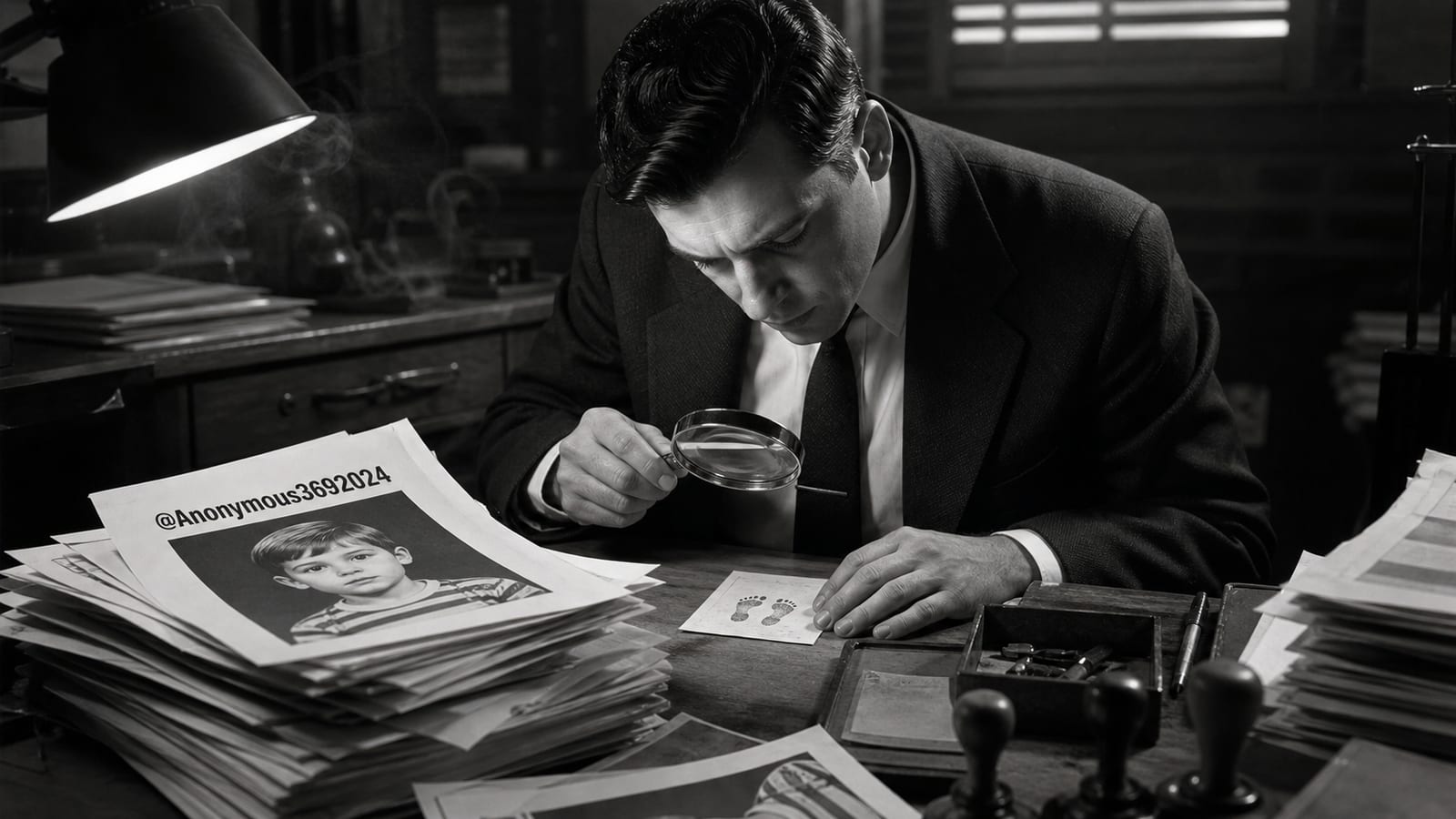
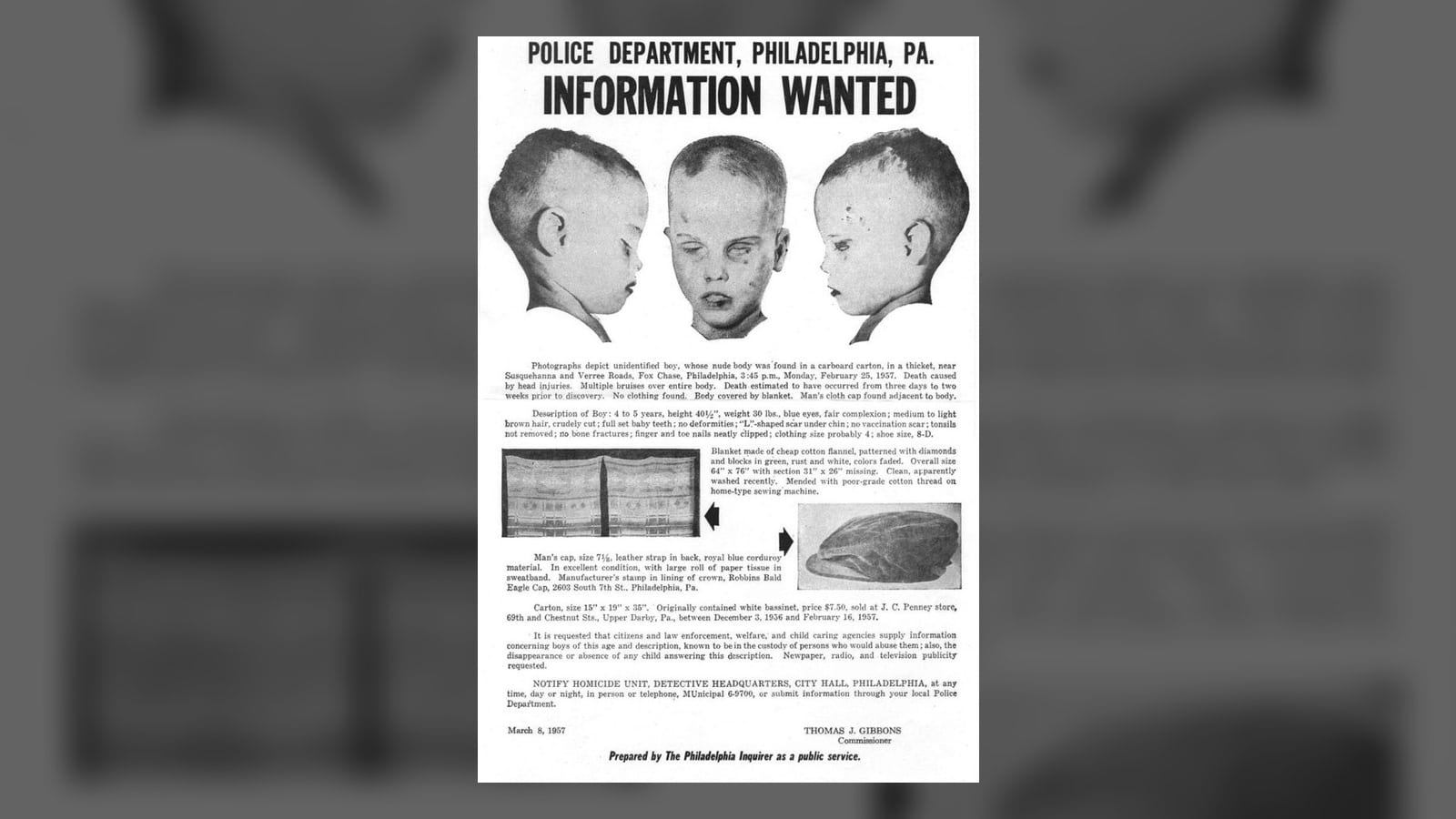
The Philadelphia Police Department launched an unprecedented campaign to identify the victim they came to call America's Unknown Child. Fingerprint expert Bill Kelly took precise impressions of the boy's fingers and feet. In an era long before digital databases, Kelly spent countless hours visiting local hospitals, manually comparing the victim's footprints to thousands of maternity ward records across the tri-state area. The police distributed four hundred thousand flyers bearing the boy's post-mortem photograph. The flyers were hung in shop windows, posted on telephone poles, and mailed out with every gas bill in Philadelphia.
Despite the massive public outcry, the investigation yielded only dead ends. Two hundred and seventy police academy recruits painstakingly combed the Susquehanna Road woods, recovering a blue corduroy cap, a child's scarf, and a white handkerchief embroidered with the letter G. None of these items could be definitively linked to the boy. When investigators noted the child lacked a standard smallpox vaccination scar, they theorized he might be a recent immigrant. They reviewed over eleven thousand passport photos of Hungarian refugees, finally tracking a similar looking boy to North Carolina, only to find that child playing safely in his front yard. It seemed impossible that a boy could be murdered and discarded without a single teacher, neighbor, or doctor coming forward, but the silence remained absolute.
The Obsession of Remington Bristow
As months turned into years, the case consumed the men who worked it. Remington Bristow, an investigator for the medical examiner's office, grew obsessed with uncovering the boy's identity. In 1960, Bristow consulted a psychic who directed him to a stone house located just a mile and a half from the discovery site. The house operated as a foster home run by Arthur and Catherine Nicoletti. When Bristow attended an estate sale at the property, he discovered a bassinet similar to the one that had been sold in the J.C. Penney box, along with blankets hanging on a clothesline that resembled the rust and green flannel found at the crime scene.
Bristow theorized that the boy was the undocumented child of Catherine Nicoletti's adult stepdaughter, and that the family had disposed of the body to hide the shame of an unwed pregnancy. Bristow pursued this theory with singular dedication for decades, spending his own money and vacation time hunting for clues. However, formal police inquiries established that all children assigned to that foster home were accounted for. In 1998, members of the Vidocq Society, a prestigious group of cold case investigators, re-interviewed the family and officially cleared them of any involvement. Remington Bristow died in 1993, taking his unwavering belief in the foster home theory to his grave, having never learned the true name of the boy he spent his life trying to save.
The Story of the Girl Named Martha
In February 2002, a bizarre and chilling lead emerged from an Ohio psychiatrist who contacted the police on behalf of a patient known only as M or Martha. Martha claimed that in the summer of 1954, her abusive mother had purchased a young boy named Jonathan from another family. According to Martha, the boy was subjected to severe physical and sexual abuse, sequestered in the basement of their Lower Merion home, and never allowed to speak.
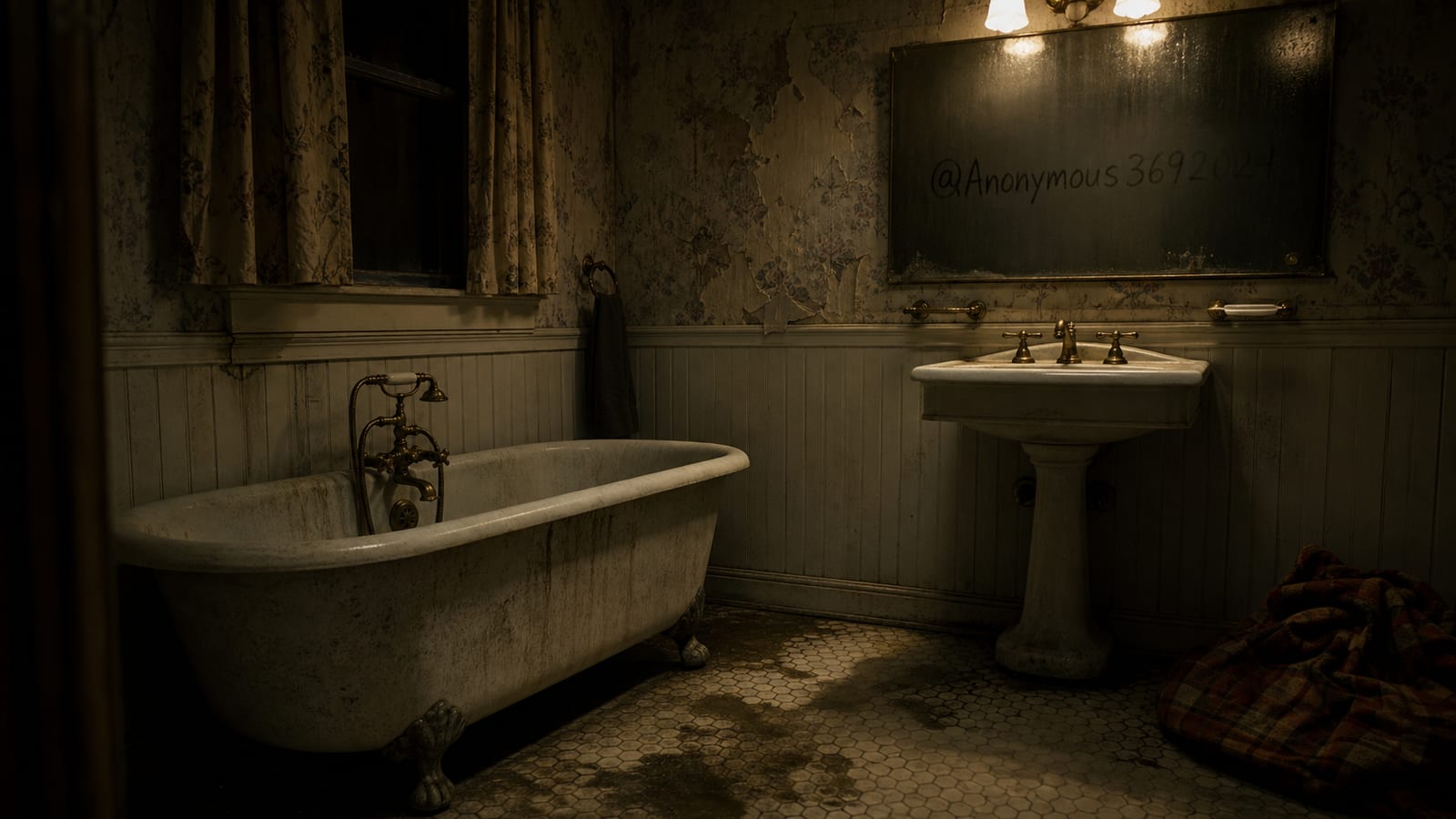
Martha claimed that one afternoon, the boy vomited a meal of baked beans. In a fit of rage, her mother threw him into the bathtub and beat him by slamming his head against the floor until he was dead. The mother then allegedly bathed the body, haphazardly cut his hair, and forced a young Martha to accompany her to the Fox Chase woods to dump the remains in an abandoned box. The account stunned investigators because it perfectly matched forensic details kept entirely from the public, specifically the baked beans found in the boy's stomach during the autopsy and the water wrinkled condition of his fingers and toes. However, police were unable to corroborate the story. Martha suffered from a documented history of severe mental illness, and neighbors who lived adjacent to her family in the 1950s vehemently denied that a young boy had ever lived in the home. The lead, while hauntingly plausible, was ultimately shelved.
The Ghost in the Machine
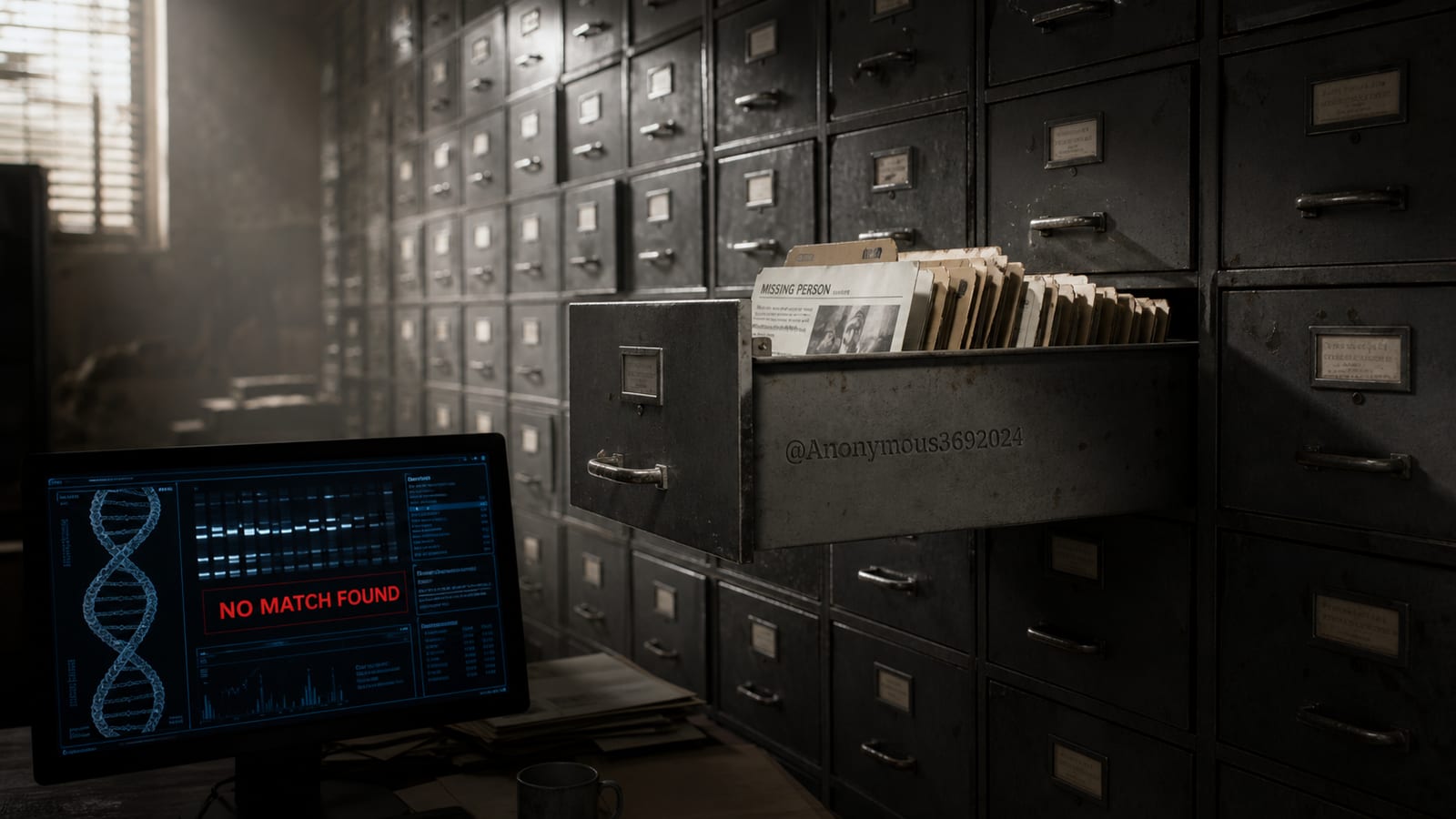
Realizing that traditional detective work had reached its absolute limit, authorities turned to the emerging field of forensic biology. In 1998, the boy's remains were exhumed from a potter's field. Investigators extracted DNA from the enamel of a tooth, hoping to utilize the Combined DNA Index System to find a match. The effort failed. The federal database only contains the genetic profiles of convicted offenders and arrestees. Because the boy was a ghost child, a victim with no social security number, no school records, and no official existence, and because his parents were not in the criminal system, the computer returned a cold, empty screen.
The boy was reburied in a donated plot at Ivy Hill Cemetery under a headstone reading America's Unknown Child, where locals continued to leave toys and flowers for decades. But forensic science refused to remain stagnant. In April 2019, recognizing the revolutionary power of modern genomics, investigators ordered a second exhumation. Forensic anthropologist Dr. Washburn successfully retrieved a better skeletal sample, allowing scientists to pursue single nucleotide polymorphism sequencing, a far more comprehensive method of DNA analysis capable of reading thousands of genetic markers rather than just a few.
The Science of a Name
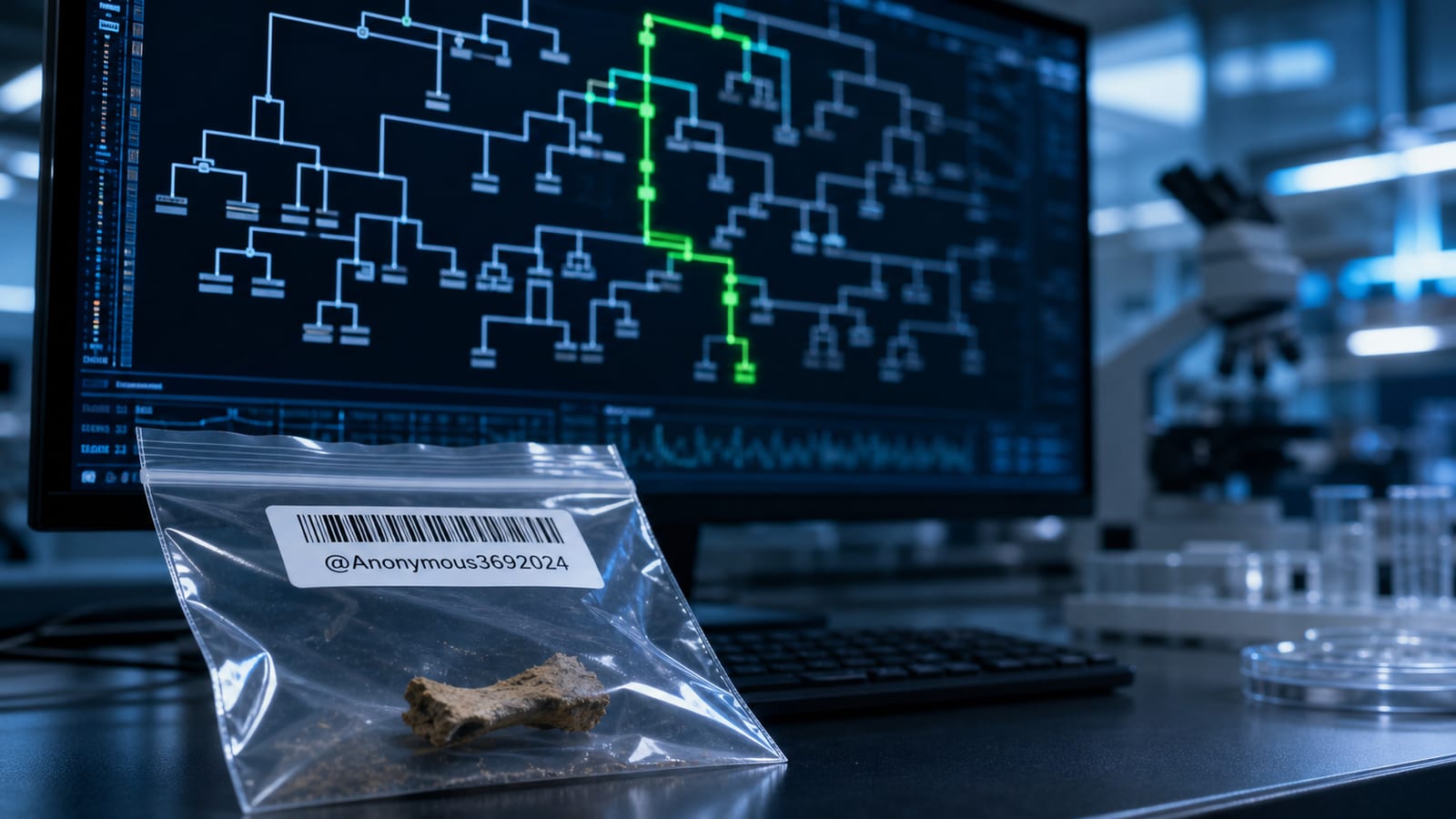
The genetic material was severely degraded after spending over sixty years in the earth. It took two and a half years of agonizing laboratory work to extract a sequence robust enough for investigative genetic genealogy. Renowned genetic genealogists Colleen Fitzpatrick and Misty Gillis took on the daunting task, later describing it as the most challenging case of their careers. They uploaded the boy's genetic profile to public databases like GEDmatch, where average citizens submit their DNA to explore their heritage.
The process was like assembling a massive, multi-generational Sudoku puzzle. By identifying distant cousins on the maternal side, Gillis and Fitzpatrick painstakingly constructed family trees backward through time, searching for intersecting branches. The genealogy eventually pointed toward a prominent family in Delaware County, Pennsylvania. Once the maternal link was established, investigators obtained sealed birth certificates from the early 1950s. They discovered a record for a male child born to Mary Elizabeth Plunkett and Augustus John Zarelli. Subsequent DNA testing of the paternal family line confirmed the absolute biological truth. The boy in the box finally had a name.
America's Unknown Child No More
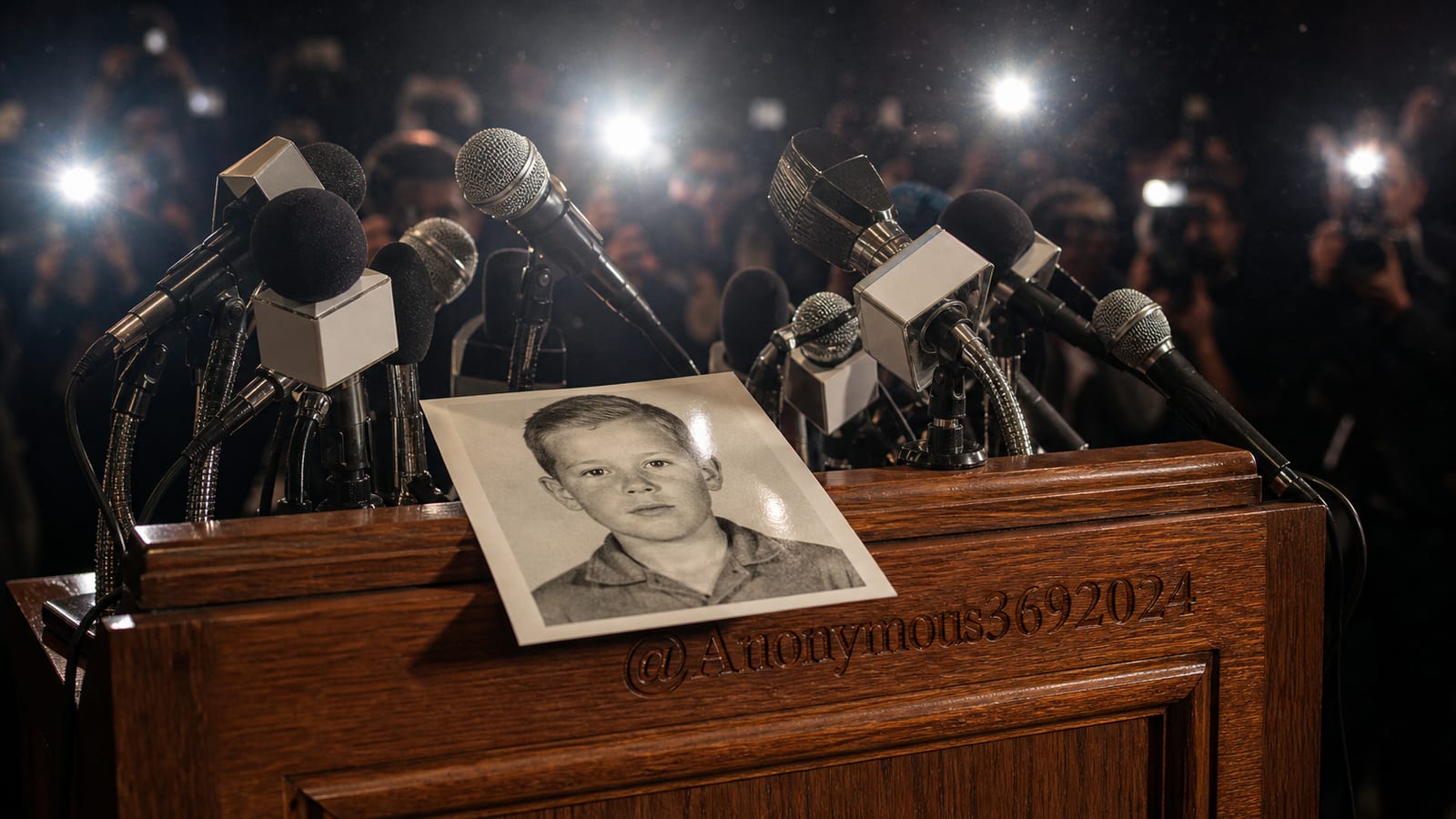
On December 8, 2022, sixty five years after a college student peered into a discarded bassinet box, Philadelphia Police Commissioner Danielle Outlaw stood before a bank of microphones and officially announced the victim's identity. The boy was Joseph Augustus Zarelli, born January 13, 1953. He had lived his four short years in the West Philadelphia neighborhood near 61st and Market streets. The announcement sent shockwaves through the true crime community and the city of Philadelphia, closing the longest active homicide investigation in the history of the department.
Authorities revealed that both Augustus John Zarelli and Mary Elizabeth Plunkett were deceased, but that Joseph had several living half siblings on both sides of his family. Out of respect for the surviving relatives, who likely had absolutely no knowledge of the child's tragic existence or death, the police withheld their identities. The revelation answered the most profound question of the case, but it immediately birthed a darker, more pressing mystery. Who had physical custody of Joseph in the winter of 1957, and who swung the heavy blows that ended his life?
The Unresolved Depths
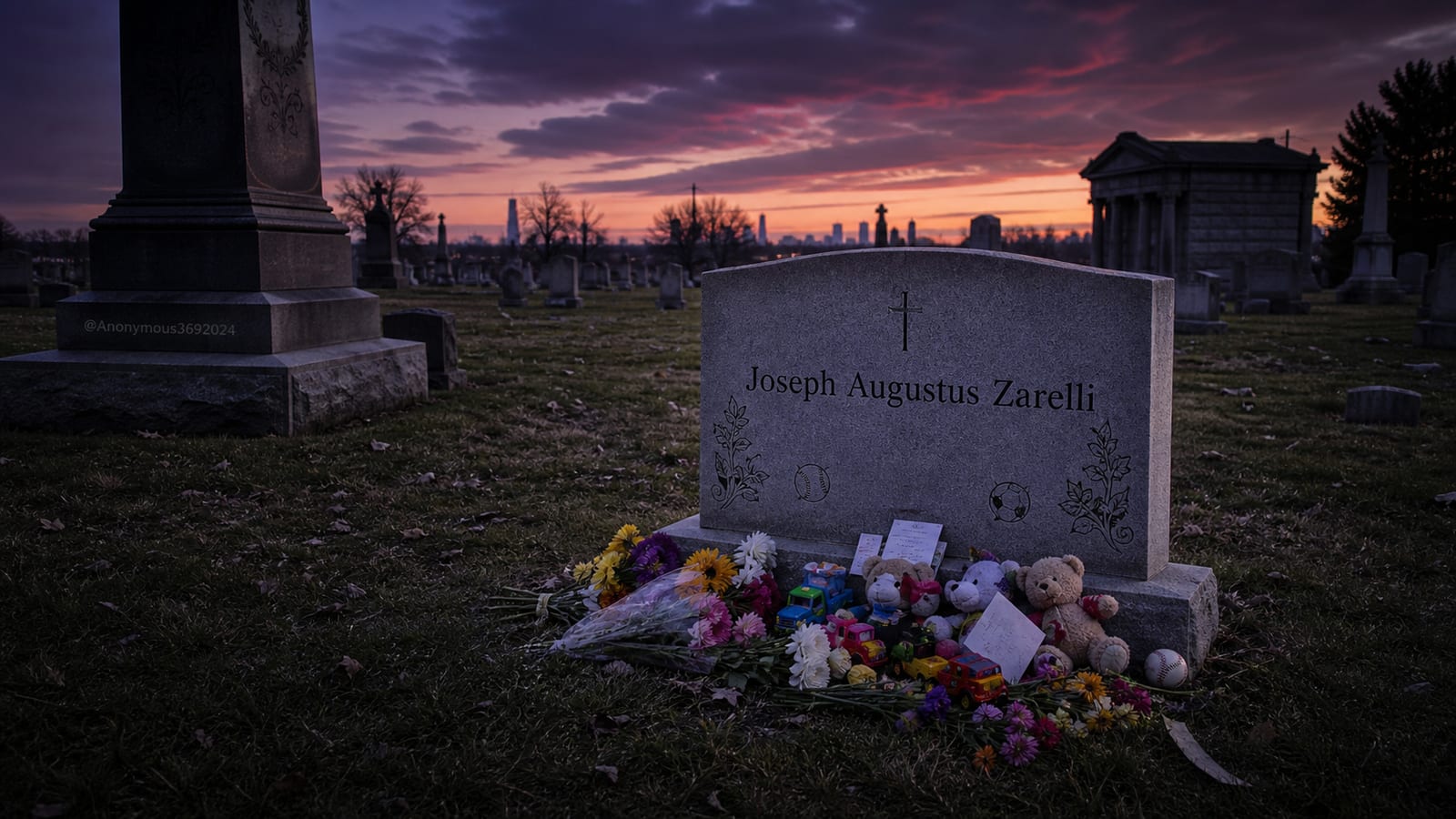
Today, the headstone at Ivy Hill Cemetery bears the name Joseph Augustus Zarelli. The word unknown has been erased from his physical resting place, but the shadows surrounding his murder remain deep and unyielding. The Philadelphia Police Department maintains an active, ongoing homicide investigation, offering a twenty thousand dollar reward for information leading to an arrest. Captain Jason Smith has publicly stated that authorities have suspicions regarding who is responsible for the crime, but the lack of living witnesses and the immense passage of time make a legal prosecution incredibly difficult.
The science of genetic genealogy performed a miracle, reaching back through decades of decay and silence to restore a stolen identity. Yet, the forensic triumph forces us to confront a terrifying reality about human nature. A child was beaten, starved, and thrown away in a cardboard box while surrounded by a bustling American city, and the people responsible carried that secret quietly to their graves. How many other ghost children are sleeping in unmarked plots, waiting for the day when science finally forces the earth to speak their names?
Archival Case Gallery
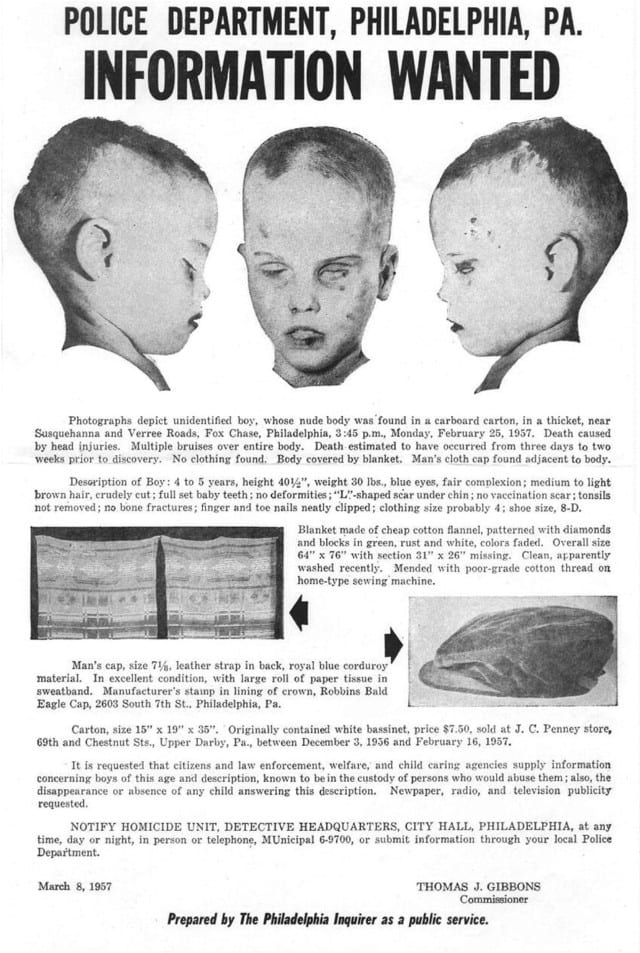
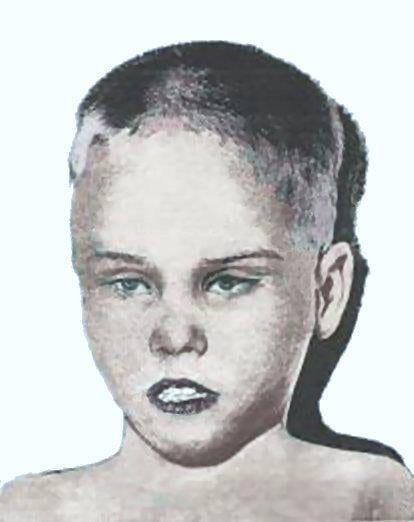
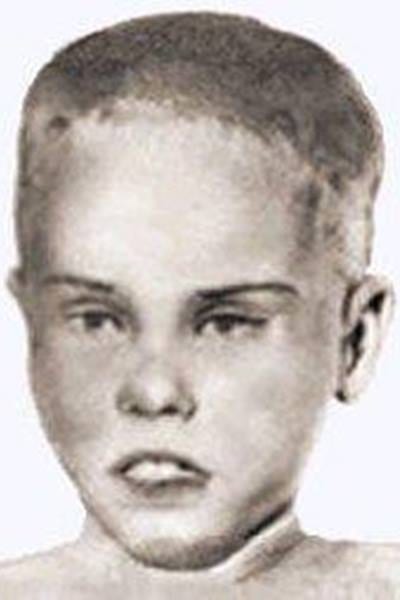
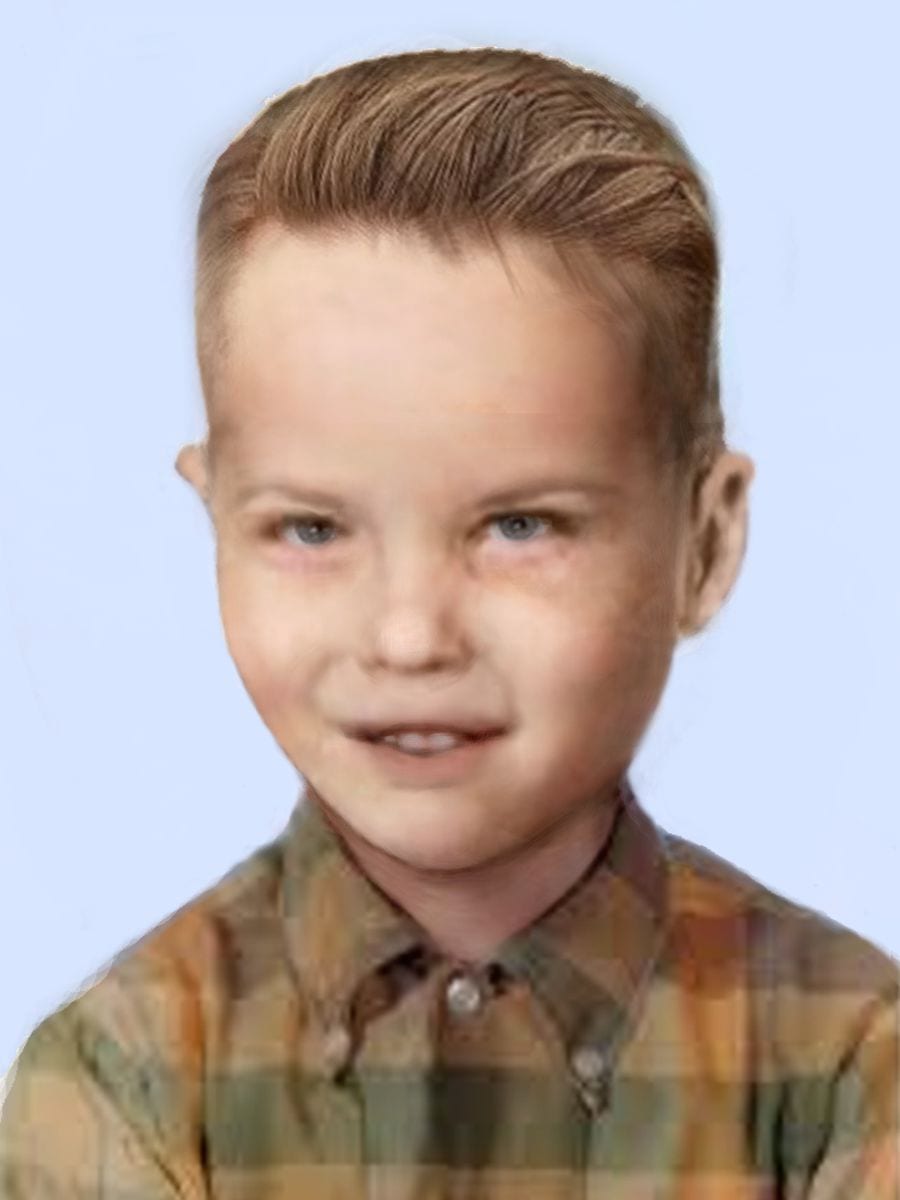
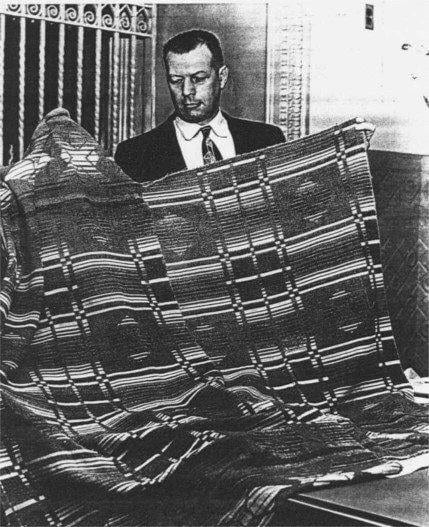
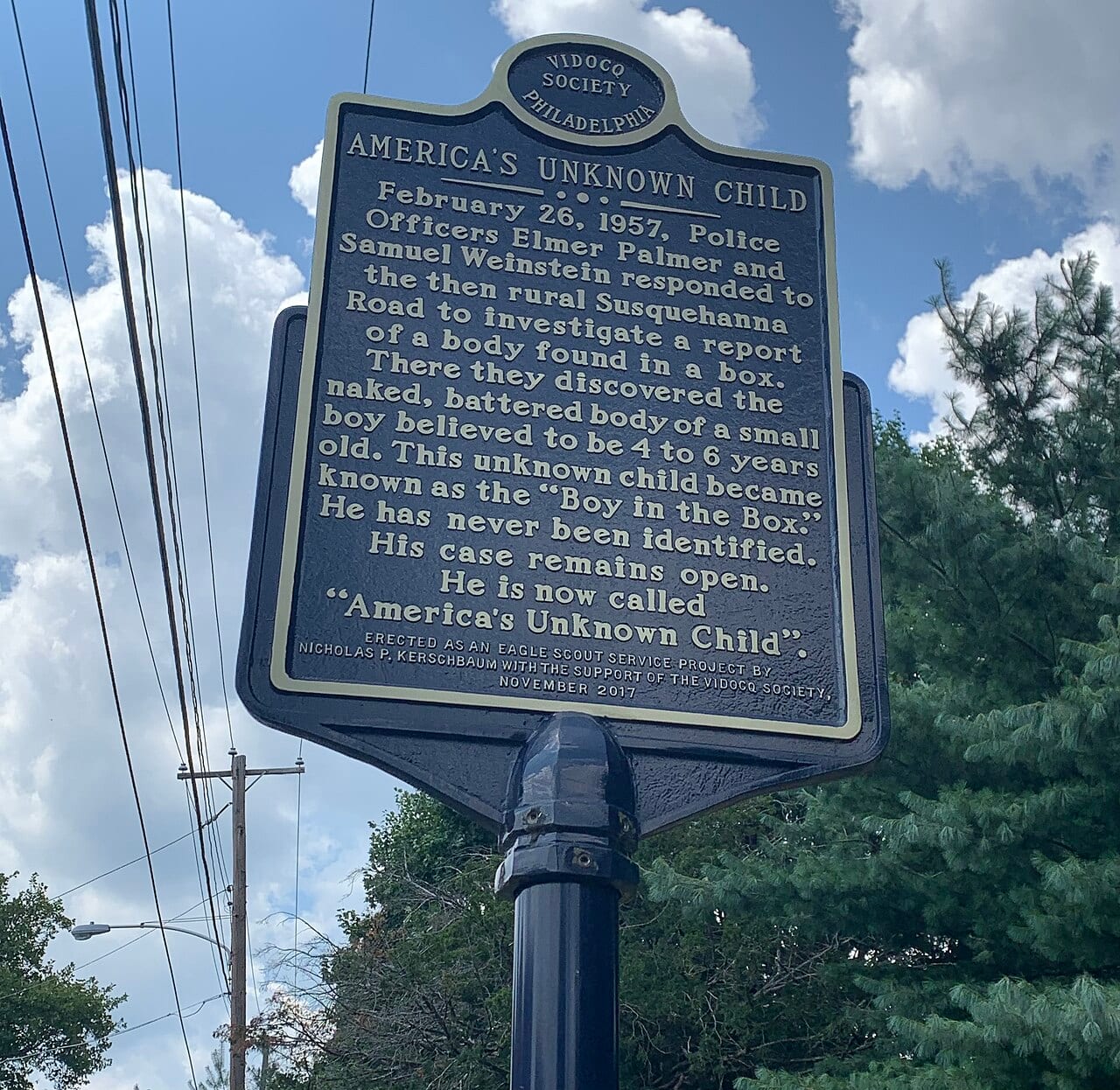
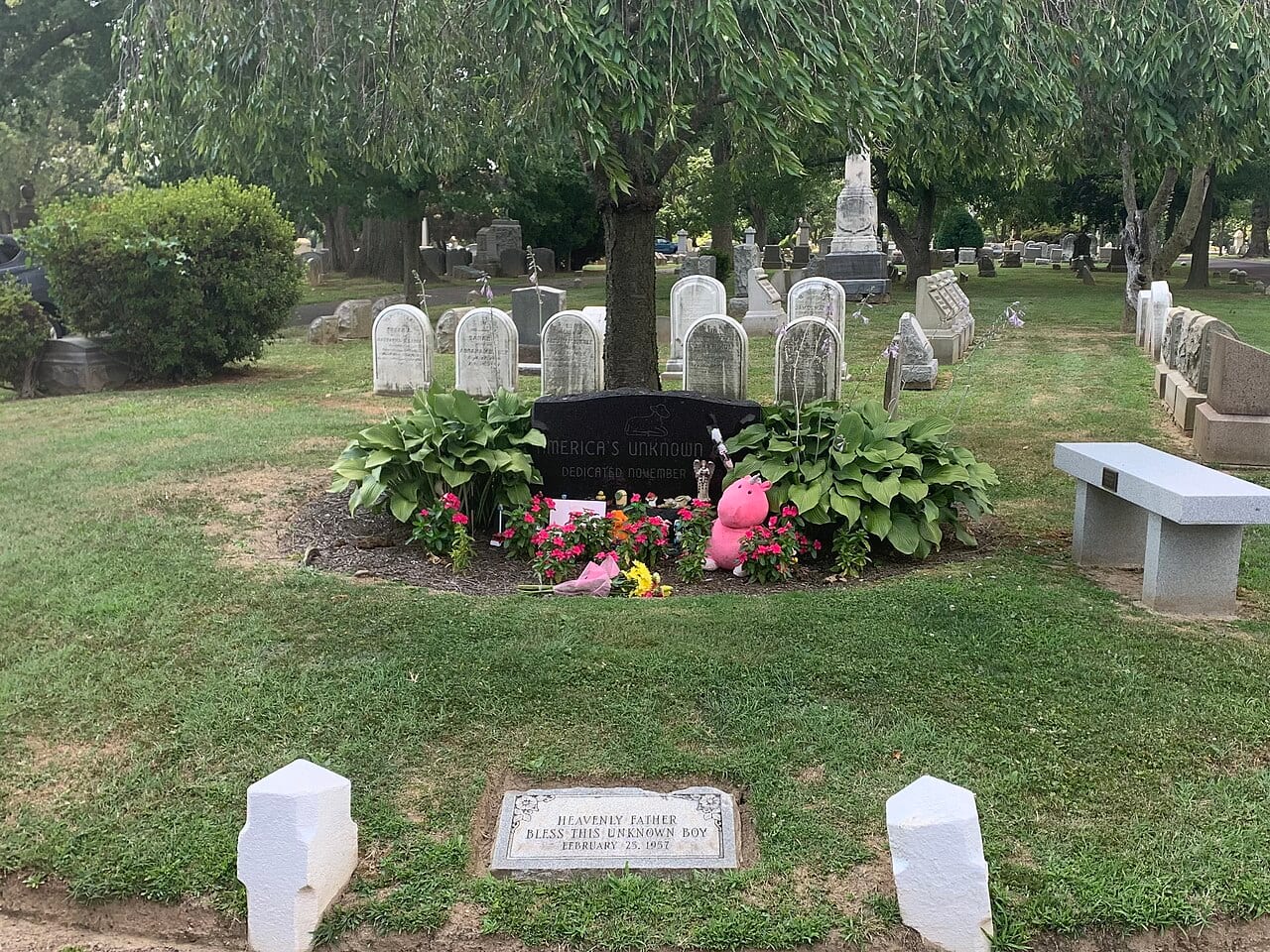
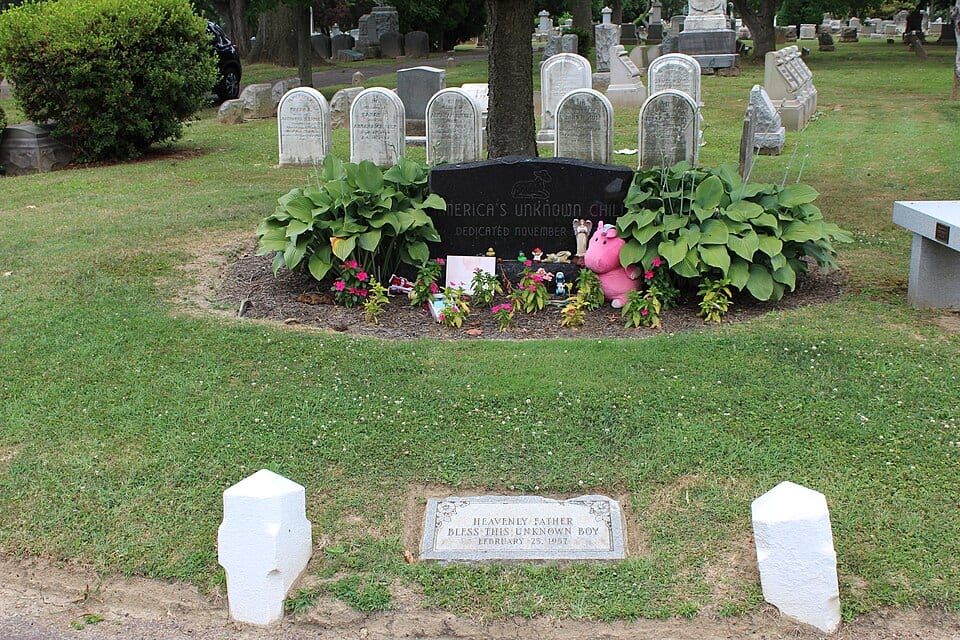
Real case gallery: Philadelphia Police Department poster and reconstruction images, the official blanket evidence image, a later licensed reconstruction, and real Ivy Hill Cemetery memorial/location photographs. Sources: Wikimedia Commons public-domain and CC BY-SA files.
Sources & Case Notes
Last updated: May 8, 2026.
Primary sources / case notes: Philadelphia Police Department/NCMEC identification material, public forensic-genealogy reporting, and official/public-domain Philadelphia Police case images preserved through Wikimedia Commons.
Source links:
- Philadelphia Police identification notice
- CBS News report on the Joseph Augustus Zarelli identification
- Wikimedia Commons public case images
Correction policy: Send corrections, source notes, or image-rights concerns through Contact & Media Inquiries.
Image credits: Feature and archival gallery use official Philadelphia Police Department/public-domain case images and reconstructions available through Wikimedia Commons. Body images are non-graphic documentary recreations created for Anonymous369 Media.
Content warning: Discusses the death and identification of a child victim; non-graphic and restrained.
Editorial standards: Read how Anonymous369 Media researches, corrects, and credits factual cases on our Editorial Standards page.
Continue the Case File
These investigations reward careful reading. Step back if you missed the previous file, or keep going to follow the next case in the archive.
Previous file: The Somerton Man: How DNA Named Australia's Unknown Beach Corpse Next file: The Barrel in the Crawlspace: How Forensics Named Reyna Marroquin