
The Staircase and the Cellar: The Unresolved Murder of JonBenét Ramsey
In 1996, six-year-old JonBenét Ramsey was found dead in the basement of her family's Boulder home. Nearly three decades later, a ransom note, a compromised scene, disputed DNA, and unanswered legal questions keep the case unresolved.


On Christmas night in 1996, the Ramsey family returned to their Tudor-style home in Boulder, Colorado, after a holiday dinner with friends.
According to the family's account, six-year-old JonBenét had fallen asleep during the drive. Her parents carried her inside, got her ready for bed, and settled into the house with the ordinary fatigue of a family at the end of Christmas Day. An early morning flight waited for them. Luggage needed to be ready. The holiday had one more movement before the family left Colorado for Michigan.
Before sunrise, the house changed forever.
In the early morning hours of December 26, Patsy Ramsey came down the stairs and found a long handwritten note resting on the steps. The letter claimed that JonBenét had been kidnapped by a "small foreign faction" and demanded $118,000 for her safe return. It warned the family not to contact police.
Patsy called 911 anyway.
Within minutes, officers from the Boulder Police Department arrived at the home. They entered what appeared, at first, to be an active kidnapping. A child was missing. A ransom note was in the house. A deadline seemed to be coming. The safest assumption was that JonBenét had been taken outside the walls of the home.
That assumption collapsed hours later.
In the early afternoon, John Ramsey and family friend Fleet White searched the basement at the request of Detective Linda Arndt. Behind a latched door in a small basement room often described as a wine cellar, John found JonBenét's body.
The search for a kidnapped child became a homicide investigation.
Nearly thirty years later, no one has been convicted. The Boulder Police Department continues to describe the case as an open investigation. The murder of JonBenét Ramsey remains one of the most publicized unresolved cases in American history, not because there was no evidence, but because almost every major piece of evidence points into an argument: the note, the staircase, the cellar, the DNA, the broken window, the pineapple, the grand jury, and the mistakes made before the house was ever treated like the center of a crime.
The case has become a maze built inside a family home.
At the center of that maze was a child.
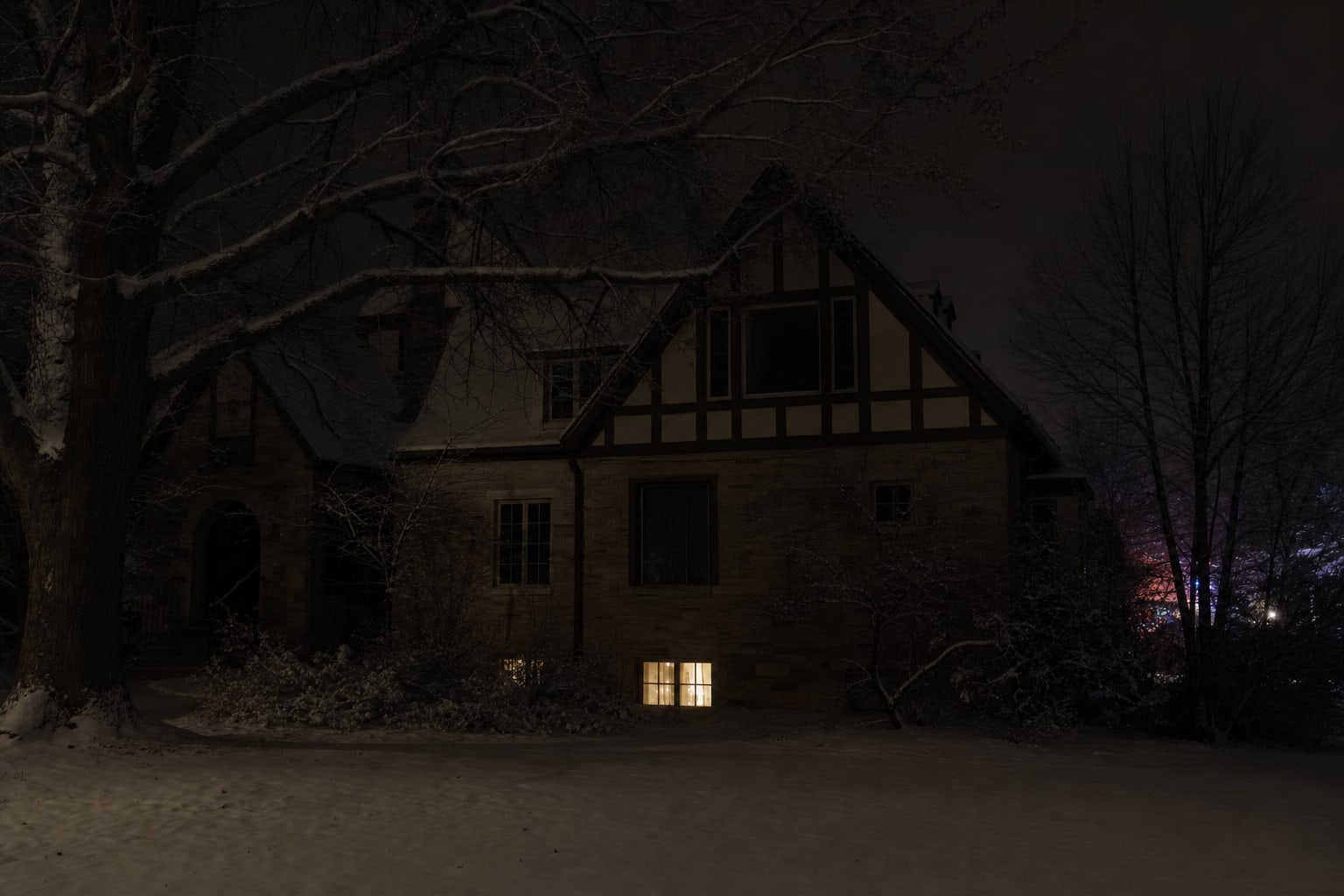
The Child Behind The Headlines
Before her name became a permanent fixture in tabloid history, JonBenét Patricia Ramsey was a kindergartener.
She was born in Atlanta, Georgia, and moved with her family to Boulder, where her father, John Bennett Ramsey, worked as an executive for Access Graphics. Her mother, Patricia "Patsy" Ramsey, had been Miss West Virginia in 1977, and JonBenét followed her into the child pageant circuit. She won titles, wore elaborate costumes, and appeared in photographs that would later be replayed endlessly across television, magazines, and documentaries.
Those images changed the public conversation almost immediately.
The pageant photographs made JonBenét look stylized, polished, and older than she was. They became the easiest visual shorthand for a hungry media machine, but they also distorted the emotional center of the case. The child behind the makeup was six years old. She attended school. She had a bedroom. She had toys. She had a family planning to leave for a post-Christmas trip.
The murder did not happen in a distant alley, a highway corridor, or an abandoned field.
It happened inside the place where she should have been safest.
That fact gave the case its permanent psychological pressure. It forced investigators and the public toward two terrible possibilities. Either someone outside the household entered the home, wrote a strange ransom note, killed a child, and disappeared without leaving an obvious path. Or something fatal happened inside the home and was later obscured by staging, panic, confusion, or decisions that have never been fully explained.
The case has never stopped swinging between those two poles.
The Note On The Stairs
The ransom note remains one of the strangest artifacts in the Ramsey investigation.
It was not a quick message. It was long, theatrical, and written across multiple pages. It addressed John Ramsey directly. It demanded $118,000, a figure widely reported to match John Ramsey's recent bonus amount. It threatened JonBenét's life if the family contacted authorities. It referred to a "small foreign faction." It ended with the cryptic signoff: "Victory! S.B.T.C."
For a conventional kidnapping, almost nothing about the note behaved normally.
Investigators and forensic examiners have long reported that the note appeared to have been written inside the Ramsey home using materials from the house. A pad and writing instrument connected to the family kitchen area became central evidence, and investigators also examined apparent practice writing or impressions tied to the same materials. The length alone was unusual. A kidnapper who has already entered a house and taken a child is usually trying to reduce time at the scene, not sit inside it composing a cinematic message.
The wording created its own problems.
Parts of the note seemed to echo the language and rhythm of crime films and thrillers. The ransom amount suggested possible knowledge of John Ramsey's finances. The instructions were elaborate. Yet the practical behavior of the supposed kidnappers made little sense. No verified ransom call came. No exchange took place. The child was not outside the house.
The handwriting evidence never produced a clean answer.
Public accounts have described John Ramsey as excluded by handwriting examiners. Patsy Ramsey became a subject of heavier debate, with some investigators believing similarities existed and other experts refusing to identify her as the writer. The safer truth is narrower and more stubborn: no handwriting analysis produced a criminally usable identification of the author.
The note therefore became less like an answer and more like a mirror.
If a family member wrote it, it could be staging.
If an intruder wrote it, it could be misdirection, obsession, or performance.
Either way, the note began the morning with a story that the basement would later contradict.
A House That Became A Crime Scene Too Late
The first hours of the investigation are now remembered as one of the case's defining failures.
Officers arrived under the pressure of a kidnapping. That framing shaped everything. JonBenét's bedroom was protected more carefully than the rest of the house, but the full residence was not immediately sealed as a homicide scene. Friends, victim advocates, and clergy came into the home to support the family. People moved through rooms. Some surfaces were handled or cleaned. Ordinary gestures of grief and comfort became potential sources of contamination.
The house was large, complicated, and emotionally charged.
It was also the scene.
The ransom deadline passed without a call. Hours dragged on. Detective Linda Arndt, who was left managing the house under increasingly tense circumstances, eventually asked John Ramsey and Fleet White to search for anything unusual.
John went to the basement.
He opened the door to the small cellar room that an earlier officer had not fully searched. Inside, he found JonBenét covered by a white blanket. In shock and grief, he lifted his daughter and carried her upstairs.
That reaction was human.
For the investigation, it was catastrophic.
The body's position, the blanket, the floor, the surrounding trace evidence, the spatial relationship of objects in the room, and the delicate context of the final scene were all disturbed before forensic teams could document them in place. Once JonBenét was moved, the case lost information it could never recover.
The Ramsey home did not begin the day as a secured homicide scene.
By the time it became one, the truth had already been touched by too many hands.
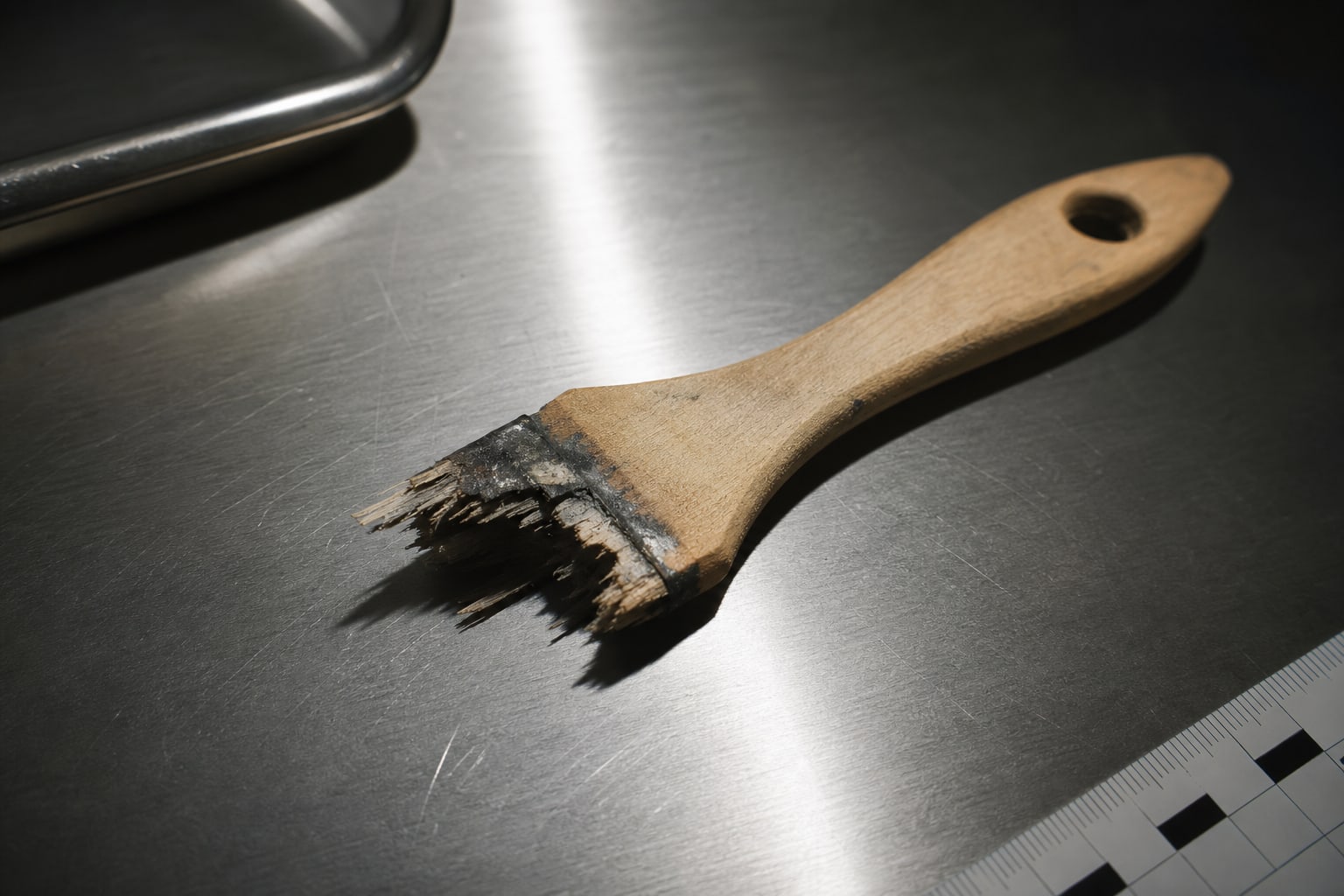
Evidence In The Basement
The autopsy was conducted by Boulder County Coroner Dr. John Meyer. The official cause of death was listed as asphyxia by strangulation associated with craniocerebral trauma.
That wording matters because it refuses a simple sequence.
JonBenét had suffered a severe skull fracture. She had also been strangled with a cord attached to part of a broken paintbrush handle from Patsy Ramsey's art supplies. Public discussion often calls the device a garrote, though the exact meaning of that label has been debated. The important point is that the strangulation device was constructed from objects linked to the home.
The evidence also included non-graphic signs of genital trauma. No semen was reported. The findings have been interpreted in sharply different ways by experts, investigators, and commentators, and those disagreements have fueled decades of competing theories about motive, staging, and timing.
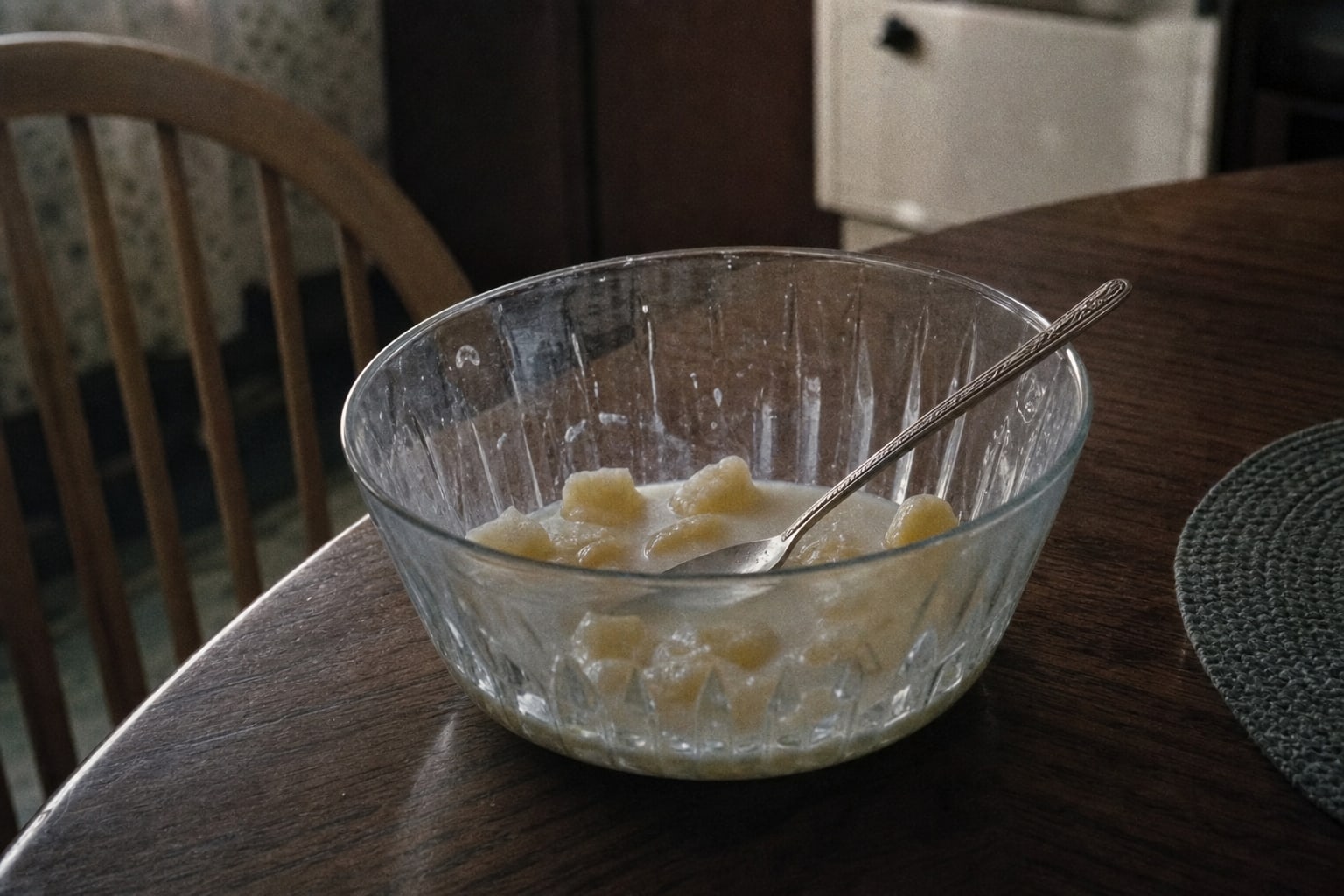
Then there was the pineapple.
The autopsy found material in JonBenét's digestive tract that has been widely reported as consistent with pineapple. In the kitchen, investigators found a bowl containing pineapple and milk, with a spoon inside. Latent prints connected to Patsy Ramsey and Burke Ramsey were reported on the bowl or related items.
The Ramseys said they did not remember serving JonBenét pineapple that night.
That does not, by itself, solve the case. A child could have eaten food without the parents remembering it. The bowl could have been left from an earlier moment. Fingerprints on household dishes are not shocking inside a household.
But the pineapple became significant because it pressed against the family's timeline. If JonBenét ate after returning home, then the night was not quite as simple as a sleeping child carried to bed and never awake again. Something happened in the house after the family returned. The question is what, with whom, and whether it mattered.
The basement evidence created another contradiction.
The killing looked intimate and domestic because so many materials appeared to come from inside the house. Yet some evidence seemed to point away from the family, including unidentified male DNA and a footprint associated with a Hi-Tec boot. The same house held objects that made an intruder seem possible and objects that made an intruder seem almost impossible.
That is the shape of the Ramsey case.
Every answer has a shadow.
The Grand Jury That Never Became A Trial
In the years after JonBenét's death, the investigation split into factions.
The Boulder Police Department focused heavily on the possibility that the crime involved someone inside the home or someone close to the family. Investigators questioned whether the ransom note, the bindings, and the basement scene reflected staging after a fatal event. Some theories suggested an accidental injury followed by a cover-up. Others proposed rage, panic, or concealment.
The Ramsey family denied involvement.
The Boulder County District Attorney's Office, led by Alex Hunter, was more cautious about prosecuting the family. The office pointed to the lack of a clean forensic case, the compromised scene, unresolved DNA questions, and the risk that the evidence would not meet the criminal standard of proof.
In 1999, a grand jury voted to indict John and Patsy Ramsey on charges connected to child abuse resulting in death and accessory to a crime. The proposed indictments alleged that the parents had permitted JonBenét to be placed in a situation that resulted in her death and had rendered assistance to a person with intent to hinder prosecution.
But the indictments were never signed.
Alex Hunter declined to prosecute, saying the available evidence was insufficient to prove guilt beyond a reasonable doubt. The grand jury action remained sealed until 2013, when the public learned that the jurors had voted for charges that never became a criminal case.
That distinction is essential.
John and Patsy Ramsey were never formally charged, never tried, and never convicted. The unsigned indictments are not a verdict. They are evidence of suspicion within a grand jury process, and of an institutional fracture between investigators who believed the family should be charged and prosecutors who believed the case could not survive trial.
The grand jury did not end the mystery.
It exposed how divided the people closest to the evidence had become.
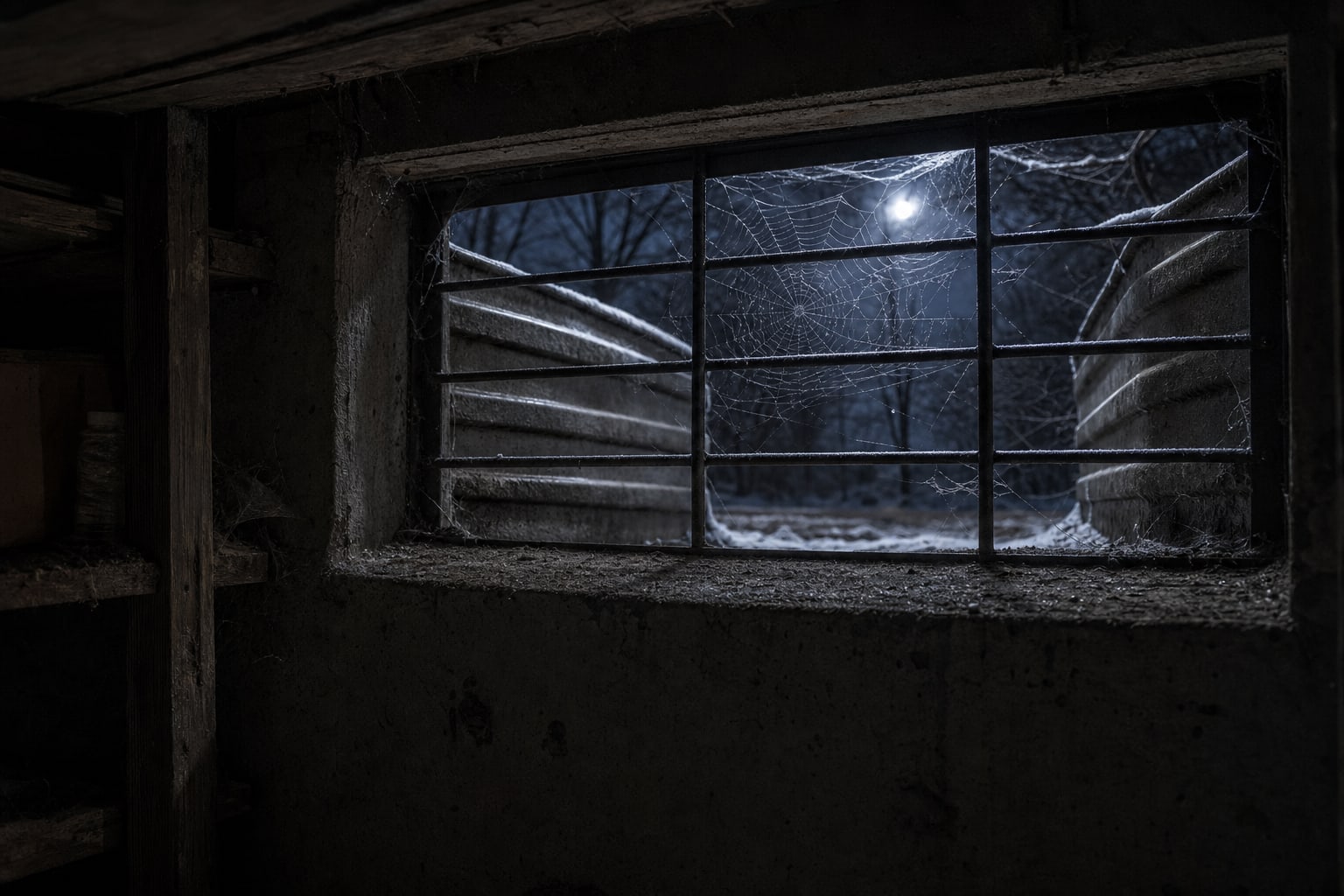
The Intruder Theory
Not everyone inside the investigation believed the Ramsey family was responsible.
Lou Smit, an experienced homicide detective brought into the case by the district attorney's office, became the most famous advocate for the intruder theory. He believed the physical evidence pointed to an unknown offender who entered the home, subdued JonBenét, took her to the basement, and left without being identified.
Smit focused on several details.
There was a broken basement window. There was a suitcase positioned under or near that window. There were markings and possible disturbance in the basement area. A footprint associated with a Hi-Tec hiking boot was found. Smit also believed red marks on JonBenét's body were consistent with a stun gun, a claim that other experts have disputed.
The theory gave the case a different architecture.
Instead of a family tragedy concealed by staging, Smit saw a predator comfortable enough to move through a large house during the night, use materials found inside, and write a note to control the morning narrative. In this version, the length of the ransom note was not evidence against an intruder. It was part of the intruder's pathology.
Critics saw problems everywhere.
They questioned whether the basement window could realistically have served as the entry or exit point, especially given reports of an intact cobweb or undisturbed debris near the exterior. They questioned why an intruder would spend so long in the home. They questioned why the note was written on household materials, why the ransom demand matched a family financial detail, and why the child was left in the basement instead of removed from the house.
The intruder theory never disappeared because it had evidence.
It never resolved the case because the evidence had answers waiting on the other side.
The DNA That Could Not Close The Case
The strongest public support for the intruder theory has always been DNA.
In 1997, investigators identified a small amount of unidentified male DNA in a bloodstain on JonBenét's underwear. The profile did not match John, Patsy, or Burke Ramsey. Years later, additional testing found trace DNA on the waistband area of the long johns JonBenét was wearing. In 2008, Boulder County District Attorney Mary Lacy issued a public letter to the Ramsey family apologizing for the suspicion they had lived under and stating that the DNA evidence supported their exclusion.
For many people, that letter became the end of the family-suspicion era.
The science did not stay that simple.
Later reporting and review of the DNA record challenged whether the material should be treated as a clean single-source profile from one unknown male intruder. Experts noted that the samples were tiny, degraded, and potentially mixed. Touch DNA can transfer through innocent contact, manufacturing, handling, laundering, or secondary transfer from another person or object. A profile that excludes the family does not automatically identify a killer.
That does not make the DNA meaningless.
It means the DNA has to be treated with precision. It is real evidence. It has been central to the case. It has excluded some people and kept the intruder theory alive. But as of now, it has not named an offender, produced a conviction, or resolved the competing explanations for how it arrived on the clothing.
The official investigation continues to revisit that question.
Boulder Police have said the case has been reviewed with the Colorado Cold Case Review Team and that evidence continues to be evaluated with modern technology. In 2023, the department reported that a round of DNA testing had been completed in September of that year and that investigators were working with partner agencies on recommendations and next steps. In its 2025 update, Boulder Police said the team continued to pursue new tips, interviews, evidence testing, and retesting.
The DNA record is also viewed today through the shadow of a separate Colorado Bureau of Investigation scandal involving former analyst Yvonne "Missy" Woods, whose misconduct led to a broad review of CBI DNA work. Public reporting has not established that Woods falsified Ramsey evidence or that the Ramsey DNA results were fabricated. Still, the scandal renewed public concern about historical forensic reliability in Colorado cases, especially in a case where microscopic genetic material carries so much weight.
The DNA is the case's most promising door.
It is also a door that has not yet opened.
Burke Ramsey And The Cost Of Suspicion
Few unresolved cases have punished the living as publicly as the Ramsey case.
JonBenét's older brother, Burke Ramsey, was nine years old when his sister was killed. He was a child in the house and, for that reason, became the subject of speculation that followed him into adulthood. Some media programs and commentators later promoted theories that he had struck JonBenét and that the parents staged the scene afterward.
Authorities have repeatedly stated publicly that Burke was not a suspect.
That point should not be treated as a footnote. He was a child, he was never charged, and the theories built around him have caused serious legal consequences. After a 2016 CBS docuseries advanced a theory implicating him, Burke Ramsey filed defamation lawsuits. The case against CBS and others was resolved in a confidential settlement.
The public has often treated the Ramsey case like a puzzle board.
For the people inside it, the puzzle board was their life.
Patsy Ramsey died of ovarian cancer in 2006, two years before Mary Lacy's public DNA-based letter clearing the family from the district attorney's perspective. John Ramsey has continued to advocate for further testing and has pushed for outside laboratories and investigative genetic genealogy to be used on any viable DNA evidence. The family has maintained that an unknown intruder killed JonBenét.
The case has also absorbed false confessions and false certainty.
In 2006, John Mark Karr confessed to killing JonBenét after being located in Thailand. The confession collapsed when investigators determined that his DNA did not match the crime-scene profile and that the broader facts did not support his claim. The episode became another reminder that public obsession can generate noise that feels like progress until it breaks apart.
The Long Shadow Of December
The Ramsey house still stands in Boulder, though the address has been altered. The physical building has outlived the media vans, the first wave of detectives, the early tabloid frenzy, and many of the people who thought the case would be solved quickly.
What remains is harder than a single theory.
A mother found a note on the staircase.
A father found his daughter in the cellar.
A house full of evidence became contaminated before the evidence could speak clearly. A grand jury voted for charges that prosecutors would not sign. A district attorney later issued a DNA-based letter clearing the family, only for later experts and reporting to argue that the DNA was more complex than the public had been told. A detective's intruder theory kept an unknown offender in the frame, while critics kept returning to the house itself and asking why so much of the crime appeared to be built from within it.
The official position today is narrower than the arguments around it.
JonBenét Ramsey was murdered on December 26, 1996. No one has been convicted. Boulder Police continue to treat the case as open. New technology may still matter, especially if a viable genetic sample can be interpreted more clearly or linked to a person through investigative genealogy.
But technology cannot restore the first hours.
It cannot rewind the unlocked rooms, the visitors, the moved body, the fingerprints that may have been touched over, or the decisions made under the pressure of a ransom note that turned out not to lead outside the home.
The mystery of JonBenét Ramsey endures because it lives in that impossible space between evidence and uncertainty. The case is not empty. It is crowded. Every room contains a clue. Every clue contains a dispute. The staircase begins the story with a handwritten demand. The cellar ends it with a child who never came back upstairs alive.
Nearly thirty years later, America is still standing in that house, listening for the missing sound.
Archival Case Gallery
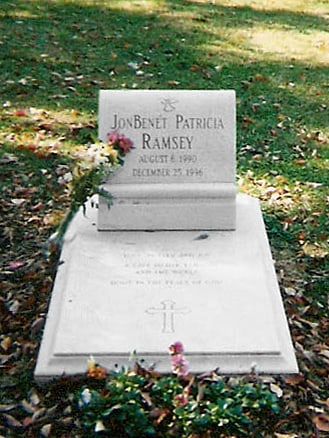
Archival case gallery: JonBenét Ramsey's grave, photographed by Taurusrus / Panoramio and licensed CC BY-SA 3.0 through Wikimedia Commons. Included as respectful memorial context, not as crime-scene imagery.
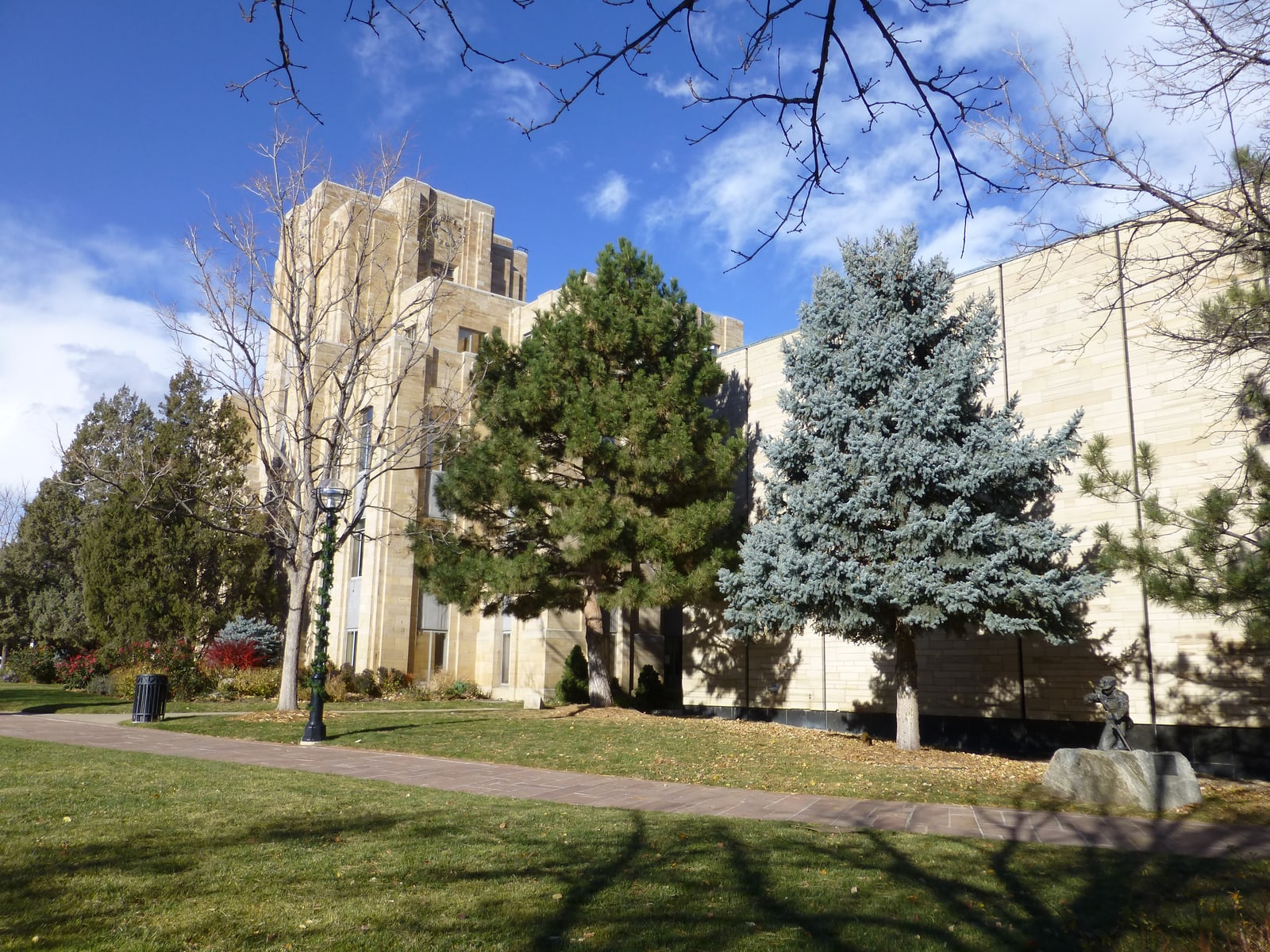
Archival case gallery: the Boulder County Courthouse, photographed by Kvng and licensed CC BY-SA 3.0 through Wikimedia Commons. Included as legal and geographic context for the grand-jury and prosecution history discussed in the article.
Sources & Case Notes
Last updated: May 24, 2026.
Primary sources: This article was checked against the City of Boulder's official JonBenét Ramsey homicide page, Boulder Police's December 2023 investigation update, Boulder's historical Ramsey press-release archive, CBS Colorado/AP reporting on the unsealed 1999 grand jury documents, Dr. John Meyer's autopsy report as publicly reported, and later reporting by the Daily Camera, The Denver Post, CBS News, the Associated Press, and Colorado Bureau of Investigation materials regarding DNA disputes and the separate Yvonne "Missy" Woods forensic review. DNA, handwriting, pineapple, stun-gun, intruder-entry, and family-suspicion claims are treated as disputed or source-dependent where appropriate.
Correction policy: Corrections, source documentation, and image-rights concerns can be directed to Anonymous369 Media's contact and media inquiries page.
Image credits: Feature and section images are Anonymous369 Media documentary recreations based on the Ramsey home, staircase, basement, ransom-note materials, kitchen-table pineapple evidence, a paintbrush-handle evidence motif, and the debated basement-window theory. They are not archival photographs, official evidence images, depictions of the victim, or depictions of an identified offender. The Archival Case Gallery uses a Creative Commons Attribution-ShareAlike 3.0 photograph of JonBenét Ramsey's grave by Taurusrus / Panoramio as respectful memorial context, and a Creative Commons Attribution-ShareAlike 3.0 photograph of the Boulder County Courthouse by Kvng as legal/geographic context.
Content warning: This article discusses the murder of a child, physical abuse of a child in non-graphic terms, disputed sexual-injury evidence, and allegations involving family members and unknown offenders.