
The RMR-1029 Flask Traced the 2001 Anthrax Attacks to Fort Detrick
After 9/11, anthrax letters turned ordinary mail into a national threat. The trail led to Flask RMR-1029, Fort Detrick, and a suspect who never stood trial.


The Invisible Threat
The crisp autumn air of early October 2001 offered no comfort to a nation still reeling from September 11. The smoke had barely cleared from Ground Zero when a different kind of terror began moving through the United States Postal Service. It made no sound. It had no face. It could hide in paper, ride through sorting machines, and turn an ordinary envelope into a sealed room of dread.
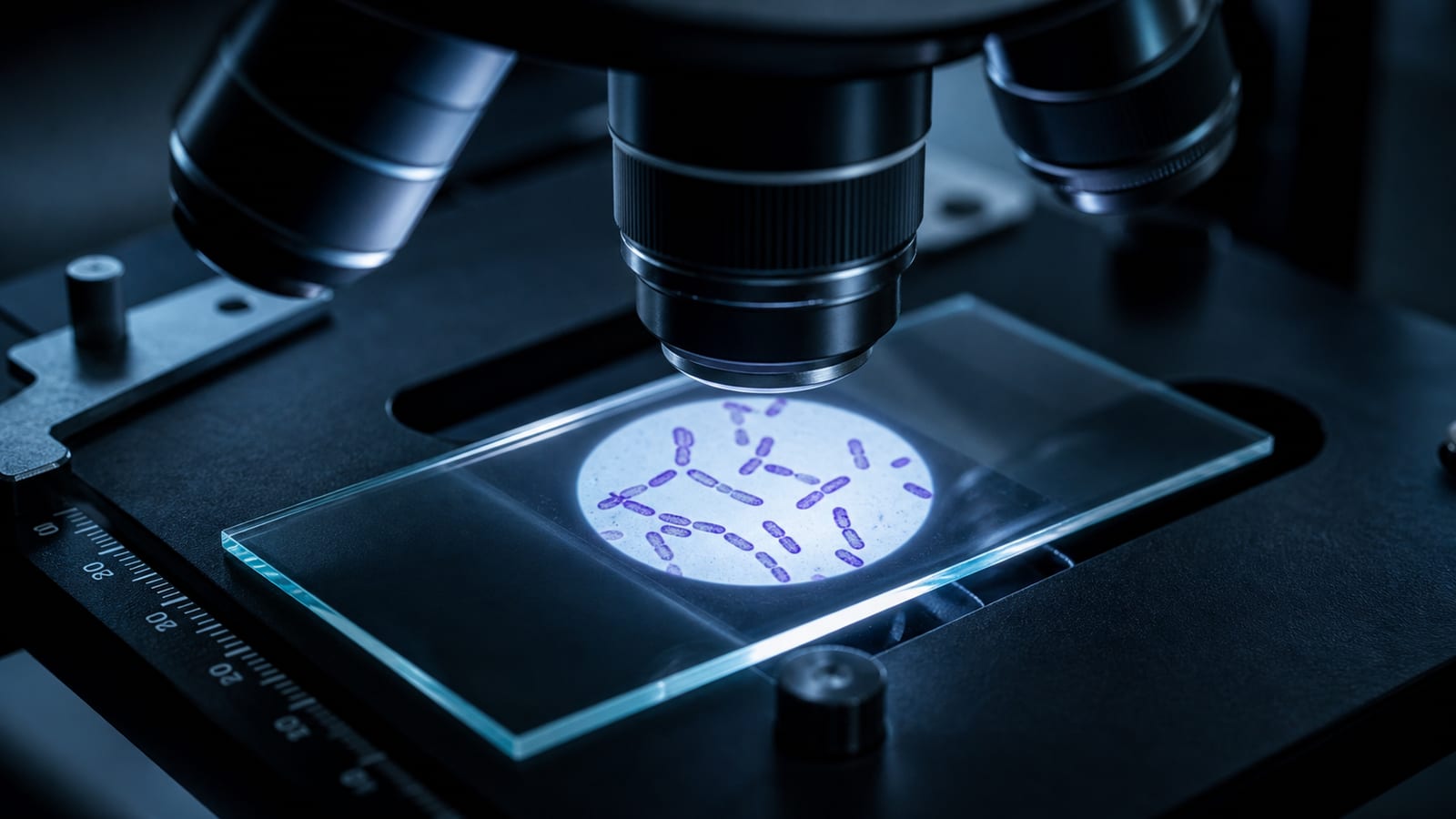
On October 3, Robert Stevens, a sixty-three-year-old photo editor at American Media Incorporated in Boca Raton, Florida, was diagnosed with inhalational anthrax. He had arrived at the hospital confused, feverish, and gravely ill. Under the microscope, the clue appeared in the old language of microbiology: large, boxcar-shaped bacilli, the kind of sight American doctors almost never expected to see in a fatal domestic case.
Stevens died on October 5.
At first, investigators hoped the exposure was a freak event, one terrible anomaly in a country already living on fear. That hope collapsed when anthrax spores were found inside the American Media building, including on Stevens’s computer keyboard. Then media workers in New York began developing cutaneous anthrax after handling mail connected to news offices. The pattern sharpened. This was not nature. This was delivery.
The FBI called the case Amerithrax. It would become one of the largest and most complicated investigations in American law enforcement history, forcing agents to chase a killer through postal routes, laboratory freezers, genetic mutations, and the narrow place where science becomes suspicion.
The Lethal Route
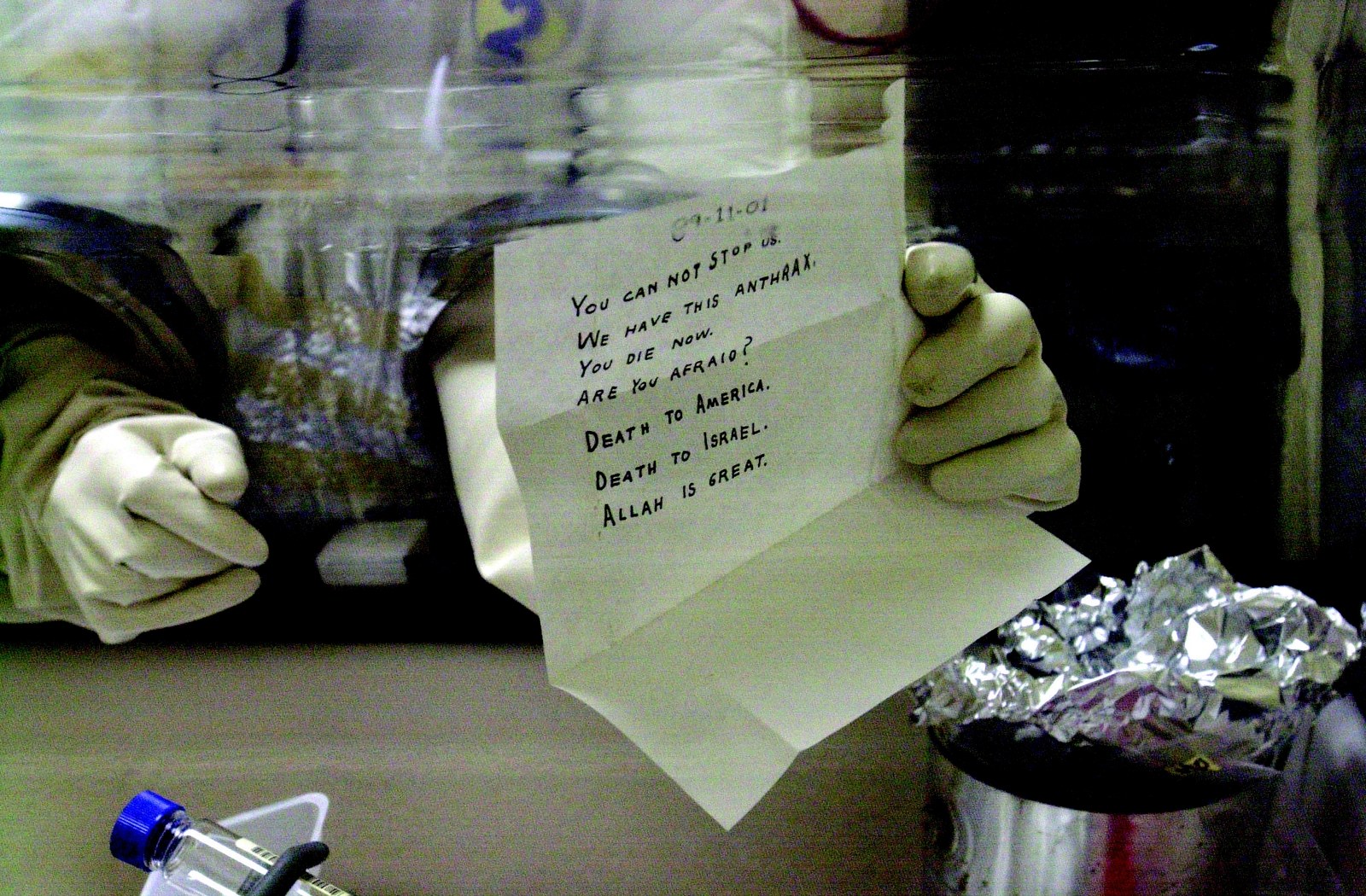
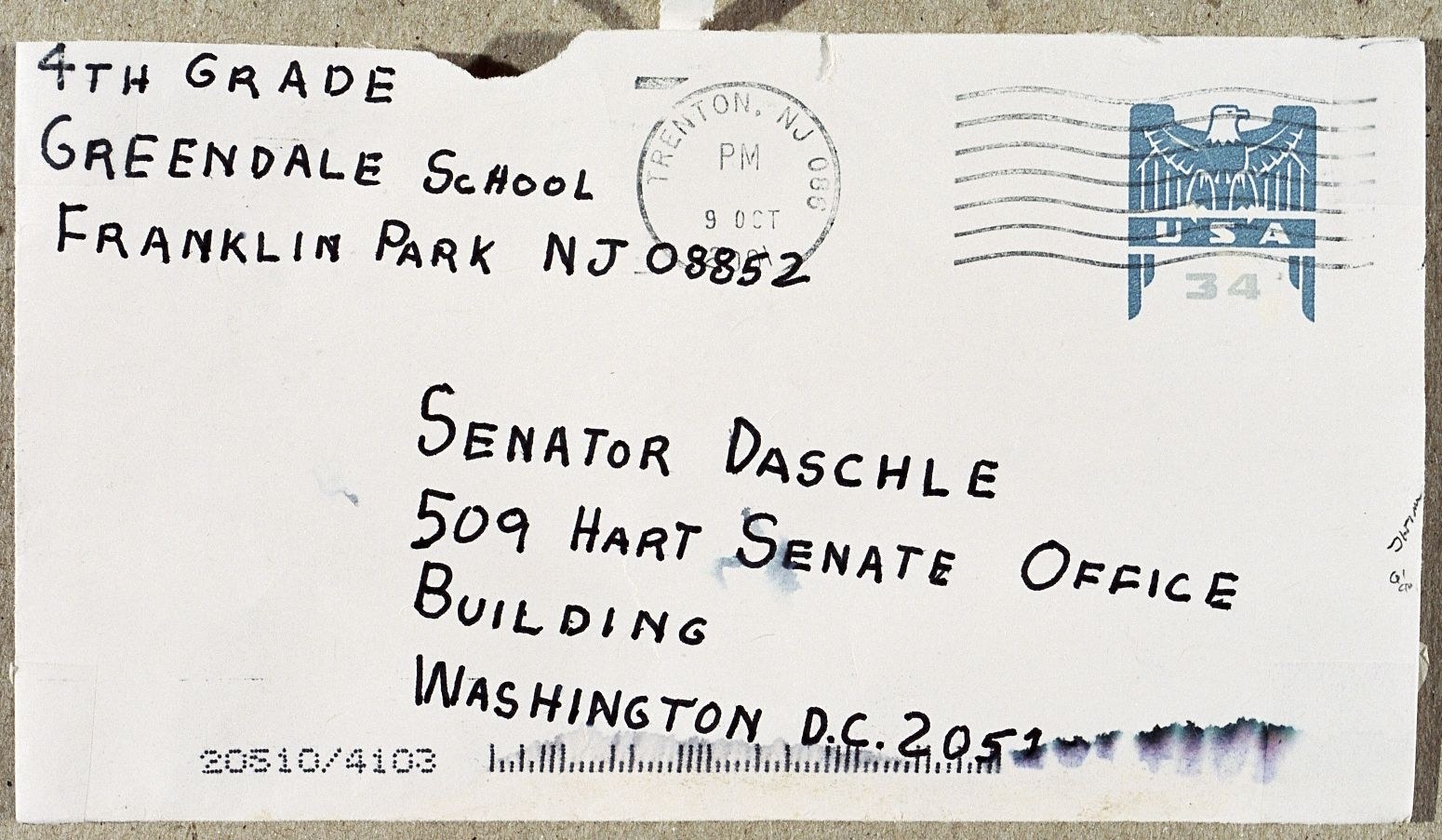
The mailings came in two waves, both postmarked from Trenton, New Jersey. The first wave, sent in mid-September, targeted media outlets in New York and Florida. The second, mailed in early October, targeted Senators Tom Daschle and Patrick Leahy in Washington, D.C.
The powder changed between waves. The earlier material was coarser, more granular, and tied mainly to cutaneous infections. The Senate letters carried something more dangerous: a finer, cleaner preparation that could lift into the air when disturbed. Government testing later placed the concentration in the Washington letters at an extraordinary level, reaching into the trillion-scale range of colony-forming units per gram.
When the Daschle letter was opened in the Hart Senate Office Building, the danger became airborne within seconds. The powder moved through office air. Staffers were exposed. Hallways, mail rooms, and government buildings became contaminated zones.
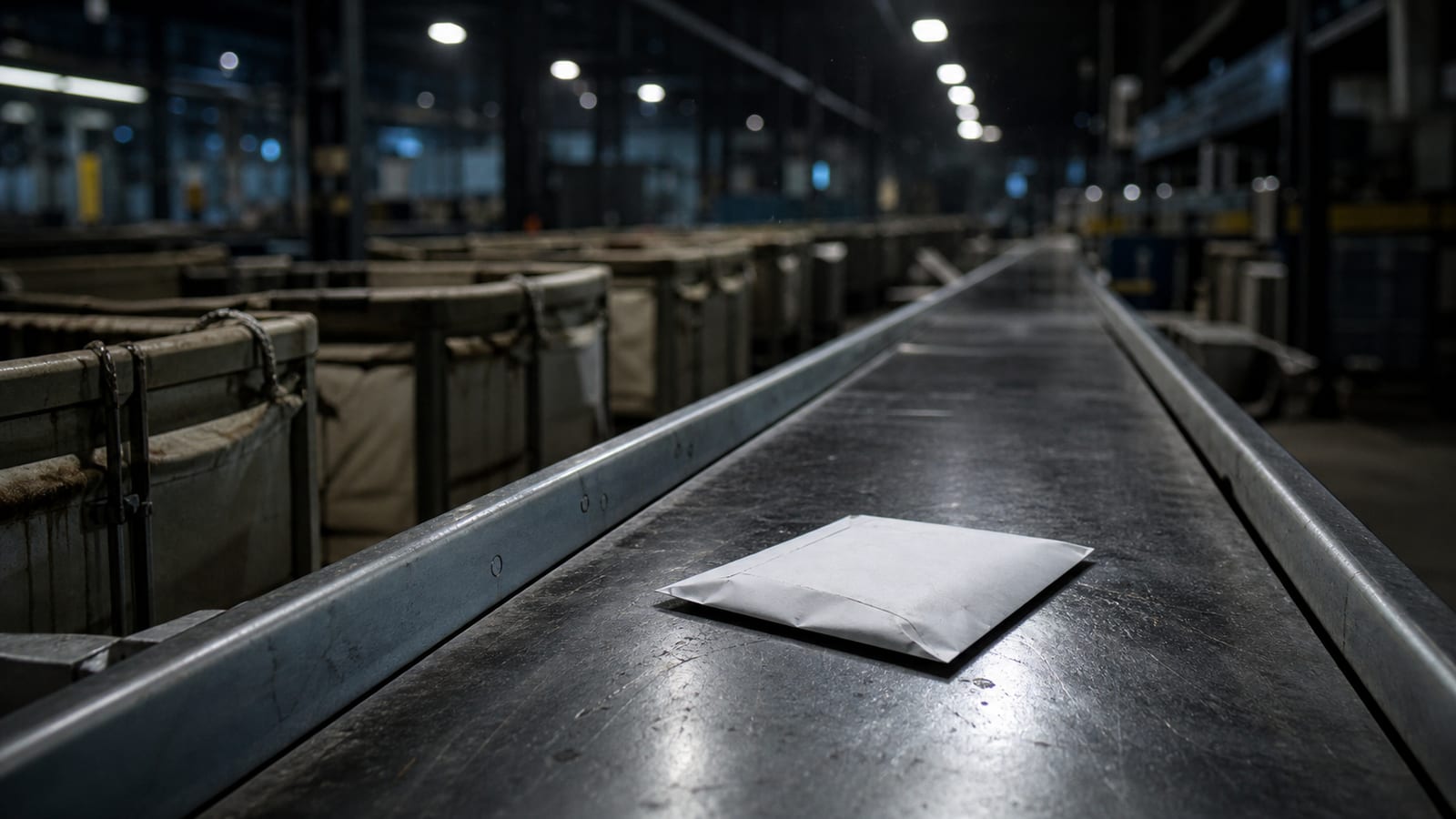
The postal system made the damage worse without knowing it. High-speed sorting machines pressed envelopes through rollers and belts, pushing microscopic spores through taped seams and paper pores. Two postal workers at the Brentwood facility in Washington, Thomas Morris Jr. and Joseph Curseen Jr., died after exposure connected to contaminated mail processing.
The attack also reached people who were nowhere near the intended targets. Kathy Nguyen, a hospital stockroom worker in Manhattan, died after an exposure route investigators could not clearly pin down. Ottilie Lundgren, a ninety-four-year-old woman in Connecticut, died after what investigators believed was exposure through cross-contaminated mail.
Five people were killed. Seventeen others were sickened. The attacker remained hidden behind the machinery of everyday life.
The Wrong Target
In the first days of fear, the public imagination ran toward foreign terrorism. The country had just watched planes become weapons. Now letters had become delivery systems for disease. Al Qaeda was on every television screen, every front page, every briefing room wall.
But the evidence began to point inward. The spores belonged to the Ames strain, a virulent anthrax lineage used in research laboratories. Investigators started looking for an American insider: someone with access, training, and the ability to grow, purify, and dry spores without killing himself in the process.
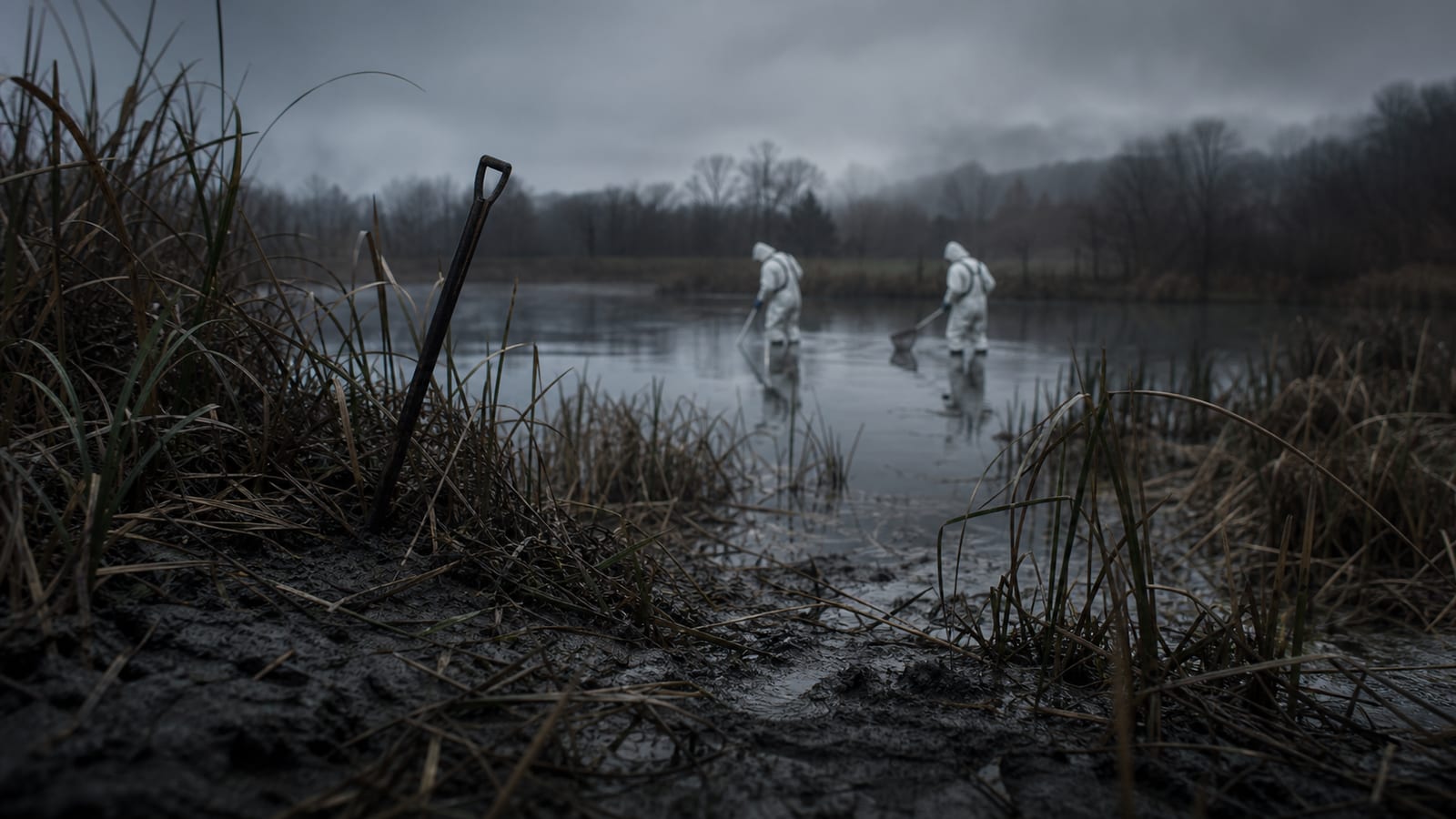
That search eventually pulled Dr. Steven Hatfill into the center of the storm. Hatfill was a virologist and former USAMRIID researcher at Fort Detrick, Maryland. The Department of Justice publicly called him a person of interest. His home was searched. His movements were examined. A pond was drained. Bloodhounds were brought into the case. Cameras followed the spectacle from above while his name became fused to the investigation in the public mind.
Then the case against him fell apart.
Investigators could not place Hatfill at the New Jersey mailbox. More importantly, later genetic work excluded him from the specific spore batch the FBI believed mattered most. The government ultimately exonerated him and paid a major civil settlement. Hatfill was not the Amerithrax mailer.
The cost was more than money. While the investigation burned years around the wrong man, the evidence was slowly turning toward a different door inside Fort Detrick.

The Microscopic Fingerprint
Traditional detective work had reached its limit. The answer would have to come from the organism itself.
The FBI partnered with civilian genomics experts to track the Ames strain used in the letters. At first, the science seemed almost impossible. Anthrax is stable. It does not mutate quickly enough to make ordinary DNA comparison easy. Thousands of Ames samples existed in laboratories, and standard testing could not separate the attack material from the wider research world.
Then scientists noticed something strange on culture plates. A small number of colonies grown from the attack spores looked different. Some had unusual color. Some had unusual texture. Some had shapes that did not match the standard growth pattern.
These were morphotypes: visible differences caused by genetic variation.
By sequencing those variants, researchers identified four genetic markers associated with the attack material. It was not a fingerprint in the old forensic sense. It was smaller, stranger, and more powerful: a microscopic trail hidden inside a living organism.
The FBI built a repository of Ames strain samples from laboratories around the world. More than a thousand viable submissions were tested against the four markers. Only a small number contained all four.
According to the government, those matching samples led back to the same source family.
The Custodian of the Spores
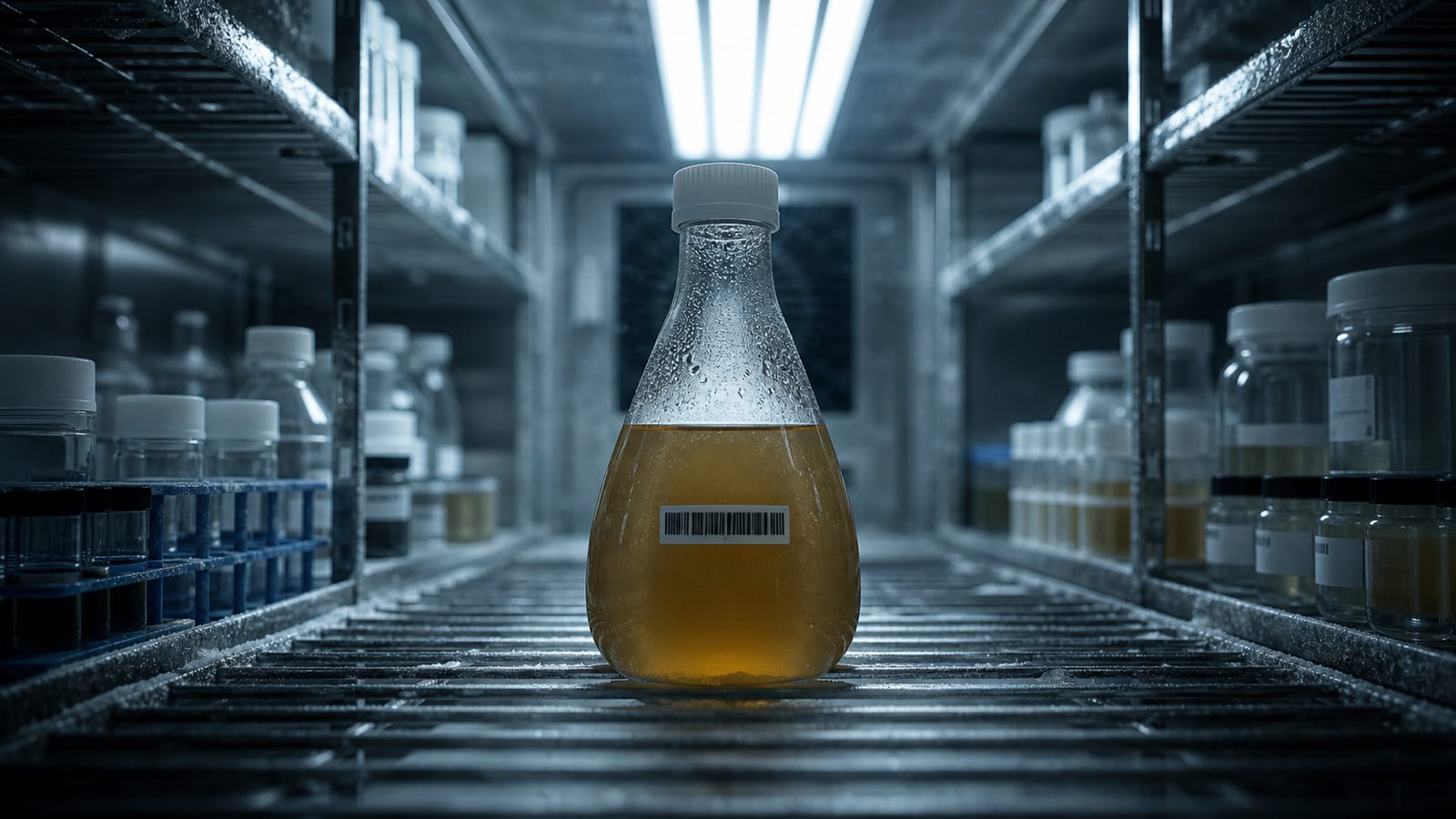
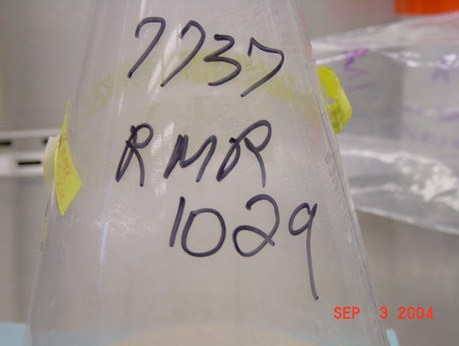
The source at the center of the investigation was a one-liter flask known as RMR-1029.
It was stored inside USAMRIID at Fort Detrick, in a secured laboratory environment where dangerous pathogens were handled behind layers of access control. RMR-1029 was not an anonymous vial forgotten in a freezer. It was a working reference material, created and maintained by Dr. Bruce Edwards Ivins, a senior biodefense researcher who had spent much of his career developing anthrax vaccines for the military.
Ivins created RMR-1029 in 1997 by combining spores from multiple batches, including material produced at an Army facility in Utah and spores connected to his own laboratory work. That blending process gave the flask a distinctive biological history. To investigators, it became the parent source from which the attack material appeared to descend.
Then came the sample problem.
When researchers were ordered to submit Ames material to the FBI repository, Ivins submitted a sample that did not show the full set of markers investigators later associated with RMR-1029. The Department of Justice would treat that submission as deeply suspicious, arguing that a properly prepared sample should not have missed the crucial variants. Later independent reviewers were more cautious about how much weight that error could carry on its own.
But in the logic of the investigation, it mattered. The flask was his. The lab access was his. The flawed submission was his. The case was no longer circling Fort Detrick in the abstract. It was circling one man.
The Shadows in Suite B3
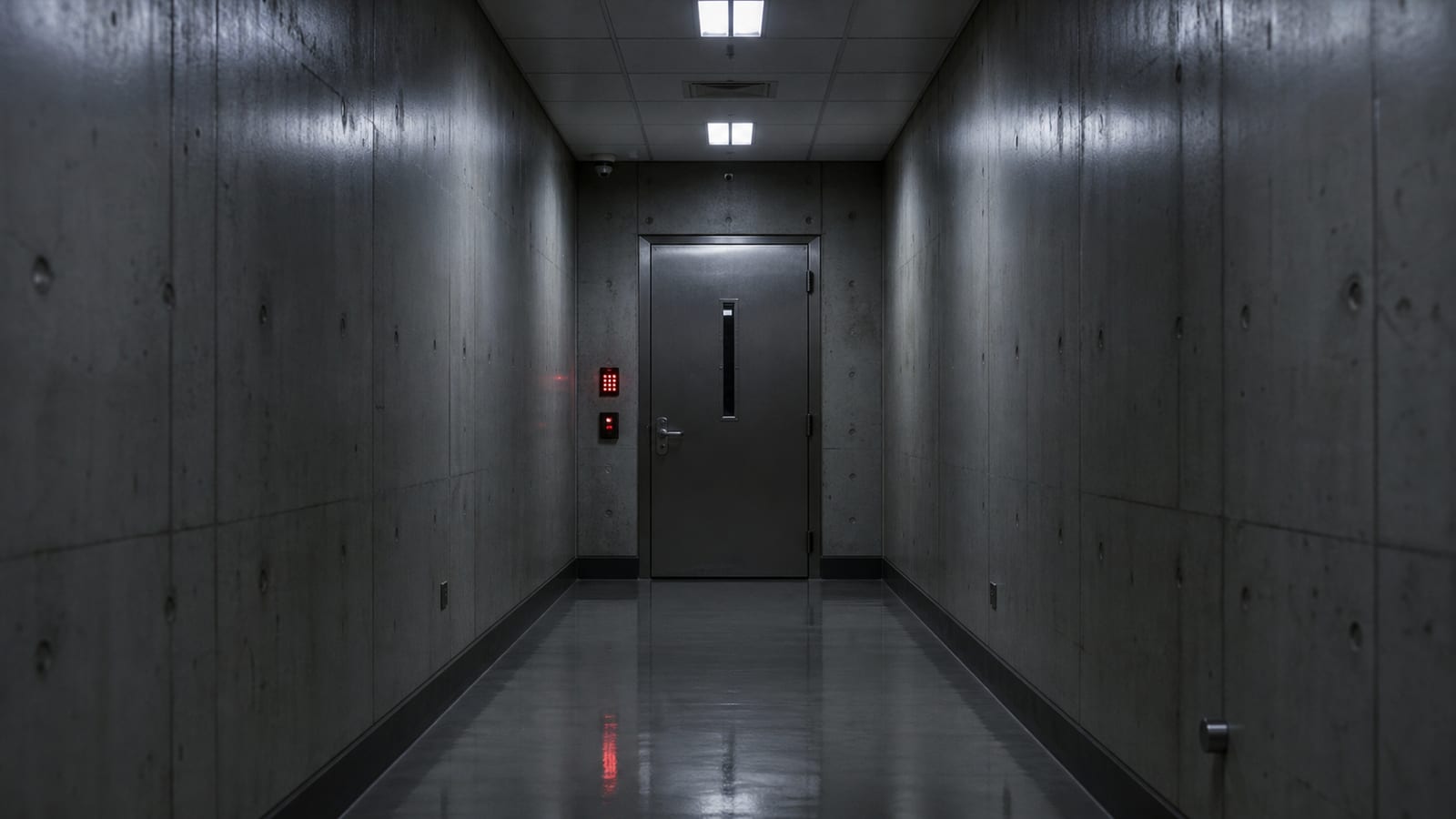
Once the genetic trail led to RMR-1029, investigators began tearing through Ivins’s access logs, lab records, emails, habits, and late-night movements.
The pattern was difficult to ignore. In the windows before the September and October mailings, Ivins logged unusual hours inside the laboratory area connected to RMR-1029. Late nights. Weekends. Time alone. According to investigators, those hours did not match his normal work demands or any clearly documented experiment that required him to be there.
When questioned, his explanations shifted. At one point, he suggested he had gone to the lab to escape problems at home. To investigators, the answer did not calm the suspicion. It deepened it.
The laboratory world around Ivins also contained the tools and knowledge the FBI believed the mailer needed. He understood anthrax. He knew vaccine work. He had access to protective measures. He had experience with equipment that could be used in preparing and drying spores, including a lyophilizer, a freeze-drying machine that became one of the investigation’s most contested objects.
The motive theory was just as unsettling. Ivins’s anthrax vaccine work was under pressure. Funding, criticism, professional identity, and biodefense urgency all surrounded him in the months before the attacks. After the letters, anthrax became a national obsession overnight. The pathogen at the center of his career was suddenly the pathogen at the center of American fear.
None of that was a trial. None of it was a confession. But to investigators, it was no longer a loose cloud of suspicion. It was a shape.
The Princeton Mailbox and the Codes
The letters were traced to a blue postal collection box at 10 Nassau Street in Princeton, New Jersey. That fact created one of the strangest emotional turns in the case.
Investigators never found direct proof placing Ivins at that mailbox on the mailing dates. No perfect receipt. No clean surveillance image. No witness who could close the distance. But the mailbox sat near an office connected to Kappa Kappa Gamma, a sorority Ivins had fixated on for decades. According to the DOJ summary, Ivins had a long and disturbing history of attention toward the sorority, including late-night drives and obsessive interest that had nothing to do with anthrax and everything to do with the private architecture of his mind.
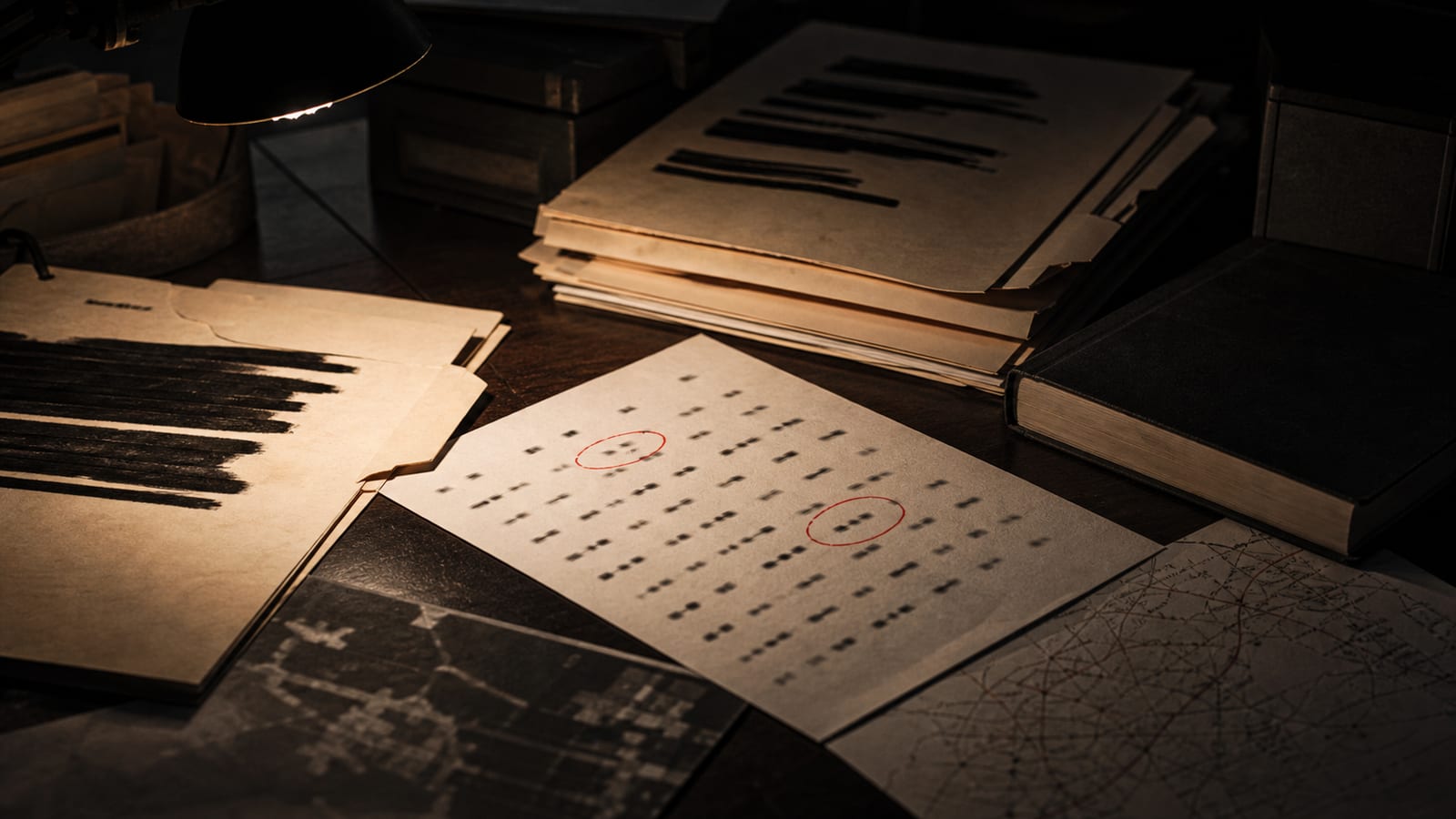
The letters themselves added another layer. Some characters appeared bolded, including A and T markings that investigators examined through the lens of genetic coding, where adenine and thymine sit at the center of DNA’s alphabet. During the investigation, Ivins was also linked to interest in hidden codes and genetic language.
This is where Amerithrax becomes almost impossible to hold in one hand. The case is laboratory science. It is postal evidence. It is behavioral analysis. It is a wrongfully targeted scientist. It is a flask in a cold room. It is also a blue mailbox near a sorority office, and letters whose strange markings seemed to invite interpretation.
The FBI believed the pieces locked together. Critics would later argue some of those pieces were suggestive, not conclusive.
That tension never went away.
An Unsettled Closure
By the summer of 2008, the investigation had closed in on Bruce Ivins. He lost his security clearance. He was barred from his laboratory. Prosecutors were moving toward charges. His mental health collapsed under the pressure of the investigation and his own documented instability.
On July 29, 2008, Ivins died after taking a fatal overdose of acetaminophen. He left no courtroom testimony. No cross-examination. No verdict. No confession that could end the argument.
In February 2010, the Department of Justice, the FBI, and the U.S. Postal Inspection Service formally closed Amerithrax, declaring that Ivins had acted alone. Their conclusion rested on the totality of the case: genetic evidence, access, lab hours, behavior, motive theory, and the exclusion of other suspects.
But the ending did not settle everyone.
In 2011, the National Academy of Sciences reviewed the scientific work and reached a more careful conclusion. The genetic evidence was consistent with the attack spores deriving from RMR-1029, but it did not prove that relationship as definitively as the government had suggested. If the material did come from the flask, it likely required additional growth and processing steps. The science provided leads, not a courtroom certainty by itself.
That is where Amerithrax remains: solved in the eyes of the Department of Justice, unsettled in the eyes of those who wanted a trial, a confession, or a cleaner scientific ending.
A nation was attacked through its mail. Five people died. A new field of microbial forensics was born. A flask in a Fort Detrick cold room became one of the most important pieces of biological evidence in American history.
And the man the government said sent the letters was gone before anyone could ask him under oath.
Sources & Case Notes
Last updated: May 9, 2026.
Primary sources / case notes: FBI Amerithrax case history, DOJ Amerithrax investigative summary, CDC Emerging Infectious Diseases reporting, and the National Academies review of the FBI microbial-forensics work. The article preserves the distinction between the DOJ conclusion and the fact that Bruce Ivins was never tried or convicted.
Source links:
- FBI Amerithrax case history
- DOJ Amerithrax investigative summary
- CDC Emerging Infectious Diseases anthrax investigation report
- National Academies review of FBI microbial forensics
Correction policy: Send corrections, source notes, or image-rights concerns through Contact & Media Inquiries.
Image credits: Archival gallery uses FBI/DOJ Amerithrax case material available through Wikimedia Commons, including Flask RMR-1029, the Leahy letter, and the Daschle envelope. Body images are non-graphic documentary recreations created for Anonymous369 Media.
Content warning: Discusses bioterrorism, fatal illness, and suicide in restrained, non-graphic terms.
Editorial standards: Read how Anonymous369 Media researches, corrects, and credits factual cases on our Editorial Standards page.
Continue the Case File
These investigations reward careful reading. Step back if you missed the previous file, or keep going to follow the next case in the archive.
Previous file: The Bitter Pill: How the 1982 Tylenol Murders Changed America Next file: The Rear Stair: How Flight 305 Turned D.B. Cooper Into a Cold Case