
The Rear Stair: How Flight 305 Turned D.B. Cooper Into a Cold Case
On the eve of Thanksgiving in 1971, a quiet man in a dark suit hijacked Flight 305, collected a ransom over Seattle, and stepped from the rear stairs into a freezing storm. Decades later, buried cash and particles on a discarded tie still circle a name no one has ever proven.


A Quiet Departure
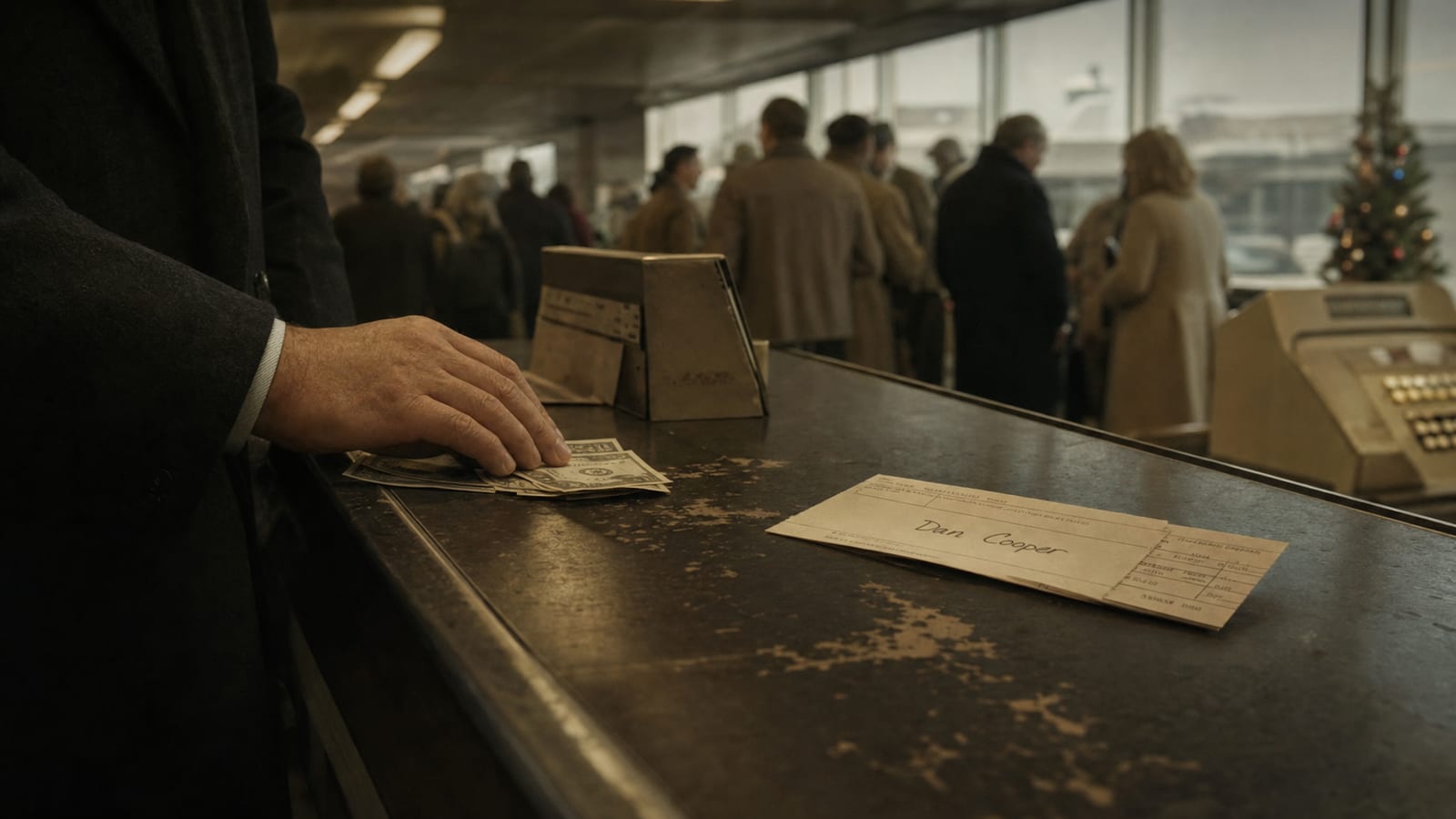
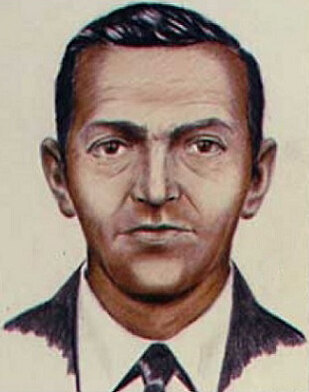
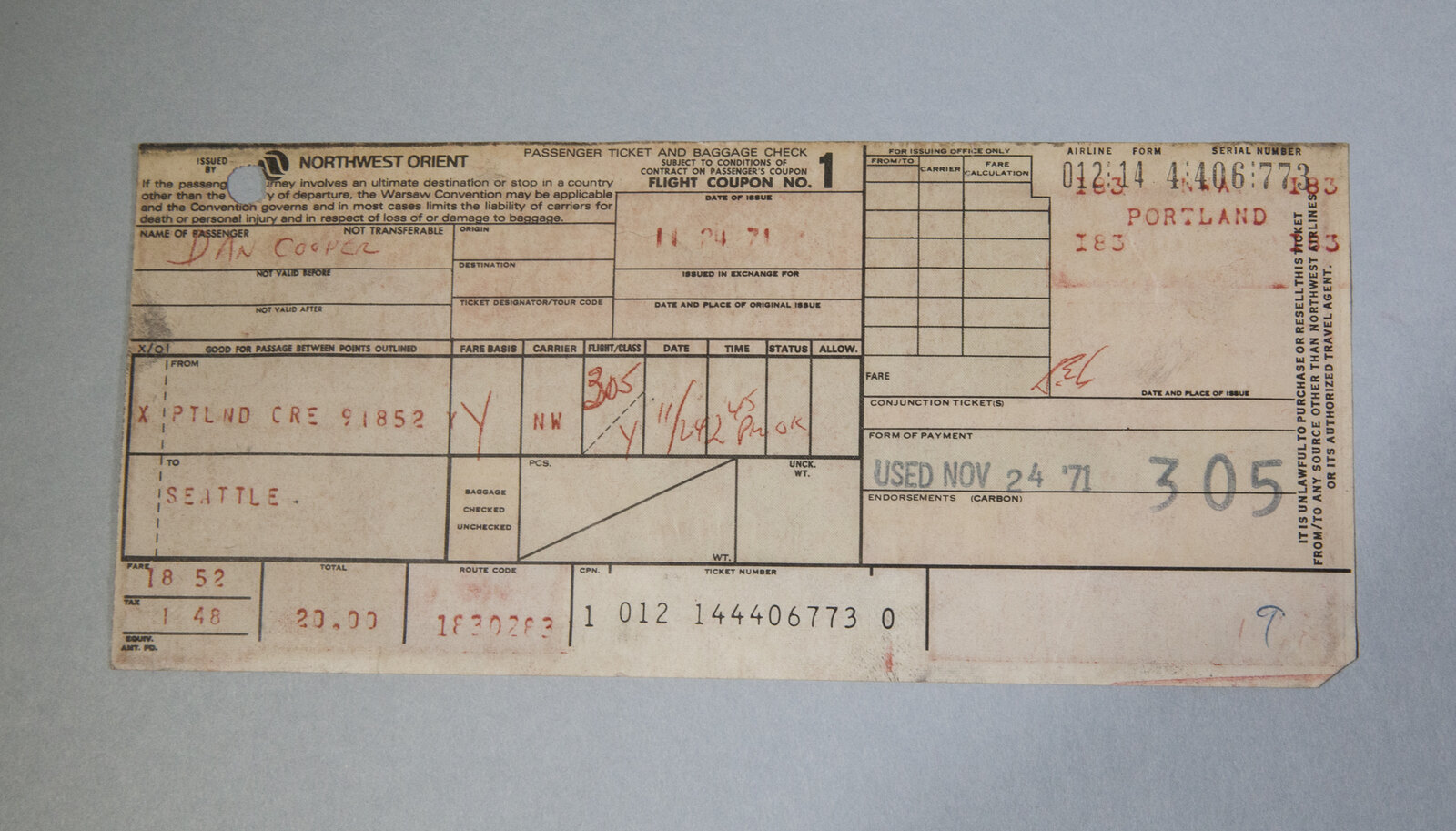
The air inside Portland International Airport on the eve of Thanksgiving in nineteen seventy one smelled of damp wool, stale tobacco smoke, and the faint kerosene tang of jet exhaust. The terminal was busy with holiday travelers, yet the man who approached the Northwest Orient ticket counter drew no particular attention. He appeared to be in his mid forties, roughly six feet tall, with a medium build, dark combed back hair, and an olive complexion. He wore a dark business suit, a crisp white shirt, a narrow black clip on tie, a black raincoat, and brown loafers. He paid cash for a one way ticket on the short flight to Seattle. When asked for his name, in an era before mandatory identification checks, he simply said Dan Cooper.
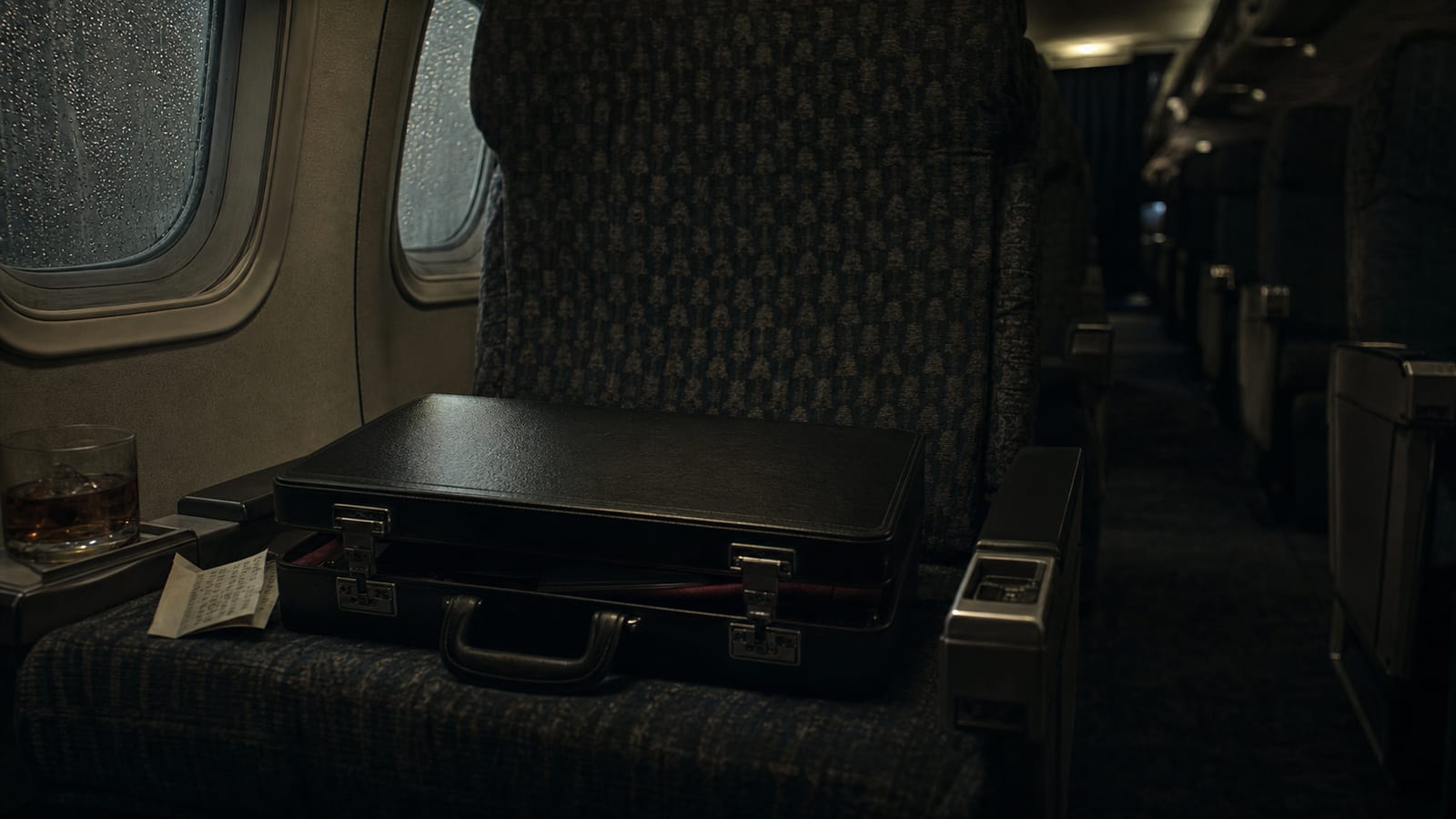
He boarded Flight 305 and made his way to the rear of the cabin. The aircraft was sparsely populated, carrying three dozen passengers and a small flight crew. Cooper ordered a bourbon and soda, paid in cash, and tried to tip the flight attendant. Shortly after takeoff, he reached into his pocket, retrieved a white envelope, and handed it to Florence Schaffner, a flight attendant stationed nearby. Like many young women in her profession during that era, Schaffner had grown accustomed to receiving unsolicited notes from forward passengers. Assuming this was another unwanted overture, she dropped the folded paper unopened into her purse. Cooper leaned closer, his voice low and free of any discernible regional accent. Miss, he said, you had better look at that note. I have a bomb.
The Bomb and the Bargain
Schaffner opened the paper. Printed in neat, all capital letters with a dark felt tip pen, the message confirmed her worst fear. The man instructed her to sit beside him. When she did, she quietly asked to see the explosive. Cooper unlatched his black attache case just enough for her to glimpse the interior. Resting inside were red cylindrical sticks, a heavy battery, and a tangled mass of wires. The threat was immediate and undeniable. He closed the case and laid out a precise set of demands. He wanted two hundred thousand dollars in negotiable American currency in twenty dollar bills. He demanded four parachutes and a refueling truck waiting on the tarmac in Seattle.
Schaffner carried the demands forward to Captain William Scott. Recognizing the gravity of the situation, the flight crew alerted air traffic control, who in turn contacted the Federal Bureau of Investigation and local police. While authorities on the ground scrambled to gather the cash and source the parachutes, Flight 305 was placed into a holding pattern, circling the dark, rain swept skies over Puget Sound for nearly two hours. Back in the cabin, flight attendant Tina Mucklow was assigned to sit beside the hijacker. Cooper remained outwardly calm and measured throughout the ordeal, an even keel that did nothing to reassure the young woman seated within reach of his briefcase. He offered her a cigarette, which she accepted, and over the next several hours she lit one filter tipped cigarette after another for him while his hand stayed close to the case. When Mucklow asked him why he had chosen their airline, he gave a chillingly vague answer. It is not because I have a grudge against your airline, he replied. It is just because I have a grudge.
A Flight Into the Void
That evening, Flight 305 touched down at Seattle Tacoma International Airport. Cooper directed Captain Scott to park the jet on a remote, unlit section of the tarmac. The requested items were delivered to the aircraft, and in exchange, Cooper allowed the passengers and two of the flight attendants to disembark unharmed. Many of them walked out into the terminal still unaware of how close they had come to disaster. Left aboard were Cooper, the pilots, the flight engineer, and Tina Mucklow.
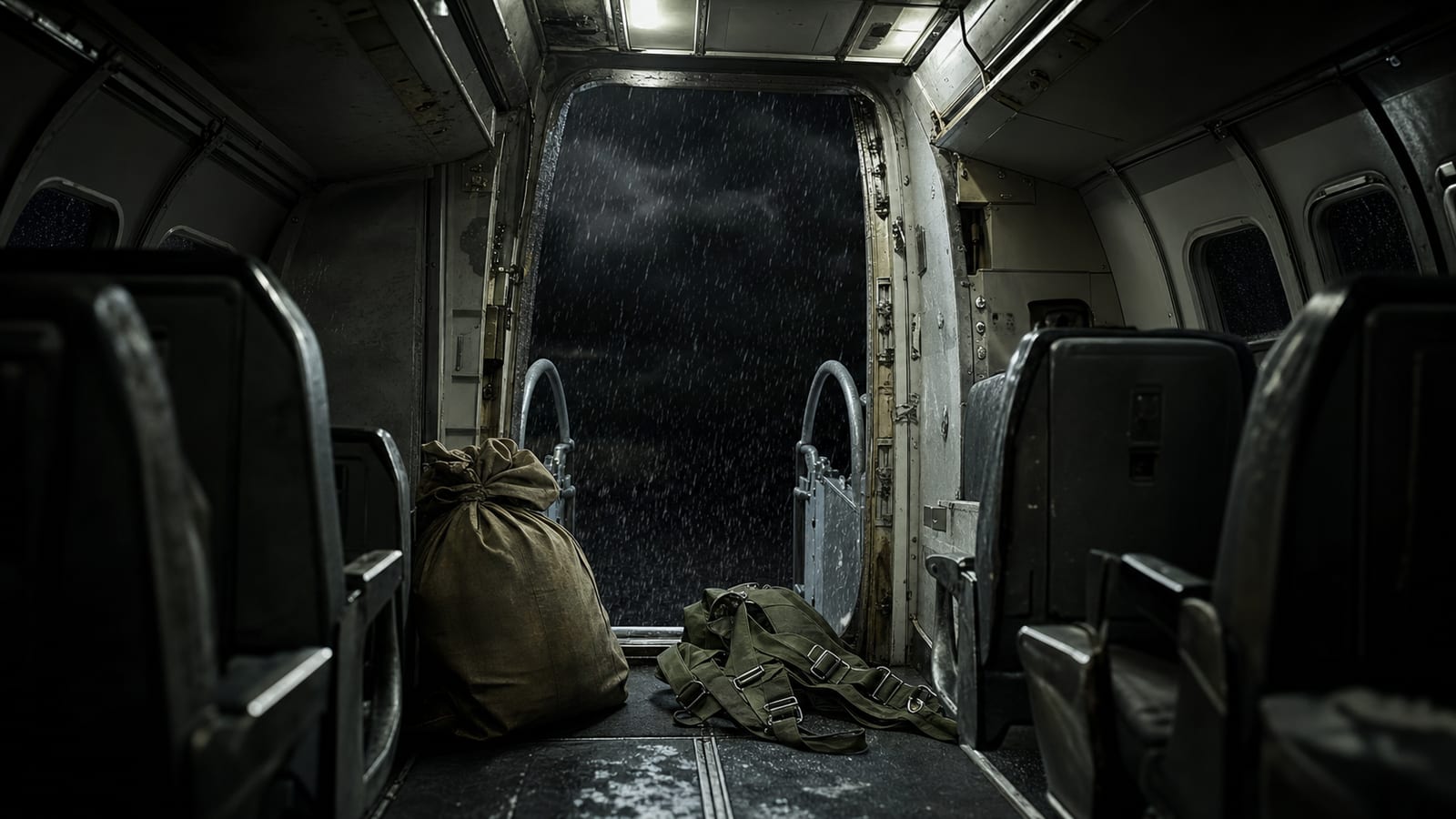
Cooper then issued the next set of orders. He wanted to be flown to Mexico City, but the pilots informed him the jet lacked the fuel range for a direct flight. They settled on a refueling stop in Reno, Nevada. He laid out a highly unusual flight configuration. The plane was to remain unpressurized and fly no higher than ten thousand feet. The landing gear was to stay deployed, the wing flaps lowered, and the airspeed kept near a bare minimum. He also demanded the rear aft airstair be lowered before takeoff. When the pilots argued that taking off with the stairs deployed was unsafe, Cooper relented but said he would lower them himself once they were airborne.
The jet climbed into pitch black, freezing rain. Shortly after departure, Cooper instructed Mucklow to show him how to operate the rear stairs. Once she demonstrated the mechanism, he ordered her into the cockpit and told her to close the curtain and not return. Alone in the rear of the unpressurized cabin, with the freezing wind beginning to roar through the fuselage, Cooper bound the heavy canvas bag of money to his waist. A little after eight o clock, the cockpit crew detected signs that the aft stairs had opened. Some minutes later, the tail of the aircraft pitched upward sharply, forcing the pilots to correct their trim. Somewhere between Seattle and Reno, the man calling himself Dan Cooper is believed to have stepped off the rear stairs and dropped into the storm.
The Ghost Ship
When Flight 305 landed in Reno late that night, the lowered airstair scraped the runway, throwing a shower of bright sparks into the darkness. Heavily armed federal agents and local police immediately surrounded the aircraft. After a tense search of the cabin, the truth became apparent. The hijacker was gone, leaving behind a freezing, empty shell.
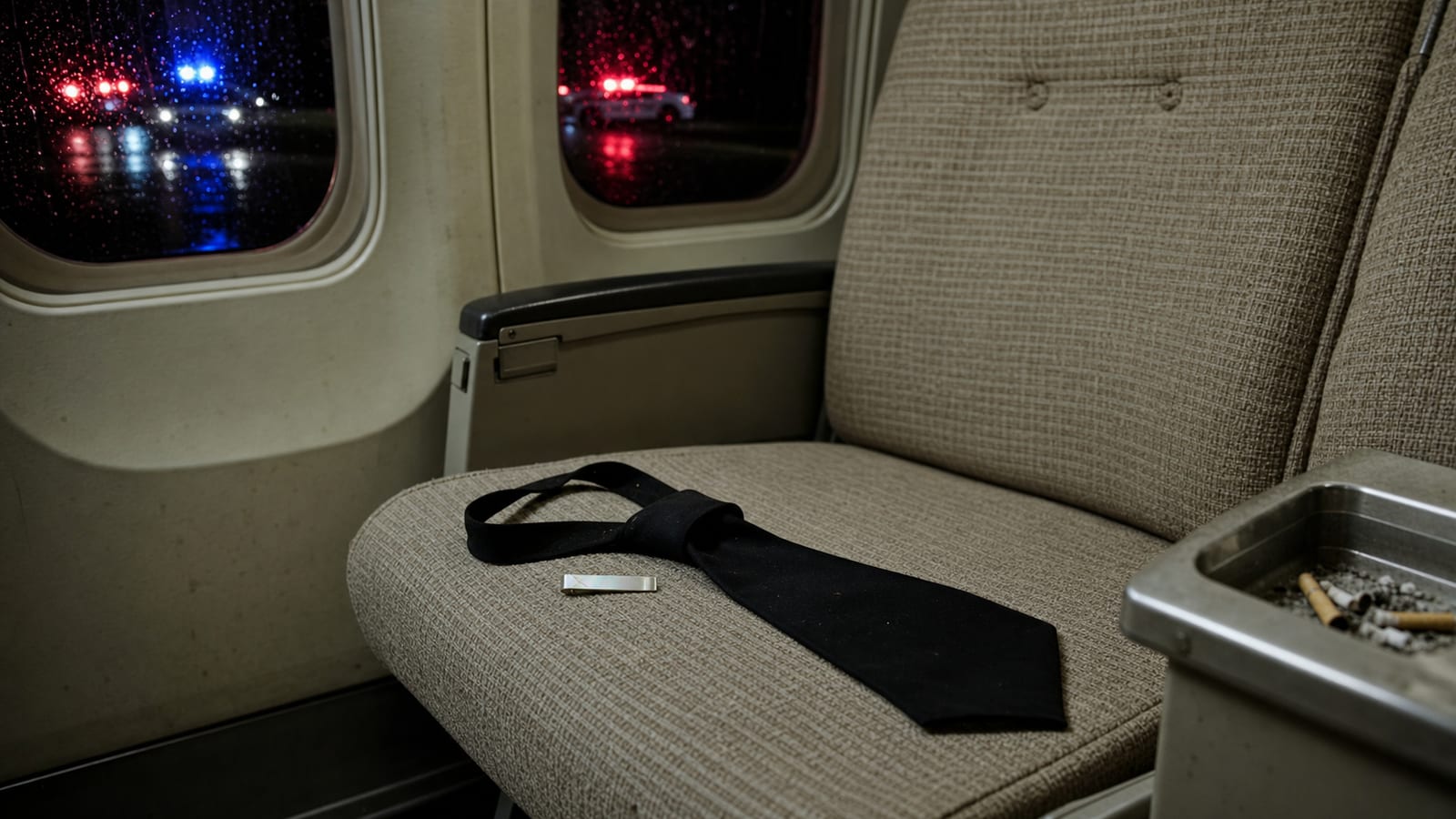
The authorities found only a handful of silent artifacts in the rear of the plane. Resting on his seat was a narrow black clip on tie from J.C. Penney, accompanied by a gold tie clip with a mother of pearl center. Cigarette butts had been crushed into the armrest ashtray. Cooper had also left behind two of the four parachutes. One was unused. Another had been altered, its cords likely used to help secure the ransom money.
The meticulous nature of his flight demands suggested some familiarity with aviation, yet his apparent choice to jump with a difficult parachute, into a freezing rainstorm, wearing loafers and a business suit, baffled experienced skydivers. Compounding the confusion, an early reporting error turned Dan Cooper into D.B. Cooper. The mistaken name spread quickly, and the alias became permanent. The Federal Bureau of Investigation opened NORJAK, one of the most exhaustive aviation investigations in American history, scouring leads, forests, aircraft evidence, and suspect files for decades. They found no body, no confirmed parachute, and no proven identity.
The Tena Bar Discovery
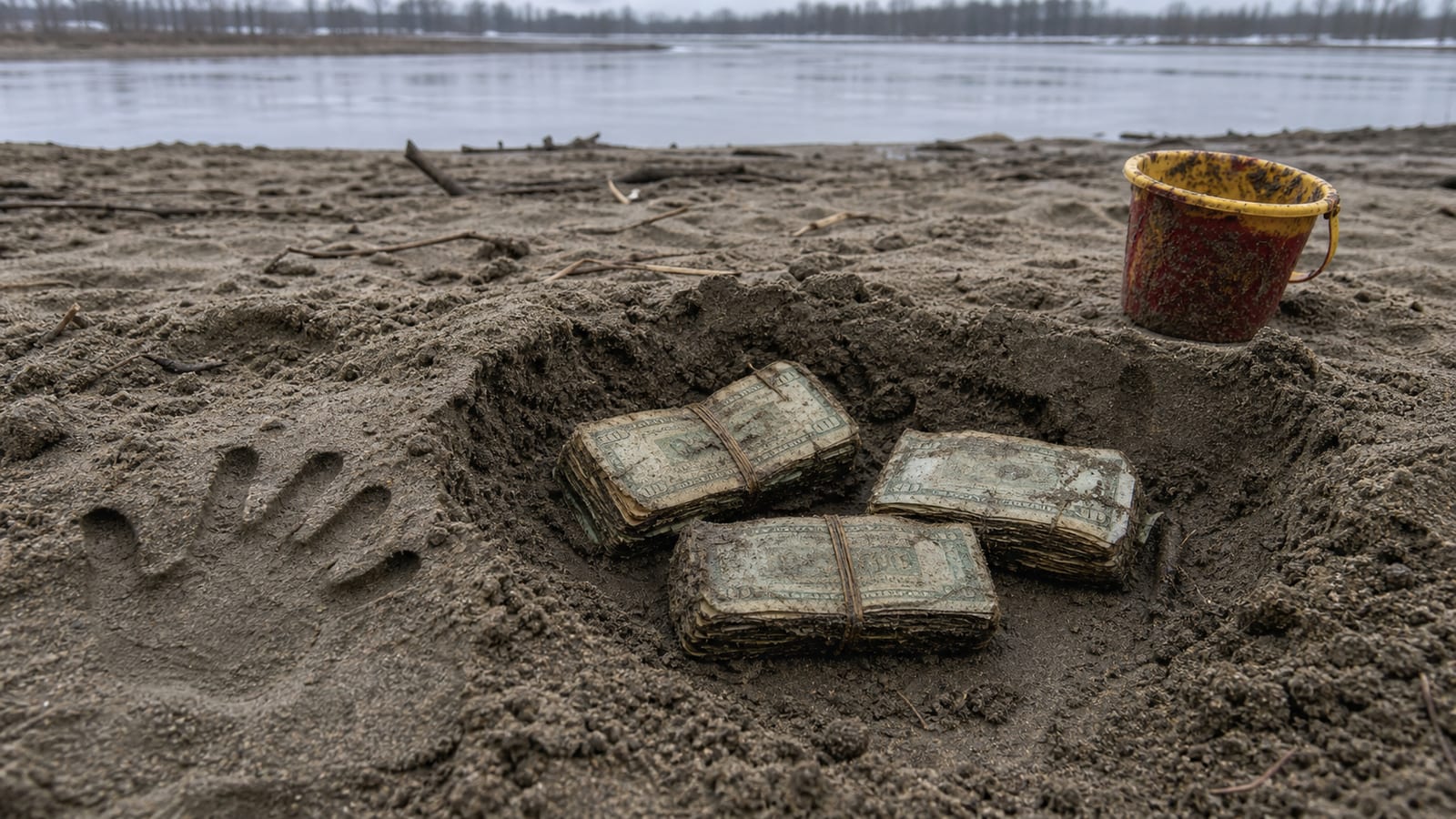
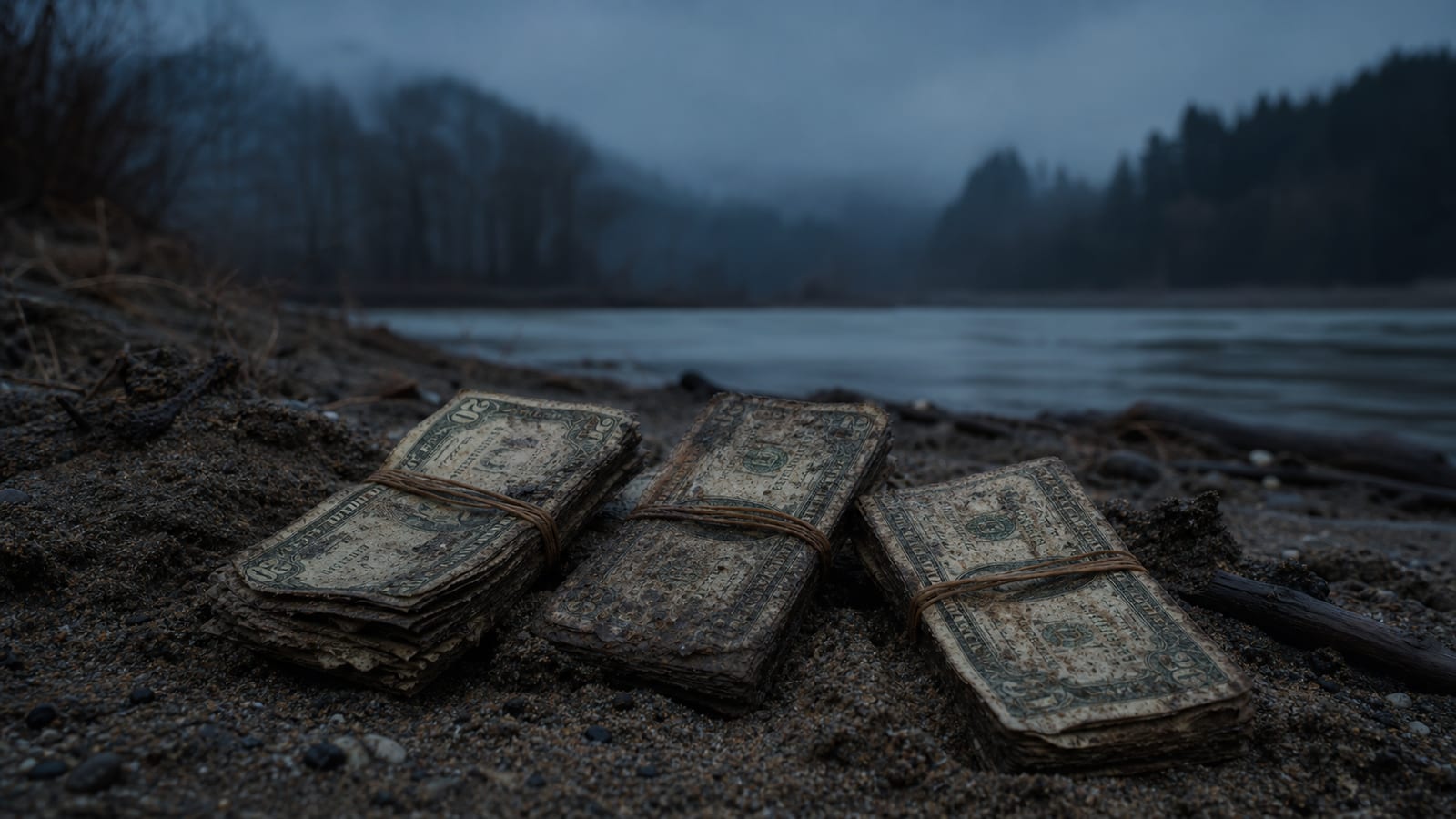
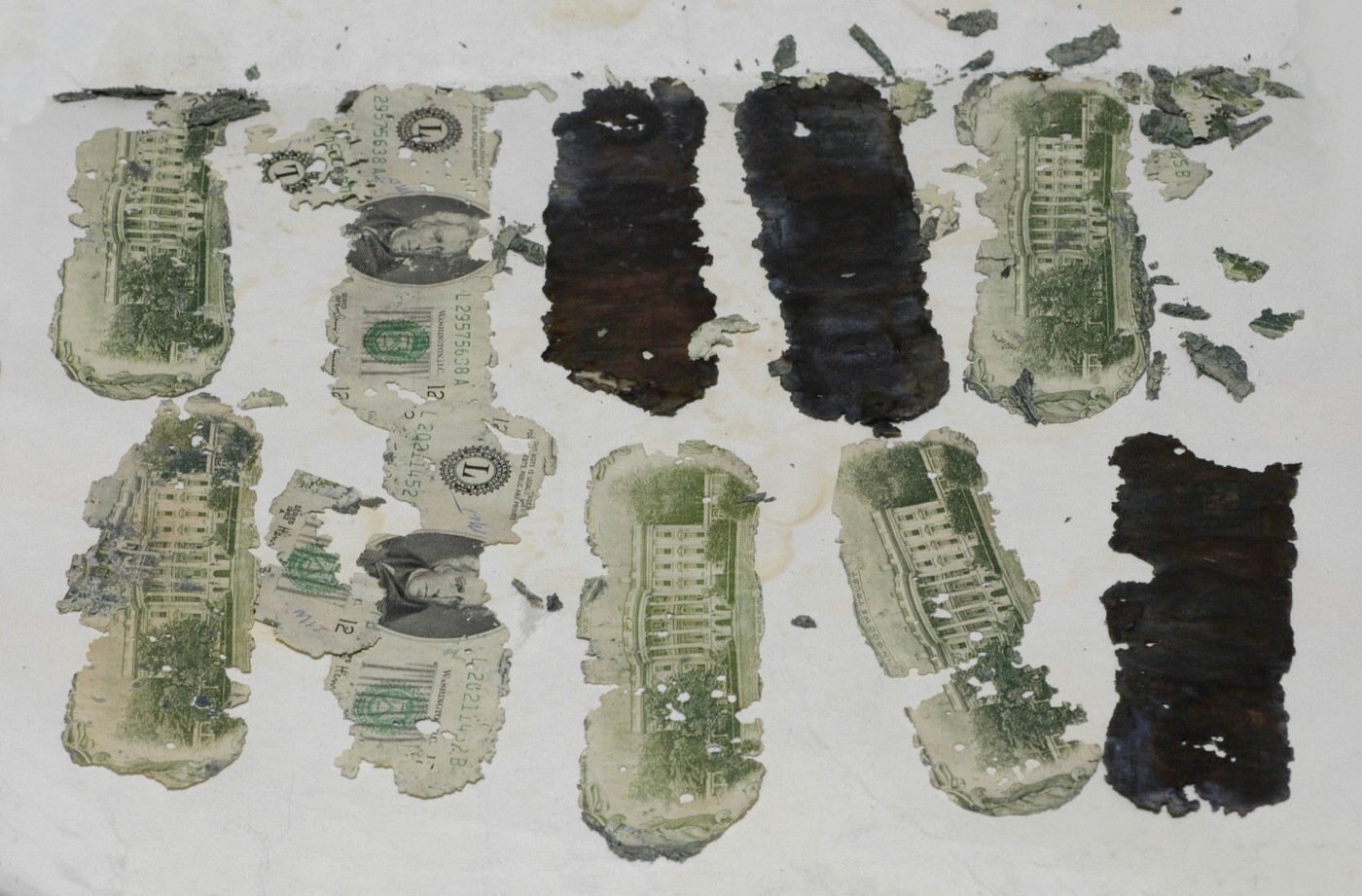
For nearly a decade, the landscape kept its secrets. The trail had gone cold by a Sunday afternoon in February nineteen eighty, when an eight year old boy named Brian Ingram was vacationing with his family along the banks of the Columbia River, at a sandy stretch known as Tena Bar, well outside the presumed drop zone. While clearing sand by hand, Brian unearthed three rotting bundles of twenty dollar bills. The cash was heavily degraded, brittle, and crumbling at the edges, but it amounted to five thousand eight hundred dollars. FBI technicians confirmed that the serial numbers matched the ransom.
The discovery sent a fresh shock through the investigation, but the physical state of the money raised difficult questions. One theory held that the bills had washed through the river system and eventually onto the sandy bank. Later researchers pointed to problems with that explanation, including the condition of the bundles and microscopic evidence from the bills and surrounding sand. Some argued that the money may have reached the sand long after the hijacking or under circumstances more complicated than a simple river journey. Others remained cautious, noting that Tena Bar had been reshaped by water, dredging, erosion, and time. The money proved the ransom had surfaced. It did not prove where Cooper landed, whether he survived, or who he was.
The Microscopic Informant
As the decades passed, the physical evidence suffered costly losses. The cigarette butts, which might have yielded a usable DNA profile, could no longer be accounted for. Other fragile traces from the cabin became less useful with time. The most enduring physical link to the hijacker became the black clip on tie.
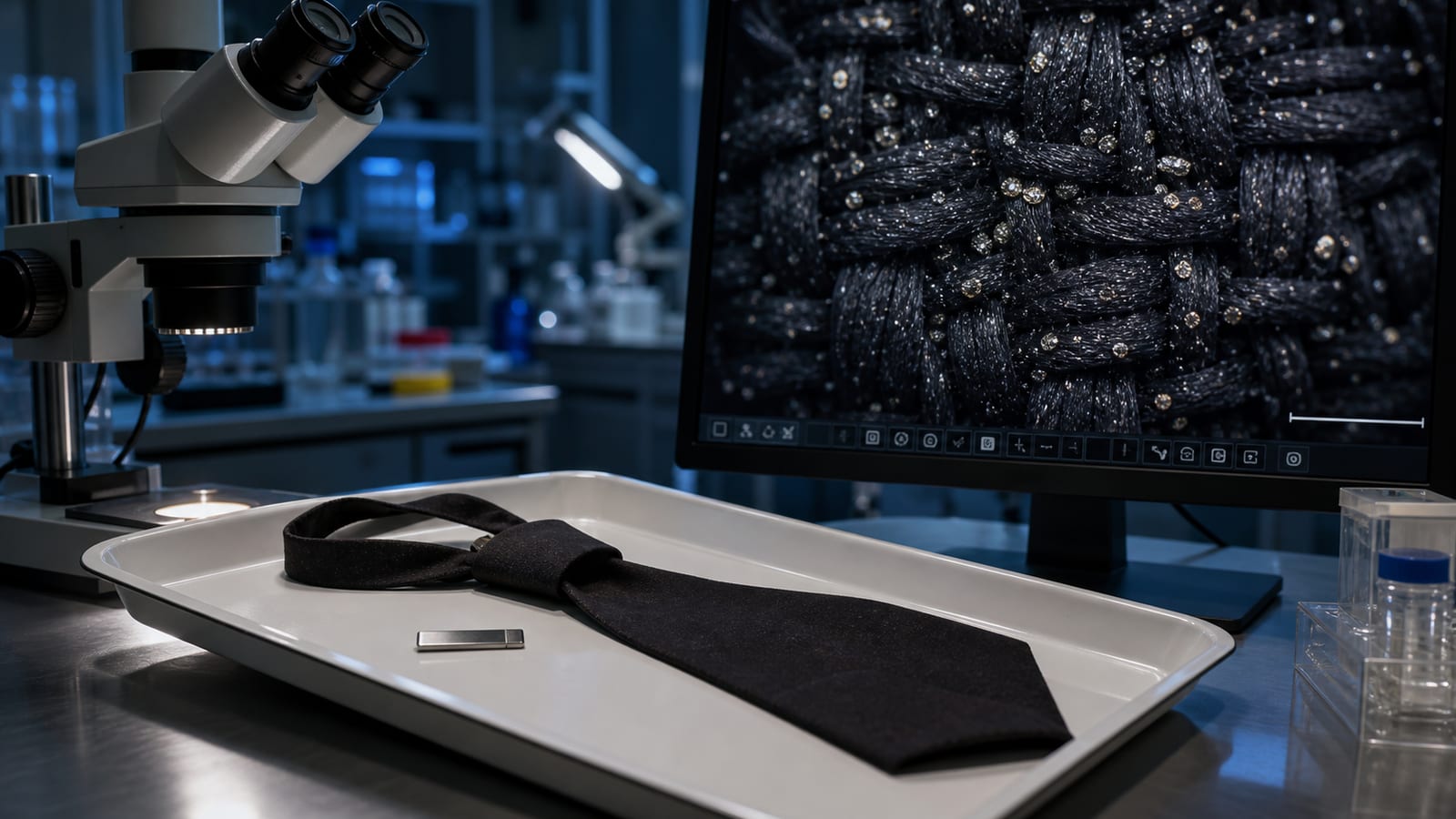
In two thousand nine, independent researchers were given access to examine physical evidence from the case, including the tie. Under scanning electron microscopy, the fabric revealed an unusual array of trace elements. Researchers cataloged tens of thousands of organic and metallic particles trapped in the weave. Among ordinary dust and debris, they reported rare titanium particles and other materials associated with specialized industrial environments.
The finding suggested a possible portrait of the wearer: someone who had moved through aerospace, chemical manufacturing, metallurgy, or another technical setting where such particles could settle onto a tie. It was a striking lead, but not a verdict. The tie was a clip on. Someone else could have worn it before the hijacking. The particles could narrow a world of possibility, but they could not name the man in the seat.
A Parade of Suspects
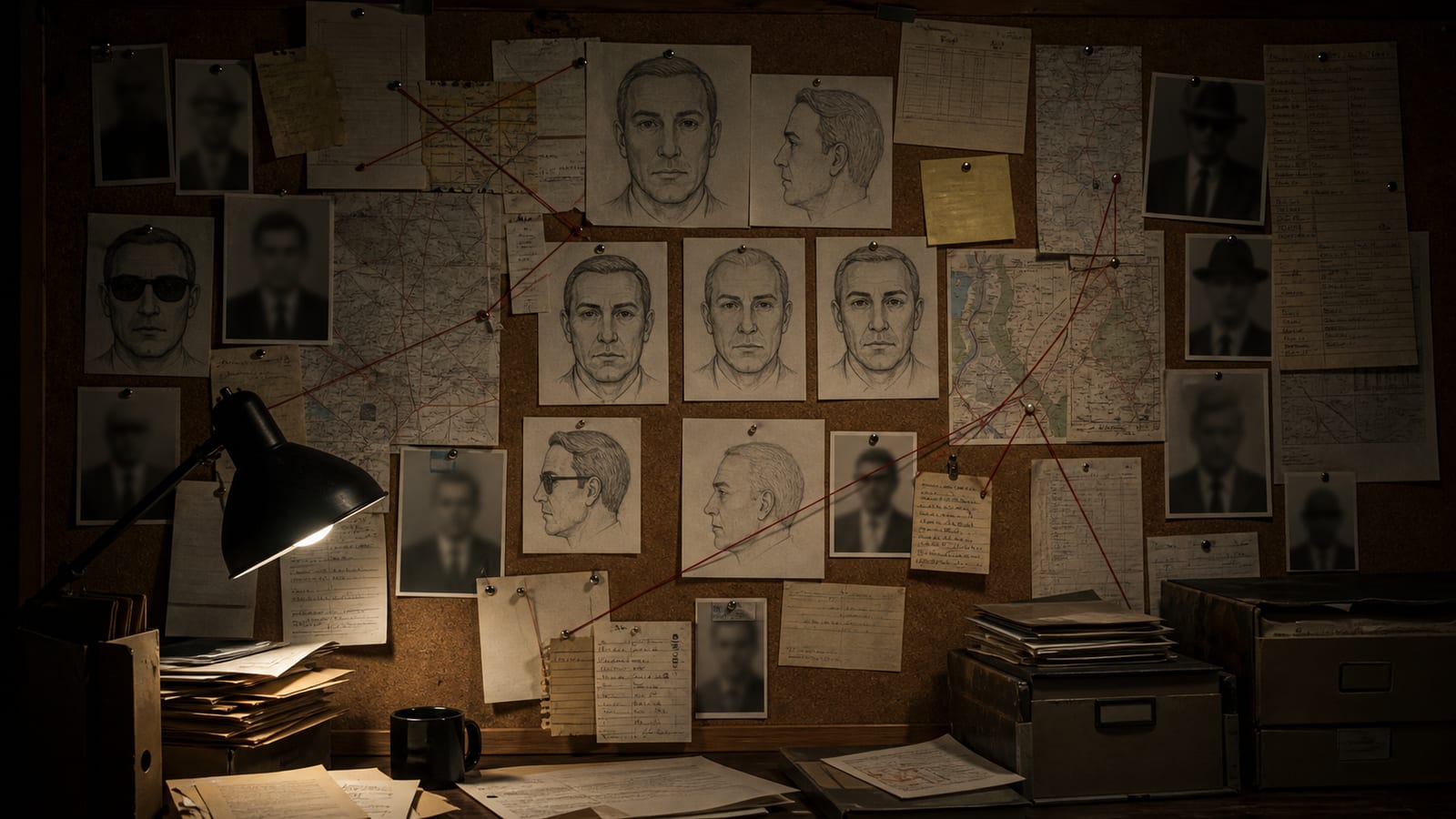
Across forty five years, the FBI investigated more than a thousand suspects, and every promising lead eventually buckled under contradictions. Richard Floyd McCoy executed a similar hijacking only months later, parachuting from a commercial jet with a large ransom of his own. The FBI later ruled him out, citing conflicts with the physical descriptions given by the flight attendants and other reasons.
Sheridan Peterson, a former smokejumper and technical editor for an aviation company, had the kind of background that attracted public attention, but reports about his whereabouts and the evidence around him left the theory unresolved rather than proven. Kenneth Christiansen, a former airline employee later put forward by relatives and authors, became another popular name in the Cooper orbit, though investigators and researchers disputed whether he matched the witness descriptions or the demands of the jump.
The composite sketches that emerged depicted an almost willfully average man, a face that could blend into any mid century crowd. The loss of biological evidence meant investigators could never definitively place a suspect in the rear cabin. The weight of the mystery fell instead on the surviving crew members, who spent decades fielding questions from amateur sleuths and reporters, their own trauma often crowded out by the public obsession with the man who had threatened them.

The Unresolved Depths
In July two thousand sixteen, citing the need to redirect resources to other priorities, the FBI suspended its active investigation into the hijacking. The evidence would be preserved, and the Bureau said specific physical evidence related to the parachutes or the money should still be brought forward. But the official manhunt had ended without a name.
The legacy of the crime remains fixed in the architecture of aviation. The Cooper Vane, a device designed to prevent rear airstairs from being lowered in flight, became a physical answer to the way Cooper escaped. The broader hijacking era also pushed air travel toward tighter screening and stricter assumptions about who and what could board a plane.
Yet his ultimate fate remains an open void. Did he fall to his death in the freezing darkness of the southwestern Washington wilderness, his body and the remaining money lost to the terrain? Or did he ride the descent down, walk away from the drop zone, and quietly resume an ordinary life, leaving a few decaying bundles of cash on a riverbank years later as a strange final footnote? The forest has kept its silence, and the sky offers no confessions. What endures is a hijacking on a rainy night in nineteen seventy one, a man without a verified name, and the slow, patient work of a science that may one day put a face to the rear cabin of Flight 305.
Archival Case Gallery
Sources & Case Notes
Last updated: May 8, 2026.
Primary sources / case notes: FBI D.B. Cooper case overview, FBI 2016 investigative update, Citizen Sleuths physical-evidence research used with caveats, and scientific reporting on the Tena Bar money timeline.
Source links:
- FBI D.B. Cooper case history
- Citizen Sleuths D.B. Cooper evidence archive
- Citizen Sleuths case overview
Correction policy: Send corrections, source notes, or image-rights concerns through Contact & Media Inquiries.
Image credits: Archival gallery uses public FBI/Wikimedia case material, including composite sketch, plane ticket, and recovered ransom-money imagery. Body images are period documentary recreations created for Anonymous369 Media.
Content warning: Discusses aircraft hijacking, extortion, and an unresolved disappearance; non-graphic.
Editorial standards: Read how Anonymous369 Media researches, corrects, and credits factual cases on our Editorial Standards page.
Continue the Case File
These investigations reward careful reading. Step back if you missed the previous file, or keep going to follow the next case in the archive.
Previous file: The RMR-1029 Flask Traced the 2001 Anthrax Attacks to Fort Detrick Next file: The 41-Minute Window: How Blood Spatter Rebuilt Nancy Guthrie's Disappearance