
The Montego in the Snow: How the Yuba County Five Vanished in Plumas
In 1978, five friends left a Chico basketball game and never came home. Their working Mercury Montego was found in the snow, and the discoveries deep in Plumas National Forest still resist every simple answer.


The car should have been the answer.
On Tuesday, February 28, 1978, four days after five young men failed to return from a college basketball game in Chico, investigators found Jack Madruga's turquoise and white 1969 Mercury Montego near the snowline in the Plumas National Forest. A forestry worker had reportedly noticed the vehicle earlier, but by the time law enforcement reached it, the car was already carrying the first shape of the mystery.
It sat on a rutted mountain road about seventy miles from Chico, far from the flat, familiar route back to Yuba City and Marysville. The tires had spun in snow, but the Mercury was not truly trapped. The gas tank was still a quarter full. Folded maps lay in the glove compartment. The keys were gone, but when police hot-wired the ignition, the engine started immediately. Food wrappers from Behr's Market littered the seats. The underside of the low-slung car showed no clear signs of a violent climb over the rough road.
The facts were plain.
The meaning was not.
Five men had entered the Sierra night in light jackets and street shoes. The car that could have kept them warm had been left behind. The road downhill led back toward help. The road ahead led deeper into snow, timber, darkness, and an empty Forest Service trailer nearly twenty miles away.
For almost half a century, the Yuba County Five case has lived inside that contradiction: a working car in the snow, a wrong turn that may not have been a wrong turn, a survival shelter full of unused supplies, four dead men, one still missing, and families left to ask whether the mountain took them or whether someone else sent them there.
The Gateway Gators
Before the case file gave them a collective name, they were five friends who loved basketball.
Theodore "Ted" Weiher was thirty-two, gentle, routine-bound, and remembered for the kind of open friendliness that could leave him hurt if strangers did not wave back. Jackie Huett, twenty-four, was younger, quieter, and deeply attached to Weiher, who often helped him with tasks like making phone calls. William "Bill" Sterling, twenty-nine, was religious and bookish, known for spending time in the library and for his particular interest in helping people in psychiatric hospitals. Jack Madruga, thirty, was a high school graduate, Army veteran, and the owner of the Mercury Montego. His family said he was protective of the car and unlikely to risk damaging it on a bad road.
Gary Dale Mathias, twenty-five, was different from the others. Public records and missing-person summaries identify him as a man diagnosed with schizophrenia, not as a man with the same intellectual disabilities attributed to several of his friends. Older reporting includes references to a difficult period after his Army service in West Germany, drug use, hospitalizations, and assault charges. But the same 1978 Washington Post account reported that by the time he disappeared, Mathias had been working steadily for his stepfather's gardening business and taking his medication consistently for at least two years. His family described him as attached to home. Later advocates have also pushed back hard against public narratives that turn his illness into an easy explanation for the deaths of his friends.
That caution matters.
The record supports that Mathias lived with a serious psychiatric condition. It does not prove that he caused the disappearance.
The five men had formed their social world around sports. They met through a Yuba City vocational rehabilitation program and played on a team known as the Gateway Gators. On Saturday, February 25, they were scheduled to play in a tournament that mattered intensely to them. The prize, according to contemporary reporting, included a week in Los Angeles if their team won. The men had laid out their uniforms. Mathias had reminded his family not to let him oversleep. Weiher had asked his mother to wash his sneakers.
Their lives were not aimless.
They had plans for morning.
That is why the night before still feels so wrong.
The Last Ordinary Stop
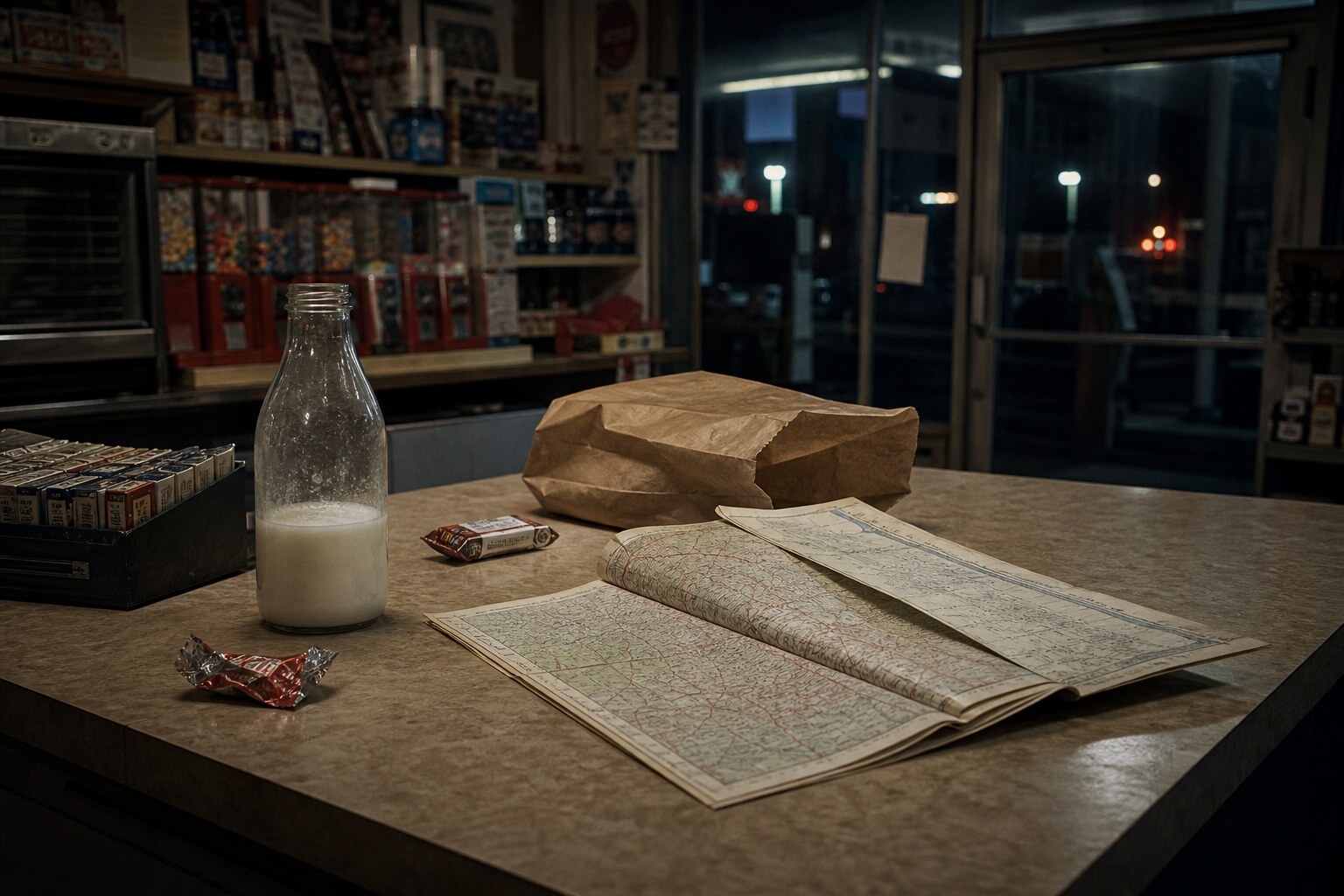
On Friday, February 24, 1978, Madruga drove the group north to California State University, Chico, to watch UC Davis play Chico State. The game ended around 10 p.m. UC Davis had won. The five men left in the Mercury and stopped three blocks away at Behr's Market, where the clerk later remembered them coming in just before closing.
They bought snack food and drinks: pies, candy bars, Pepsis, and milk. It is one of the last ordinary images in the case, almost painfully small. A convenience-store counter. Fluorescent light. Young men in good spirits after a game. A clerk wanting to close.
Then they returned to the car and drove away.
The logical route home ran south and west through the valley. Instead, the Mercury ended up east, beyond Oroville, climbing toward the Oroville-Quincy Road and the Plumas winter. The public record does not establish why.
That uncertainty should not be filled too easily.
It may have been a wrong turn compounded by darkness, fatigue, fog, poor signage, and the kind of stubborn forward motion drivers sometimes mistake for problem-solving. It may have been a deliberate detour. It may have involved another vehicle, another person, or a threat no surviving witness could explain. Families have long doubted that Madruga would willingly take his prized car onto a rough, icy mountain road. Contemporary investigators also struggled with the car's condition: it had reached a difficult road without the damage they expected.
The road did not look like a place five men should have chosen that night.
But the car was there.
So was the question.
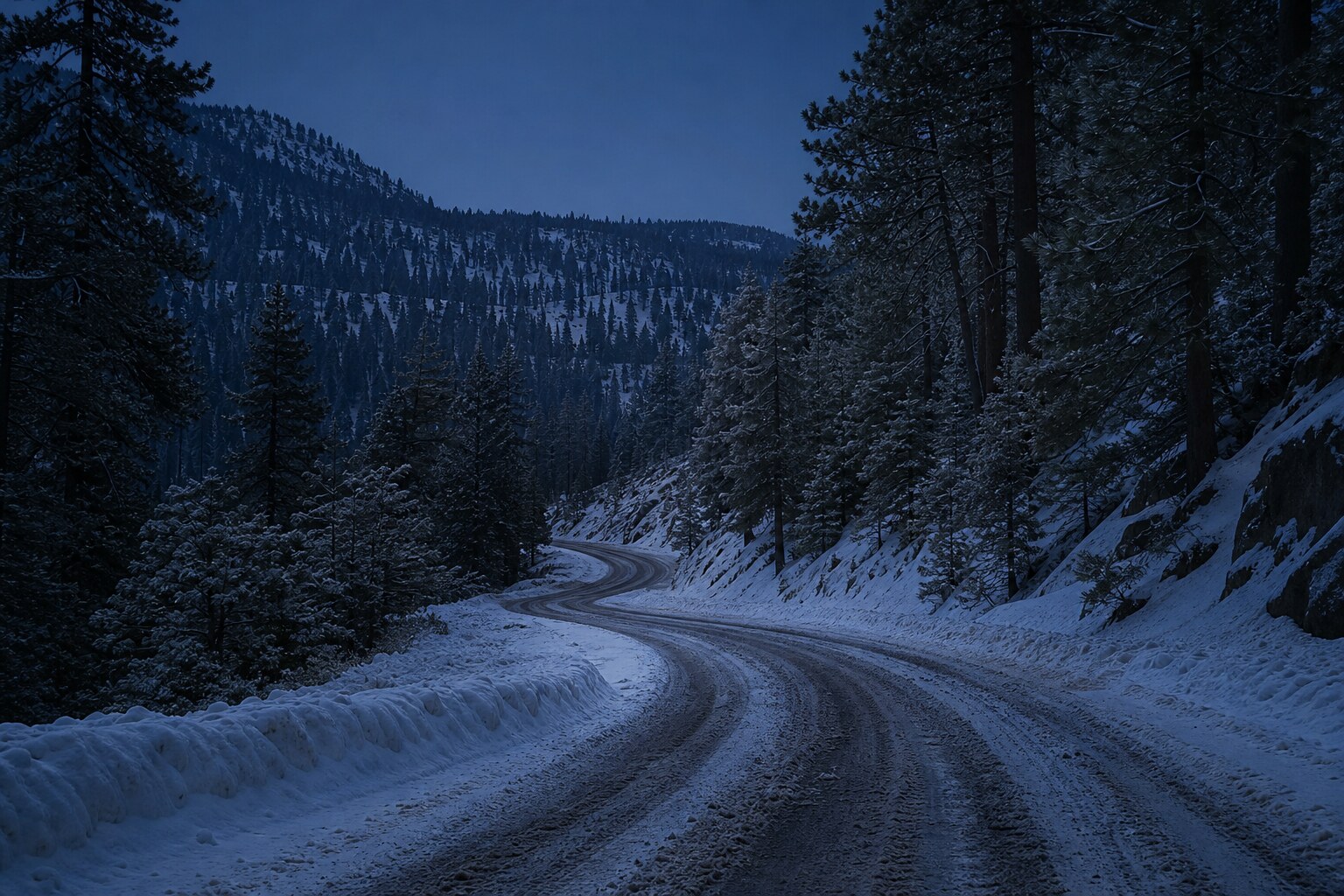
The Man Who Saw Lights
One witness placed a second pocket of confusion on the mountain.
His name appears in sources as Joseph Shones and, in later retellings, Joseph Schons. He was fifty-five and had driven his Volkswagen Bug up the same road earlier that evening, reportedly to check the snowline for a possible family trip. His car became stuck near the place where the Mercury would later be found. While trying to free it, he suffered what doctors later confirmed was a mild heart attack.
Shones spent hours in or near his running vehicle, in pain, cold, and fear.
He later told investigators that sometime in the night he saw headlights, heard voices or whistling, and saw figures moving in the glare. In the 1978 Washington Post account, he described a group of men and a woman with a baby. Later summaries describe his account more generally as headlights, flashlight beams, people, and possibly a pickup truck. He said he called out for help and that the lights or voices stopped.
The account is important.
It is also unstable.
ABC News noted in 2024 that media reports from the time described changes in Shones's story, and quoted his own admission to the Los Angeles Times that he had been half-conscious, in deep pain, and unsure whether he had seen or imagined a second vehicle.
That does not make him useless as a witness.
It makes him human.
His memory may preserve the last external trace of the Yuba County Five. Or it may preserve the shape of a medical emergency in the dark. The article cannot turn his account into proof of a chase, a woman, a baby, a pickup, or an attack. It can only leave it where it belongs: on the road, near the snowline, flickering.
The Walk Away From Warmth
The most unforgiving question in the case is not how the Mercury reached the mountain.
It is why anyone left it.
If the men abandoned the car late that night, they did not walk back down toward Oroville or the Mountain House lodge. Instead, they moved deeper into the forest. Investigators later learned that a Forest Service Snowcat had gone up the road on February 23, leaving packed tracks that the men may have followed. It is possible they believed the tracks led somewhere safe. It is possible they were frightened. It is possible they were already disoriented by cold, darkness, or panic.
None of those possibilities fully explains what happened.
The men were dressed for a valley evening, not a mountain survival march. A storm soon dropped fresh snow over the area. Searchers found nothing until the spring thaw began revealing what winter had covered.
On June 6, 1978, after Ted Weiher's body had already been discovered in the trailer, searchers found the remains of Jack Madruga and Bill Sterling about 11.4 miles from the abandoned car. They were on opposite sides of the road. The condition of the remains limited certainty, but the public record has generally treated their deaths as exposure-related.
Later, Jackie Huett's remains were found closer to the trailer. His father had insisted on joining the search. That detail carries a kind of pain no mystery label can contain: a parent walking into the forest looking for his son and finding part of the answer no parent should have to carry.
Gary Mathias was not found.
The mountain kept him.
The Trailer Full Of Rescue
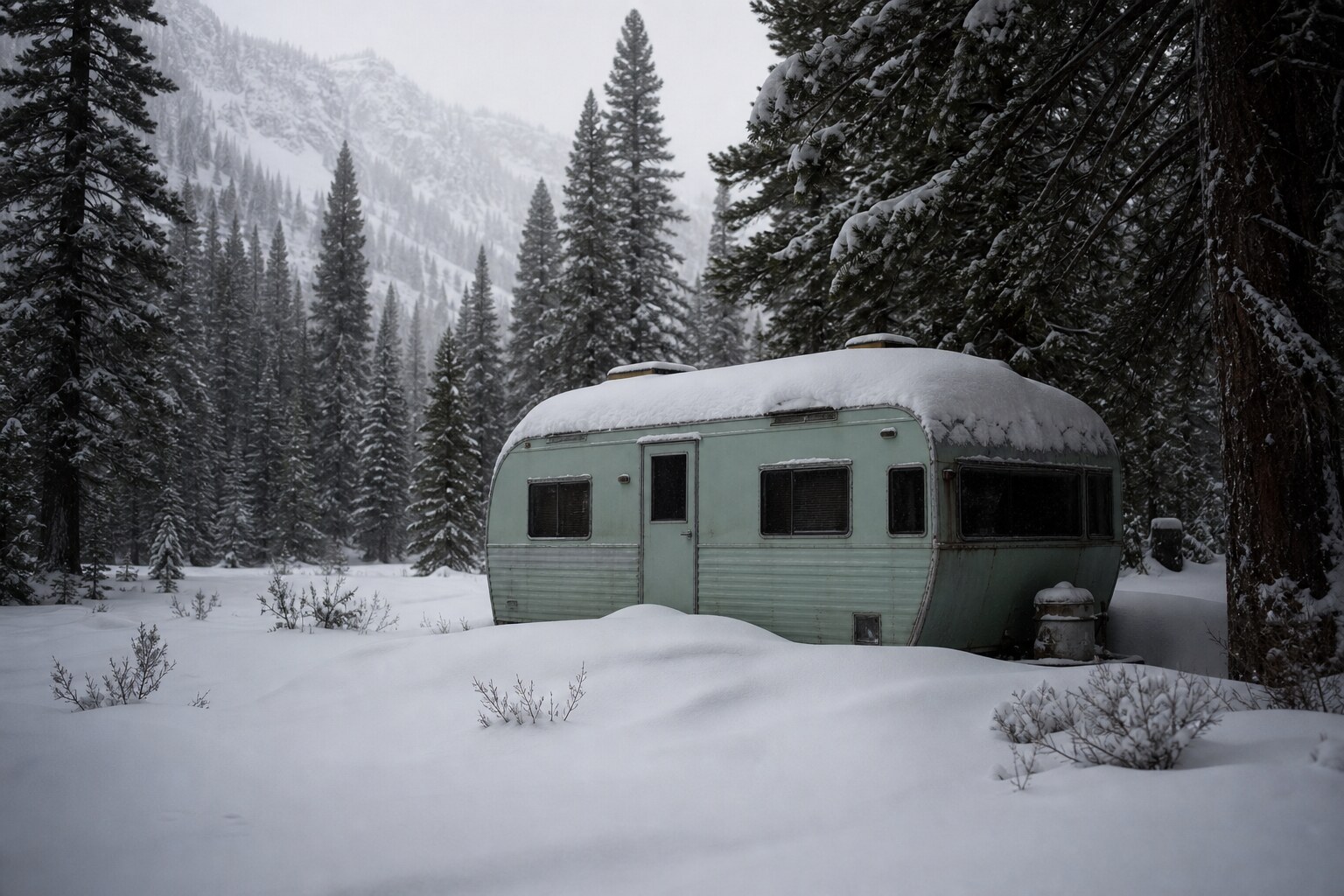
The most devastating discovery came on June 4.
Motorcyclists reached a Forest Service trailer near the Daniel Zink campground, roughly nineteen and a half miles from the Mercury. A window had been broken. Inside, they found Ted Weiher.
He was on a bed, covered with multiple sheets or blankets. Some accounts describe eight sheets pulled over him and tucked around his head. The arrangement suggested that someone else had been with him, either caring for him, covering him after death, or trying to impose dignity on a place that had become a slow-motion disaster.
Weiher had been clean-shaven when he left home. By June, he had grown a full beard. Contemporary reports said he had lost eighty to one hundred pounds. His feet were badly damaged by frostbite and infection. The Washington Post reported estimates suggesting he survived for weeks and possibly as long as eight to thirteen weeks; other later summaries are more cautious, but all point toward a terrible duration.
He had not died immediately in the wilderness.
He had endured.
That is where the case becomes almost unbearable. The trailer was not empty. Matches were present. Furniture and paperbacks could have been burned. A propane tank outside could have provided heat if used. Some C-ration cans from a storage shed had been opened, and at least one was reportedly opened with an Army P-38 can opener, the kind Madruga or Mathias might have known from military service. But other food remained untouched, including a locker with enough supplies to keep the men alive for an extended period.
The trailer was not rescue in the way a modern reader imagines rescue.
It was rescue with a locked cabinet, an unused tank, no easy medical care, no phone, no road access, no certainty that anyone was coming, and at least one badly injured man whose judgment, mobility, and survival capacity were collapsing. Still, the unused supplies remain one of the hardest parts of the case to look at.

The forest offered them life.
Somehow, they could not fully take it.
Gary Mathias And The Wrong Story
Inside the trailer, investigators found Gary Mathias's tennis shoes.
Weiher's own shoes were missing. Because Weiher had larger feet, investigators speculated that Mathias may have removed his own shoes after his feet swelled from frostbite and taken Weiher's shoes before leaving the trailer. The Washington Post called that pure conjecture. It remains exactly that.
But it is a different kind of conjecture than the one that has followed Mathias for decades.
Because Mathias was never found, and because he lived with schizophrenia, he became the easiest place for public suspicion to land. Some theories imagined him as the destabilizing force that led his friends into the mountain. Some media retellings leaned too heavily on his diagnosis, his military discharge, or older arrest history, as if illness could automatically explain a route, a car, a nineteen-mile walk, and a death scene inside a trailer.
The available record does not support that certainty.
He had gone to the game without any reported incident. He stopped at Behr's Market without any reported incident. His family and doctor described him as stable in the period before the disappearance. A&E's 2025 summary cites author Tony Wright's view that there was no evidence linking Mathias to ill will toward the group, and that blaming his schizophrenia functions more like a shortcut than an explanation.
There is another possibility that deserves at least as much space.
Mathias may have survived in the trailer. He may have helped open food. He may have covered Weiher. He may have put on the larger shoes and walked back into the snow looking for help.
That version cannot be proved either.
But it treats him as what the missing-person record still leaves open: a missing man, likely dead, whose final actions remain unknown.
The Letter And The Allegation
For years, the public explanation leaned toward accident: a wrong turn, snow, confusion, exposure, and a chain of decisions that became fatal.
Then the official language shifted.
ABC News reported in 2024 that a Yuba County Sheriff's Department letter dated in mid-October 2020, made public through a records request in October 2023, stated that Gary Mathias was believed to be "a victim of foul play" and that the case remained open as a missing-person/homicide case. Public-record advocates and case researchers have also circulated references to a November 15, 2019 memorandum with similar language, including a reported instruction that the information not be forwarded to Mathias's family. This approval draft does not treat the disputed date or the family-notification language as independently established from the original file. It treats the broader point more cautiously: at least one later Yuba County Sheriff's Department communication, as reported by ABC, placed Mathias within a homicide/foul-play frame.
That matters.
It does not solve the case. It does not prove who caused the deaths. It does not prove the other four men were murdered. But it does break the cleanest version of the accident narrative. If law enforcement privately or publicly regarded Mathias as a foul-play victim, then the story cannot be reduced to five vulnerable men simply wandering until nature finished the work.
The suspect material is even more delicate.
Recent family and research discussions have focused on Gary Dale Whiteley, Mathias's former brother-in-law. A&E reported in 2025 that Dallas Weiher suspects Mathias's brother-in-law and that a related theory entered the Yuba County Sheriff's Department case file in 1994 on a hearsay basis, but that there is no strong proof supporting the claim. Public petitions and online case-file researchers identify Whiteley by name and cite an alleged 1994 report in which a civilian relayed statements attributed to him.
Those allegations are serious.
They are also not a conviction, not a charge, and not proof.
No public record reviewed for this approval draft establishes that Whiteley killed, abducted, threatened, or forced the Yuba County Five into Plumas National Forest. The responsible framing is narrow: he has been named in family/research allegations and in public discussion of case-file material, but the claim remains unproven.
The case does not need a falsely tidy villain.
It needs the truth.
What The Mountain Kept
The tragedy of the Yuba County Five is not simply that five men vanished.
It is that every answer opens into another room.
If they got lost, why was the car left when it worked? If they were frightened, what frightened them? If they followed Snowcat tracks, why did they keep going so far? If they reached shelter, why did so much food, heat, and burnable material remain unused? If Mathias left the trailer for help, why did no trace of him surface? If foul play touched the case, why has no public evidence carried it into a courtroom?
The families have lived inside those rooms for almost fifty years.
Most of the parents who waited for the men to come home are gone now. Their children, siblings, nieces, nephews, and advocates have inherited the long labor of not knowing. They have also inherited the burden of correcting narratives that flatten the men into disability, diagnosis, or mystery bait.
Ted Weiher was more than the man in the trailer.
Jackie Huett was more than the bones found by his father.
Bill Sterling was more than a body beside a mountain road.
Jack Madruga was more than the owner of the car.
Gary Mathias was more than the missing one.
They were five men with routines, families, friendships, and a basketball game waiting in the morning. They were vulnerable, yes. But vulnerability is not the same as emptiness. It does not make their choices meaningless, their fear unknowable, or their deaths easier to explain.
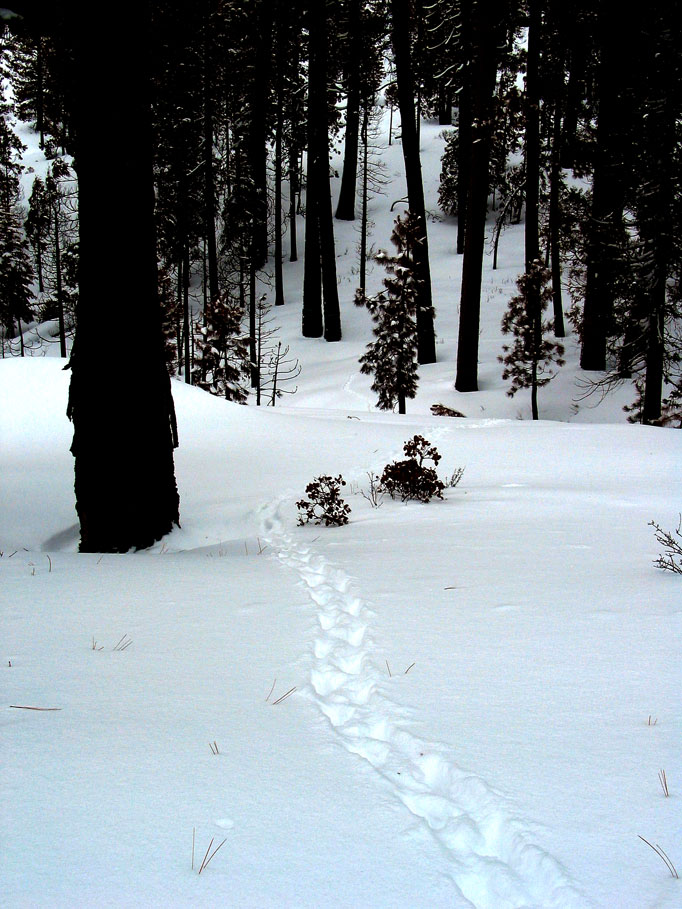
The Plumas National Forest still holds the last answer under layers of weather, time, and institutional uncertainty. What remains visible is the shape of absence: a working Mercury at the snowline, a line of footprints or imagined footprints into the trees, a trailer full of supplies that did not save them, and one man whose name is still listed as missing.
The mountain gave back four.
It kept Gary Mathias.
And it kept the reason they were there.
Archival Case Gallery
Sources & Case Notes
Last updated: May 19, 2026.
Primary sources and case notes: This article was built from Cynthia Gorney's 1978 Washington Post feature, "5 'Boys' Who Never Come Back", which remains the core contemporary narrative on the car, Behr's Market stop, Joseph Shones account, trailer, supplies, and early investigative uncertainty; ABC News Australia's 2024 overview, "Five men disappear on a snowy February night", used for later family context, case status, and reporting on a Yuba County Sheriff's Department letter classifying Mathias as believed to be a foul-play victim; A&E's 2025 summary, "What Happened to the Yuba County Five?", used as a current secondary check on family views, author Tony Wright's analysis, and suspect-theory caution; and The Charley Project's Gary Dale Mathias case file, used to verify current missing-person status, physical description, NamUs reference, and summary case details. Public petitions and online records-discussion posts concerning the alleged 2019 memo and Gary Dale Whiteley were treated as unverified public-record claims unless independently supported by the sources above. No person has been charged or convicted in the disappearance or deaths of the Yuba County Five.
Correction policy: If you have source corrections, family-approved context, or image-rights concerns, contact Anonymous369 Media through Contact & Media Inquiries.
Image credits: Feature and section visuals are Anonymous369 Media documentary recreations based on the documented Mercury Montego, Plumas winter road, Behr's Market stop, Forest Service trailer, and survival-supply context. The Plumas National Forest winter-location image is by the USDA Forest Service / Pacific Southwest Region via Wikimedia Commons, licensed under CC BY 2.0 Generic, and used as geographic context. Family photographs, missing-person posters, Yuba County Sheriff's Department documents, newspaper scans, case-file images, and photographs of the Mercury Montego or Forest Service trailer were reviewed but not reproduced because public reuse rights were not clear enough for this production pass. Archival Case Gallery uses USDA Forest Service Plumas snow-location context from Wikimedia Commons, CC BY 2.0.
Content warning: This article contains restrained discussion of missing persons, death by exposure, starvation, decomposition, disability, mental illness, and unproven foul-play allegations.