
The One-Pound Note: How the Beaumont Children Vanished at Glenelg
On Australia Day 1966, three siblings left for Glenelg Beach and never came home. A tall man, a one-pound note, and decades of failed searches turned the Beaumont children into Australia's most haunting missing-child case.


The beach was close enough to feel harmless.
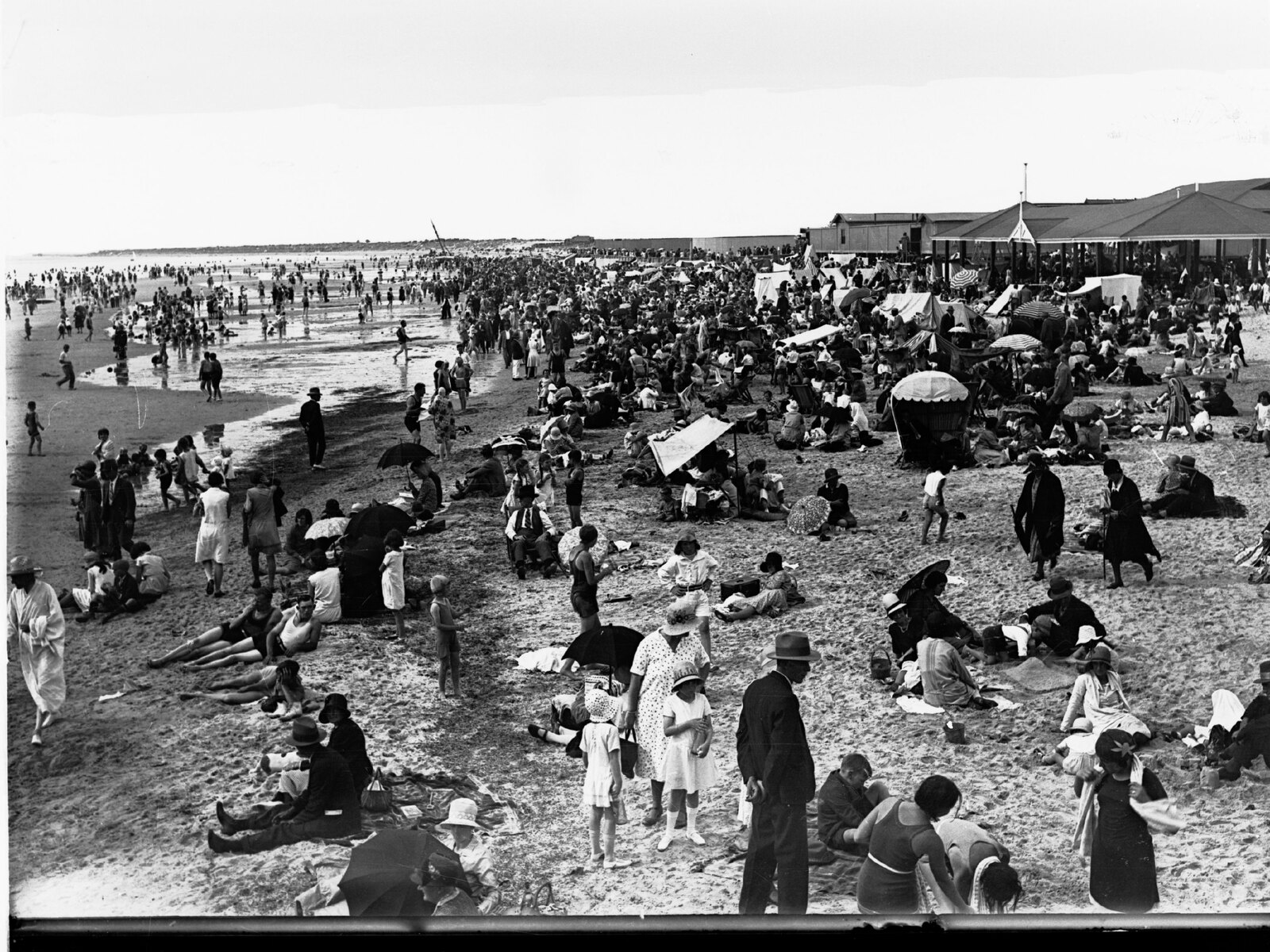
That is the first thing the Beaumont case still asks the modern world to understand. Glenelg Beach was not a hidden place at the edge of a map. It was a familiar Adelaide shoreline, reachable by bus, busy in summer, ordinary in the way public places can feel ordinary only before something happens inside them.
On Wednesday, January 26, 1966, Jane, Arnna, and Grant Beaumont left their home on Harding Street in Somerton Park and headed for Glenelg. Jane was nine, the responsible oldest child. Arnna was seven. Grant was four. It was Australia Day, the height of the school-holiday season, and the beach offered the plain pleasure of water, sand, lunch money, and the small authority of being trusted.
Their mother, Nancy Beaumont, expected them home by early afternoon.
They never came back.
The disappearance of the Beaumont children is often described as the moment Australia lost its innocence. Like most national myths, that phrase is both emotionally true and historically incomplete. It names the shock felt by many white, middle-class families who suddenly saw danger inside the sunny routines they had trusted. It does not erase the fact that Aboriginal and Torres Strait Islander families had long known a different kind of state-enabled child removal and fear. But within the world that sent three children to the beach alone that morning, the Beaumont disappearance landed like a door closing.
Sixty years later, the door has never reopened.
No remains have been found. No one has been charged. The South Australia Police file remains open, and the reward remains listed at up to one million Australian dollars for information leading to a conviction and/or recovery of the children's remains. What survives in the public record is a sequence of images that still refuse to settle: three children on a bus, a tall man near the beach, a bakery purchase made with money their mother did not give them, and a coastline that gave nothing back.
The Children On The Bus
The Beaumont children had made the trip before.
That is why the morning did not feel like a transgression. In 1966, children moved through Australian suburbs with a freedom that now feels almost impossible to imagine. They walked to shops. They took public transport. They played at beaches and parks without adults standing over them. The risk was not absent. It was simply not imagined in the same way.
Jane, Arnna, and Grant left home for Glenelg in the morning. Public accounts vary on small details of clothing and timing, as old missing-person cases often do, but the broader movement is stable. They boarded a bus. They went toward the beach. They were seen in the Glenelg area by people who later understood that an ordinary glimpse had become evidence.
A postman reportedly saw the children laughing and walking together near Jetty Road. Other witnesses placed them near Colley Reserve and Wenzel's cake shop on Moseley Street. The official Crime Stoppers South Australia summary identifies those locations as confirmed sightings.
There is a particular cruelty in confirmed sightings.
They prove the children were real and alive at a specific moment. They also freeze the case in a terrible nearness. The children were not lost in the abstract. They were moving through a familiar public map, close to shops, close to buses, close to adults, close to rescue in every ordinary sense.
Then the timeline bent.
The Tall Man
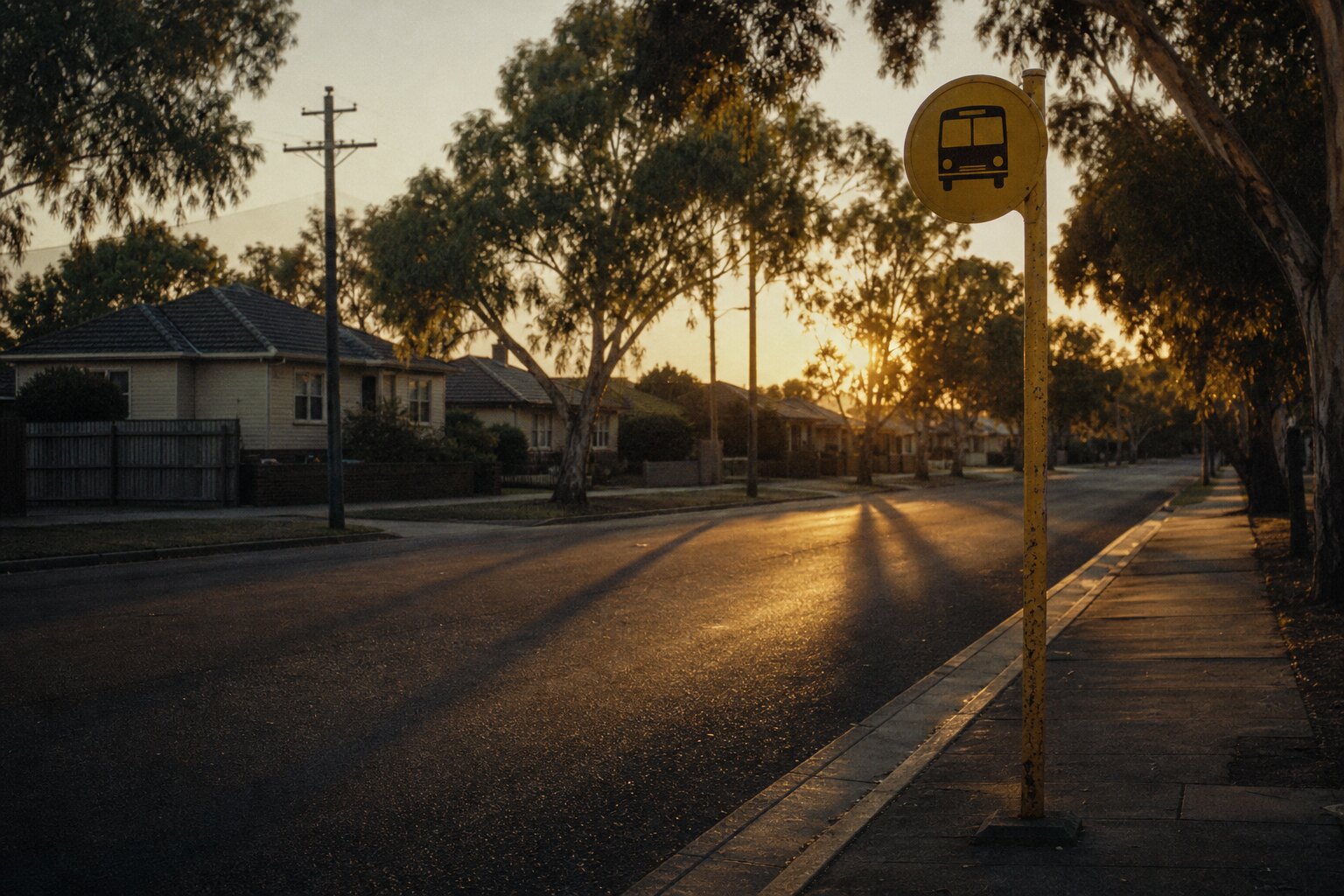
Several witnesses later told police they saw the Beaumont children with an adult male near Glenelg.
ABC News, summarizing the police case on the fiftieth anniversary, described the man as tall, tanned, thin-faced, with short blond hair. Other accounts have described him as physically fit or neat in appearance. What matters most is not the exact adjective. It is the reported behavior.
The children appeared comfortable with him.
That detail has haunted the case longer than any sketch. Jane was the oldest. She was trusted to supervise her younger siblings. For all three children to remain near an unfamiliar adult without obvious distress suggests one of three broad possibilities: they already knew him, he had approached them in a way that felt safe, or witnesses misunderstood the nature of the interaction. The available record cannot prove which is true.
But the public clues point toward trust being manufactured.
Witnesses reported that the man interacted with the children as though he had authority over them. In some retellings, he asked nearby adults whether anyone had interfered with belongings. He was seen helping or standing close enough to the children in a way that suggested an unsettling familiarity. Those details should be handled with care because they come from eyewitness memory, not from recovered physical evidence. Still, they form the central behavioral question of the case.
How did one adult gain enough control over three children in public daylight that no alarm was raised?
The answer may not have required force at the beginning.
It may have required calm.
The One-Pound Note
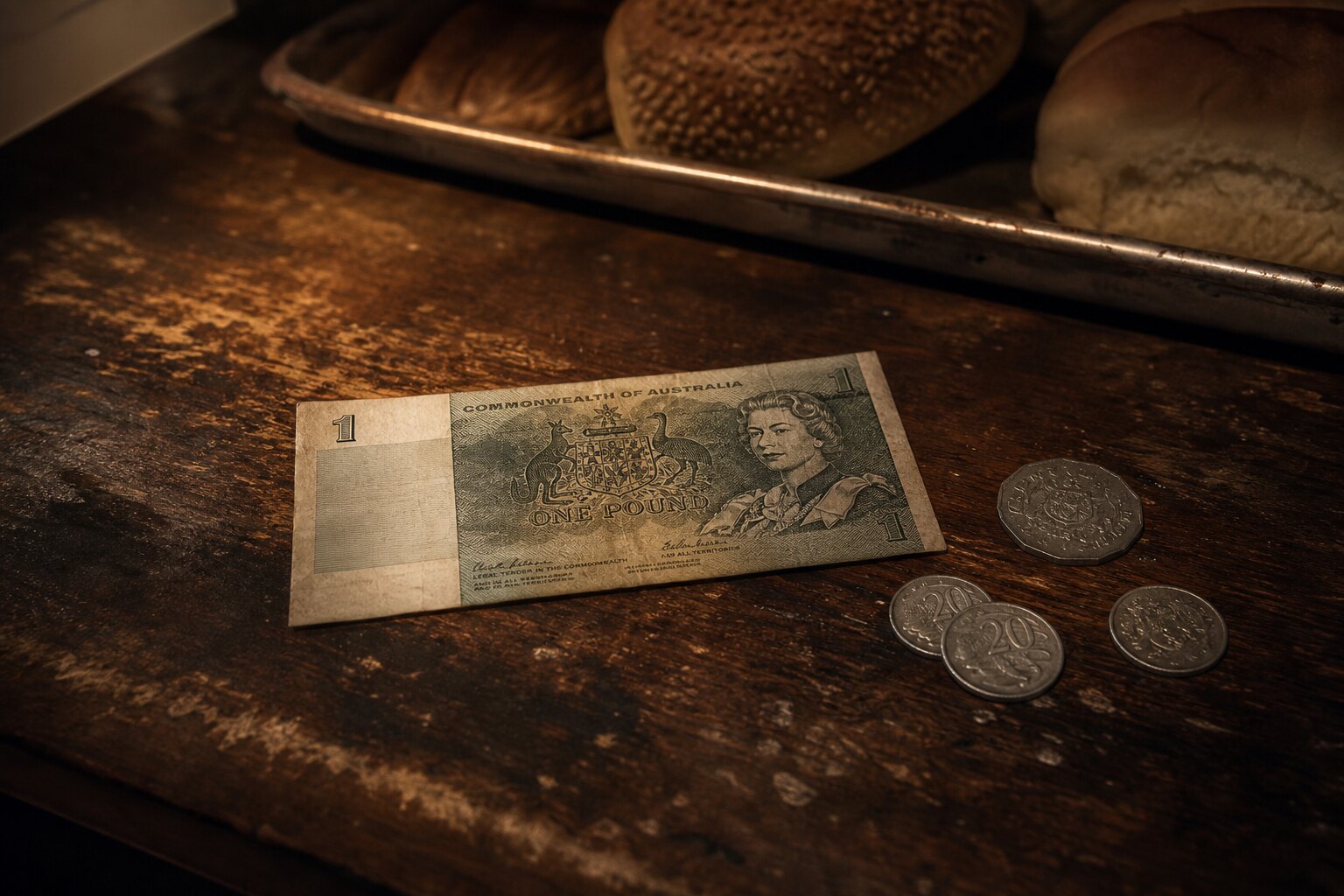
The strongest public clue came from a bakery counter.
Jane was later reported to have gone into Wenzel's cake shop on Moseley Street. The shopkeeper knew the children and noticed something strange. Jane bought pasties and a meat pie with a one-pound note. Nancy Beaumont later said the children had left home with only six shillings and sixpence.
In a case without a body, a weapon, or a recovered purse, the one-pound note becomes enormous.
It is not proof by itself. A pound note does not identify a suspect. It cannot say whether the children were frightened, persuaded, bribed, or still unaware that they were in danger. But it does suggest a third-party presence in the children's final known movements. Police believed the man associated with the children may have given them the money.
That possibility changes the emotional mechanics of the case.
If the man gave Jane the note, he was not merely standing near the children. He was participating in their day. He was shaping their choices. He was giving them something their mother had not provided, turning himself into a temporary source of permission, lunch, generosity, and control.
Predators do not always begin with a threat.
Sometimes they begin with a problem they can solve.
A missing purse. A special lunch. A grown-up voice saying it is all right. A child old enough to feel responsible, but still young enough to accept adult direction when it arrives dressed as help.
After the bakery, the public trail fades.
The children did not board the bus home. They did not walk through the front door. The summer routine split open, and Australia began searching for three children who had been visible until they were not.
A Search With No Objects
The first searches were built around hope.
Maybe the children had lost track of time. Maybe they had gone to a friend's house. Maybe they were injured, hiding, confused, or waiting somewhere without understanding the panic they had created. Then the hours grew darker, and the search widened.
Police, volunteers, and ordinary South Australians scoured beaches, dunes, drains, sheds, roads, and waterways. Public accounts describe massive searching around Glenelg and beyond. Waterways near the foreshore were searched because drowning remained one possible explanation in the early hours. But the sea, the sand, and the suburbs produced no answer.
No clamshell purse.
No towel.
No sandals.
No book.
No clothing bundle.
No reliable trace of the children after the final Glenelg sightings.
That absence pushed the investigation toward abduction. Crime Stoppers South Australia states plainly that police suspect the children were abducted and murdered. It is a hard sentence, but it remains a suspicion, not a court finding. No one has been legally convicted of taking Jane, Arnna, or Grant Beaumont.
The case became a national wound partly because it had no physical ending. The public could not grieve around remains. The parents could not bury their children. The police could not build a prosecution around a known scene. Instead, everyone was left with movement: the children left home, reached Glenelg, met or were seen with a man, bought food with unexplained money, and vanished.
An empty beach is not an answer.
It is a stage after the actors have disappeared.
The Psychic, The Warehouse, And False Hope
When physical evidence disappears, other kinds of certainty rush in.
In November 1966, Dutch clairvoyant Gerard Croiset was flown to Adelaide by a local businessman. Croiset claimed the children were buried under a newly constructed warehouse on the site of an old brick factory near Somerton Park. The claim generated intense public pressure and community fundraising. The floor was excavated against official advice.
No bodies were found.
Decades later, the same kind of ache returned around other searches and locations. The Beaumont case has always attracted people who believe they can find the missing piece: psychics, authors, former investigators, amateur sleuths, politicians, tipsters, hoaxers, and grieving members of the public who cannot bear the silence.
Some acted in good faith. Some did not.
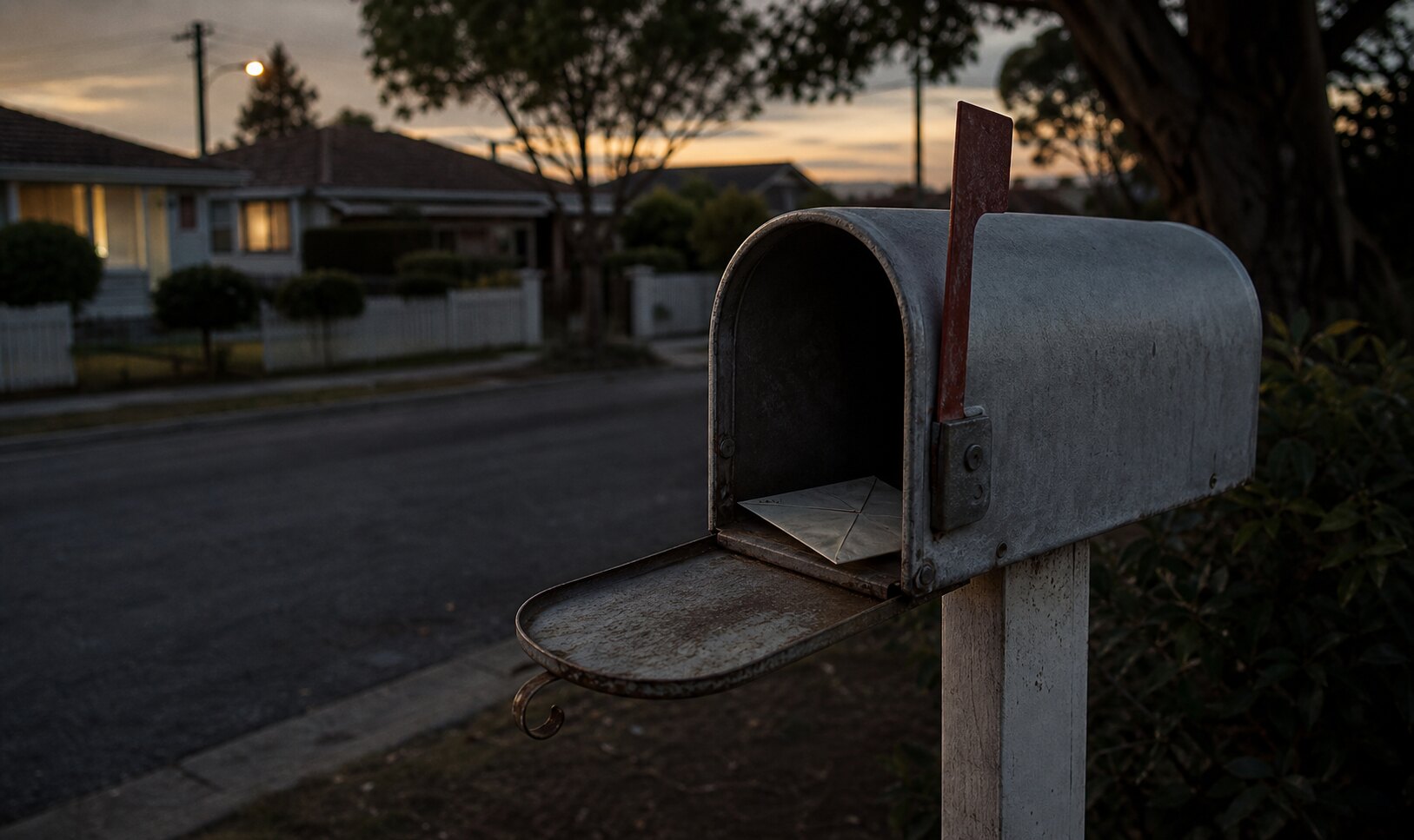
In 1968, two letters reached the Beaumont family. They appeared to offer impossible hope: a message supposedly from Jane and a man who claimed to be caring for the children in Victoria. Jim and Nancy followed the instructions for a meeting, but no one appeared. ABC News later reported that forensic fingerprinting identified the author as a man who had written the letters as a cruel joke when he was younger.
There are hoaxes that waste police time.
There are hoaxes that enter a parent's bloodstream.
For the Beaumonts, the letters did both. They made hope procedural. Put on the clothes. Go to the place. Wait for the children. Let the police hide nearby. Imagine the door opening. Imagine the faces older but alive.
Then go home again with nothing.
The Other Disappearance
Seven years after Glenelg, South Australia was struck by another public disappearance.
On August 25, 1973, eleven-year-old Joanne Ratcliffe and four-year-old Kirste Gordon vanished from Adelaide Oval during a football match after leaving their seats to go to the toilet. Witnesses later described a man with the girls. Like the Beaumont children, Joanne and Kirste were never found.
The two cases are not legally solved as one crime. They should not be fused into a single certainty. But investigators and commentators have long discussed possible similarities. In 2016, Detective Superintendent Des Bray told ABC News that the Beaumont case might have links to the Ratcliffe-Gordon disappearance.
That possibility matters because it changes the shadow without proving the shape.
If the cases are connected, South Australia was dealing with a highly dangerous offender capable of taking children from crowded public places years apart. If they are not connected, then the region carried two separate child-disappearance wounds whose similarities made each one feel more frightening.
Either way, the Adelaide Oval case became part of the emotional weather around the Beaumont disappearance: another public place, another child trust boundary broken, another family left without a body or a trial.
That same overlap explains why later private searches sometimes blur together in the public imagination. In 2025 and 2026, bone fragments from a private Yatina search connected to the Ratcliffe-Gordon investigation generated headlines. In February 2026, ABC News reported that forensic testing determined the fragments were not human, and South Australia Police warned that speculation around cold cases can create false hope and distress.
That warning applies far beyond one field.
In cases this old, the public wants the earth to confess. But the earth is not obligated to make every fragment meaningful.
A Roster Of Suspects And No Conviction
The Beaumont case has collected names for decades.
Some belonged to convicted killers. Some to convicted child sex offenders. Some to men who were in the wrong geography at the wrong time. Some to people suggested by resemblance, rumor, alleged confession, or behavioral similarity. The list is long because the evidence is short.
Arthur Stanley Brown, Bevan Spencer von Einem, James Ryan O'Neill, and Frederick Henry "Harry" Phipps have all been publicly discussed in relation to the case. None was ever charged with abducting or killing the Beaumont children.
That boundary matters.
O'Neill, a convicted murderer in Tasmania, became the subject of allegations explored around the documentary The Fisherman. High Court of Australia records from later legal proceedings show those allegations were contested, and the court record notes reporting that South Australian police had found no evidence supporting O'Neill's involvement and had discounted him from their inquiries.
Von Einem, convicted in the murder of teenager Richard Kelvin, has also been discussed because of broader South Australian crime theories. But his age in 1966 and the known pattern of his later offending make any connection to the Beaumont children uncertain and unproved.
Brown, convicted in Queensland for killing two young sisters, has been compared to suspect descriptions by some researchers and writers. But comparison is not evidence, and no public record establishes him as the Beaumont offender.
Then there is Harry Phipps.
Phipps was a local businessman whose former New Castalloy factory site became the focus of repeated searches. His son Haydn later claimed he had seen children matching the Beaumont children at the family property on the day they disappeared, and he also alleged abuse by his father. Two brothers separately told police they had dug a hole for Phipps at the factory site in the year the children vanished.
Those claims are serious. They are also unresolved.
ABC News reported in 2025 that police had previously described Phipps as one of about a dozen persons of interest, and that SAPOL said a renewed private excavation at the old Castalloy site was following a theory police believed was not supported by evidence and available information. The 2013 and 2018 searches failed to find the children. The 2025 search also concluded without uncovering remains.
The difference between a theory and a proof is the difference between a story and a charge.
The Beaumont children deserve the second standard.
The Factory That Gave Nothing Back
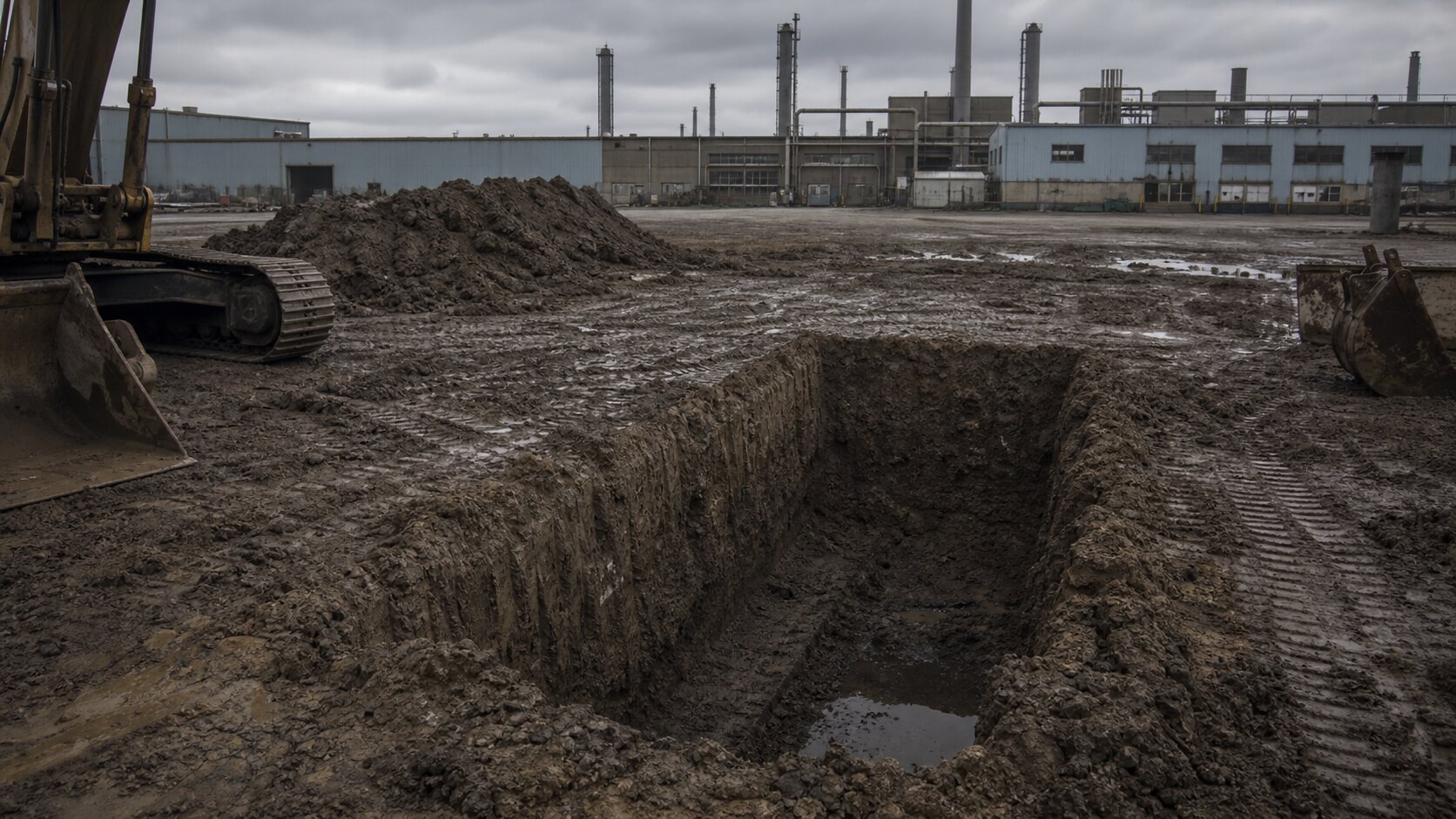
The Castalloy site became a modern stage for an old grief.
In 2013, police examined part of the site. In 2018, another search uncovered non-human bones and rubbish, but nothing linked to the Beaumont children. In February and March 2025, a private search organized around new information and concerns about fill depth removed thousands of tonnes of soil before concluding without finding remains.
The images from those digs carry their own kind of ache: excavators, high-visibility vests, open earth, cameras, experts, reporters, hope standing at the edge of a trench.
There is something almost unbearable about a search that looks so physical and produces nothing. The machine bites into soil. The crowd waits for the past to become material. The case, for a few days, feels less like memory and more like a place you can touch.
Then the trench closes.
For families of missing children, every excavation has two possible injuries. It can find what no parent wants found, or it can find nothing and return them to the airless room of not knowing.
By the time of the 2025 Castalloy search, Jim and Nancy Beaumont were no longer alive to endure another cycle in public. Nancy died in 2019. Jim, whose given name was Grant Alfred Beaumont, died in 2023 at ninety-seven. They both died without knowing what happened to Jane, Arnna, and Grant.
That fact should sit heavily in any telling of this case.
They did not become symbols because they wanted to. They became symbols because someone took their children and left the rest of the country to learn fear from their absence.
The Legacy Of Glenelg
The Beaumont children changed Australian parenting because their disappearance attacked a shared illusion.
It was not simply that three children vanished. Children had vanished before. Violence had existed before. The deeper shock was spatial. They vanished from the ordinary: a bus route, a public beach, a bakery counter, a day bright enough that danger should have cast a shadow.
After Beaumont, freedom looked different.
Parents watched more closely. Police understood missing children differently. The public learned that a crowded place is not the same as a safe place, and that a child can be surrounded by adults and still be alone if no one understands what they are seeing.
That is the psychological wound at the center of the case.
The tall man did not need to empty the beach. He only needed to become unremarkable within it.
Sixty years later, the children remain fixed in the record at nine, seven, and four. Jane as the small guardian. Arnna as the middle child moving between independence and play. Grant as the youngest, still close to the age where the world is mostly hands to hold and adults to trust.
The reward remains. The file remains open. Tips still matter if they are credible and handled through police rather than performance.
But the case also remains a warning about the ethics of attention. Old mysteries can become entertainment too easily. Names can be thrown at dead men. Private digs can become spectacle. Bones can become headlines before science has spoken. Families can be made to grieve again for evidence that was never evidence.
The Beaumont children deserve better than that.
They deserve names spoken carefully.
Jane Nartare Beaumont. Arnna Kathleen Beaumont. Grant Ellis Beaumont.
They deserve the truth, if the truth still exists in a form the world can reach.
And until then, the case remains anchored to that terrible summer image: three children leaving home for the beach, a one-pound note crossing a bakery counter, and a man no one has ever named walking through the bright Australian heat with someone else's children.
Archival Case Gallery
Sources & Case Notes
Last updated: May 19, 2026.
Primary sources and case notes: This article was built from the Crime Stoppers South Australia Beaumont children release, which summarizes the official disappearance date, confirmed Glenelg sightings, police suspicion of abduction and murder, and the reward; ABC News' 2016 case timeline, including the tall-man description, Wenzel's cake shop one-pound note, Croiset search, hoax letters, and possible Ratcliffe-Gordon link; ABC News' 2025 Castalloy search reporting and March 2025 follow-up; ABC News' February 2026 Yatina report, which concerns the Adelaide Oval/Ratcliffe-Gordon investigation and found the fragments were non-human; 7NEWS' 2026 sixtieth-anniversary overview; High Court of Australia records concerning James Ryan O'Neill-related allegations and the contested documentary context; and public historical context on the Stolen Generations from the National Museum of Australia and the Australian Museum. Suspect material involving Harry Phipps, James Ryan O'Neill, Arthur Stanley Brown, Bevan Spencer von Einem, and other named men is framed as investigation history, allegation, or theory. No person has been convicted in the disappearance of Jane, Arnna, or Grant Beaumont.
Correction policy: If you have source corrections, family-approved context, or image-rights concerns, contact Anonymous369 Media through Contact & Media Inquiries.
Image credits: Feature and section images are Anonymous369 Media documentary recreations based on the documented Glenelg Beach setting, one-pound note clue, hoax-letter context, and Castalloy search history. The archival Glenelg Beach image is a public-domain State Library of South Australia/Wikimedia Commons location photograph. SAPOL/press family photographs, police sketches, search-scene images, and Adelaide Oval comparison materials were reviewed but not reproduced because public reuse rights were not clear for this production pass. Archival Case Gallery uses State Library of South Australia Glenelg Beach archival imagery from Wikimedia Commons, public-domain/CC0 record context.
Content warning: This article discusses the disappearance of children, suspected abduction and homicide, hoaxes directed at grieving parents, and unresolved suspect allegations in restrained, non-graphic terms.