
The Barn Loft That Broke Moesko Island in The Ring
Moesko Island did not collapse because one child was strange. The barn loft, the horses, and the Morgan family's need for control taught Samara Morgan's curse how to spread.


The Ring Complete Movie Lore: File 2 of 4
Moesko Island does not feel haunted because of one girl.
It feels haunted because every building on the Morgan ranch is designed to keep a secret in place. The house protects the family name. The stables protect the bloodline. The cliffs protect the island from the mainland. And above the horses, in the high, dark barn loft, a child is given a bed, a television, and the message that she is easier to manage when she is out of sight.
That child is Samara Morgan.
The Ring is usually remembered through the tape: the seven days, the phone call, the wet hair, the screen that stops behaving like glass. But before Samara becomes an analog infection, she is a domestic problem that no one on Moesko Island knows how to love without trying to contain.
The barn loft is where that containment becomes a machine.
It does not cure the island. It concentrates it.
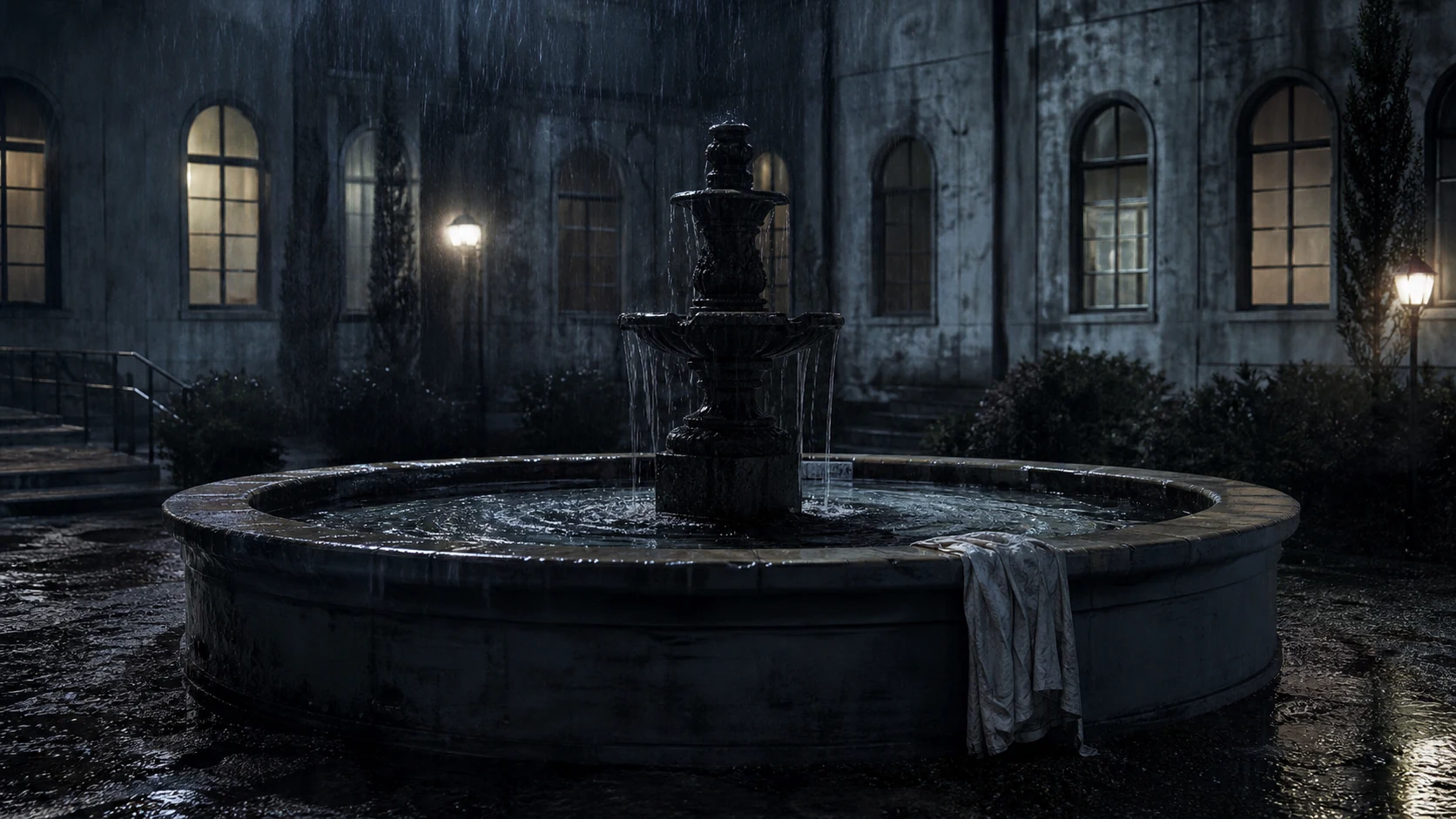
Original Anonymous369 Media generated cinematic recreation for commentary on Samara Morgan's early mythology.
The Child the 2002 Film Keeps at a Distance
The 2002 film gives Samara's early life in fragments, which is part of its power. Rachel does not receive a clean origin file. She receives missing records, a stolen psychiatric tape, a fake birth certificate, and a family story full of holes. The broader American Ring mythology later gives Evelyn more detail, including the church, the captivity, and the birth-story horror behind Samara's arrival. But the 2002 film's essential machinery begins with a simpler wound: Anna and Richard Morgan want a child so badly that they mistake adoption for restoration.
Anna has suffered four miscarriages. The Morgan home has money, status, land, horses, and a public image built around control, but the nursery remains a place where the family's confidence fails. Then Samara arrives, adopted into a world that understands breeding lines better than grief.
That distinction matters. The Morgans know how to manage pedigree. They know how to preserve the appearance of excellence. They know how to build a ranch where every animal, fence, trophy, and public achievement says the family is strong.
They do not know what to do with a child whose pain changes the room.
Samara's silence is not ordinary shyness. Her gaze is not ordinary distance. Her abilities, often described through the language of thoughtography or nensha, make the boundary between mind and matter unstable. Images do not stay inside her. They press outward. They mark surfaces. They invade sleep. They turn the people and animals around her into receivers for something she cannot stop broadcasting.
The tragedy is that the Morgans respond like owners of a damaged asset.
They try to move the problem.
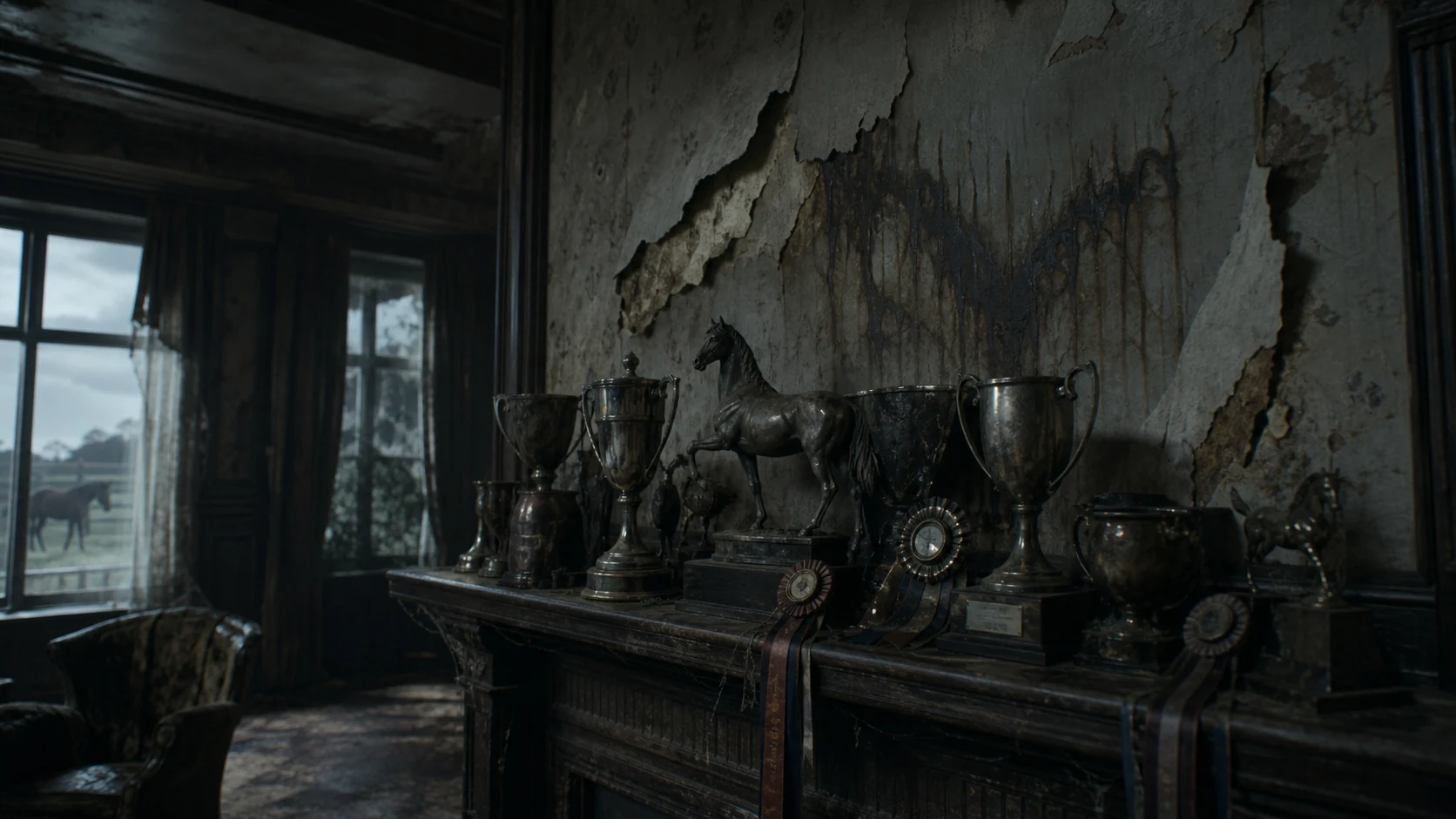
Original Anonymous369 Media generated cinematic recreation of the Morgan ranch prestige collapsing into neglect.
The Breeding Lines That Could Not Hold
Moesko Island gives the family the illusion of control. It is separated by water, weather, and distance. A mainland problem can be delayed by a ferry ride. A family embarrassment can be folded into fog. The ranch itself is built around the language of inheritance: show horses, bloodlines, ribbons, trophies, names that matter because they can be traced.
Samara does not fit that system.
She is not a Morgan by blood. She is not a polished continuation of Anna's imagined future. She is an interruption the family tries to dress in domestic language until the language fails. In a cleaner story, love might have made adoption into a real home. In The Ring, love is present but unstable. Anna wants Samara, but wanting is not the same as understanding. Richard protects the ranch, the wife, the name, and the business, but protection becomes another word for removal.
The horses are the cruelest mirror in the house.
They receive the tenderness Samara wants. Anna brushes them, talks to them, soothes them, and returns to them as if the stable offers a version of motherhood that does not stare back from the dark. The animals are valuable, beautiful, responsive, and legible. Their distress can be named. Their bodies can be examined. Their pedigrees can be recorded. They belong to the Morgan system in a way Samara never can.
So when the horses begin to fail, the island loses more than livestock.
It loses its proof of order.
The film presents their collapse as one of the Morgan family's defining disasters: the horses go mad, run toward the cliffs, and drown themselves in the sea. Some franchise tracking places the number at twenty-seven, a detail that matters less for spectacle than for pattern. This is not one animal spooked in a storm. It is a whole prestige system turning against itself.
Samara's pain does not stay in her room. It moves through the barn. It moves through the stable. It enters the animals that Anna loves and makes the ranch watch its own heart break against the rocks.
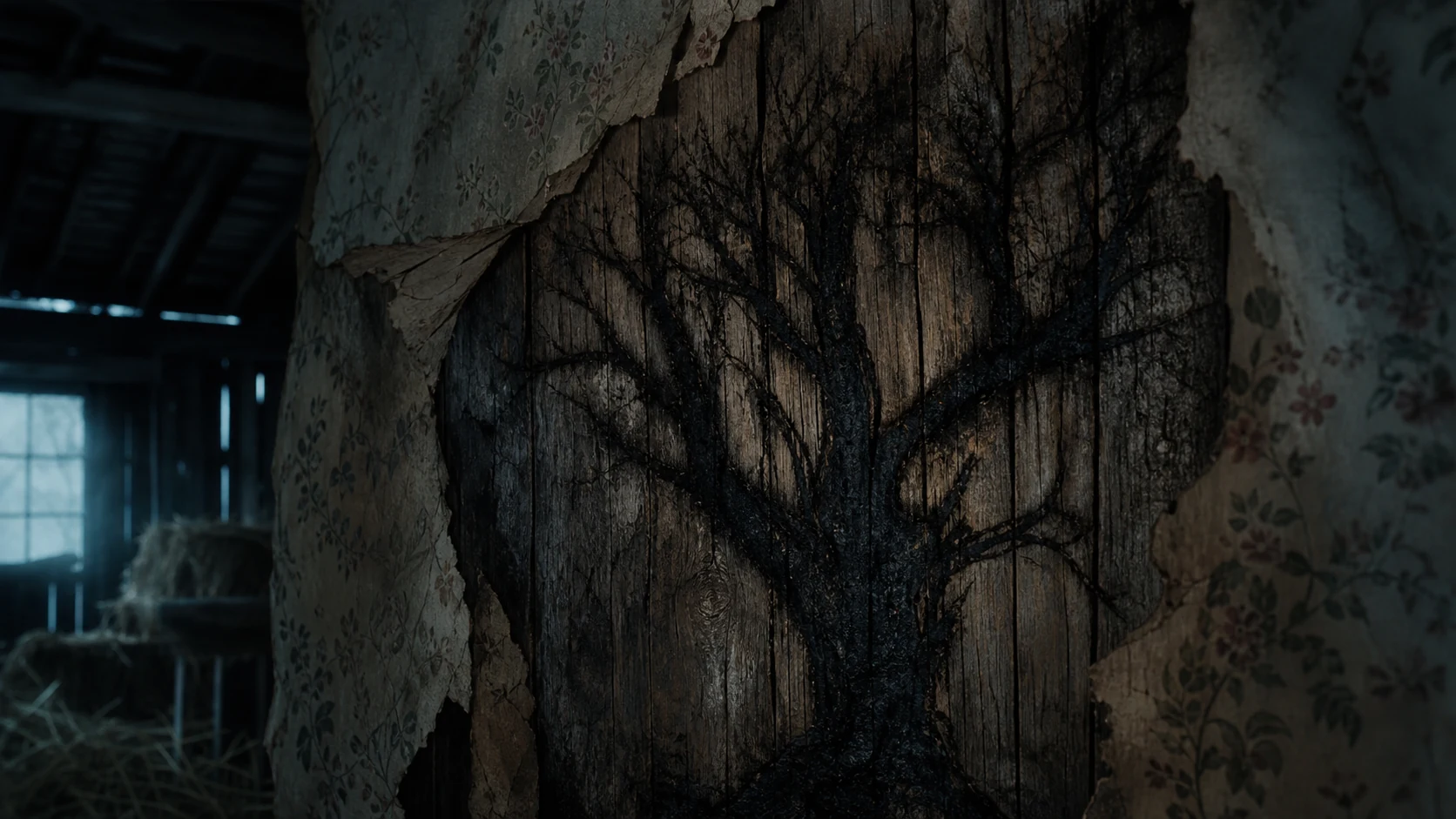
Original Anonymous369 Media generated cinematic recreation of the barn-loft tree image tied to Samara Morgan's thoughtography.
The Ladder Richard Stopped Climbing
The barn loft is one of the most important spaces in The Ring because it explains Samara better than any confession could.
Richard does not build a prison with bars. He builds one with inconvenience. A ladder. A height. A separate structure. A room that technically contains a bed and wallpaper and a television, but no true place in the family. The arrangement has the false logic of a compromise: she is not abandoned, exactly; she is simply placed where her presence can be managed.
That is what makes the loft so ugly.
It looks almost reasonable from the outside if a person wants it to. The child has shelter. The child has a screen. The child is away from Anna, away from the horses, away from the main house. Everyone can pretend the solution is temporary, therapeutic, necessary, practical.
But the ladder tells the truth.
Every visit requires someone to climb. Every act of care requires effort. Every day, that effort becomes easier to postpone. The loft turns love into a physical ascent, and then the family fails that ascent until Samara is left with the hum of a television and the grain of the wall.
That wall becomes evidence.
When Rachel and Noah peel back the wallpaper, they find the image of a tree burned into the wood. The detail is easy to treat as another clue, another breadcrumb leading toward Shelter Mountain. But inside the logic of the loft, it is more intimate than that. It is Samara trying to leave before anyone ever lets her go. Her mind reaches past the barn, past the island, past the room that has become her world, and brands an impossible destination into the timber.
The tree is not decoration.
It is escape pressure.
It is a child's inner landscape scorching itself onto the walls because the body has nowhere else to travel.
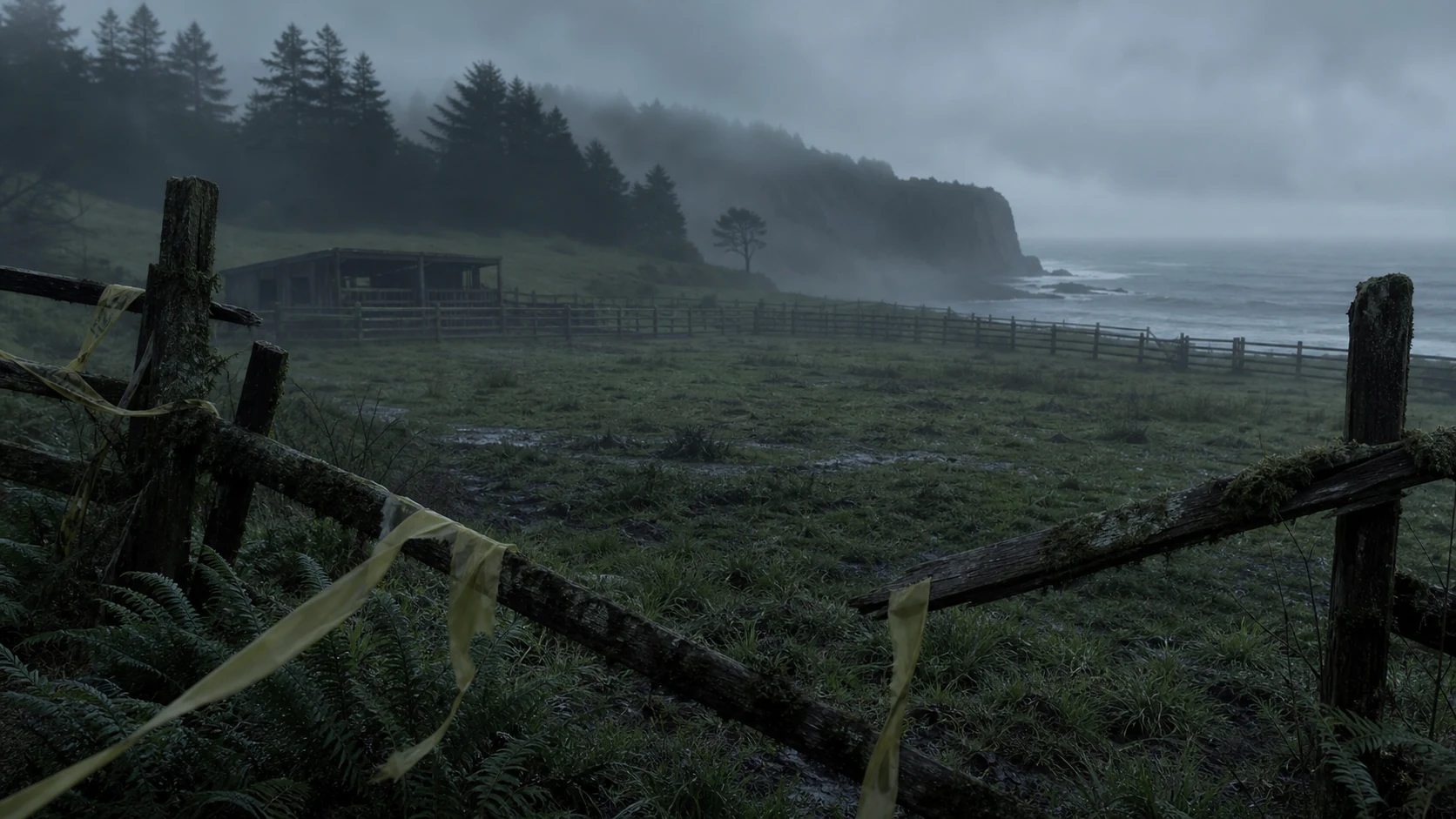
Original Anonymous369 Media generated cinematic recreation of the quarantined Morgan ranch aftermath.
The Quarantine That Missed the Real Infection
After the horses die, the state does what the state is built to do. It searches for a measurable cause. Officials quarantine the ranch. Investigators look for disease, poison, contamination, anything that can explain why valuable animals would break from their stalls and run toward death.
That response is logical. It is also useless.
The Morgan ranch is not infected in a way a veterinarian can isolate. The soil is not the patient. The water is not the patient. The hay is not the patient. The infection is spatial, emotional, and psychic. It is the pressure of a child placed above the animals, beneath the family's denial, inside a domestic architecture that refuses to admit what it is doing.
That is why Moesko Island matters more than a normal haunted-house setting. The island does not simply contain the horror; it helps manufacture it. The water isolates the family. The cliffs make escape feel theatrical and final. The barn stacks the horses below the child. The house lets Richard deny fatherhood while keeping the evidence within walking distance. Even the weather seems to participate, washing the ranch in the same cold blue-gray that will later bleed into the cursed tape.
By the time the quarantine ends, the official investigation has missed the only conclusion that matters.
Samara was not a pathogen that entered Moesko Island.
Moesko Island was the chamber that taught the pathogen how to become one.
The quarantine can hold a farm in place for five weeks. It cannot hold back the kind of curse that has already learned to use images as exits.
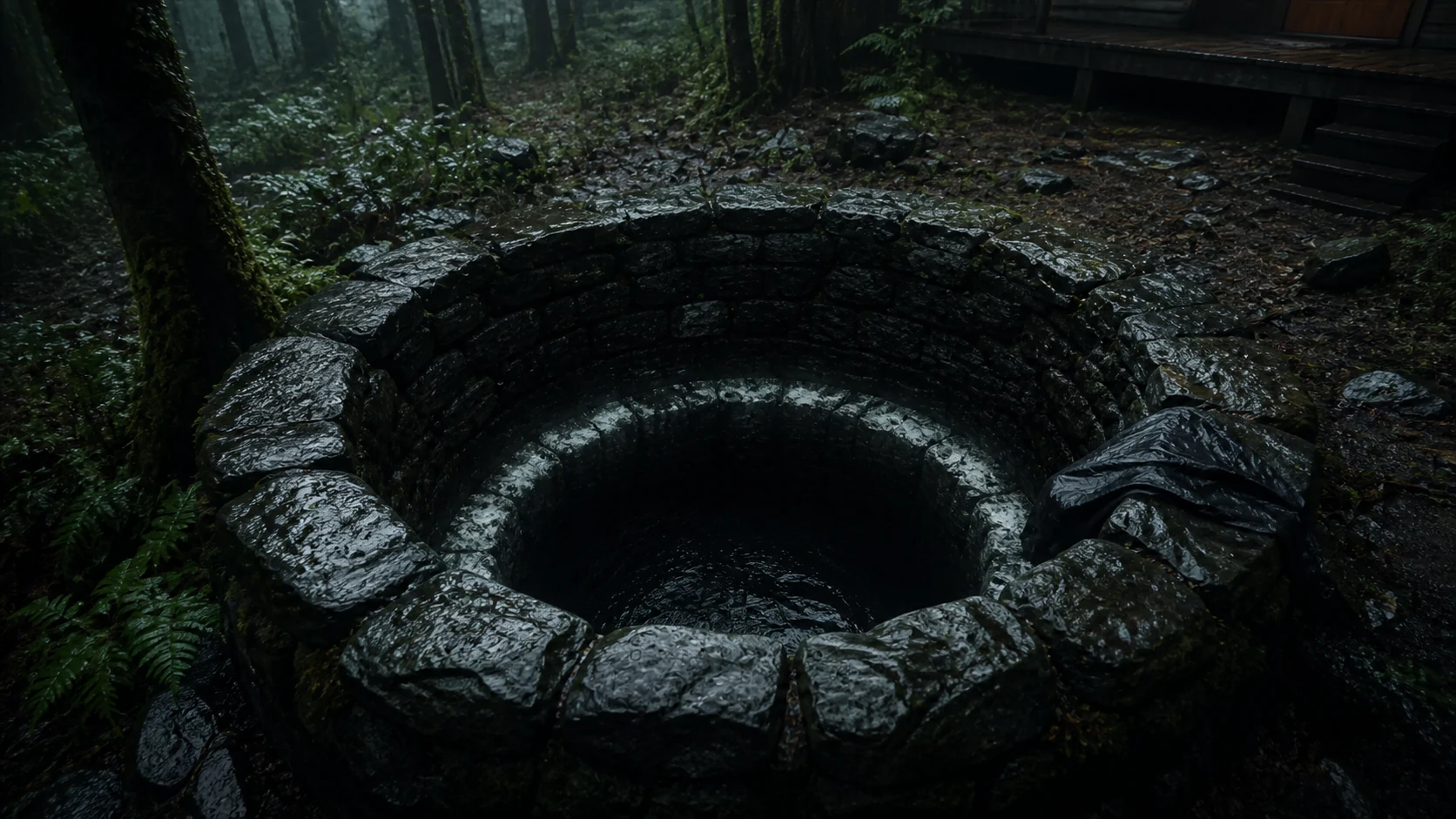
Original Anonymous369 Media generated cinematic recreation of the Shelter Mountain well mythology.
The Stone Cover at Shelter Mountain
The Morgan family finally runs from the island, but the escape does not free anyone. It only relocates the logic of containment.
At Shelter Mountain Inn, the domestic cage becomes simpler and more brutal. No loft. No ladder. No pretending that a television counts as companionship. Anna suffocates Samara, strikes her, and lowers her into the well beneath Cabin 12. The stone cover seals the opening, and the family story tries to become silent again.
It fails for the same reason the barn loft failed.
Samara is not ended by being hidden. She is intensified. The loft gave her isolation with a screen. The well gives her isolation with a circle of light. In both spaces, the architecture says the same thing: stay down there, stay quiet, become someone else's problem later.
Later is the cursed tape.
That is the bridge between this file and the previous one. The tape in The Missing Control Track: How The Ring Turns VHS Into a Virus does not appear from nowhere. It grows out of places that trained Samara to turn confinement into transmission. The loft teaches the image to burn into wood. The well teaches the image to climb through media. The island teaches the curse that isolation is not the opposite of spread. Sometimes isolation is where spread learns discipline.
Anna returns to Moesko Island and throws herself from the cliffs, repeating the movement of the horses she loved and the ruin she could not survive. Richard remains with the ranch, the water, the dead electronics, and the denial, a man guarding a catastrophe after the catastrophe has already left the property.
That is the final cruelty of Moesko Island. Everyone there tries to contain Samara by moving her farther away from ordinary life: from mother to institution, from house to barn, from barn to island myth, from body to well.
Each removal makes her less reachable.
Each removal also makes her more powerful.
The Ring understands that some hauntings are not born from a single evil act. They are built by repeated acts of distance. A child is treated as a secret. A room becomes a compromise. A ladder becomes an excuse. A ranch becomes a quarantine. A well becomes a grave. Then the thing that was never allowed to speak learns the one language the modern world cannot stop repeating.
An image.
Read The Ring Files in Order
The Ring Complete Movie Lore is built as a four-file sequence. Start with the cursed tape, move into Moesko Island, follow Samara's possession of Aidan Keller, then finish with the copy loop that turns survival into betrayal.
- The Missing Control Track: How The Ring Turns VHS Into a Virus
- The Barn Loft That Broke Moesko Island in The Ring - current file
- The 93-Degree Body: How Samara Rewrites Aidan Keller in The Ring Two
- The Dual-Deck VCR: How The Ring Turns Survival Into Betrayal
Previous file: The Missing Control Track: How The Ring Turns VHS Into a Virus
Next file: The 93-Degree Body: How Samara Rewrites Aidan Keller in The Ring Two