
The Missing Control Track: How The Ring Turns VHS Into a Virus
The tape in The Ring is not just a haunted clue. Its missing control track, impossible images, screen-breaching fly, and copy-or-die rule turn Samara Morgan's curse into an analog virus.


The Ring Complete Movie Lore: File 1 of 4
A videocassette is supposed to have fingerprints.
Not literal fingerprints. Mechanical ones. The tiny electronic habits a recording device leaves behind when it drags magnetic tape past a head and turns light into signal. A camera, a VCR, an editing deck, a cheap camcorder on a family shelf: every machine speaks with an accent. It leaves a control track, a pulse, a map for the machine that plays it back.
The tape in The Ring refuses that basic bargain.
That is the detail that turns Samara Morgan's curse from a ghost story into something colder. The tape is not just a clue. It is not a confession left behind for a reporter to solve. It is a medium with no clean origin, a physical cassette carrying images that should not be there, moving through the world by forcing human beings to become its reproduction system.
The horror is not only that the tape kills you after seven days.
The horror is that it teaches you how to keep it alive.
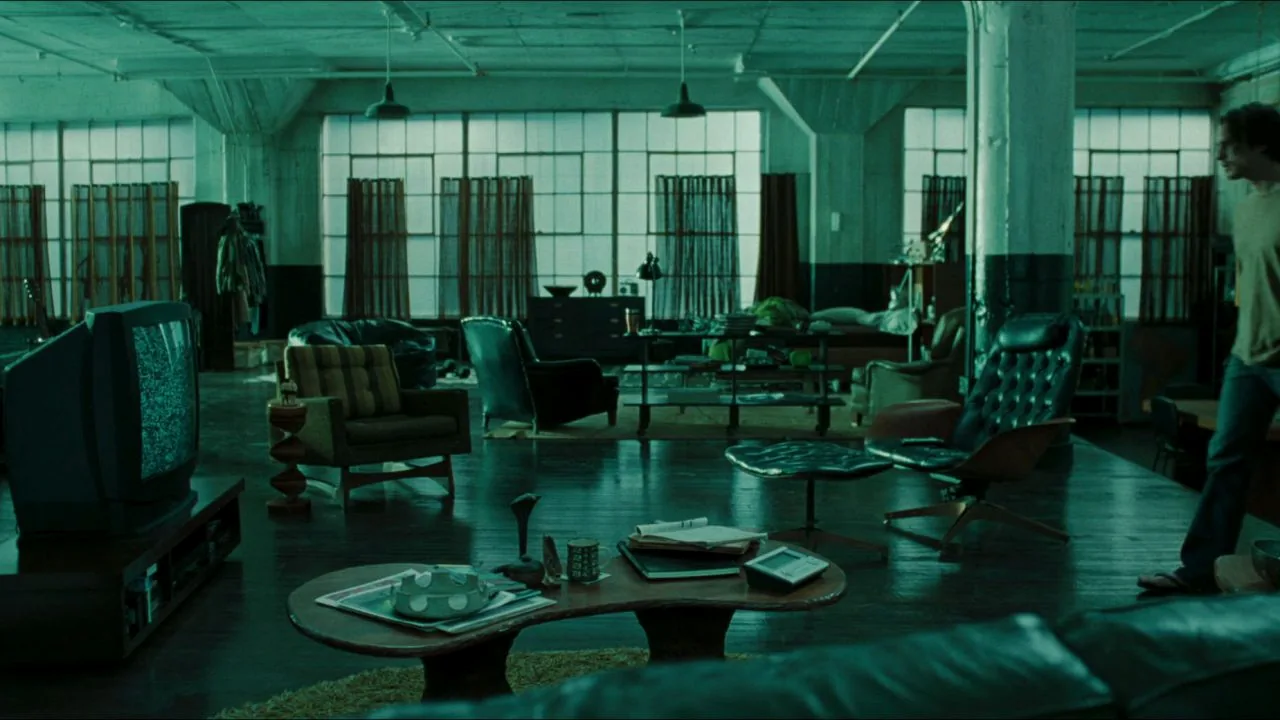
Film still from The Ring (2002), used here for commentary and criticism of the tape-analysis sequence.
The Tape Without a Pulse
When Noah studies the copy Rachel brings him, he is not reacting like a man watching a spooky home movie. He is reacting like a technician whose equipment has just contradicted reality. The numbers are wrong. The tracking behaves like it has been copied from damage. The control track, the signal that should tell the tape how to play, does not give him a normal source signature.
In ordinary analog recording, that should matter. The machine needs order. The tape needs a map. Without the right control information, the image should collapse into noise, because the player has no proper way to understand what it is reading.
Yet the cursed tape plays.
That contradiction is the first real wound in the object. The cassette looks ordinary enough to hold in one hand, but it behaves like something that bypassed the entire chain of human recording. No lens had to see those images. No camera had to stand in the room. No operator had to press record in the normal sense. The tape is magnetic material reorganized by a will that does not need equipment, only a surface.
That is why the "born without fingerprints" idea matters. The cursed tape has no father-machine. It is not evidence in the normal forensic sense. It is Samara's interior world burned directly into a consumer object, and that makes every VCR that touches it less like a player and more like an incubator.
The tape does not belong to media history.
It infects it.
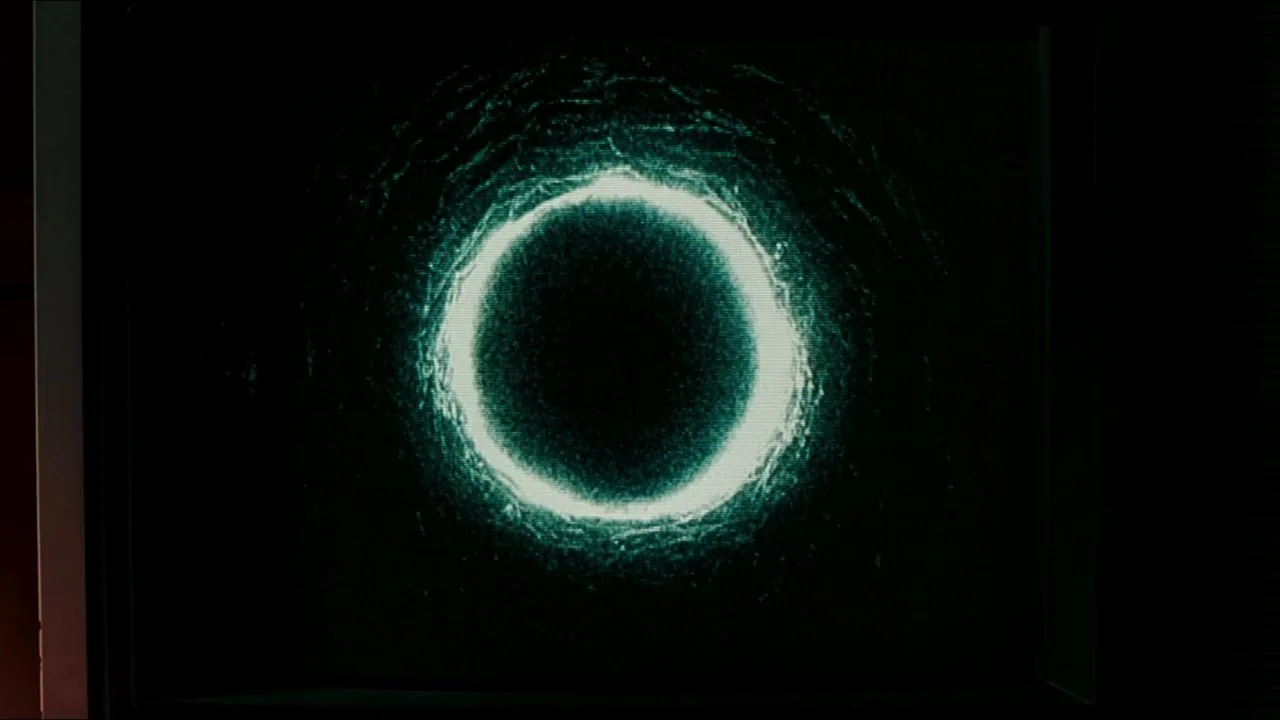
Film still from The Ring (2002), used here for commentary and criticism of how the screen becomes a boundary.
The Fly That Breaks the Screen
The cursed tape's images are often treated as symbols: the well, the ladder, the chair, the ring of light, the horses, the woman brushing her hair. But The Ring makes one image do something more dangerous than symbolize.
It becomes touchable.
Rachel sees the fly on the screen and reaches for it. The gesture should be impossible before it even begins. A television image is light against glass. It can frighten the mind, but it cannot cross into the room. That is the oldest contract between viewer and screen: the image may haunt you, but it stays on its side.
Then Rachel pulls the fly out.
The moment is small, almost quiet, which is why it lands so hard. It does not need a monster lunging from the frame. It shows the law being broken at the scale of an insect. Something from the tape has physical weight. It can be pinched between fingers. It leaves a blank space behind in the image, as if the television was not showing a recording but storing a piece of matter in a different state.
That is the tape announcing its real power. Samara's images are not memories playing back. They are pressure leaks. Her mind does not represent the world; it pushes through it. The screen becomes a membrane. The viewer becomes exposed.
Once that line breaks, everything else in the film changes shape. The distorted photographs are no longer just spooky warnings. They are early signs of a body losing its image integrity. The face fails before the person does. Cameras and mirrors begin to show what ordinary eyes cannot: the curse is already inside the victim, scratching at identity before the final hour arrives.
The television does not simply show Samara.
It prepares the room for her.
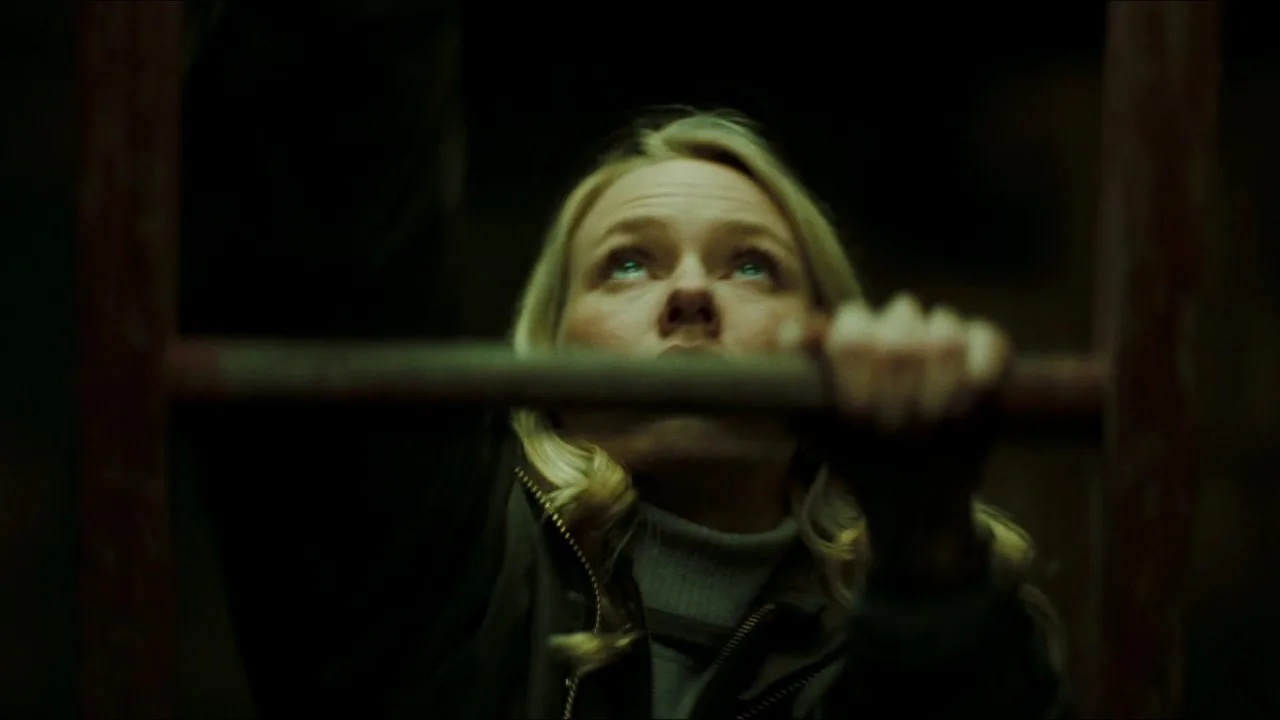
Film still from The Ring (2002), used here for commentary and criticism of Cabin 12 and the well.
Cabin Twelve and the Well Under the Floor
The tape's birthplace is not a studio, a laboratory, or a haunted archive. It is Cabin 12 at Shelter Mountain Inn, a rental space built over the sealed well where Samara died.
That geography is the cruelty. People arrive looking for a weekend away. They bring ordinary boredom, ordinary teenage plans, ordinary assumptions about a television and a blank tape. But the cabin is not neutral. Its floorboards cover an unfinished death. Its architecture sits on top of seven days of drowning, starvation, panic, and unanswered noise.
The blank cassette becomes dangerous because it is placed above the wound.
When the teenagers try to record a game, they are not making a home recording anymore. They are giving the well a format. The VCR becomes the nearest available mouth. The tape becomes the nearest available body. Samara's final sensory world: the circle of light above her, the wet stone, the impossible climb, the barn, the horses, the tree, the isolation, compresses itself into a sequence of images that does not behave like edited film because it was not assembled like film.
It is not a story Samara tells.
It is a trauma pattern she exports.
That distinction keeps the tape from becoming a simple treasure map. The images do lead Rachel toward Moesko Island and the well, but leading someone to the body does not end the curse. Discovery is not the cure because discovery was never the tape's purpose. The tape does not want investigation. It wants circulation.
Rachel makes the classic mistake of a reporter: she believes the truth will close the file.
Samara is not a file that closes.
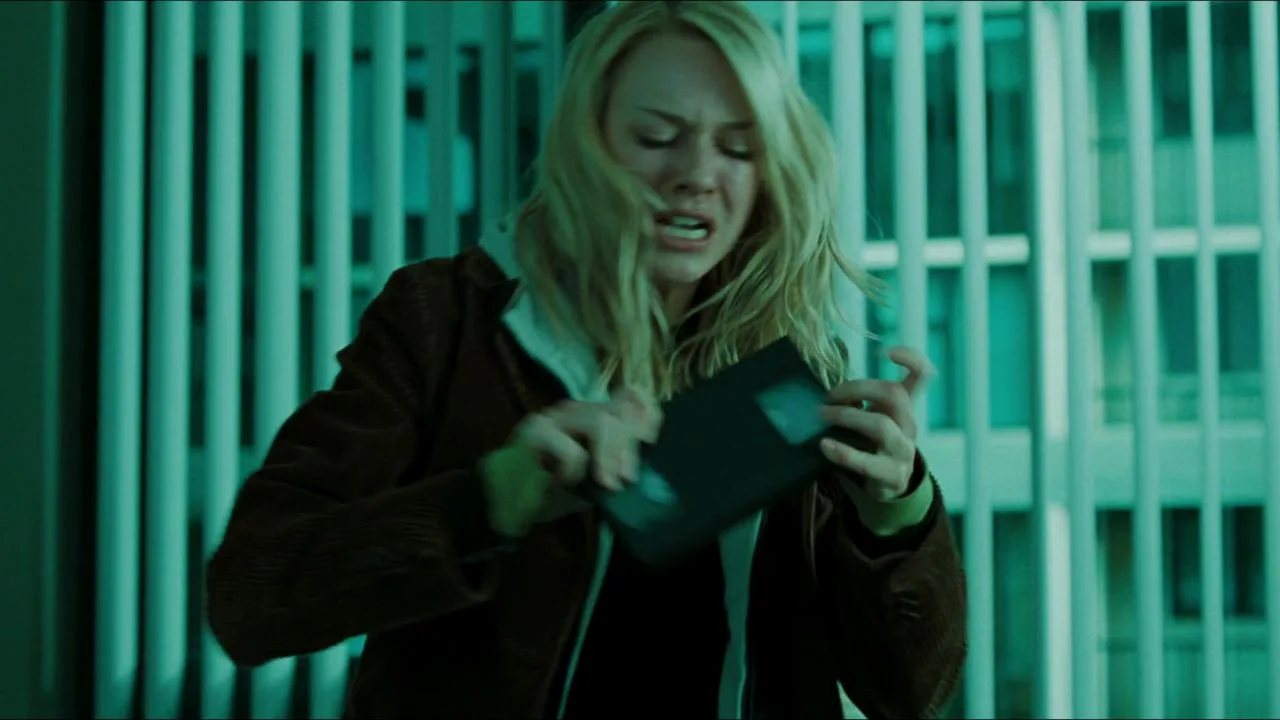
Film still from The Ring (2002), used here for commentary and criticism of the curse's replication rule.
The Copy That Makes You Guilty
The most merciless part of The Ring is not the seven-day deadline. A deadline is simple. A deadline gives fear a shape.
The real cruelty is the cure.
To survive, the viewer has to copy the tape and show it to someone else. That rule turns the cursed object into something more sophisticated than a haunting. It becomes a replication system powered by human fear. Samara does not need to chase every new victim herself. She only has to make the current victim afraid enough to recruit the next one.
That is why the tape feels so modern even while it belongs to VHS culture. Its logic is viral before the language of online virality took over everyday life. It understands sharing as contamination. It understands reproduction as self-defense. It understands that most people, when forced to choose between moral cleanliness and survival, will find a way to press "copy."
Rachel survives because she passes the danger forward. Aidan survives because she understands the rule in time. But survival does not equal innocence. The curse makes the living participate in the machinery that nearly killed them.
That is Samara's final revenge on the world above the well. She was buried where no one could hear her. Now everyone who hears her has to become part of her voice.
The tape does not ask to be believed. It does not ask to be solved. It does not ask to be pitied. It asks only to be duplicated.
Every copy makes the ghost larger. Every act of self-preservation gives the dead another set of hands. And somewhere, in another room, another screen waits to turn glass into water, static into skin, and a blank cassette into the most efficient kind of curse: one that teaches its victims to spread it.
Read The Ring Files in Order
The Ring Complete Movie Lore is built as a four-file sequence. Start with the cursed tape, move into Moesko Island, follow Samara's possession of Aidan Keller, then finish with the copy loop that turns survival into betrayal.
- The Missing Control Track: How The Ring Turns VHS Into a Virus - current file
- The Barn Loft That Broke Moesko Island in The Ring
- The 93-Degree Body: How Samara Rewrites Aidan Keller in The Ring Two
- The Dual-Deck VCR: How The Ring Turns Survival Into Betrayal
Next file: The Barn Loft That Broke Moesko Island in The Ring