
The Tooth in the Woodchipper: How Forensics Solved the Helle Crafts Case
Explore the chilling forensic masterclass that brought down a killer who thought he committed the perfect crime. Discover how 3 ounces of debris in the snow secured the first murder conviction without a body in Connecticut history.


A Blizzard and a Betrayal
The wind howled through the affluent, snow-choked streets of Newtown, Connecticut, on the freezing night of November 18, 1986. Helle Crafts, a thirty-nine-year-old Pan American flight attendant and mother of three, had just been dropped off at her home after a grueling long-haul flight from Frankfurt, West Germany. She stepped into the quiet isolation of her dark house, the temperature plummeting outside, and was never seen alive again.
Her husband, Richard Crafts, was an Eastern Air Lines pilot, a former CIA Air America operative, and a part-time local police officer. When Helle failed to show up for her upcoming flights, her colleagues immediately panicked. Richard offered a revolving door of calm, nonchalant excuses: Helle was visiting her sick mother in Denmark, or perhaps she had jetted off to the Canary Islands with a friend. But Helle’s inner circle knew the dark truth festering behind the Crafts' marriage. Helle had recently hired a private investigator who documented Richard's chronic infidelity with another flight attendant. Knowing her husband's volatile temper, his background in covert operations, and his vast cache of firearms, Helle had left a chilling, prophetic warning with her divorce attorney: "If anything happens to me, don't believe it is an accident".

The Timeline of a Cover-Up
While the Newtown police initially hesitated to aggressively investigate one of their own auxiliary officers, the timeline of Richard’s actions during the blizzard painted a sinister picture of a man systematically erasing his wife from existence. Financial records revealed that just days before Helle vanished, Richard used an alias and cash to purchase a large Westinghouse chest freezer. He also bought new bed sheets, a flathead shovel, and rubber gloves, and rented a massive, industrial-grade Brush Bandit 100 woodchipper—equipment far too large and expensive for casual winter yard work.
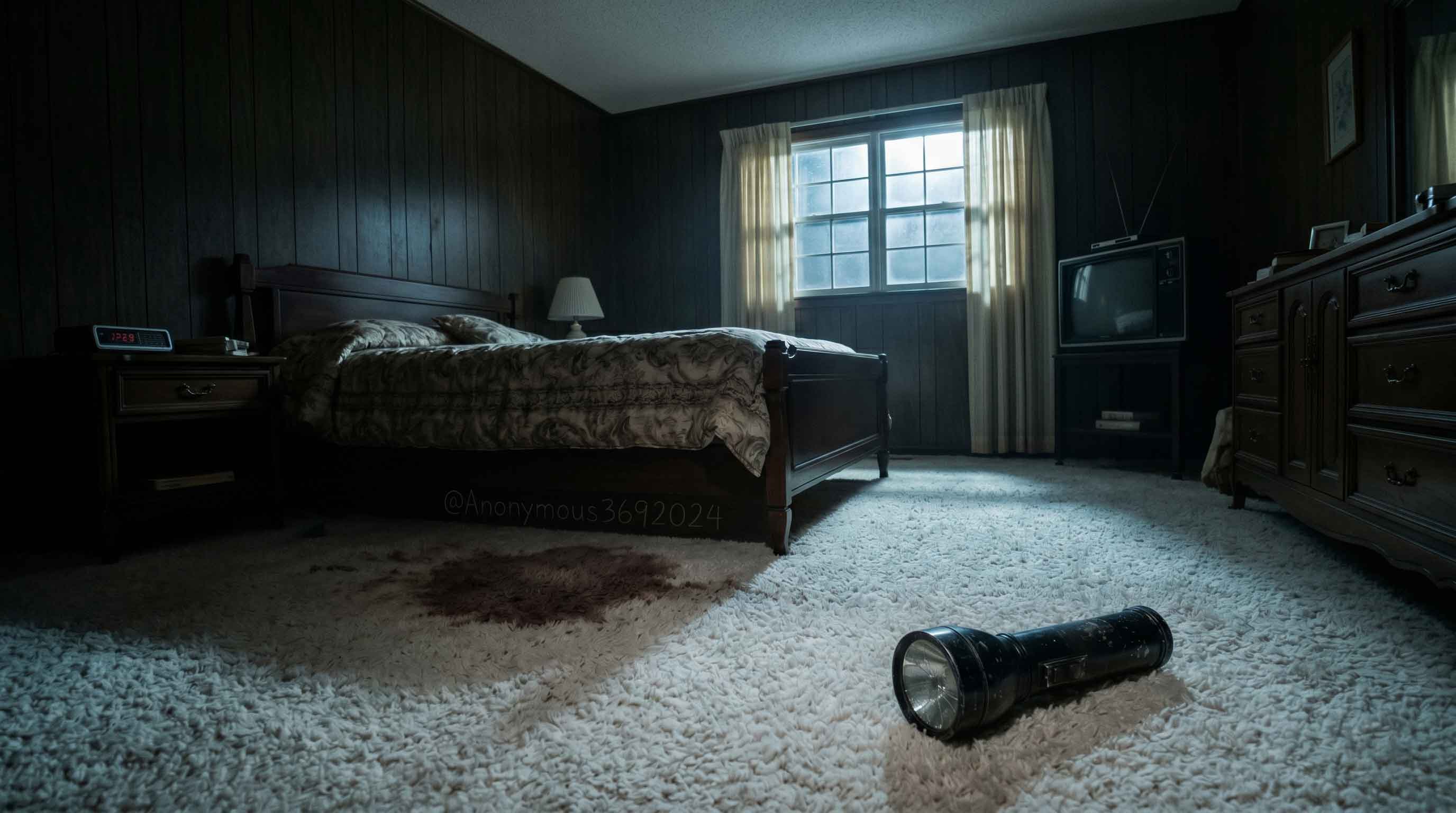
The family’s live-in nanny, Dawn Marie Thomas, provided a disturbing glimpse into the house's atmosphere. The morning after the storm, Richard abruptly woke her, claiming a power outage made the house too cold, and swiftly moved the children to his sister's home in Westport. Upon returning, Thomas noticed a dark, grapefruit-sized stain on the master bedroom carpet, which Richard quickly dismissed as spilled kerosene. Days later, that entire section of the carpet was ripped up and missing.
The most damning piece of the timeline came from a local snowplow driver named Joseph Hine. Plowing the roads at 3:00 a.m. during the height of the blinding snowstorm, Hine spotted a U-Haul truck towing a woodchipper parked suspiciously close to the freezing shoreline of Lake Zoar, right over the Housatonic River. That odd, seemingly innocuous sighting would soon crack the case wide open and trigger the most exhaustive forensic search in state history.

The Investigation & Forensics: Dr. Henry Lee's Masterclass
When standard searches yielded nothing, the Connecticut State Police brought in Dr. Henry Lee, a world-renowned forensic criminalist. Dr. Lee faced an unprecedented challenge: proving a brutal murder had occurred without a body. He began in the master bedroom, deploying luminol and tetramethylbenzidine (TMB) to expose invisible, scrubbed-away bloodstains. The chemical reagents illuminated medium-velocity castoff impact spatters low on the walls and furniture. The geometric angles told a terrifying story: Helle was likely kneeling or stooped near the bed when she was struck from behind multiple times with a heavy, blunt object, possibly a police-issue flashlight.
The forensic siege then moved to the freezing banks of the Housatonic River. Despite the heavy snow, Dr. Lee ordered investigators to melt the snow in buckets inside heated tents, sifting the slush for microscopic clues. The results were an absolute triumph of forensic science. From the muddy, freezing riverbank, they extracted exactly 2,660 bleached blonde human hairs, 67 tiny bone fragments, a torn piece of a mailing label bearing Helle's name, a severed toe, and a fingernail still coated in pink polish. The total biological material recovered weighed a mere three ounces.
Among this grisly debris was a single tooth crown. Forensic dentist Dr. Lowell Levine definitively matched the crown to Helle Crafts' dental records, officially establishing her death and allowing the Medical Examiner to issue a death certificate. Richard Crafts was arrested immediately.
The Mechanics of Erasure
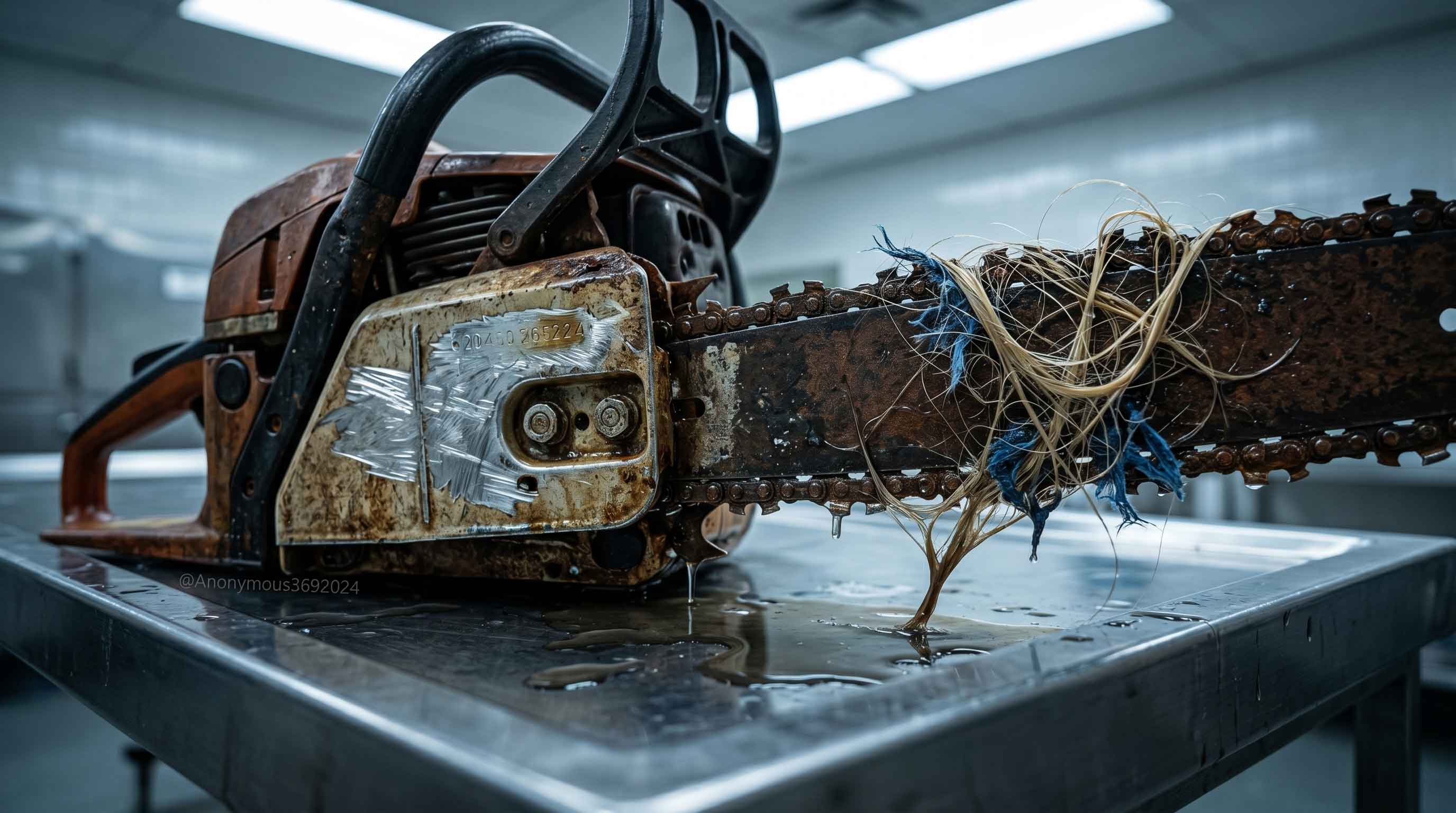
The prosecution laid out a horrifying narrative of mechanical disposal. Richard Crafts had bludgeoned Helle in their bedroom, stored her corpse in the newly purchased chest freezer until she was frozen solid, and then used a chainsaw to dismember her body. Under the cover of a massive blizzard, he fed the frozen pieces into the rented woodchipper, spraying her remains into the dark waters of the river.
To solidify this theory, police divers pulled a chainsaw from the murky depths of the Housatonic River. Its serial number had been deliberately filed off, but forensic scientists used chemical etching to restore the digits, tracing the tool directly to a warranty card filled out and signed by Richard Crafts. Caught in the teeth of the chainsaw were blonde hairs and blue fibers matching Helle's bathrobe.
The defense vehemently argued that a woodchipper could not definitively produce the specific bone fragments found at the scene. In response, Chief Medical Examiner Dr. H. Wayne Carver II conducted a groundbreaking and macabre experiment. He fed a frozen pig carcass through the exact model of woodchipper Richard had rented. The cuts and sheer marks on the pig bones were a perfect microscopic match to the 67 fragments found at Lake Zoar, completely neutralizing the defense's argument and sealing Crafts' fate.
The Resolution: A Landmark Conviction
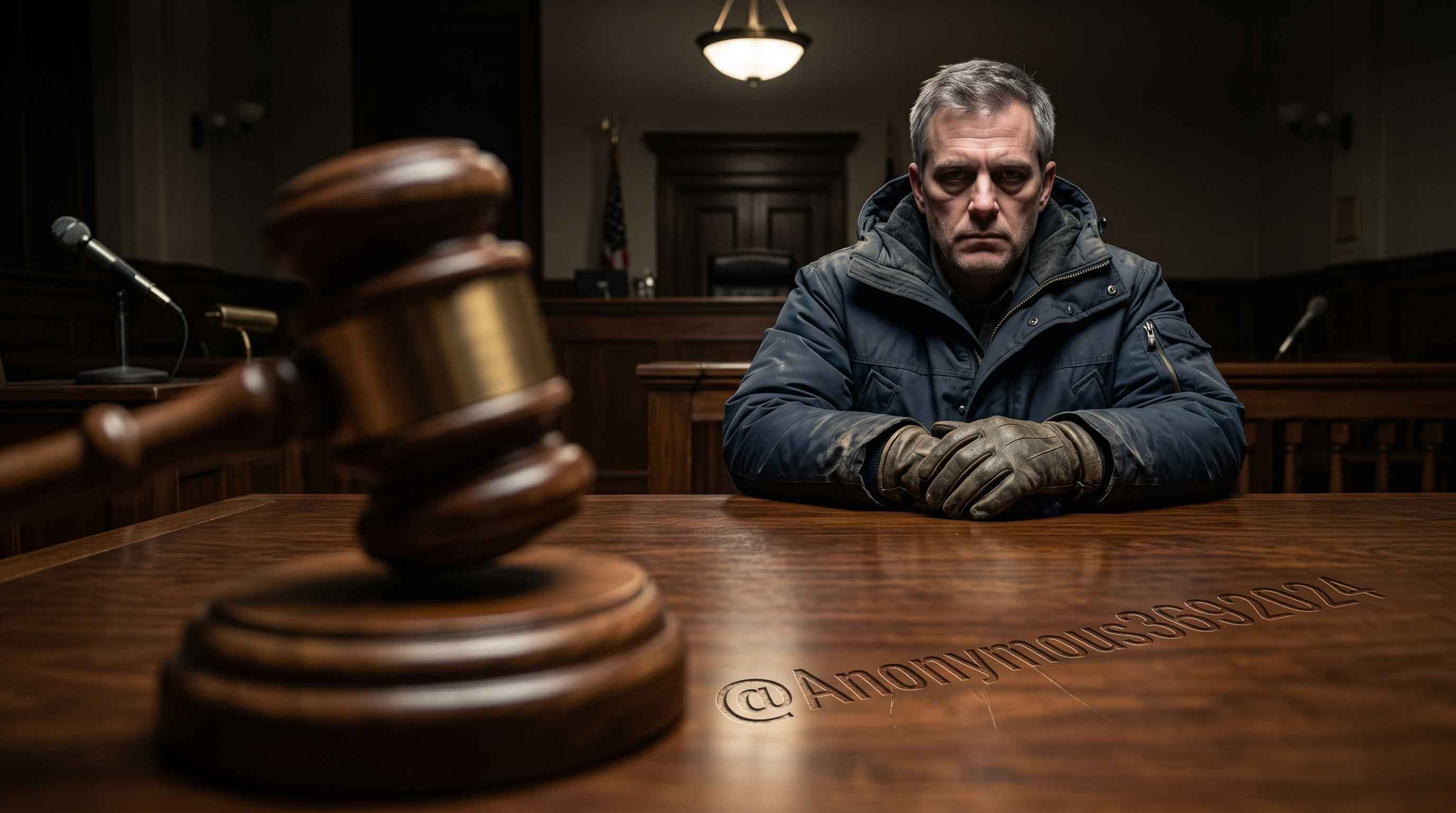
Richard Crafts’ stoic, emotionless demeanor—honed during his covert CIA flights over Southeast Asia—never wavered during the proceedings, embodying a terrifying detachment from the brutality of his crime. After a first trial ended in a mistrial due to a single holdout juror, a second trial in Norwalk concluded on November 21, 1989. Richard Crafts was found guilty of murder and sentenced to 50 years in prison. It was a paradigm shift in criminal jurisprudence: the first time in Connecticut history that a murderer was convicted without a physical body.
Despite his meticulous planning, his background in law enforcement, and his brutal mechanics of erasure, Crafts could not outsmart the microscopic truth left behind in the snow. He was quietly released to a halfway house in 2020 due to archaic "good time" laws, but his crime remains one of the darkest true crime legends in American history, even inspiring the iconic woodchipper scene in the film "Fargo". What possesses a man to look into the eyes of his wife, the mother of his three children, and reduce her life to three ounces of debris in the freezing winter wind?

Archival Case Gallery



Sources & Case Notes
Last updated: May 8, 2026.
Primary sources / case notes: Connecticut court records on State v. Crafts, public forensic-history reporting, Dr. Henry Lee/forensic reconstruction context, and legally reusable woodchipper and Lake Zoar location imagery.
Source links:
Correction policy: Send corrections, source notes, or image-rights concerns through Contact & Media Inquiries.
Image credits: Feature/gallery imagery uses public-domain or CC0 woodchipper and Lake Zoar location images. Body images are non-graphic forensic documentary recreations created for Anonymous369 Media.
Content warning: Discusses homicide, disposal evidence, and forensic recovery; non-graphic.
Editorial standards: Read how Anonymous369 Media researches, corrects, and credits factual cases on our Editorial Standards page.
Continue the Case File
These investigations reward careful reading. Step back if you missed the previous file, or keep going to follow the next case in the archive.
Previous file: The Paint Spheres: How Forensics Caught the Green River Killer Next file: The Floppy Disk Trap: How Metadata Caught the BTK Killer