
The Coded Suitcase: How the Isdal Woman Became Bergen's Coldest Case
In 1970, an unidentified woman was found burned in Norway's Isdalen Valley. Coded travel notes, false names, vanished clothing labels, and Cold War theories turned the Isdal Woman into one of Europe's most unsettling identity mysteries.


The valley already had a name for death.
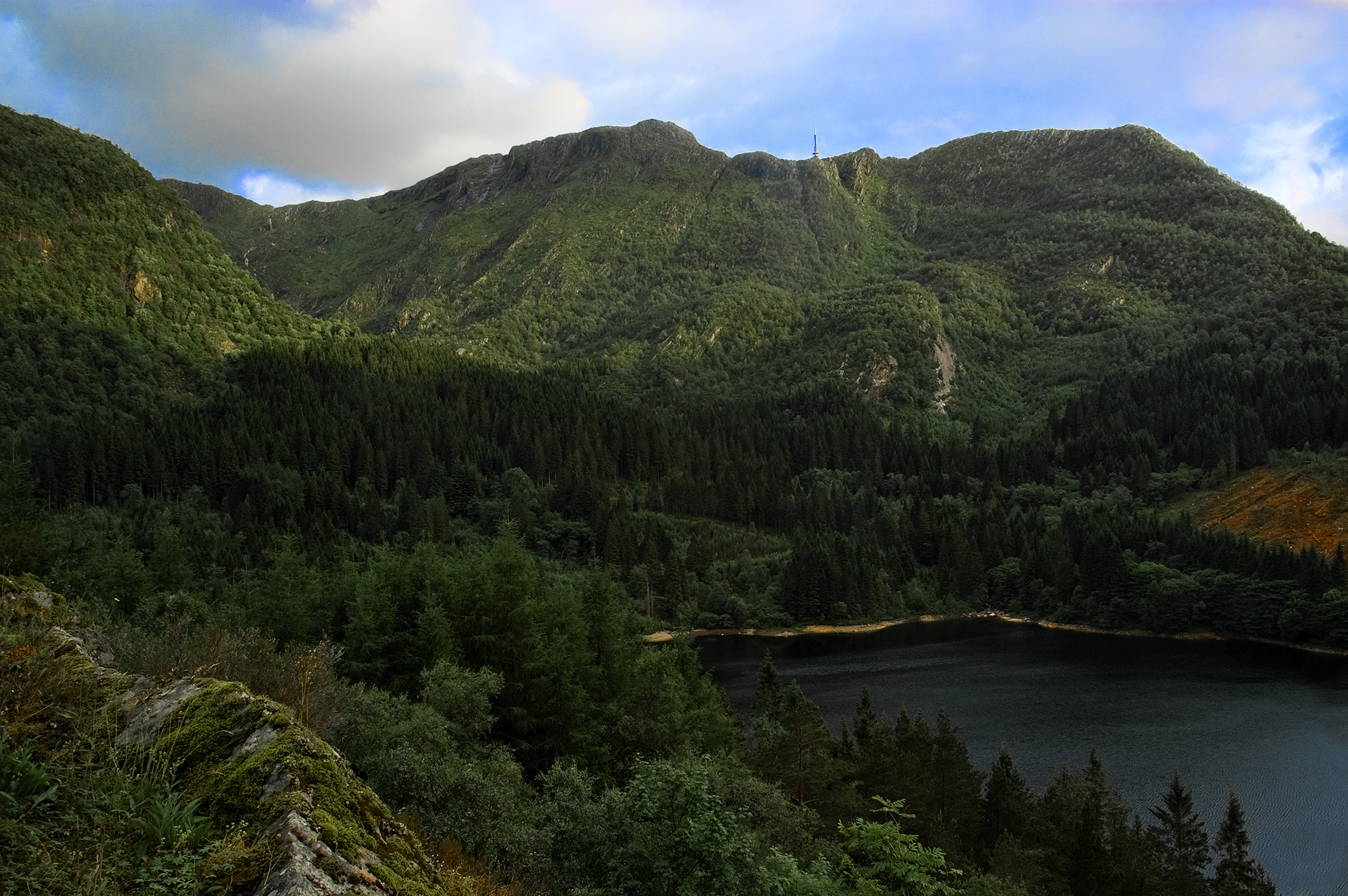
Just beyond Bergen, where the city gives way to damp stone, pine, and the steep northern face of Mount Ulriken, Isdalen cuts into the landscape like a wound that never fully closes. Locals have long called it Dødsdalen, Death Valley, a name tied to old stories of suicides, later hiking accidents, and the kind of weather that can turn a familiar trail into something suddenly hostile.
On the morning of November 29, 1970, a man hiking with his two young daughters noticed the smell first.
Burning.
They moved off the path and found a woman among the rocks. She was lying on her back. The front of her body and clothing had been badly burned. Her face could not be recognized. Her hands were drawn upward in the heat-stiffened posture investigators would later associate with fire exposure. Her back, shielded against the ground, was far less damaged.
The family left the valley and contacted police.
By the time Bergen investigators arrived, the fire was out, the ground was cold, and the woman had already become something more than a body in a remote ravine. She was a contradiction. A dead stranger in an exposed place. A carefully erased identity surrounded by clues. A woman with no name, no passport, no obvious origin, and a trail that seemed to move through hotels, train stations, airports, aliases, and Cold War Europe without ever touching the ordinary world long enough to be held.
More than fifty years later, no one has publicly identified her.
She is still known by the place where she was found: the Isdal Woman.
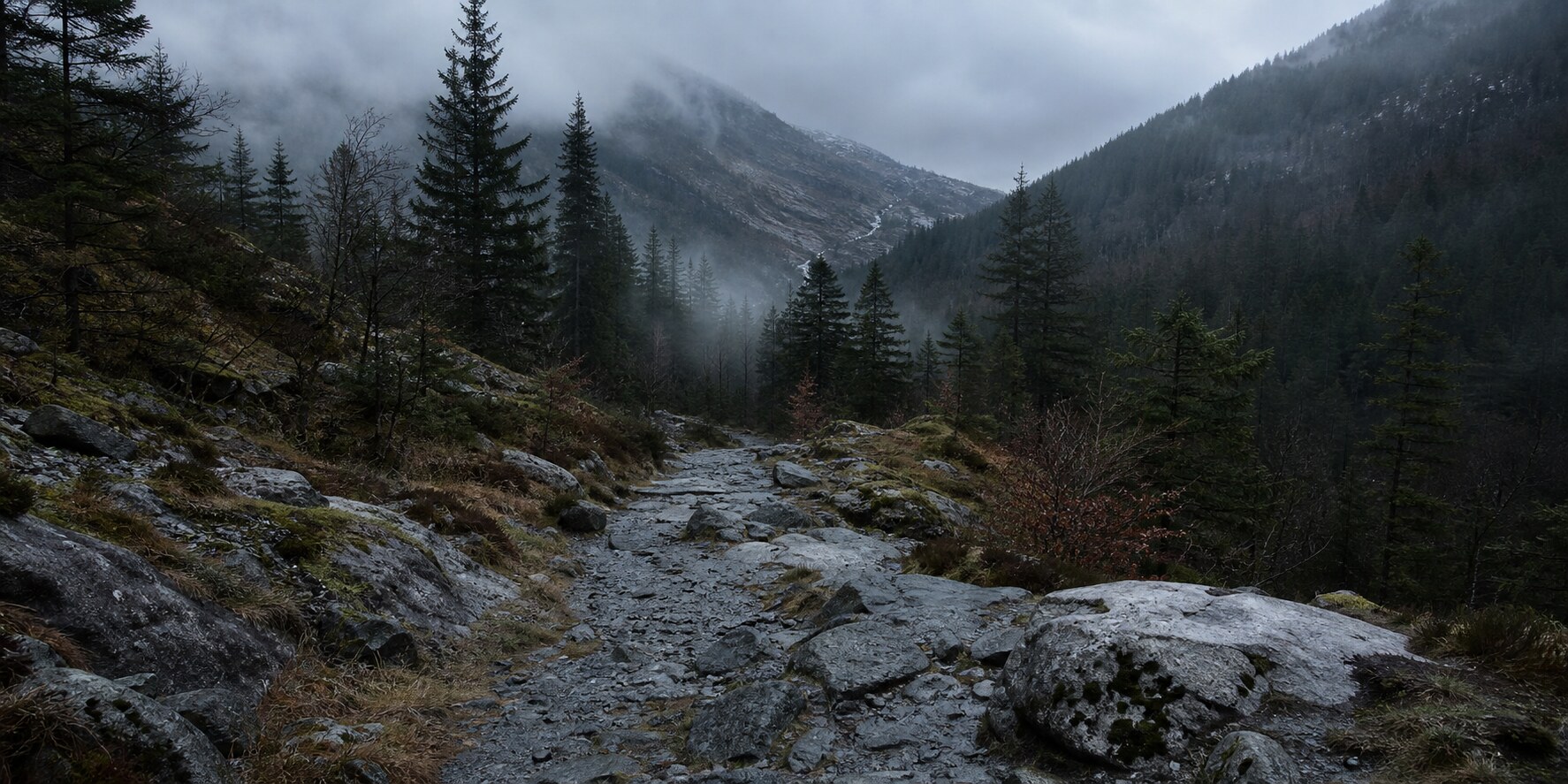
The Fire In Isdalen
The scene did not behave like a simple hiking death.
Around the woman, police found a strange collection of items: bottles, remnants of clothing, a broken umbrella, a matchbox, jewelry, a watch, rubber boots, and burned paper. Later case summaries also describe traces of petrol, including on or near items found at the scene. Some of the objects appeared placed rather than casually dropped, a detail that lodged in the memories of investigators and helped give the scene its enduring ritual quality.
But the most disturbing feature was not what remained.
It was what had been removed.
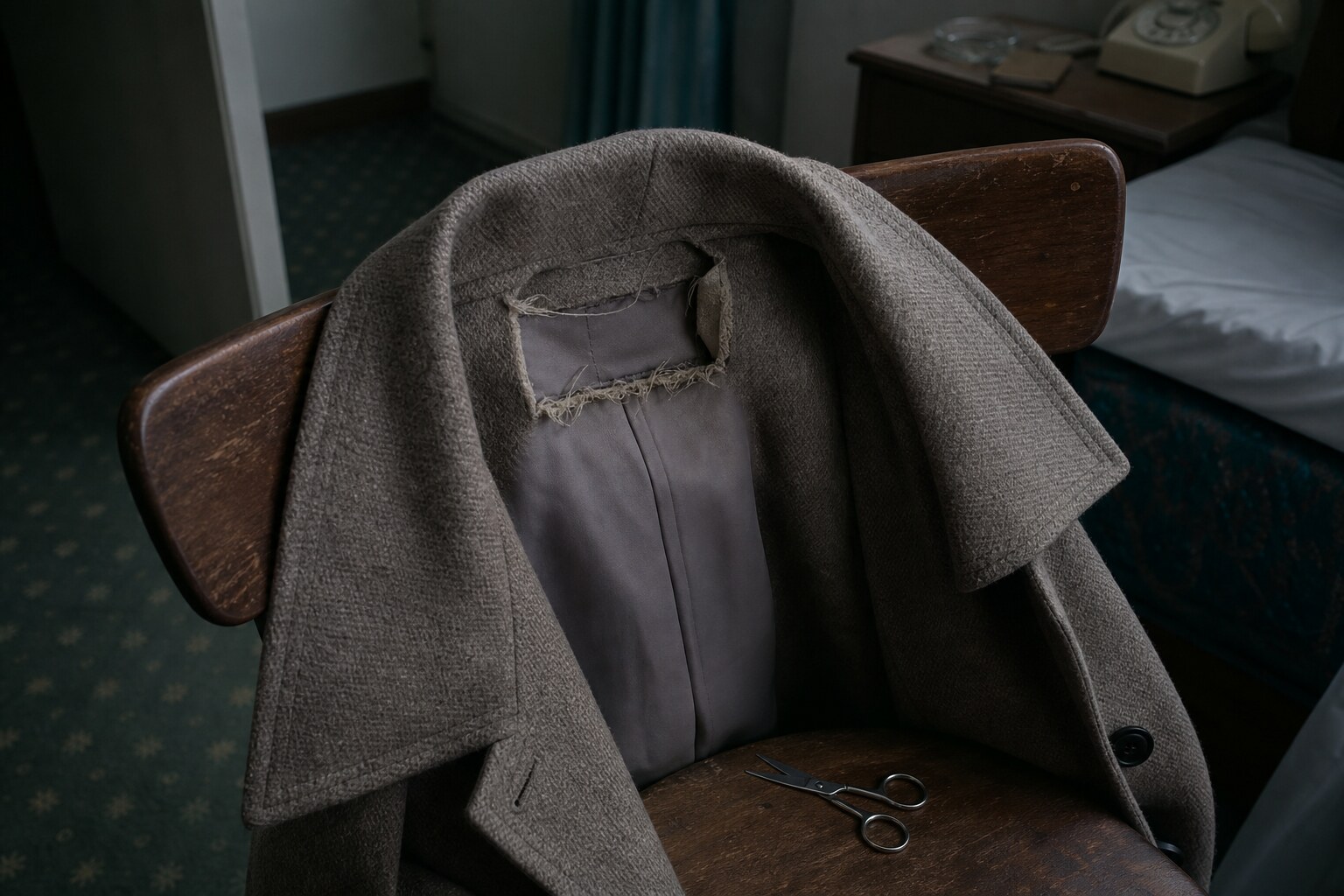
Labels had been cut from clothing. Identifying marks on belongings had been scraped away or rubbed off. Near the body was a damaged plastic passport holder, but no passport that could give her a name. The pattern suggested someone had worked deliberately to separate the woman from every ordinary object that might have followed her back to a shop, a doctor, a country, a hotel, or a family.
That does not prove espionage. It does not prove murder. It does not even prove that another person did the erasing.
But it does prove an intention.
Someone, whether the woman herself or someone close to her final hours, wanted identification to fail.
The autopsy deepened the unease. The examination at Gades Institutt concluded that she died from a combination of carbon monoxide poisoning and a large quantity of barbiturate sleeping pills. Reports from the investigation describe 50 to 70 Fenemal-brand tablets in her system or stomach, with additional pills found near the body. Soot in her lungs indicated she was alive when she inhaled smoke. A bruise on her neck was noted as possibly consistent with a blow or a fall.
Those facts created the central tension of the case.
The pills pointed toward self-destruction. The petrol, removed labels, remote location, and neck bruise kept pulling the case back toward staging, coercion, or the presence of someone else.
In 1971, the official conclusion moved toward probable suicide. Many people who have studied the case since have found that conclusion difficult to make peace with.
Not because suicide was impossible.
Because the scene seemed to be doing too much.
The Suitcases At Bergen Station
Three days after the discovery, police found the first real doorway into the woman's life.
At Bergen railway station, two unclaimed suitcases were located in storage. A fingerprint on a pair of sunglasses inside the luggage matched the dead woman. If Isdalen had been a place of erasure, the suitcases were a place of controlled abundance.
They contained clothing, wigs, cosmetics, eczema cream, money, maps, timetables, non-prescription glasses, and personal effects. They also repeated the same absence found in the valley. Labels were gone. Prescription information had been removed. Identifying marks had been destroyed. There was money in several currencies, including German marks and Norwegian cash, along with Belgian, British, and Swiss coins.
Then investigators found the notepad.
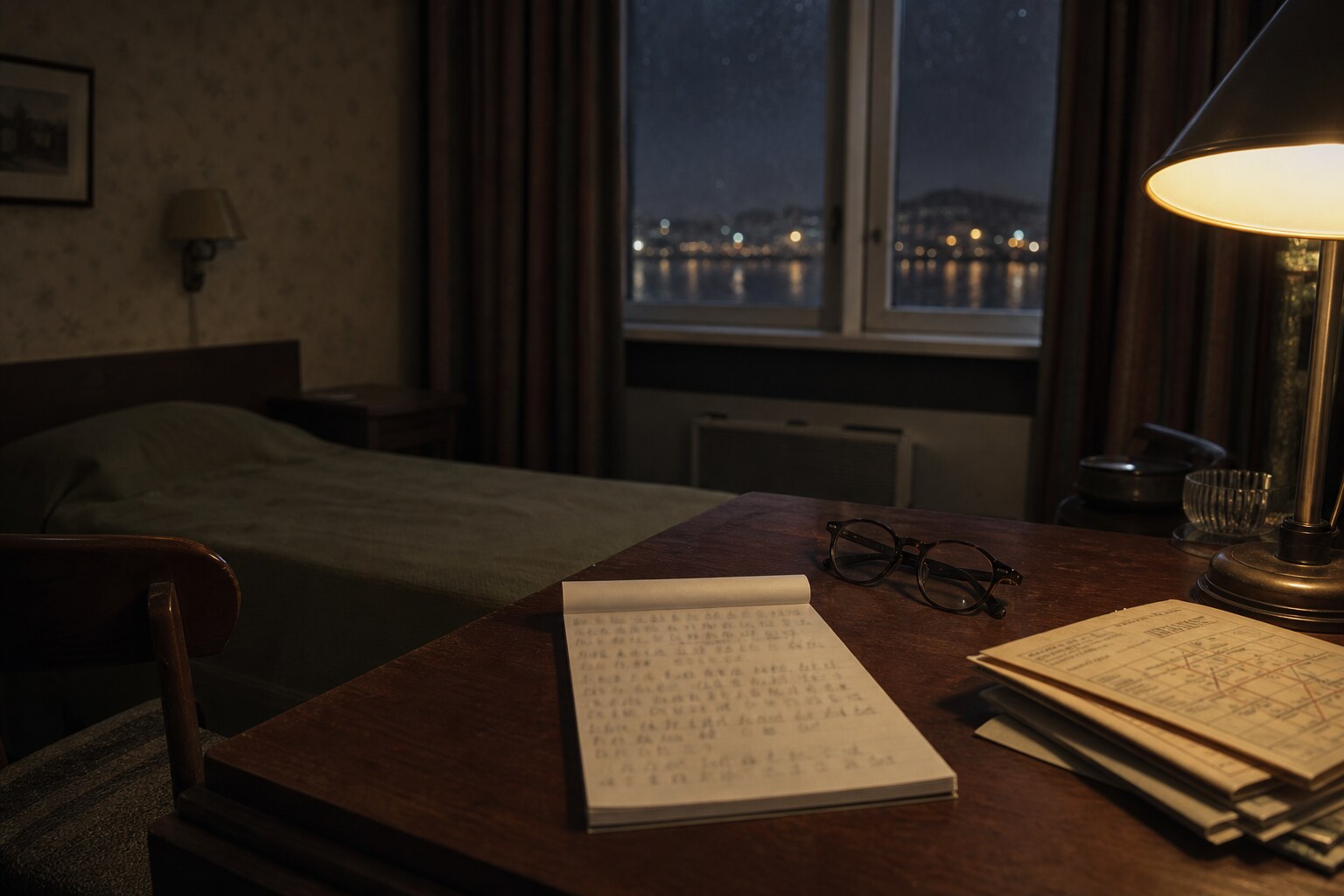
It held columns of letters and numbers that looked, at first glance, like the scribblings of someone hiding meaning inside nonsense. Police eventually decoded the system. The notes were not a confession or a spy cipher in the cinematic sense. They were a travel log: dates, destinations, hotel stays, and movements across Norway and Europe.
The code did not solve the woman.
It made her larger.
Hotel records and travel notes placed her through Bergen, Oslo, Trondheim, Stavanger, Paris, and other points in a moving map of false identity. She had used multiple names, including Geneviève Lancier, Claudia Tielt, Claudia Nielsen, Vera Jarle, Fenella Lorck, Alexia Zarne-Merchez, and Elisabeth Leenhouwer or a close spelling variant recorded in hotel documents. She often claimed Belgian citizenship. Belgian addresses she gave were later found to be false or unusable. The exact count varies by source depending on whether repeated or variant registrations are counted, but the pattern is clear: this was not a woman with one alias.
She had built a corridor of names and walked through it alone.
The Woman Who Changed Rooms
The people who remembered her did not describe someone forgettable.
She was stylish. Dark-haired. Well dressed. Reserved. She appeared to be in her twenties or thirties to some witnesses, though later forensic work would suggest she was probably older than the hotel impressions allowed. She spoke poor English, German, and possibly Flemish or French-influenced language. Several witnesses remembered a strong, unusual scent, often described as garlic.
In Bergen hotels, she drew attention by trying not to draw attention.
She paid in cash. She kept to herself. She changed rooms after check-in. On at least one occasion, staff remembered her asking to change rooms repeatedly. She told different stories about herself, including that she worked as a traveling saleswoman or dealt in antiques. She wore wigs. She moved as though she expected observation, but her methods were imperfect enough to be remembered by clerks, waitresses, shopkeepers, and police.
That contradiction matters.
A professional operative would normally want a life that leaves less texture behind. The Isdal Woman left texture everywhere: room changes, accents, wigs, cash, false forms, a smell people remembered decades later, and handwriting that pulled investigators from one alias to the next.
Her final confirmed hotel stay was at Hotel Hordaheimen in Bergen, where records place her from November 19 to November 23, 1970, under the name Elisabeth Leenhouwer or a variant spelling. She paid her bill in cash and asked for a taxi to the railway station.
After that, the public record thins.
Her suitcases went into storage.
Her body appeared in the valley six days later.
Somewhere between those two points, the woman with many names lost the last one she could use.
The Spy Theory
The espionage theory did not come from nowhere.
Norway in 1970 sat inside the pressure system of the Cold War. It shared a border with the Soviet Union. It hosted military infrastructure that mattered to NATO. Bergen and Stavanger were not just postcard cities; they belonged to a strategic coastline watched by intelligence services, navies, diplomats, journalists, and people whose job was to know where other people were not supposed to be.
The Isdal Woman's coded travel notes and false identities appeared to overlap, in some reported analyses, with Norwegian military activity involving the Penguin missile, an anti-ship missile then being tested. BBC and NRK reporting has treated that overlap as one reason intelligence rumors attached themselves to the case. A fisherman reportedly saw a woman matching her description near Tananger, outside Stavanger, speaking with a military officer. A Stavanger shoe-store witness remembered selling rubber boots to a well-dressed foreign woman; similar boots were later connected to the Isdalen scene.
It is tempting to let those pieces lock into place.
The Cold War wants a spy. The coded notebook wants a handler. The missing labels want tradecraft. The suitcases want a mission. The valley wants an execution.
But temptation is not evidence.
The decoded notebook appears to have recorded travel rather than secrets. No public source has established that she was an intelligence officer, courier, informant, or asset. Norwegian intelligence interest in the case, and later reporting about possible military-spying concerns, does not by itself reveal her occupation. Intelligence agencies can monitor a strange case near sensitive activity without the strange person being a spy.
The better answer is less satisfying and more honest.
The Isdal Woman moved through a Cold War landscape in a way that looked suspicious. Whether she belonged to that landscape professionally remains unknown.
The Other Doors
When a person has no confirmed name, theories rush into the empty space.
Some writers have suggested she may have been involved in sex work, using aliases, cash, room changes, and privacy rituals as protection from clients and police. Others have floated organized crime, check fraud, courier work, or a personal escape from someone dangerous. A later press theory tried to connect her travel patterns to François Genoud, the Swiss banker known for extremist and militant ties; that remains a press theory, not a police finding.
Mental illness has also been proposed. Under that reading, the aliases, label removal, coded notes, and travel loops might reflect paranoia, trauma, or a self-created system of safety that finally collapsed into suicide.
The problem is that every theory explains some things and leaves other things standing in the room.
The suicide theory has to explain the labels, petrol, bruising, remote location, and the strange arrangement of objects. The murder theory has to explain why an offender would leave so many clues while removing so many others. The spy theory has to explain why a supposed operative was memorable to so many people. The sex-work or crime-network theories have to explain why no associate, client, handler, relative, or enemy ever publicly surfaced with a confirmed identity.
This is why the case does not close.
Not because it has no evidence.
Because it has evidence that points in several directions at once.
The Men On The Trail
One of the most haunting later claims came decades after the fact.
In 2005, a Bergen man said that when he was twenty-six, five days before the body was found, he saw a woman resembling the Isdal Woman while hiking near Fløyen. According to his later account, she was dressed too lightly for the terrain and weather. She walked ahead of two men in dark coats who looked foreign or southern European to him. He believed she appeared resigned and as if she wanted to speak, but the men were close enough to make the moment feel controlled.
The sighting was not recorded contemporaneously in the official investigation, at least not in a way the public can rely on. That matters. Memory changes. Old cases create gravity. People fit remembered faces to famous sketches. A responsible account cannot treat the Fløyen sighting as confirmed fact.
But it cannot simply be ignored either.
If true, it would place a woman matching her description alive in the Bergen hills with two unidentified men shortly before her death. It would also give shape to the feeling that has always surrounded the valley scene: that the Isdal Woman may not have been alone at the end.
The public record does not prove those men existed.
It only leaves the possibility walking behind her.
The Science Of The Teeth
For decades, the case seemed frozen in 1970.
Then the teeth began to speak.
During the original autopsy, the woman's jaw and dental material were preserved because her dental work was distinctive. She had numerous fillings and gold crowns that did not fit easily with ordinary Norwegian dental patterns of the period. That decision, grim and clinical as it was, gave modern investigators something the fire had not destroyed.
In 2017, forensic isotope work connected to NRK, Kripos, the University of Bergen, and geological research from the Geological Survey of Norway shifted the map of her life. The analysis did not give a name. It did not produce a birth certificate. It did not say who held her passport or who waited for her in hotel rooms.
It gave probabilities.
The chemical signatures in her teeth suggested she spent her earliest years in southern Germany, in northern Bavaria, and later moved as a child or teenager toward areas near the Luxembourg-France border and West Germany. Other reporting has framed the finding around the Nuremberg region and the broader French-German-Belgian border world. The estimated birth period moved closer to around 1930, plus or minus several years, making her likely older than some early hotel impressions suggested.
That science changed the emotional weather of the case.
The Isdal Woman was no longer just an elegant stranger from nowhere. She may have been a child of a Europe tearing itself apart: born near the rise of Nazi power, growing up through war, occupation, displacement, border shifts, rationing, silence, and the bureaucratic afterlife of catastrophe.
It is only context, not biography.
But context matters.
A woman who learned young that names, papers, language, and borders could decide whether a person survived might understand identity differently from the clerks who watched her sign false hotel forms thirty years later.
DNA work has also produced a profile, and later reporting has discussed mitochondrial DNA pointing to a maternal line associated with parts of Southeast Europe or Southwest Asia. But as of this approval draft, no public official identification has been located. The genetic code exists. The name has not returned.
The Grave Without A Name
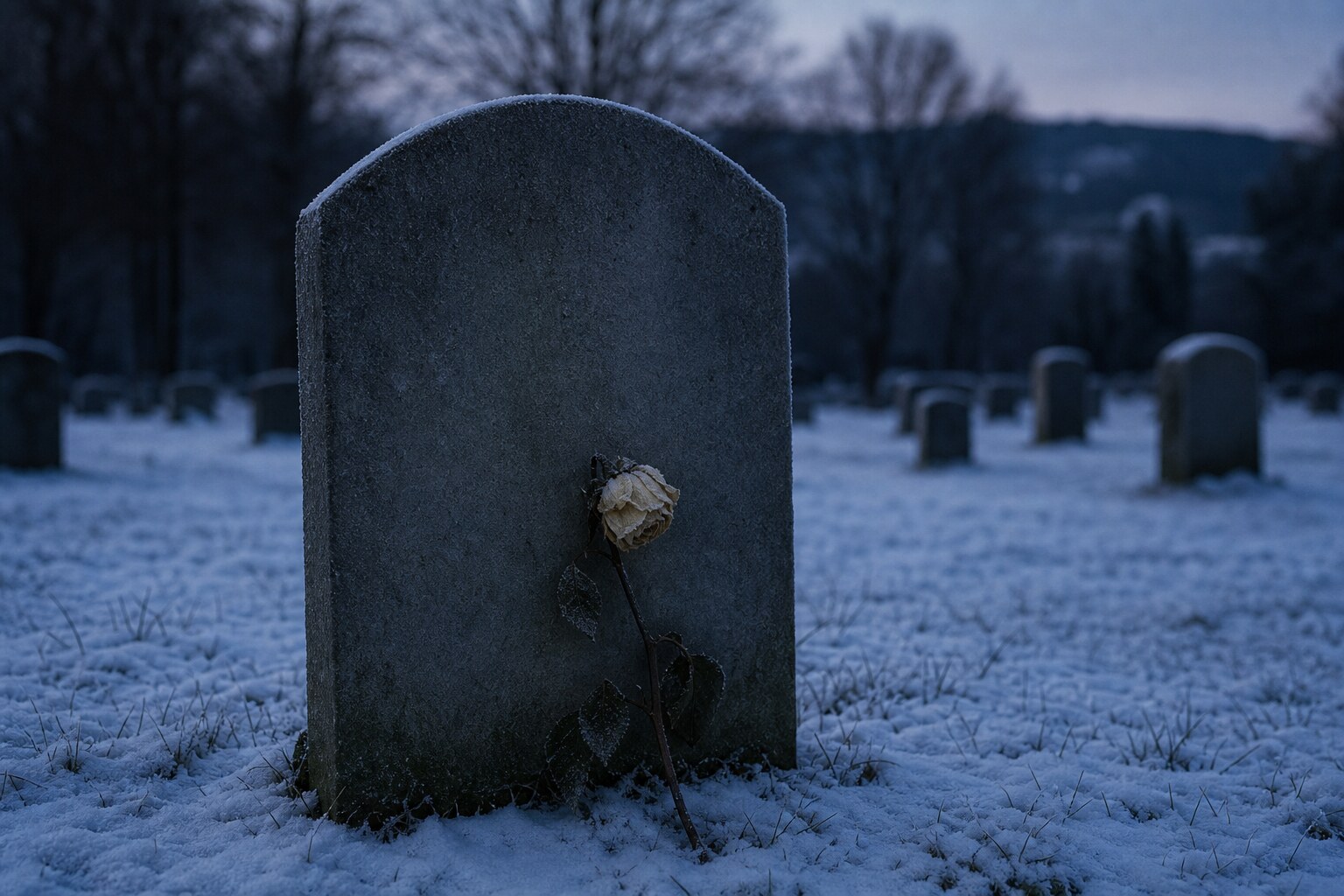
In February 1971, the woman was buried at Møllendal cemetery in Bergen.
Because she had used names associated with Catholic saints, she was given a Catholic service. Police attended. No family stood beside the grave. She was placed in a zinc-lined coffin so that, if relatives ever came forward, her remains could still be recovered and returned.
That detail is almost unbearable in its restraint.
Even the burial admitted the case was unfinished.
The authorities closed the file in the practical sense. The ground received her. The official explanation leaned toward suicide. But the coffin itself carried a different truth: we may need to open this again.
More than half a century later, the Isdal Woman remains suspended between all the systems that failed to name her. Police. Hotels. Borders. Intelligence rumors. Forensic science. Public memory. The coded notebook has been studied. The aliases have been listed. The teeth have been mapped. The valley has been walked by investigators, journalists, locals, and people drawn to mysteries because some doors feel wrong when they stay shut.
Still, the central question remains untouched.
Who was she before Norway called her the Isdal Woman?
Maybe she was hiding from a state. Maybe she was hiding from men. Maybe she was hiding from one life and trying to pass through another. Maybe the false names were tradecraft. Maybe they were fear. Maybe they were survival habits from a century that taught millions of people that papers could become weapons.
What can be said safely is smaller, colder, and more human.
An unidentified woman crossed Europe under names that were not hers. She arrived in Bergen. She stored her suitcases at the station. She disappeared into the hills above the city. She was found among rocks in a valley already named for death, surrounded by objects that both revealed her and erased her.
She tried, or someone tried, to remove every road back to her.
For now, the erasure still holds.
Archival Case Gallery
Sources & Case Notes
Last updated: May 19, 2026.
Primary sources and case notes: This article was built from BBC News/BBC Mundo reporting by Helier Cheung on the Isdal Woman investigation, including the Isdalen discovery, removed labels, luggage, aliases, hotel records, autopsy findings, and renewed forensic work, available through public BBC syndication mirrors such as Teletica's BBC Mundo report; the BBC World Service and NRK collaborative investigation Death in Ice Valley; the Geological Survey of Norway 2017 Annual Report, which summarizes isotope work suggesting childhood links to southern Germany/northern Bavaria and later movement toward the Luxembourg-France border and West Germany; and A&E's updated case summary, The Isdal Woman Cold Case: Mystery Over Her Identity Endures Over 50 Years, used as a secondary check on current public status, recent DNA/database context, and theory framing. Espionage, sex-work, organized-crime, mental-health, and François Genoud-related material is presented only as theory, press reporting, or investigative speculation. No public official source identifies the Isdal Woman or confirms that she was a spy, sex worker, criminal courier, or homicide victim.
Correction policy: If you have source corrections, family-approved context, or image-rights concerns, contact Anonymous369 Media through Contact & Media Inquiries.
Image credits: Feature and section visuals are Anonymous369 Media documentary recreations based on the documented Isdalen valley setting, coded travel notes, removed clothing labels, hotel movements, and unidentified burial context. The Ulriken/Isdalen location image is by Nina Aldin Thune via Wikimedia Commons, licensed under CC BY-SA 3.0 Unported, and used as geographic context. Bergen police, Interpol, NRK/BBC, crime-scene, police-sketch, evidence, hotel, and archive images were reviewed but not reproduced because public reuse rights were not clear enough for this production pass. Archival Case Gallery uses Nina Aldin Thune's Ulriken/Isdalen location photograph from Wikimedia Commons, CC BY-SA 3.0.
Content warning: This article contains restrained, non-graphic discussion of an unidentified woman's death by fire, possible suicide, possible homicide, and unresolved Cold War-era allegations.