
The Empty Oldsmobile: How the Fort Worth Missing Trio Vanished
Three girls went Christmas shopping at a Fort Worth mall in 1974 and never came home. Their locked Oldsmobile, a strange letter from Houston, and decades of broken leads turned an ordinary holiday errand into one of Texas's most enduring cold cases.


The car was still there after the shoppers left.
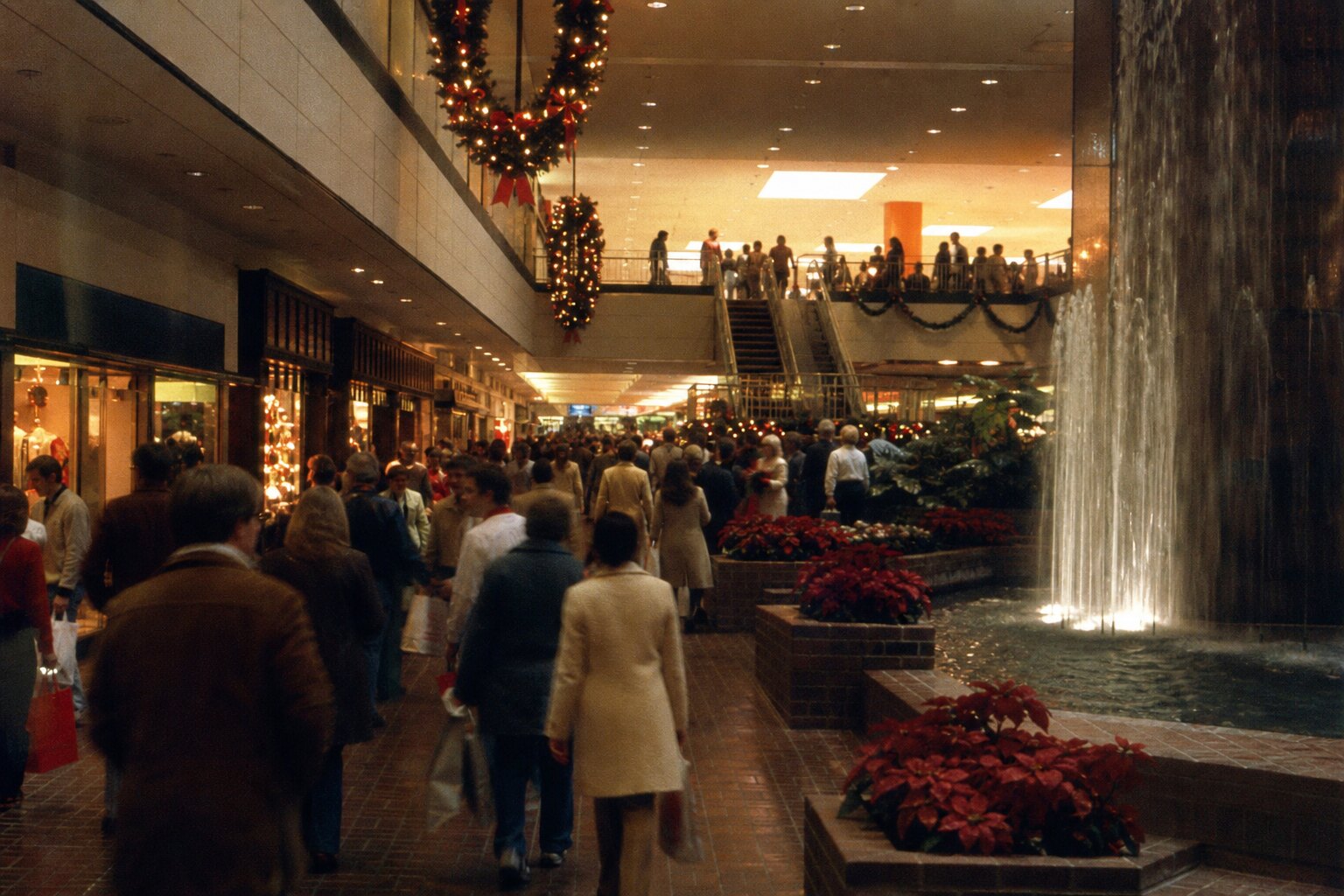
That is the image that has kept this case alive for more than fifty years: a heavy Oldsmobile parked near Sears at the Seminary South Shopping Center in Fort Worth, Texas, with Christmas purchases inside and no sign of the three girls who should have returned to it.
On Monday, December 23, 1974, the mall was moving through the last frantic hours before Christmas. Families crossed parking lots with bags in their hands. Teenagers drifted through stores. Indoor fountains and department-store lights gave the place the soft theater of the season, the kind of public brightness that makes danger feel almost impolite.
By evening, that brightness had failed.
Seventeen-year-old Mary Rachel Trlica, known to her family as Rachel, had driven to the mall with fourteen-year-old Lisa Renee Wilson, who went by Renee, and nine-year-old Julie Ann Moseley. They were supposed to buy gifts, run ordinary errands, and come back before the day turned into night.
Instead, Rachel's Oldsmobile was found locked in the upper parking area. The girls were gone. The keys were gone. A wrapped gift and other purchases were left behind.
There was no confirmed scream, no recovered weapon, no immediate ransom demand, no body, and no confession. Just a car in a crowded parking lot, a missing set of children and teenagers, and a silence so clean it became its own kind of evidence.
The Fort Worth Missing Trio case is not only a disappearance. It is a study in what happens when a crime enters the wrong category too early, when a strange letter is allowed to steer a narrative, and when families are forced to spend decades arguing with the empty space where an answer should be.
Three Girls Before Christmas
The three girls were not a planned trio in the dramatic sense. They belonged to the same neighborhood orbit, the same family networks, the same late-December pressure of rides, gifts, parties, and permission.
Rachel Trlica was the oldest. She was seventeen, newly married to Tommy Trlica, and old enough to be treated by the younger girls as the responsible driver. She had been married only a short time. Christmas was coming with the strange velocity it has for the very young, when adulthood is arriving but still feels temporary, like a coat that has not been worn long enough to fit.
Renee Wilson was fourteen. She was a ninth grader, bright and social, with plans of her own for that evening. Published accounts say her boyfriend, Terry Moseley, had given her a ring that morning, and she expected to be home in time to get ready for a Christmas party. She was not disappearing from a life in collapse. She was moving through a day with a schedule.
Julie Moseley was nine, Terry's younger sister. She was not part of the original plan. According to long-running family accounts and case summaries, Julie wanted badly to go along, and her mother eventually relented with a condition: she had to be home by early evening.
That detail matters because the day had guardrails.
Renee had somewhere to be. Julie had a deadline. Rachel had a car that would have taken them home. None of the public record suggests three girls preparing for a secret week away.
They left for the mall shortly before noon, with at least one stop before Seminary South. The first errand was reportedly an Army/Navy store, where Renee picked up jeans that had been on layaway. After that, the girls moved into the holiday traffic of the shopping center.
Witnesses later placed them inside Seminary South during the afternoon. They were seen browsing. They were seen doing the exact thing they said they were going to do.
Then the day thinned around them.
The Empty Oldsmobile
When Renee did not return by the time she was expected, concern arrived quickly. When Julie did not return by her deadline either, concern hardened into alarm.
Family members went to Seminary South and found Rachel's Oldsmobile in the parking area near Sears. The car was locked. The purchases inside suggested the girls had made it back to the vehicle at least once, or that someone had placed their belongings there after the shopping trip. Either way, the car did not look like the starting point of a runaway plan.
It looked like an interruption.
The missing-girl protocols of 1974 were not built for what families now expect from an endangered-child case. There were no Amber Alerts. There was no modern network of instant public notices, highway signs, phone alerts, camera pulls, digital license-plate tracking, or child-abduction response teams. A missing teenager could still be forced into the convenient old drawer labeled runaway, and once a case entered that drawer, urgency could leak out of it.
That is what the families believed happened here.
Early law-enforcement attention leaned toward the possibility that the girls had left voluntarily. Later case summaries and family accounts describe the car as not being treated immediately as a preserved abduction scene. If there were fingerprints, trace evidence, fibers, impressions, or other small clues waiting in or around the Oldsmobile, time and handling may have taken them before science ever had a fair chance.
The families did what terrified families do when an institution moves too slowly. They searched. They waited. They stayed near the car. They tried to turn the parking lot back into a place where the girls might reappear.
No one came back for the Oldsmobile.
By itself, the car was already frightening. But the next morning, a letter arrived that changed the shape of the investigation.

The Letter From Houston
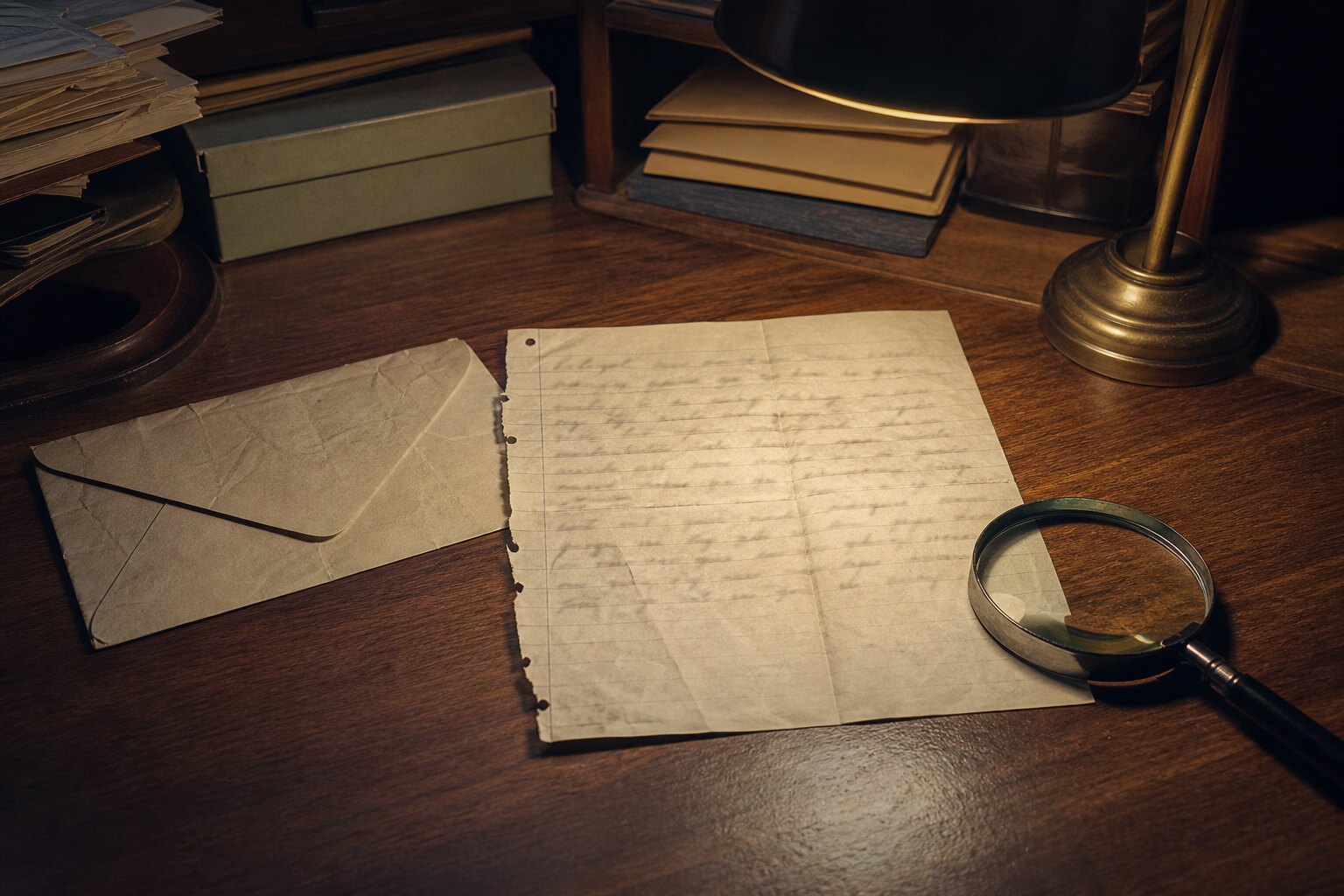
On December 24, 1974, mail reached the Trlica home.
The envelope was addressed to Tommy Trlica in a formal way that family members later said did not sound like Rachel. Inside was a short message presenting the disappearance as voluntary. It claimed the girls had gone to Houston, said they would return in about a week, and pointed Tommy to the location of the car at the Sears upper lot.
The letter did not calm the family.
It deepened the dread.
Rachel's relatives doubted that she had written it. The handwriting, the tone, the use of her husband's formal name, and the strange handling of Rachel's own name on the envelope have all been discussed for decades as reasons to suspect someone else wrote it. At least one public account says handwriting review did not conclusively prove the author, and later reporting says DNA recovered from the letter did not match anyone in available systems at that time.
That is the narrow, careful truth: the letter is deeply suspicious, widely doubted by the family, and central to the case, but it has not publicly solved the case and should not be described as officially proved forged unless law enforcement says so.
Still, the letter's function was devastating.
It gave police a story that matched the runaway theory. It bought time. It offered a location for the car that the author either knew from direct observation, family knowledge, police contact, or involvement. It turned the most urgent question, where are they, into a false-looking answer: Houston.
That answer was never enough.
Why would Rachel, a newly married seventeen-year-old with no known preparation for travel, take a fourteen-year-old friend and a nine-year-old neighbor on a secret trip days before Christmas? Why leave purchases behind? Why miss Renee's party and Julie's deadline? Why write a note that felt wrong to the people who knew her?
The letter remains one of the cruelest objects in the case because it did not have to be elegant to do harm. It only had to delay belief.
Sightings, Stories, And The Noise Around Silence
After the girls vanished, the case filled with fragments.
Some were possible witness sightings. Some were rumors. Some were sincere mistakes. Some may have been the kind of contaminated information that grows around any public mystery when time passes and the human mind tries to repair a broken sequence.
There were reports of a yellow pickup. Reports of girls being forced or hurried into a vehicle. Later accounts of a man claiming a confrontation was only a family dispute. Years afterward, another report placed the girls in a pickup with a mall security guard late that night, but police reportedly found and interviewed the man named in that account, and he denied it.
None of those leads publicly produced Rachel, Renee, or Julie.
That does not mean every witness lied. It means old witness information has to be handled with discipline. A mall parking lot two days before Christmas is a storm of vehicles, arguments, waiting adults, tired children, strangers, relatives, employees, and people who notice something only after the world tells them it might have mattered.
The families were left to live inside that storm.
In February 1975, Julie's mother, Rayanne Moseley, reportedly received a brief phone call from a young female voice. The caller said "Mama" and, when Rayanne asked if it was Julie, reportedly answered yes before the call ended. It was never verified or traced in a way that resolved the case.
There are leads that become evidence.
There are leads that become wounds.
That call, if accurately reported, belongs to the second category unless and until investigators can prove more.
The Investigator Who Took His Files With Him
Frustration with the investigation pushed the families toward private help.
In 1975, they hired Jon Swaim, a private investigator whose work on the case became aggressive, public, and controversial. Swaim followed leads and pursued possible persons of interest, including a man who had lived near Rachel's family and who, according to case summaries, had been accused of using employment applications to contact young women.
No confirmed case-breaking evidence emerged publicly from that line of inquiry.
Then Swaim died in 1979. His death was reported as a suicide, and the most painful detail in later case histories is what happened afterward: his Fort Worth Missing Trio files were destroyed according to his instructions.
That fact has become one more locked door in a case made of locked doors.
Maybe his files held nothing but dead ends. Maybe they held names, impressions, witness notes, diagrams, timelines, or small contradictions that would matter differently under modern review. The point is not to turn Swaim into the answer. The point is that another body of information disappeared.
The girls vanished first.
Then the car lost its forensic moment.
Then the letter failed to identify its writer.
Then a private investigator's files were erased.
At a certain point, a cold case begins to feel less like one missing road and more like an entire map burned at the edges.
The Gravity Of Suspicion
When a case goes unsolved long enough, suspicion becomes its own weather.
It gathers around family tensions, old relationships, abandoned tips, convicted offenders, strangers seen near parking lots, men who lived too close, men who traveled too much, men who had harmed women or children elsewhere. Some of those questions are necessary. Some are corrosive. All of them must be separated from proof.
Rachel's older sister, Debra, has been discussed publicly for years because of family conflict, her prior relationship with Tommy Trlica, and the painful fractures that followed the disappearance. She has denied involvement. She has not been publicly charged in the disappearance of Rachel, Renee, or Julie. A responsible account cannot turn family suspicion into fact.
The same caution applies to the names of convicted offenders and mobile predators that have circulated in books, online case files, and cold-case discussions. Researchers and family advocates have considered whether someone with a known history of abduction, sexual violence, impersonation, or predatory movement could have crossed paths with the girls. But public discussion is not a criminal charge, and theory is not evidence.
No person has been publicly proven to have taken the Fort Worth Missing Trio.
That sentence is unsatisfying.
It is also the ethical boundary the case requires.
By the early 2000s, Fort Worth police had publicly indicated they believed the girls may have left the mall with someone they trusted or at least someone who did not initially trigger enough fear to cause a public struggle. If that belief is right, the crime may have begun not with a dramatic attack, but with compliance: a familiar face, an authority posture, a ride, a request, a pressure point, a lie.
The most frightening predators do not always begin by looking like predators.
Sometimes they begin by sounding like a solution.
What The Water Keeps
Time changed the tools available to investigators, but it did not change the central absence.
The girls were never found. No remains were identified. No vehicle tied to them was recovered from some obvious hiding place. No confession unlocked the letter. No public DNA match named the person who handled it.
Still, the case has never fully gone quiet.
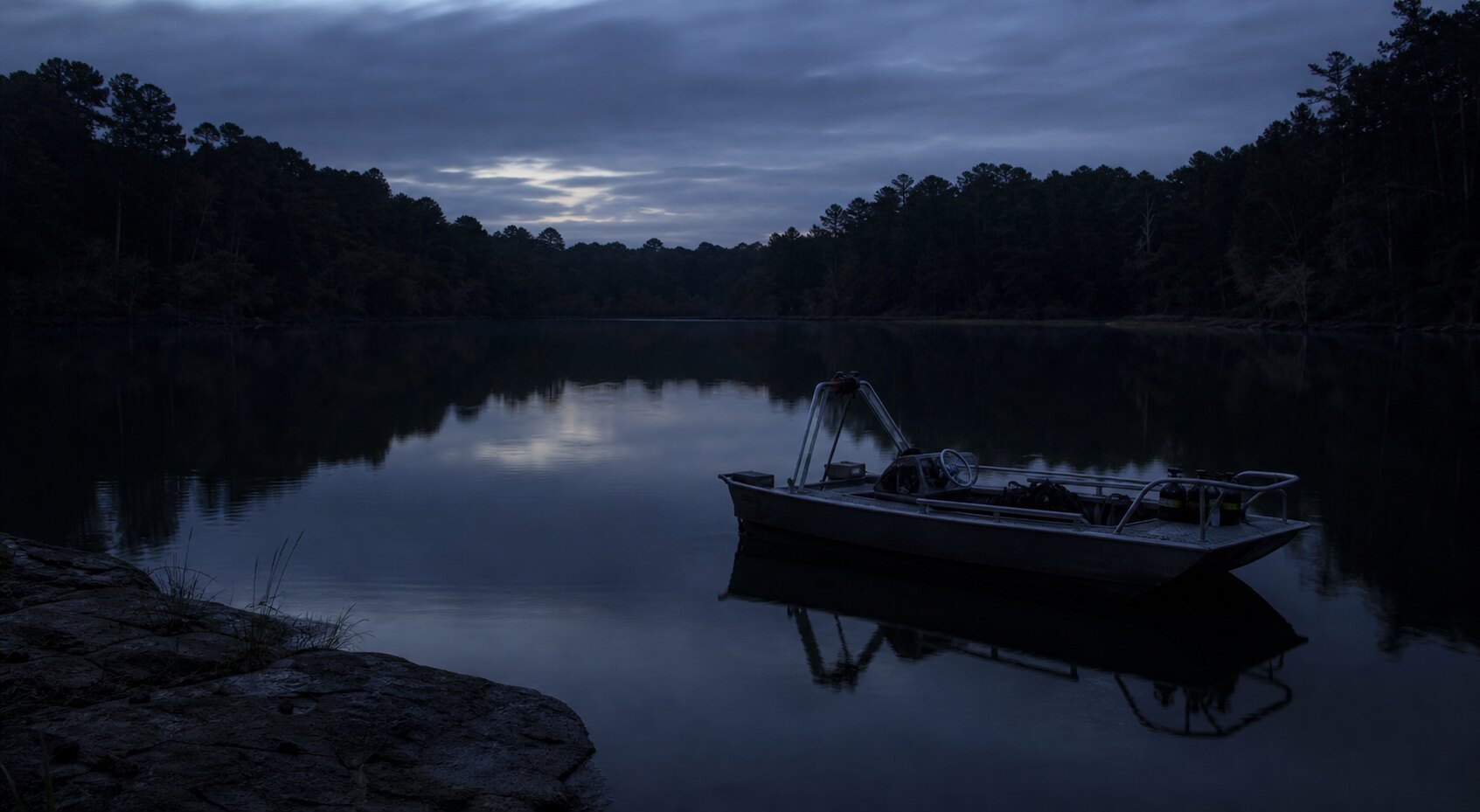
Rachel's younger brother, Rusty Arnold, spent decades pursuing leads and pressing for answers. One of the most visible efforts came in 2018, when volunteer divers searched Benbrook Lake after renewed attention to a possible vehicle lead. The operation drew sonar hits and recovery work in dark water, the kind of search that feels almost medieval in its effort: men and machines lowering themselves into the cold because the surface has given up nothing.
Divers recovered vehicles from the lake, including older cars that had spent decades underwater. Public reporting said those recoveries did not produce a confirmed link to the missing girls.
That is the cruelty of cold-case searching. Even the dramatic moments can end in nothing. A car breaks the surface. Families hold their breath. Reporters gather. The water opens its mouth.
And then the case remains the case.
Modern forensic hope has gathered around the letter, especially the possibility that newer DNA methods might do what older testing could not. If viable biological material remains on the envelope, stamp, or paper, future testing might identify a contributor, exclude old suspects, or develop an investigative lead. But that possibility depends on evidence condition, chain of custody, sample quality, legal access, database policy, and confirmation work.
Science can reopen a door.
It cannot promise what will be behind it.
More Than Fifty Years Later
The Seminary South Shopping Center is no longer the place it was in 1974. Names change. Stores close. Buildings are renovated, repurposed, or absorbed into new versions of themselves. A mall can survive a tragedy by becoming visually unfamiliar to the people who remember it.
Families do not get that privilege.
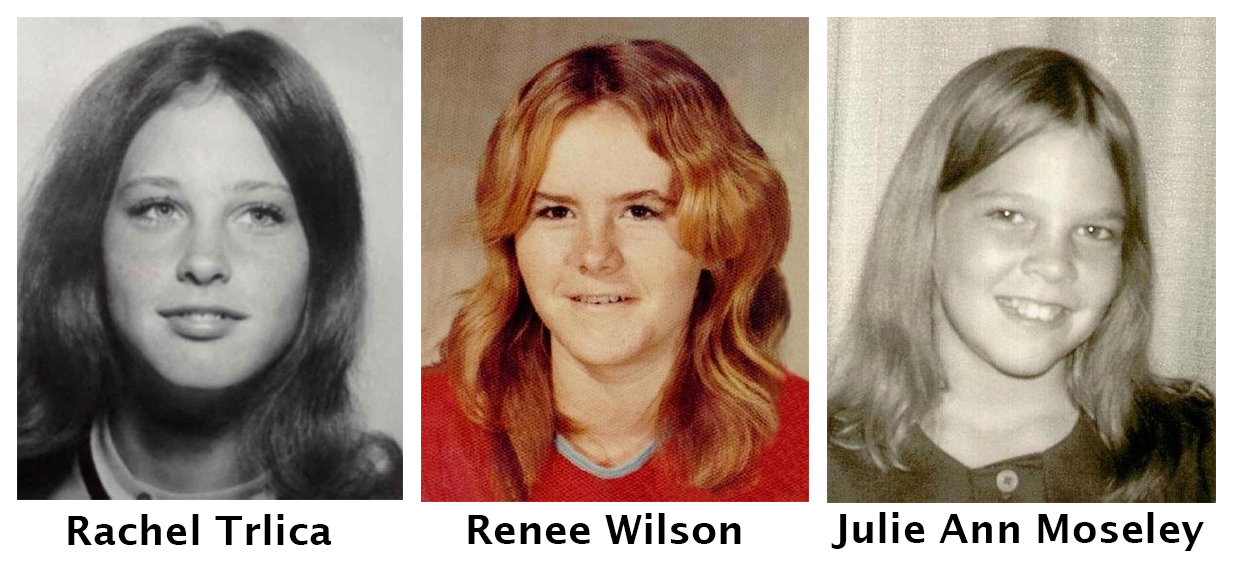
The families of Rachel Trlica, Renee Wilson, and Julie Moseley lived through the first Christmas without them, then the first anniversary, then ten years, then twenty, then the long public ritual of age-progressed images showing the women and child they might have become. NCMEC continues to circulate their missing-child information. Texas records still mark the case as unresolved, with foul play possible.
The girls remain suspended in the record at seventeen, fourteen, and nine.
Rachel is still associated with the car.
Renee is still associated with the party she never reached.
Julie is still associated with the permission she fought for, the ordinary little victory of being allowed to go shopping before Christmas.
That is what makes the case so hard to set down. It was not a midnight disappearance from a remote road. It was not a secret errand built around danger. It was a public place, a busy holiday afternoon, three young people moving through the most familiar choreography in America: buy the presents, put them in the car, go home.
Somewhere between the mall and the rest of their lives, someone or something intercepted them.
The Oldsmobile stayed behind.
The letter arrived.
The families entered a lifetime of waiting.
More than fifty years later, the Fort Worth Missing Trio case still asks the same terrible question it asked on December 23, 1974: who knew enough to make three girls disappear from a crowded place, leave a car behind, and send a letter that helped silence the alarm?
The answer has not surfaced.
But neither have the names disappeared.
Mary Rachel Trlica. Lisa Renee Wilson. Julie Ann Moseley.
Archival Case Gallery
Sources & Case Notes
Last updated: May 18, 2026.
Primary sources and case notes: This article was built from the National Center for Missing & Exploited Children poster for Mary Rachel Trlica, which lists Lisa Renee Wilson and Julie Ann Moseley as missing companions; the Texas Department of Public Safety Missing Persons Clearinghouse entry for Mary Rachel Trlica; A&E True Crime's Fort Worth Missing Trio case overview; NBC 5 Dallas-Fort Worth reporting on renewed billboard attention and DNA testing of the letter; Oxygen's 2018 report on the Benbrook Lake vehicle searches; The Charley Project's Mary Rachel Trlica case file; and the detailed chronology maintained by Stories of the Unsolved. Family-suspicion material, old witness sightings, serial-offender theories, and private-investigator claims are framed as reported leads or theories, not established findings.
Correction policy: If you have source corrections, family-approved context, or image-rights concerns, contact Anonymous369 Media through Contact & Media Inquiries.
Image credits: Feature and section images are Anonymous369 Media documentary recreations based on the documented 1974 Fort Worth mall setting, the Houston letter, the mailbox timeline, and the Benbrook Lake search context. The archival portrait montage is a public-domain NamUs/Wikimedia Commons image using family-provided missing-person photos. Other archival images, including newspaper photographs, mall images, age-progressed images, and Houston letter scans, were reviewed but not reproduced because republication rights were not clear for this production pass. Archival Case Gallery uses a public-domain NamUs/Wikimedia Commons missing-person portrait montage of Mary Rachel Trlica, Lisa Renee Wilson, and Julie Ann Moseley.
Content warning: This article discusses the disappearance of children and teenagers, suspected abduction, family trauma, and possible foul play in restrained, non-graphic terms.