
The Tip in the Drawer: How Richard Allen Was Convicted in the Delphi Murders
Abby Williams and Libby German crossed Delphi's Monon High Bridge in 2017 and never came home. Years later, a misfiled tip, an unspent cartridge, and disputed prison confessions led to Richard Allen's conviction, now under appeal.


The Monon High Bridge still looks like a dare.
It rises over Deer Creek in rural Carroll County, Indiana, an abandoned railroad trestle of rusted iron, weathered ties, and open air. In winter, when the trees are bare and the ground is the color of dead leaves, the bridge feels even higher than it is. It is not a polished tourist postcard. It is narrow, exposed, and local in the way old landmarks become local: familiar enough to feel ordinary, dangerous enough to make teenagers prove something to themselves when they cross it.
On February 13, 2017, there was no school in Delphi. The afternoon was unseasonably mild. Thirteen-year-old Abigail "Abby" Williams and fourteen-year-old Liberty "Libby" German had the kind of plan that should not have needed a tragic footnote: go to the trail, walk the bridge, take pictures, and wait for a ride home.
At 2:07 p.m., Libby posted a photo to Snapchat. Abby is on the bridge, stepping carefully over the wooden ties, her blue jacket bright against the gray-brown world around her.
It looked like a normal image from a normal afternoon.
About six minutes later, Libby's phone recorded video of a man behind them on the bridge. The public would come to know him as "Bridge Guy": blue jacket, jeans, head down, hands near his pockets, moving forward through the grain of a cellphone camera.
The audio later released by police carried the phrase that made the case national: "Guys... down the hill."
Trial testimony would place the phone's final logged movement at about 2:32 p.m. That timestamp cannot tell the whole story by itself. It cannot speak for Abby. It cannot speak for Libby. But it marked the place where an ordinary day narrowed into evidence.
For more than five years, the man in the blue jacket seemed to hover outside identification. Then, in 2022, the case turned not on a sudden confession, a dramatic laboratory breakthrough, or a new witness stepping out of the woods.
It turned on a file.
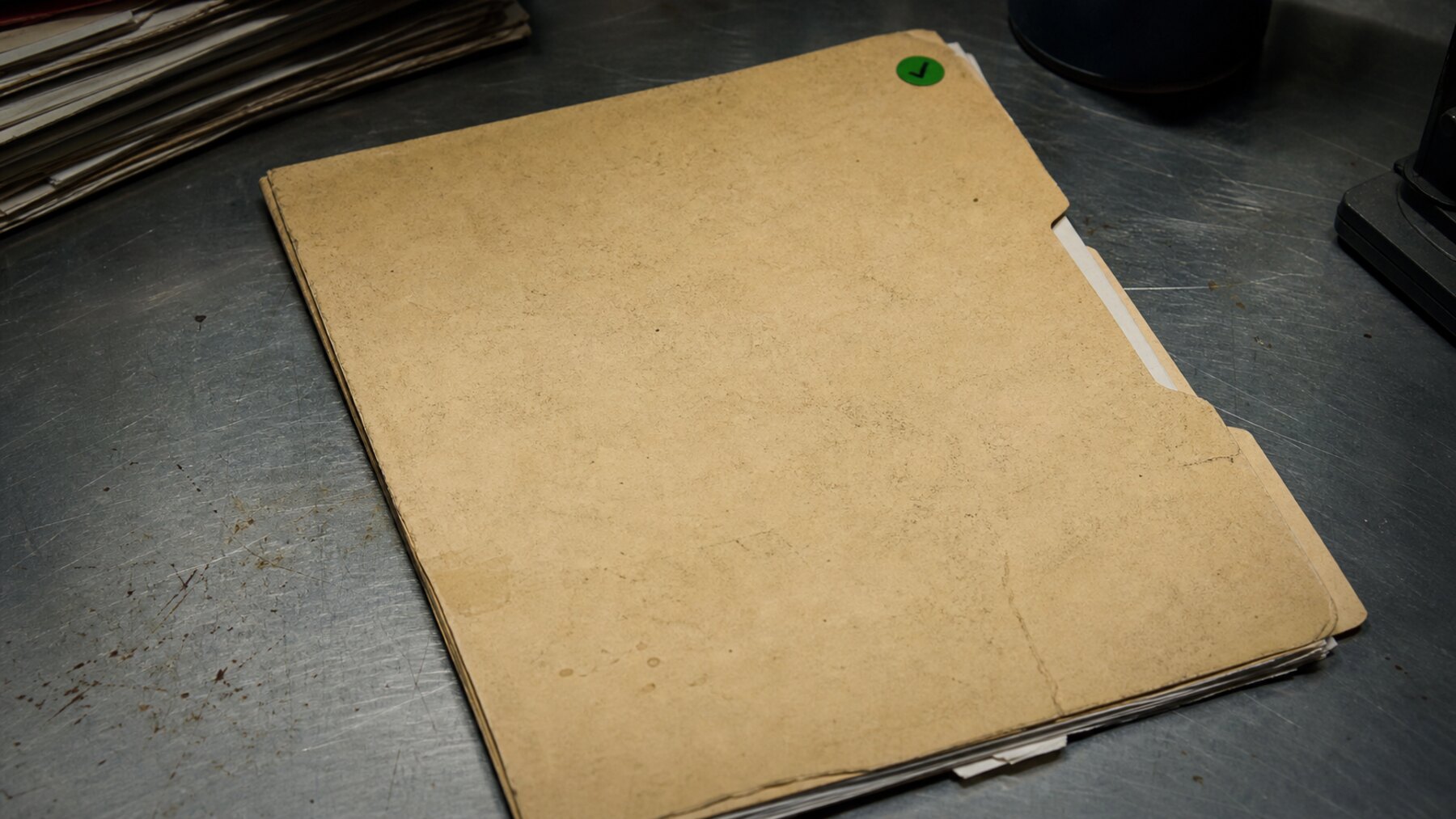
A manila record, missed for years, sitting inside a drawer with the wrong name attached to it.
The Day The Trail Did Not Give Them Back
Abby and Libby were best friends in a small town where people knew one another by face, family, school, and routine. Libby lived with family members who helped raise her. Abby had a circle that understood the steady closeness between the girls. They were eighth-graders, which means they were old enough to want independence and young enough that the adults around them still measured the day by pickup times.
Libby's older sister, Kelsi, dropped the girls near the trail area around early afternoon. The plan was simple. Libby's father was expected to pick them up later that day, around 3:15 p.m.
But the girls did not appear.
Calls went unanswered. Texts went unanswered. Family worry became family search, then community search, then law-enforcement search. At about 5:30 p.m., Abby and Libby were reported missing.
At first, the fear still had room for mercy. Maybe they were hurt. Maybe they had wandered farther than intended. Maybe the difficult terrain near the bridge had trapped them somewhere out of sight.
The next day, February 14, searchers found Abby and Libby in a wooded area near Deer Creek.
The case became a homicide investigation.
Courtroom testimony years later established that both girls died from sharp-force injuries to the neck. Trial reporting also described clothing displacement and other disturbing crime-scene details, but this article will not dwell on those specifics. The central fact is enough: two children were killed after a walk on a public trail, close to a landmark their community knew, in the middle of the afternoon.
Forensic testimony did not produce the kind of simple biological answer people often expect from modern crime stories. A state DNA analyst testified that the items she tested did not contain Richard Allen's DNA. Reporting from the trial also noted limited male DNA findings that were not presented as a direct identification of Allen. That absence would become one of the defense's strongest talking points.
But one physical object did matter immediately.
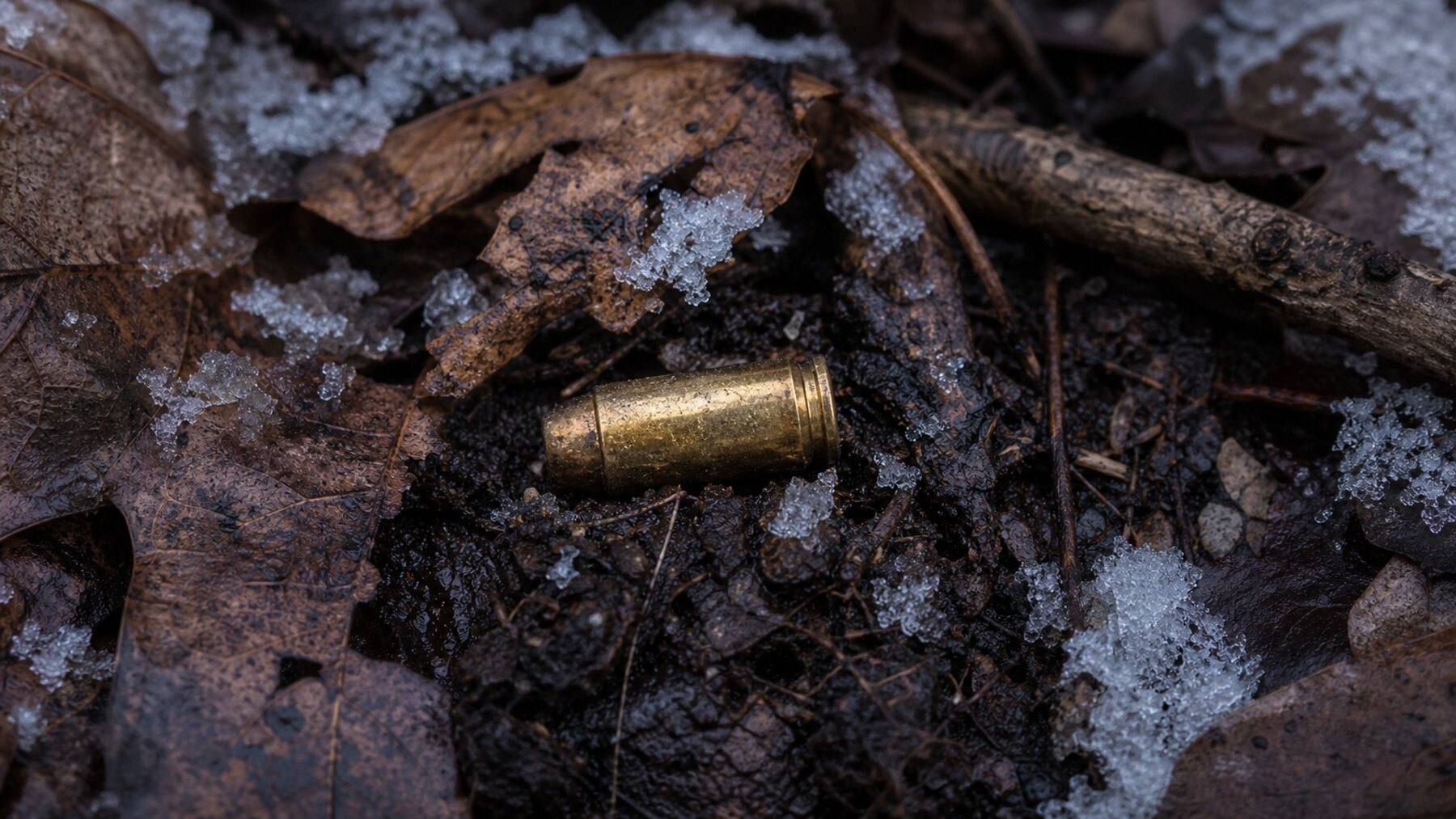
Near the girls, investigators recovered a single unspent .40-caliber cartridge.
It had not been fired. It had not passed through a barrel. It was a cartridge that, according to the state's theory, had been cycled through a firearm and left behind.
For years, that small piece of brass waited beside the video in the case file: one image from a phone, one voice on audio, one cartridge in the dirt.
The Girl Who Left A Record
The reason the Delphi murders became so recognizable, so fast, is that Libby German did something extraordinary under pressure.
She recorded.
The video did not show everything. It did not give the public a clean face, a license plate, a name, or a complete account of what happened after the girls left the bridge. But it gave investigators something rare and terrible: a moving image of the man prosecutors would later argue forced Abby and Libby away from the trail.
Police released a still image first. Later, they released audio. Then they released additional video and an expanded audio clip. The public studied every pixel and syllable. The man's posture, his clothing, his gait, the shape of his hat or hood, the tone of the words. Every fragment became a place for hope, fear, grief, and speculation to gather.
It was too much evidence to ignore and not enough evidence to solve the case.
That contradiction is what made the case so haunting.
In many unsolved murders, the public imagines the offender as a shadow beyond the camera. In Delphi, the shadow was visible. He was walking toward two girls in daylight. He was caught by the courage or instinct of one of the victims. He was close enough for a phone microphone to catch his command.
And still, no one could name him.
The investigation generated thousands of tips. Sketches were released. Leads rose, collapsed, and were replaced by new leads. The community lived with a particular kind of fear, not the abstract fear of evil somewhere far away, but the intimate fear that someone who could do this might still be near enough to buy groceries, fill a prescription, or stand in line without anyone knowing.
Richard Matthew Allen lived in Delphi.
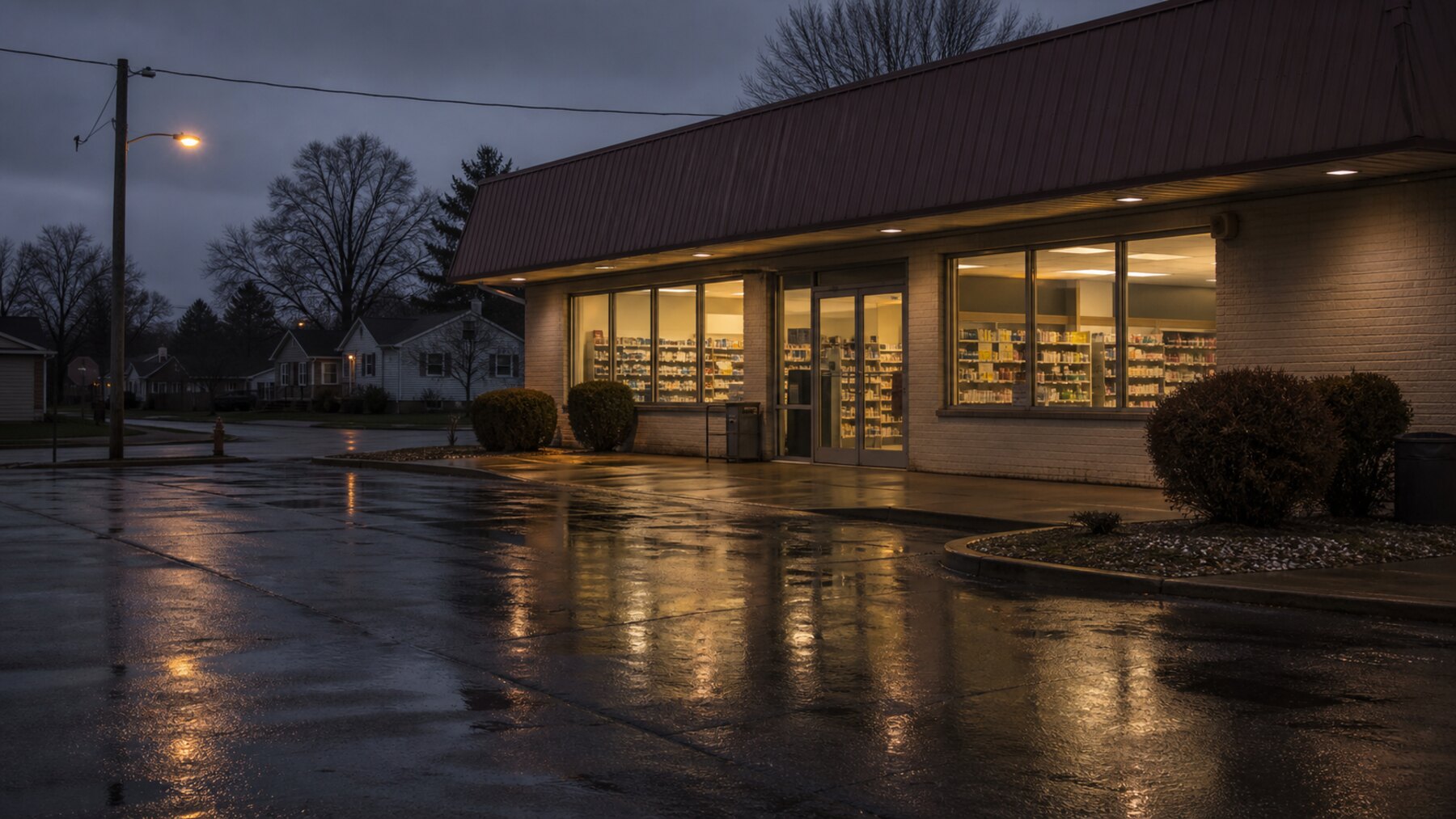
He worked as a pharmacy technician at the local CVS. He was married. He was a father. He had served in the Army. He was not a public fugitive or a stranger from the edge of the map. He was part of the town's ordinary background, one more person moving through the same streets as everyone else.
After his conviction, that ordinary background became one of the most unsettling facts in the case.
The Tip In The Drawer
The break came through a volunteer and a paperwork failure.
In 2022, Kathy Shank, a retired state worker volunteering with the investigation, was helping organize and digitize a large collection of physical tips. Trial reporting described roughly 14,000 tips and multiple filing cabinets of material. During that process, she found a lead sheet from February 2017.
The file had been labeled with the name "Richard Allen Whiteman."
Whiteman was not Allen's last name. It was connected to the street where he lived. The lead also carried a "CLEARED" marking, according to trial testimony summarized by WRTV. However it happened, the practical effect was devastating: a man who had placed himself on the trail the day Abby and Libby disappeared had not become the investigative focus for years.
The report traced back to an early contact with a Department of Natural Resources officer. Allen had self-reported that he was on the Monon High Bridge trail area on February 13, 2017. He said he had been there during the critical window. He said he had seen three girls on the trail. He described wearing jeans and a jacket in a dark or blue-black range, according to trial reporting and probable-cause summaries.
Those details mattered because they lined up with the image the public had been staring at since 2017.
Police reexamined Allen. The file changed from background noise into a possible answer.
This is the cruelest part of the case from an investigative standpoint. The lead was not hidden by the offender. It was not buried in a remote archive. It was not a secret known only to one person. It was inside the system, close enough to be found, but badly enough handled to lose its meaning.
The figure on the bridge had, according to the state's later theory, told police he was there.
The system failed to hear what that meant.
The Unspent Cartridge
On October 13, 2022, investigators interviewed Allen again and searched his home after obtaining a warrant. Among the items recovered was a .40-caliber Sig Sauer pistol.
The state's firearms evidence became one of the most important and most contested parts of the case.
An Indiana State Police firearms examiner testified that the unspent .40-caliber cartridge recovered near Abby and Libby had marks consistent with having been cycled through Allen's Sig Sauer. Reporting from the trial described ejector and extractor marks, the kinds of microscopic impressions a firearm can leave on a cartridge when it is chambered and removed.
To prosecutors, that opinion tied Allen's gun to the crime scene.
To the defense, it was not a clean fingerprint. It was a disputed interpretation of toolmarks on an unfired cartridge, a narrower and more controversial claim than matching a fired bullet to barrel markings. Defense experts and attorneys argued that the methodology was subjective and that the state was asking the jury to trust too much from too little.
That distinction matters.
The article should not flatten the cartridge into a magic object that solved the case by itself. It did not. It became powerful because it sat among other evidence: Allen's own admission that he was on the trail, witness accounts, the cellphone video, the clothing description, the police theory of the abduction, and later, the confessions.
Evidence rarely arrives in court as a thunderclap. More often it arrives as accumulation. Each piece leans on another piece until the jury either sees a structure or sees a pile.
In Delphi, the jury saw the structure.
Confessions Under Pressure
After Allen's arrest, the case entered a darker and more complicated phase.
Allen was held in state prison facilities before trial, in conditions his defense team later described as psychologically destructive. They argued that he was isolated, deteriorating, and treated in ways that made his later confessions unreliable. The state argued that he was held under protective conditions because of the nature and notoriety of the charges.
During incarceration, Allen made repeated incriminating statements. Prosecutors said he confessed dozens of times, including in calls to family members and in statements to prison personnel. Jurors heard some of those recordings and heard testimony from correctional staff and mental-health professionals.
Dr. Monica Wala, a prison psychologist who treated Allen, became a central witness. According to trial reporting, she testified that Allen eventually gave details about the crime, including a claim that he had intended a sexual assault but stopped after seeing a van nearby. The prosecution treated that detail as significant because a man whose driveway ran near the bridge testified about driving in the area around the relevant time.
The defense attacked the confessions from several directions.
They argued that Allen's mental state had collapsed. They emphasized the lack of Allen's DNA at the crime scene. They challenged whether some details in the confessions could have come from discovery materials, public information, leading conversations, or a mind under extreme distress. They also questioned Wala's role, including reporting that she had followed the Delphi case outside her treatment relationship.
This is why the confessions cannot be responsibly summarized as either pure certainty or pure noise.
The jury was entitled to hear them. The defense was entitled to challenge them. The state saw them as the human voice of guilt. The defense saw them as the sound of a man breaking under confinement.
Both interpretations now sit inside the appeal.
The Theory The Jury Did Not Hear
The most controversial excluded defense theory involved Odinism.
Allen's attorneys argued before trial that early investigative leads pointed toward other men and that elements of the crime scene suggested a ritualistic killing tied to Odinism or Norse-pagan symbolism. In public filings and hearings, they connected the theory to alleged third-party suspects, white-supremacist or extremist subcultures, and the placement of sticks near the victims.
That theory is not presented here as fact.
It was a defense theory, built from early investigative material and disputed interpretations. Prosecutors rejected it. Special Judge Frances Gull barred the defense from presenting it to the jury after finding that Allen's attorneys had not produced admissible evidence showing the required nexus between the theory, proposed alternative suspects, and the murders.
The exclusion mattered because it shaped the trial.
Without that theory before the jury, Allen's defense focused heavily on reasonable doubt: no direct DNA link to Allen, disputed toolmark science, witness uncertainty, questions about the timeline, and the reliability of confessions made after months in severe confinement.
To the state, the excluded theory was speculation that would have confused the jury and turned the trial into a rumor chamber. To the defense, its exclusion denied Allen the chance to tell the full story of the investigation and present an alternative explanation.
That argument did not end with the verdict.
It moved to the appellate record.
A Verdict, A Sentence, And An Appeal
On November 11, 2024, a Carroll County jury found Richard Allen guilty of two counts of murder and two counts of felony murder in the deaths of Abby Williams and Libby German.
The verdict did not erase the years of fear, rumor, or investigative failure. It did not give the families the girls back. But it gave the case a legal answer after nearly eight years of public uncertainty.
On December 20, 2024, Judge Frances Gull sentenced Allen to 130 years in prison, the maximum term reported for the convictions: consecutive 65-year sentences for the deaths of Abby and Libby.
Allen remains a convicted murderer under Indiana law. He also continues to maintain his innocence through appeal. Those facts can exist at the same time. The conviction is real. The sentence is real. The appellate process is also real.
As of May 22, 2026, the appeal is active. The Court of Appeals of Indiana has granted oral argument, scheduled for September 21, 2026, at the Indiana Statehouse. Allen's appellate arguments include challenges to the search warrant, the confession evidence, the toolmark testimony, and the exclusion of third-party-defense material. The state has asked for the conviction to be upheld.
The public often wants a crime story to end at the verdict, but courts rarely move with that kind of dramatic neatness. The legal system is slower, colder, and more procedural than grief. It asks whether rules were followed, whether evidence was admitted properly, whether a defendant's rights were protected, whether a conviction can survive scrutiny after the emotion of trial has cooled.
For Abby and Libby's families, the case has always been more than a legal file.
It is a missing future.
It is the school years that never happened, the birthdays that kept arriving, and the ordinary teenage mess of growing up turned into memorials, foundations, headlines, and courtroom benches.
Libby's phone captured the man on the bridge, but it also preserved the last visible proof of an afternoon before the world changed. Abby ahead on the ties. Libby behind the camera. The bridge under their feet. The trees bare around them. A familiar place becoming evidence in real time.
Years later, the answer police had missed was not in the woods.
It was in the paperwork.
A name mishandled. A street folded into an identity. A green mark that should not have been the end of anything. A drawer holding the kind of mistake that does not look dramatic until everyone understands what it cost.
The Monon High Bridge still stands above Deer Creek.
Richard Allen is serving a 130-year sentence while his conviction is challenged on appeal.
And the Delphi case now carries two hauntings at once: the man seen walking behind two girls on a winter bridge, and the missed file that let him remain part of ordinary Delphi life for five more years.
Sources & Case Notes
Last updated: May 22, 2026.
Primary sources and case notes: This article is based on the FBI Indianapolis 2017 request for information; the WRTV Delphi timeline documenting the drop-off and 2:07 p.m. Snapchat post; ABC7/WLS reporting on trial phone-data testimony placing the bridge video around 2:13-2:14 p.m. and the phone's last logged movement around 2:32 p.m.; WRTV Day 6 trial reporting on Kathy Shank, the misfiled "Richard Allen Whiteman" tip, and Allen's self-reported presence on the trail; WRTV Day 7 trial reporting on the unspent .40-caliber cartridge and disputed firearm-toolmark testimony; WRTV Day 9 trial reporting on DNA testimony; WRTV Day 11 trial reporting and Associated Press trial reporting on the confession evidence and defense mental-health arguments; WRTV reporting on Judge Frances Gull's order excluding the Odinism theory; CBS Chicago verdict reporting and CBS Chicago sentencing reporting on the November 2024 conviction and December 2024 sentence; and WNDU 2026 reporting on the Court of Appeals of Indiana granting oral argument for September 21, 2026. Crime-scene mechanics, motive claims, confession details, third-party theories, and appellate issues are framed as trial evidence, defense arguments, prosecution arguments, or pending appellate claims rather than independent findings by this article.
Correction policy: If you have source corrections, family-approved context, or image-rights concerns, contact Anonymous369 Media through Contact & Media Inquiries.
Image credits: Feature and section images are Anonymous369 Media documentary recreations based on the Monon High Bridge setting, the misfiled-tip record, the unspent cartridge evidence, and the small-town pharmacy context. They are not archival photographs, official evidence, images of Abby Williams or Libby German, depictions of Richard Allen, booking images, court images, or reproductions of law-enforcement video stills. FBI, Indiana State Police, Delphi Police, news-hosted, family, missing-poster, courtroom, booking, and Monon High Bridge images were reviewed for context, but no archival image is reproduced here because the immediate reuse rights were not clear enough for publication.
Content warning: This article discusses the murders of two children, contested forensic evidence, incarceration-related mental-health claims, and restrained non-graphic crime-scene facts.