
The Crosshair Letters: How the Zodiac Killer Held California Hostage
Five people were murdered in Northern California while an unidentified killer used letters, ciphers, and threats to turn private grief into public terror. The Zodiac Killer was never caught.


The first confirmed attack did not begin with a symbol.
No crosshair. No cipher. No boastful letter folded into an envelope. No newspaper editor staring at a page of strange shapes and wondering whether publishing it would save lives or feed the person who had sent it.
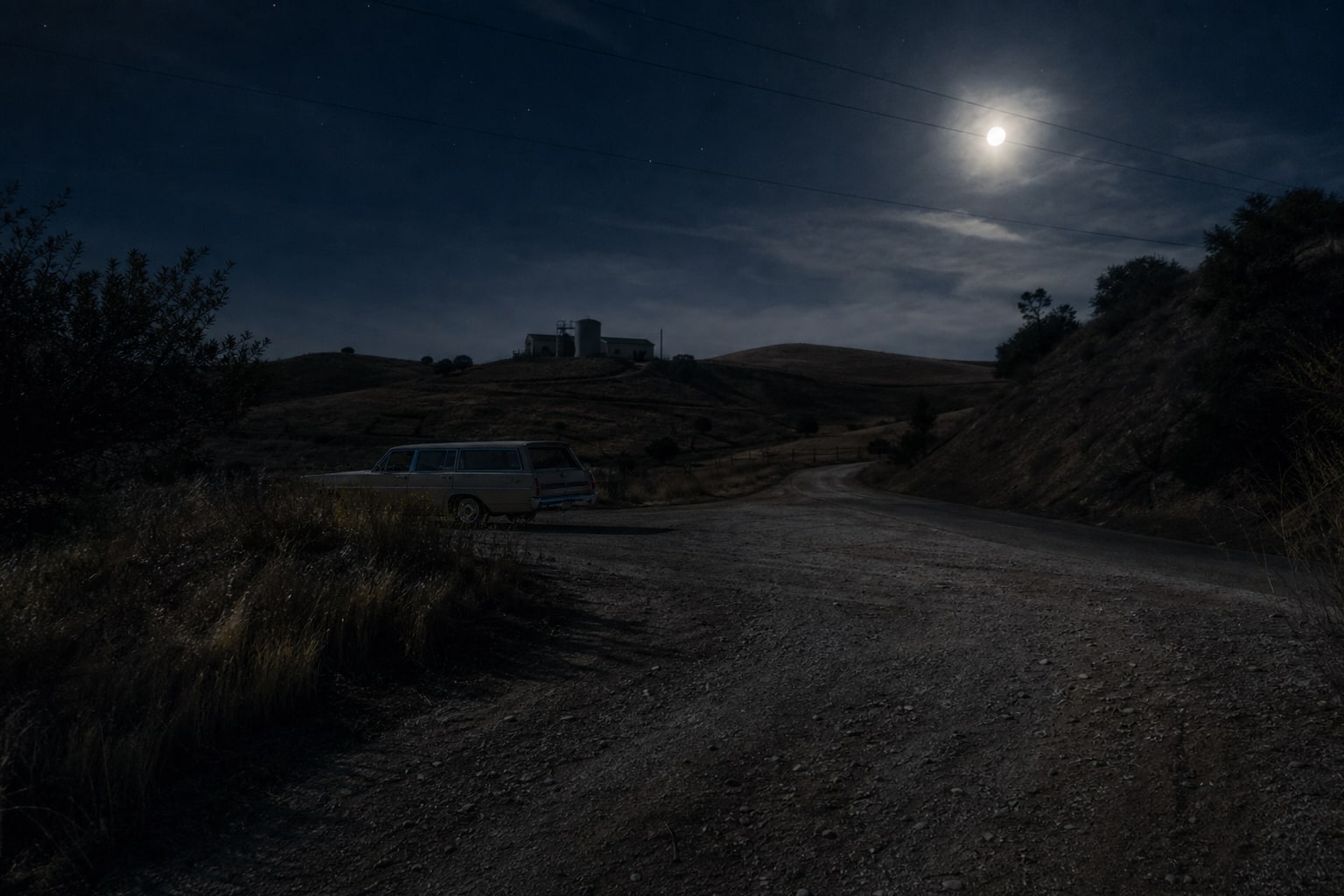
It began on a cold Friday night beside Lake Herman Road, on the edge of Vallejo and Benicia, where two teenagers had parked in a gravel turnout on December 20, 1968.
David Arthur Faraday was seventeen. Betty Lou Jensen was sixteen. They were high school students on their first formal date, moving through the fragile independence of adolescence: a car, a dark rural road, a few hours away from parents and homework and the small rules of home.
Sometime after 11 p.m., someone came to the turnout with a gun.
David was shot near the car. Betty Lou was shot as she fled into the darkness. By the time passersby and police found them, the scene had already become the kind of silence investigators hate most: no clear witness, no suspect in hand, no obvious motive strong enough to explain why two teenagers had been chosen.
At first, the murders looked like a brutal local mystery. A lovers' lane attack. A random predator. A night that broke two families and left police searching the hills for a person without a name.
The Bay Area did not yet know that the killer would eventually give himself one.
Two Teenagers On Lake Herman Road
The first victims were not symbols in someone else's performance.
David Faraday and Betty Lou Jensen were young people at the opening edge of their lives. That matters in a case that has often been swallowed by codes, suspects, movie posters, and the grim theater of the man who wrote to the press. Before the letters made him famous, there were families waiting for two teenagers to come home.
The Lake Herman Road turnout was a known place for young couples. It sat in a rural stretch where headlights could appear, pass, and vanish into blackness. That isolation created the killer's first advantage. He did not need a complicated plan if the road itself gave him privacy.
The attack was fast. The known facts suggest control rather than conversation: the car, the gunfire, the attempted escape, the abrupt disappearance of the person who had done it. Investigators had little to work with beyond shell casings, ballistic evidence, and the terrible fact that the victims had been selected while doing something ordinary.
For months, the case remained isolated.
Then the pattern returned.
The Phone Call After Blue Rock Springs
Late on July 4, 1969, and into the early minutes of July 5, Darlene Ferrin and Michael Mageau were parked at Blue Rock Springs Park in Vallejo, only a few miles from the first murders.
Darlene was twenty-two. Michael was nineteen. They were sitting in Darlene's car when another vehicle entered the lot, left, then returned. A man approached with a flashlight bright enough to blind them through the window.
Then he fired.
Darlene was killed. Michael survived despite multiple gunshot wounds. His survival would become one of the case's rare pieces of living testimony: not a full solution, but proof that the attacker was not only a phantom made of letters. He had stood close enough for someone to remember the flash, the weapon, the shock of violence entering a parked car.
About forty minutes after the attack, a man called Vallejo police from a payphone. He reported the shooting, identified the weapon as a 9mm, and claimed responsibility for the Lake Herman Road murders too.
That call changed the shape of the case.
The first murders were no longer only the first murders. They were now a chapter in a story someone wanted law enforcement to read in order. The person on the phone was not content to kill and disappear. He wanted credit. He wanted the crimes connected. He wanted the fear to have an author.
That desire would become the real engine of the Zodiac case.
Ink Became A Weapon
At the end of July 1969, handwritten letters arrived at three Bay Area newspapers: the San Francisco Chronicle, the San Francisco Examiner, and the Vallejo Times-Herald.
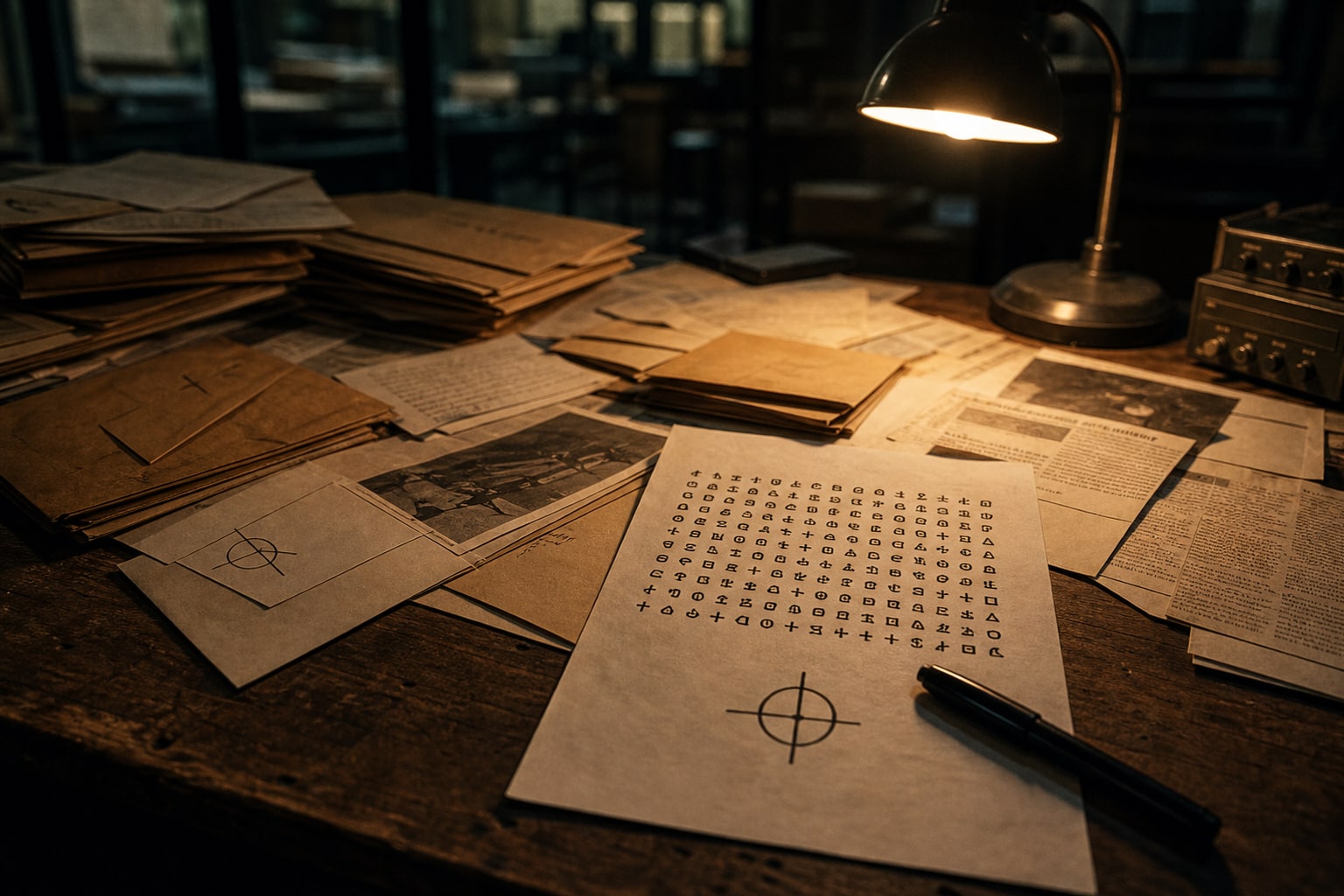
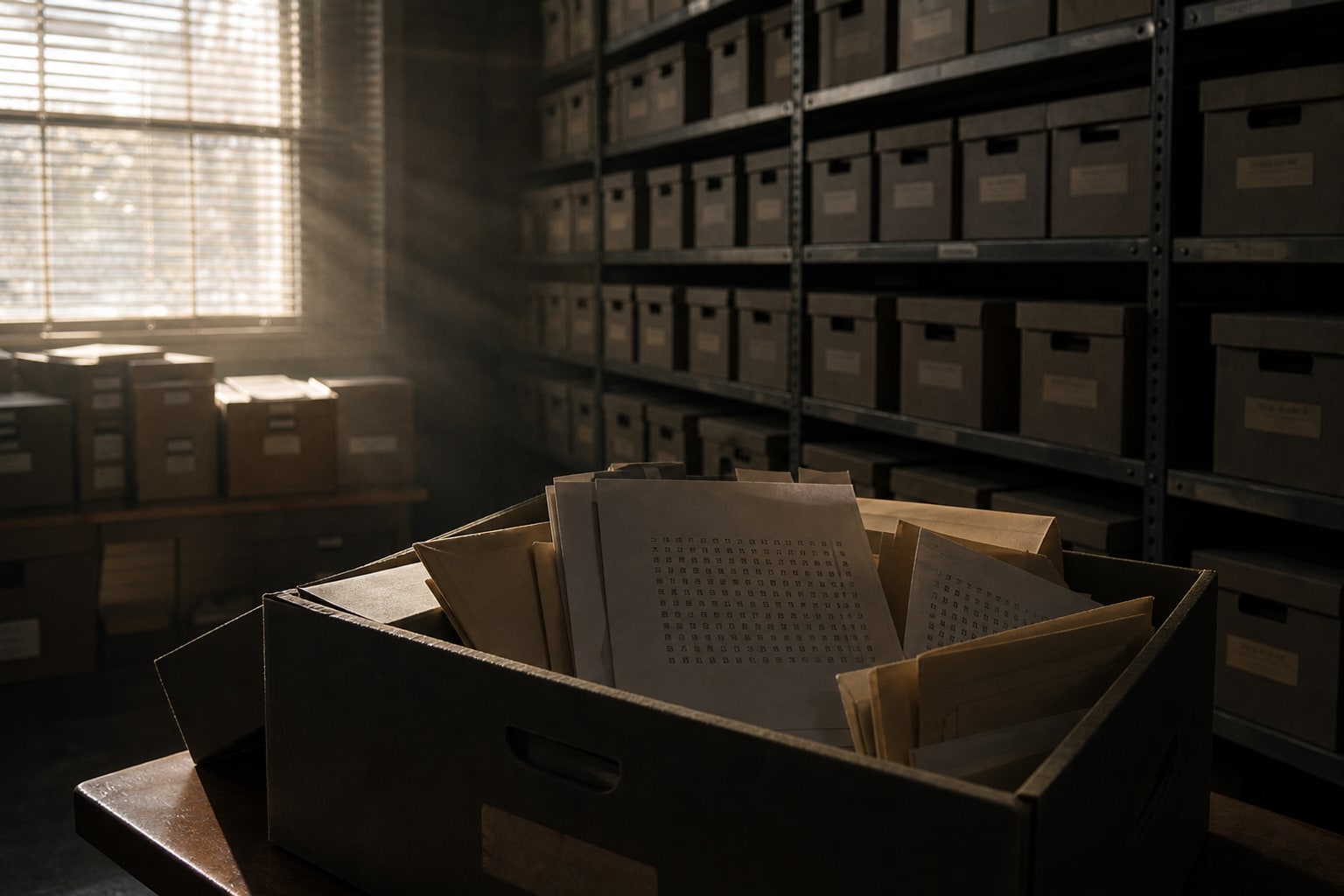
Each letter claimed responsibility for the Lake Herman Road and Blue Rock Springs attacks. Each included details meant to prove the writer knew what had happened. Each carried part of a 408-symbol cipher, with a demand that the newspapers publish the messages.
This was the moment the case moved from murder investigation into public siege.
The writer understood something ugly about attention. A letter to police stays in a file. A letter to newspapers enters kitchens, buses, barbershops, classrooms, offices, and living rooms. It makes every reader part of the scene. It turns a private investigation into a public performance.
On August 4, another letter arrived, opening with the phrase that would define the case: "This is the Zodiac speaking."
The name was a mask, but it was also a strategy. With the name came the crosshair symbol, a clean graphic mark that could be recognized faster than any paragraph. It reduced the case to a brand before the modern media world had the language for that kind of manipulation.
Days later, Donald and Bettye Harden of Salinas cracked the 408-symbol cipher. The answer did not reveal the killer's identity. It revealed the shape of his fantasy: the writer claimed that killing gave him pleasure and that the people he murdered would become his slaves after death.
The message was not a confession in the normal sense. It was a self-portrait built out of cruelty, misspellings, and control.
It told investigators less about a name than about a need.
The Hood At Lake Berryessa
On September 27, 1969, the case changed again.
Bryan Hartnell and Cecelia Shepard, students at Pacific Union College, were spending the afternoon on a quiet peninsula at Lake Berryessa in Napa County. It was daylight. They were not in a dark parking lot or along an isolated road at midnight.
A man approached them wearing a hood.
Bryan Hartnell survived and later described the outfit: black fabric, eyeholes covered by clip-on sunglasses, and the crosshair symbol displayed on the chest. The image has become one of the most unsettling pieces of the entire case because it shows planning beyond opportunity. Whoever attacked them had not simply arrived with a weapon. He had arrived with a costume.
He told a story about being an escaped convict and needing their money and car. Under threat of a gun, Bryan and Cecelia were bound. Then the false robbery collapsed.
The attacker stabbed them repeatedly and left them on the shore.
Bryan survived. Cecelia died two days later.
Before leaving, the attacker wrote on Bryan's car door in black marker, listing dates tied to the earlier attacks and ending with the Lake Berryessa date and the words "by knife."
There is no need to make that moment more dramatic than it already is. A car door became a ledger. A human life became a line in a tally. The crosshair symbol was no longer just on paper. It had followed the killer into the field.
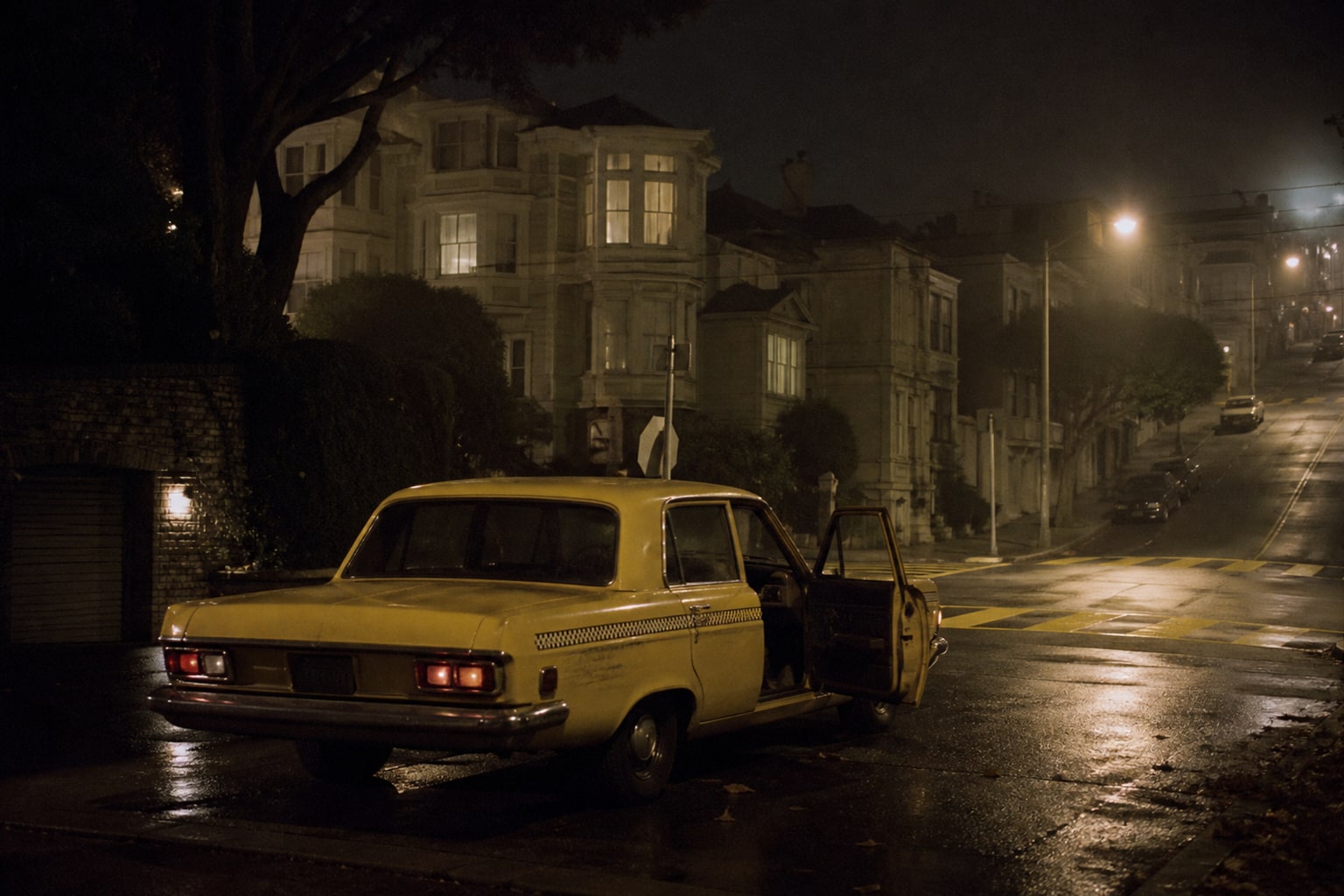
The Cab On Washington And Cherry
Two weeks later, the pattern broke again.
On October 11, 1969, in San Francisco's Presidio Heights, twenty-nine-year-old cab driver Paul Stine picked up a fare. When the taxi reached Washington and Cherry Streets, the passenger shot him once in the head.
It did not fit the earlier pattern of young couples in isolated places. Paul Stine was working. He was not parked on a date. He was not in a rural turnout. He was driving a cab through a wealthy neighborhood in a major city.
Witnesses saw a white man near the cab after the shooting. Police responded quickly, but a reported dispatch error described the suspect as a Black male. Officers later said they saw a white man walking away from the area and did not detain him.
The missed encounter became one of the case's most painful what-ifs.
At first, Stine's killing appeared to be a robbery-homicide. Then the San Francisco Chronicle received another letter. Inside was a piece of Stine's shirt, cut from the victim and mailed as proof.
That piece of fabric changed the meaning of the cab murder. It tied the writer to the scene in a way that could not be dismissed as empty boasting. It also showed how far the person calling himself Zodiac was willing to go to control the narrative after the crime.
He did not only kill.
He collected proof, mailed it to the press, and waited for the city to understand.
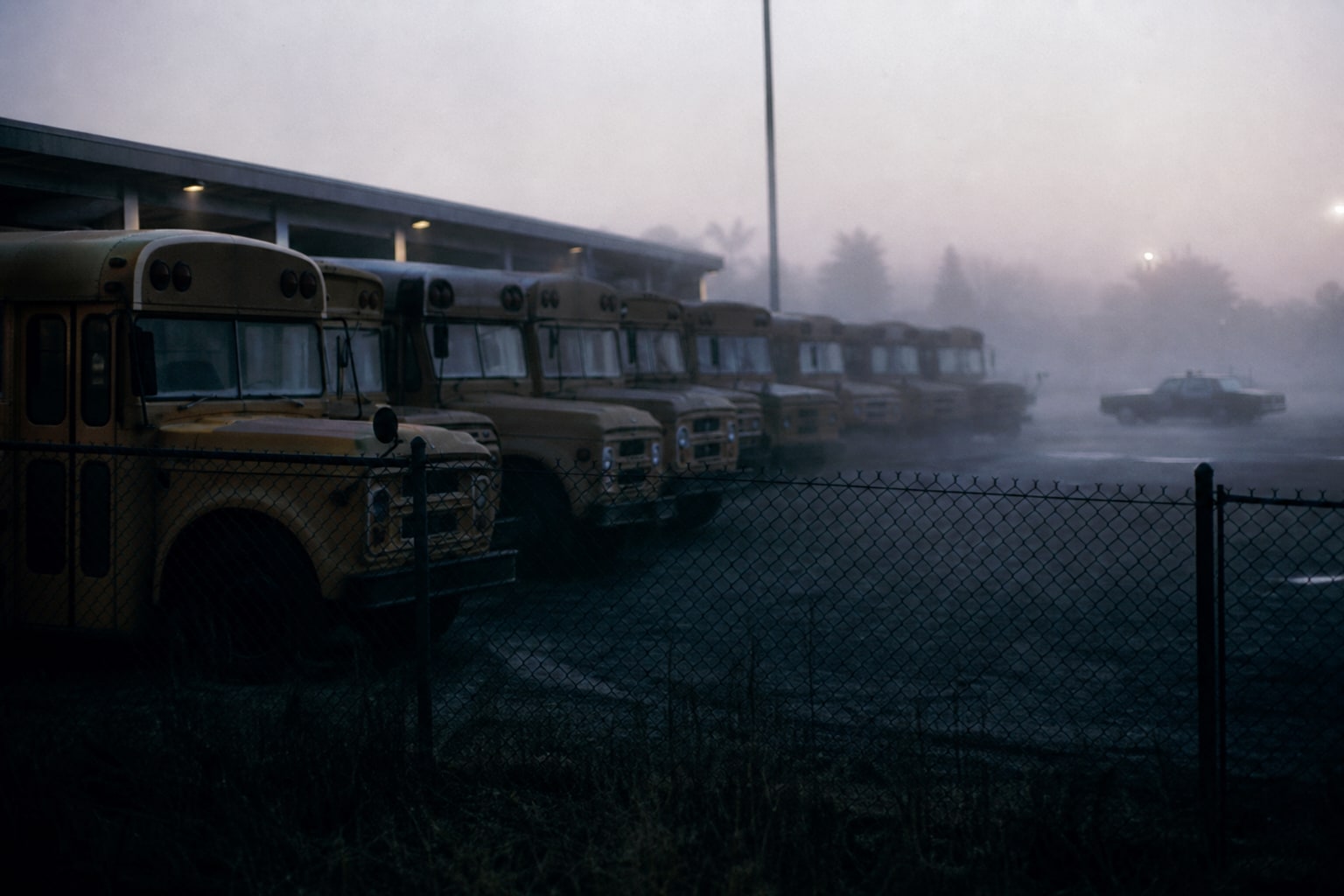
The City That Rode The Bus In Fear
After the Stine letter, the Zodiac's threats expanded beyond victims already attacked.
He wrote about targeting schoolchildren and described violence against a school bus. The threat was specific enough to terrify families across the Bay Area. Buses were guarded. Police watched routes. Parents carried a fear that did not need a body to become real.
That is the strange power of the Zodiac case. Some of the fear came from what he did. Some came from what he threatened. Some came from the possibility that no one could tell the difference quickly enough.
He mailed bomb diagrams. He demanded attention. He pushed newspapers and police into the horrible position of deciding how much of his voice to amplify. Silence might anger him. Publication might reward him. Every option carried a cost.
This is where the case becomes more than a murder series. It becomes a study in coercive attention.
The person calling himself Zodiac understood that media could spread fear faster than he could move through a city. He did not need to be everywhere if everyone could imagine him everywhere.
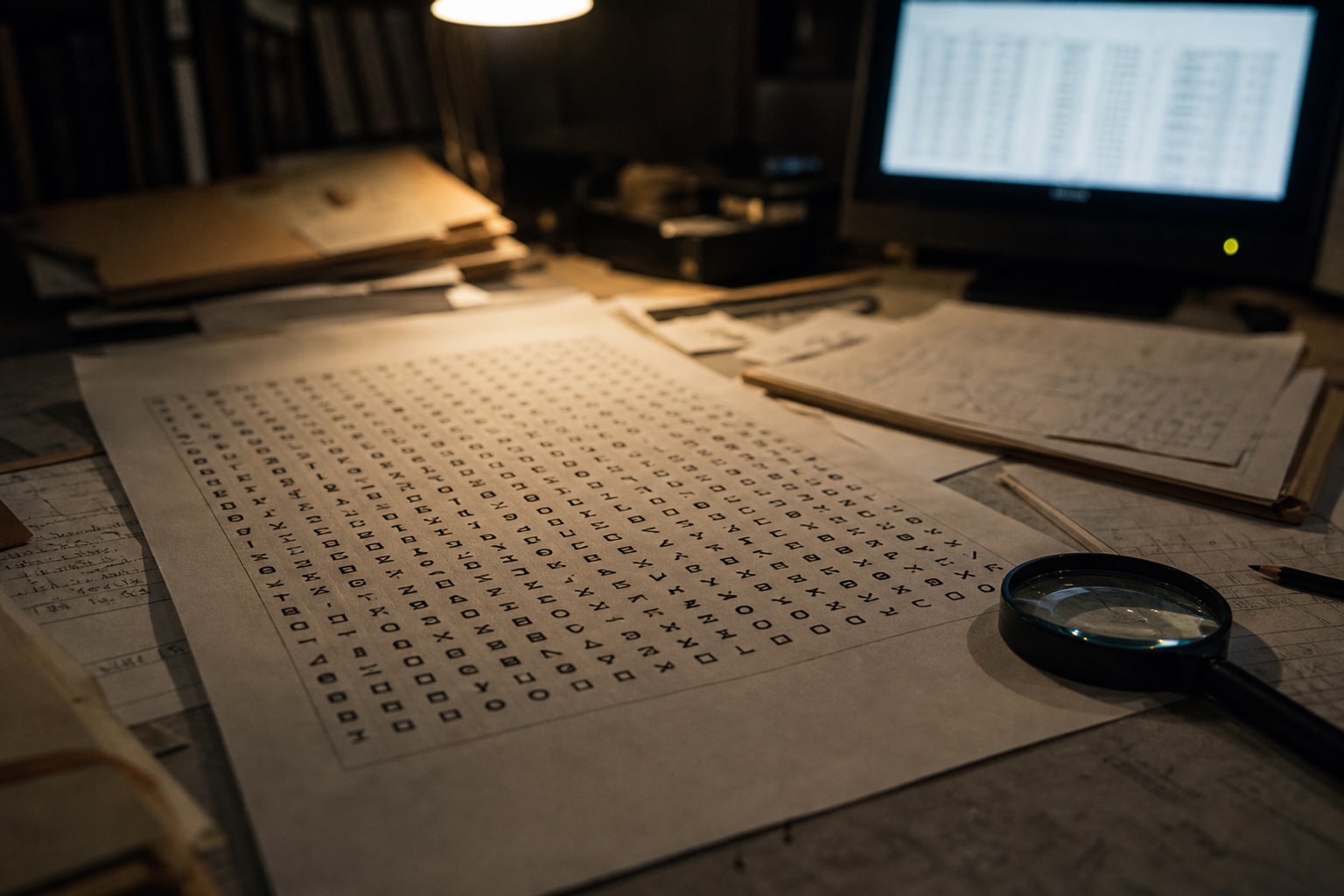
The Cipher That Waited Fifty-One Years
In November 1969, another cipher arrived: 340 characters, later known as Z340.
Unlike the 408-symbol cipher solved by the Hardens, Z340 resisted codebreakers for decades. The FBI, private researchers, amateur cryptographers, and obsessed readers all tried to break it. The mystery became a second case inside the first one: not who pulled the trigger, but what the message said and whether it hid a name.
In December 2020, David Oranchak, Sam Blake, and Jarl Van Eycke solved it. The FBI publicly confirmed that a cipher attributed to the Zodiac had been solved by private citizens and said the case remained an ongoing investigation.
The decoded message did not name the killer.
That absence matters. For more than fifty years, people imagined the code might contain the key. Instead, it contained more taunting, more fear, more language about death and punishment, more of the same voice trying to stay alive inside other people's attention.
The solution was historically important, but emotionally cruel. It proved that one major mystery could be solved without moving the central one an inch.
The code had waited half a century to say almost nothing new.
The Suspect Who Never Became The Answer
The most famous publicly named suspect was Arthur Leigh Allen.
Allen had lived in Vallejo. He had been investigated heavily. He owned a Zodiac-brand watch with a crosshair-like logo, and circumstantial details kept pulling researchers, writers, and some investigators back toward him. In the public imagination, he became the suspect who would not leave the room.
But the case against him never became a prosecution.
Handwriting comparisons did not match him to the Zodiac letters. Fingerprints connected to the case did not establish him as the killer. Public reporting in 2002 said a partial DNA profile developed from Zodiac letter material did not match Allen, though older envelope DNA carries its own uncertainties about source and handling.
That is the uncomfortable discipline this case demands: circumstantial pull is not proof.
Allen died in 1992 and was never charged. Since then, other names have surfaced through books, documentaries, private investigators, family claims, and headline-friendly theories. Some are more plausible than others. None has been accepted by law enforcement as the official solution to the confirmed Zodiac murders.
The Zodiac case has always punished certainty.
Every strong theory eventually reaches the same locked door: no courtroom, no conviction, no confirmed identity.
What The Crosshair Left Behind
The man who called himself Zodiac wanted to become larger than his victims.
That is the trap of the case. The ciphers are fascinating. The letters are disturbing. The costume at Lake Berryessa is unforgettable. The missed moment in Presidio Heights feels almost impossible not to replay. The symbol is clean, sinister, and built for memory.
But the symbol is not the wound.
David Faraday and Betty Lou Jensen were teenagers on a first date. Darlene Ferrin was sitting in her car with Michael Mageau on a holiday weekend. Cecelia Shepard was spending an afternoon at a lake with Bryan Hartnell. Paul Stine was working a cab shift.
Those are the lives the case has to return to, because the killer's entire performance was built to pull attention away from them and toward himself.
He wrote as if murder made him powerful. The record shows something smaller and uglier: a person who found isolated people, attacked them, and then used paper and ink to make strangers carry his fear for him.
The case remains unsolved. The confirmed victims remain five dead and two survivors. The claimed number of thirty-seven remains a claim, not a verified total. The name remains a mask.
And somewhere between the Lake Herman Road turnout, the Blue Rock Springs payphone, the Lake Berryessa car door, and the cab on Washington and Cherry, one of America's most famous cold cases still waits for the one thing the Zodiac never gave the world.
The truth.
Archival Case Gallery

Sources & Case Notes
Last updated: May 17, 2026.
Primary sources and case notes: This article was built from the FBI's archived Zodiac Killer case overview, the FBI Vault Zodiac Killer files, public reporting and timelines from HISTORY's Zodiac Killer timeline and HISTORY's cipher overview, the Z340 solution paper by David Oranchak, Sam Blake, and Jarl Van Eycke, contemporary UPI archive reporting on the Paul Stine shirt-cloth evidence, and SFGATE/San Francisco Chronicle reporting on the 2002 partial-DNA comparison involving Arthur Leigh Allen. Suspect language remains cautious because no one has been charged or convicted as the Zodiac Killer.
Correction policy: If you have source corrections, family-approved context, or image-rights concerns, contact Anonymous369 Media through Contact & Media Inquiries.
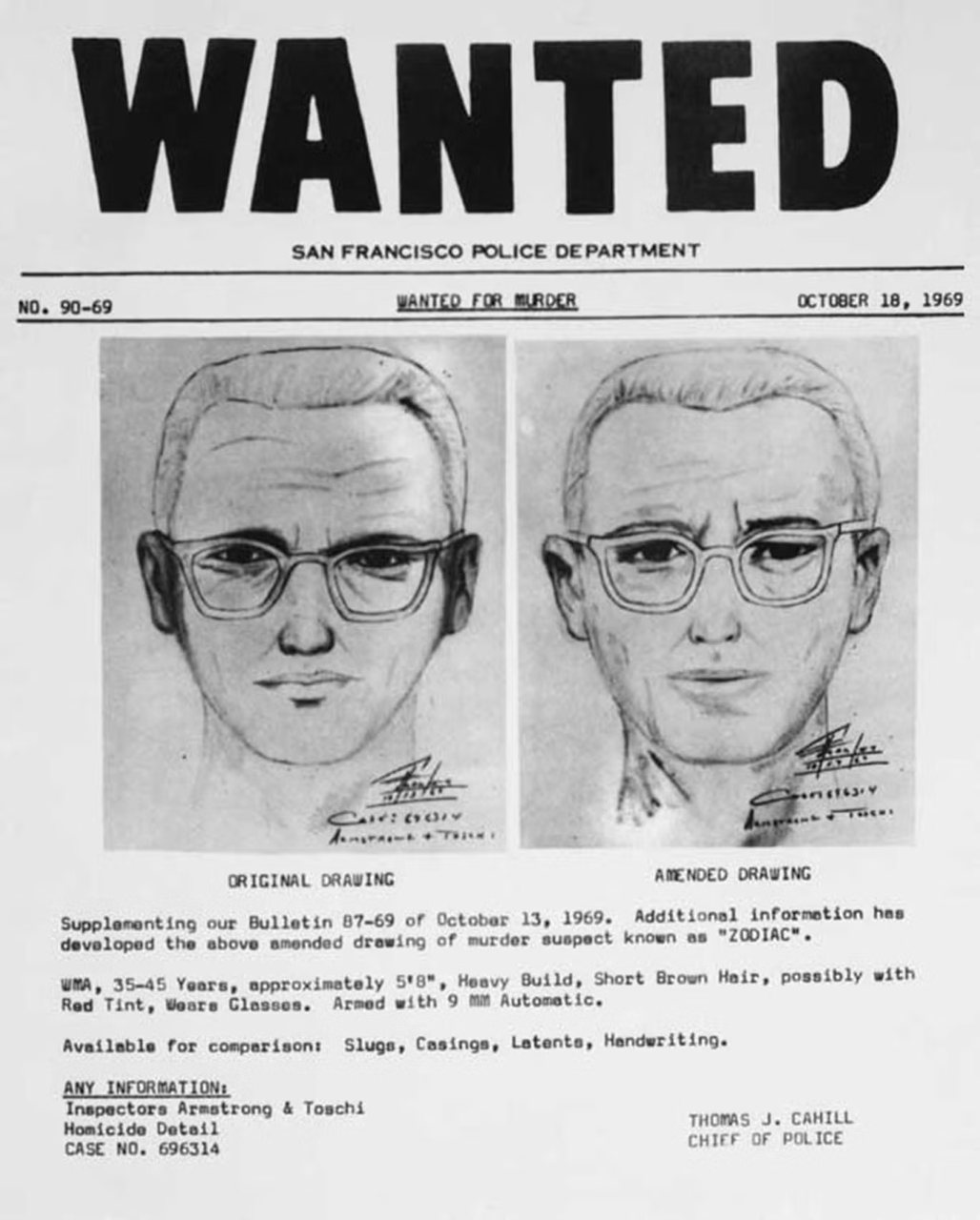
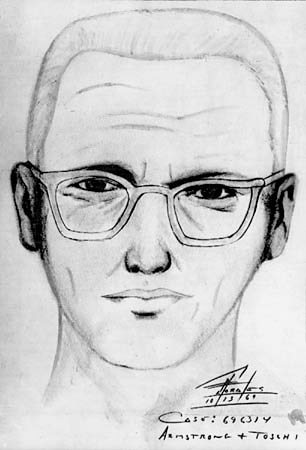
Image credits: No archival image is reproduced in this approval draft. Visual planning should prioritize FBI Vault/public-record material, legally licensed newspaper imagery, and documentary-style recreations that do not depict actual victims, suspects, crime-scene evidence, or official records as if they were archival photographs. Archival Case Gallery uses public-domain SFPD Zodiac wanted/composite material from Wikimedia Commons plus Lake Berryessa location context by Todd Lappin, CC BY-SA 4.0.
Content warning: This article discusses fatal shootings, stabbing, threats against children, and unsolved homicide in restrained, non-graphic terms.