
The House on Second Street: Why the Villisca Axe Murders Stayed Unsolved
In 1912, eight people were killed inside a quiet Iowa home after a children's church program. More than a century later, the Villisca Axe Murders remain a case of covered mirrors, ruined evidence, and a killer who walked into history without a name.


The house on East Second Street looked like the kind of place where nothing could happen.
It was modest, white, and ordinary, sitting in Villisca, Iowa, a railroad town where people knew one another by name, children walked to church programs, and a locked door still felt more like a habit than a defense.
On Sunday evening, June 9, 1912, the Moore family attended the Children's Day program at the Presbyterian church. Sarah Moore had helped coordinate the event. Her children performed with the other Sunday school students. Two sisters, Lena and Ina Stillinger, joined the family afterward for a sleepover.
The night should have ended with tired children, Sunday clothes folded away, and a house settling into sleep.
Instead, sometime between midnight and dawn, someone moved through the Moore home and turned one of the safest rooms in Villisca into one of the most disturbing unsolved crime scenes in American history.
By morning, eight people were dead.
Josiah Moore. Sarah Moore. Herman. Katherine. Boyd. Paul. Lena Stillinger. Ina Stillinger.
The killer used an axe from the property, moved through the house in darkness, covered faces and mirrors, left behind strange objects, and vanished before Villisca understood what had happened.
No one was ever convicted.
More than a century later, the Villisca Axe Murders still feel like a door left open inside American memory: a case where every theory has a shape, every suspect has a shadow, and the house itself seems to remember more than the record can prove.
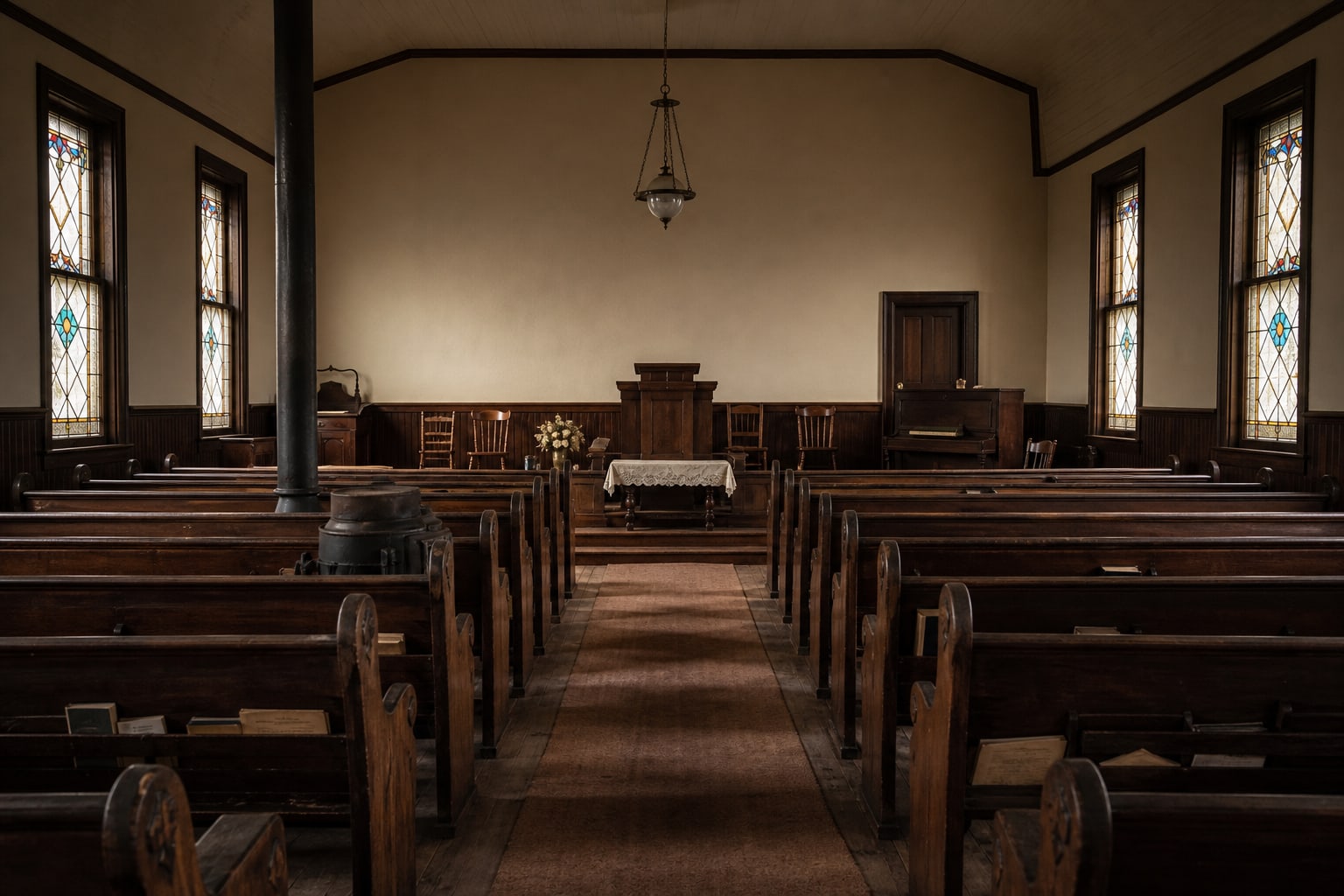
The Last Walk Home
The final known hours of the victims were painfully ordinary.
Josiah B. Moore was forty-three, a well-known local businessman who had built his life in a town shaped by rail lines, farm equipment, church membership, and social standing. Sarah Montgomery Moore was thirty-nine, a mother of four and an active presence in the Presbyterian church.
Their children were still small enough that the ages land like a blow even before the crime arrives: Herman was eleven, Katherine was ten, Arthur Boyd was seven, and Paul was five.
That evening, the Moore children walked home with Lena and Ina Stillinger. Sources differ slightly on Lena's age, but Iowa Cold Cases lists her as twelve, while some house-history summaries list her as eleven. Ina was eight. The important truth is simpler and harder: they were children invited into a trusted neighbor's home after a church program.
The group reached the Moore house sometime after 9:30 p.m., likely between 9:45 and 10. Some accounts say the evening ended with cookies and milk before everyone went to bed. The Stillinger sisters slept in the downstairs guest or sewing room. The Moore children slept upstairs near their parents.
Outside, Villisca continued being Villisca.
Inside, the house was waiting for morning.
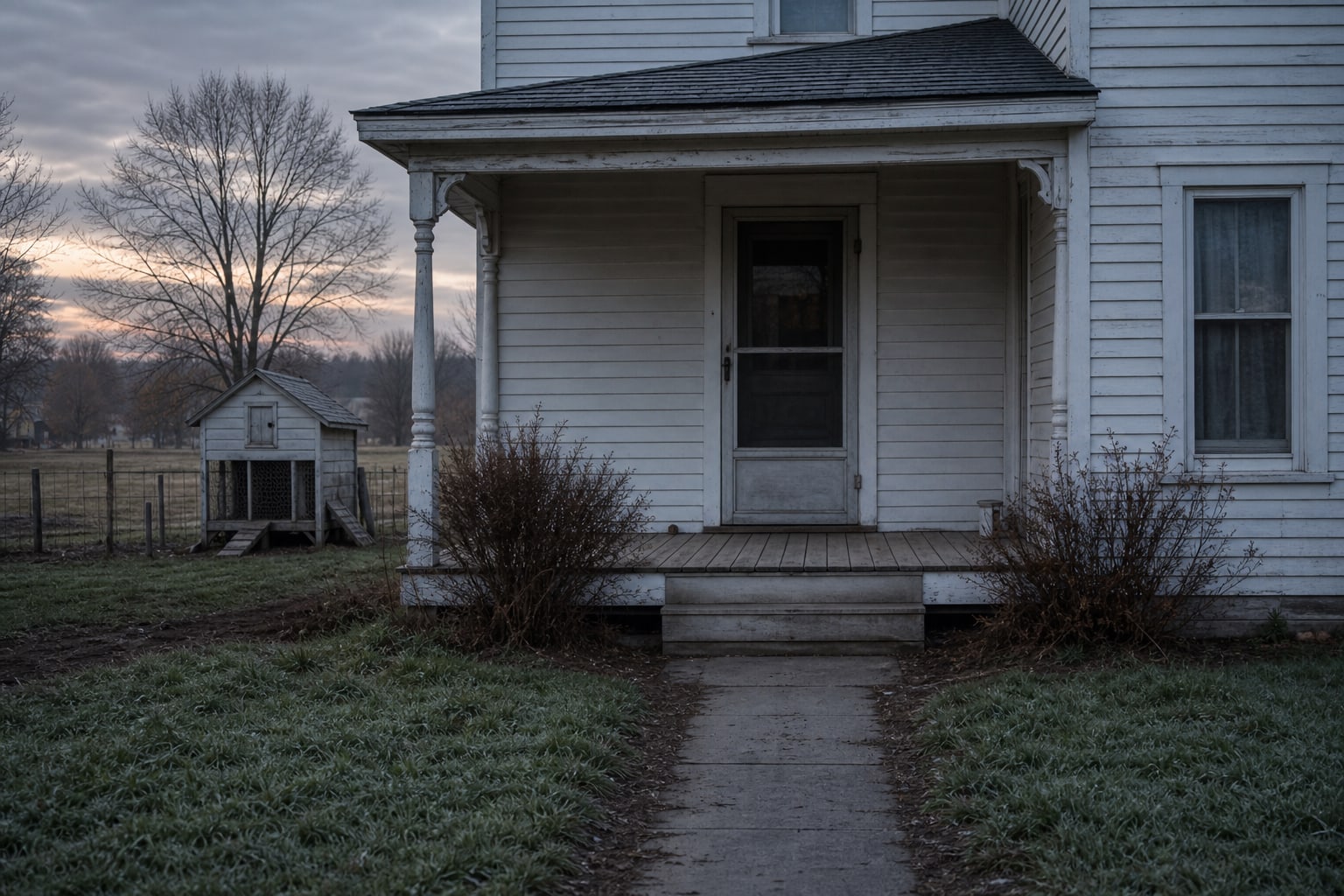
The Morning That Broke Villisca
The first alarm came from Mary Peckham, the Moores' neighbor.
On Monday morning, June 10, she noticed the family had not begun the usual chores. The house was still. No one came outside. No one answered when she knocked. Finding the door locked, she let the chickens out and called Josiah's brother, Ross Moore.
Ross arrived with a key. While Peckham waited on the porch, he entered the house and looked into the downstairs room.
There he found the bodies of Lena and Ina Stillinger.
Ross withdrew and told Peckham to call Hank Horton, Villisca's primary peace officer. Horton's search revealed the rest of the house: Josiah and Sarah upstairs, the four Moore children nearby, all eight occupants killed in their beds.
The axe, belonging to Josiah Moore, was found in the room with the Stillinger sisters.
What happened next belongs to an earlier age of policing, before crime-scene tape, forensic teams, controlled entry logs, and the instinct to protect a scene from the public. Villisca was not prepared for a mass murder inside a neighbor's home. Almost no small town in 1912 would have been.
People came because they were frightened. They came because they were stunned. Some came because horror attracts witnesses even when witnesses can only make the damage worse.
By the time investigators tried to understand the house, too many feet, hands, voices, and assumptions had already passed through the rooms. The killer had left very little. The town accidentally took even more.

The Low Lamp
Doctors placed the murders sometime between midnight and 5 a.m.
The likely sequence began upstairs. Josiah Moore appears to have been attacked first, receiving the greatest number of blows. Sarah was killed nearby. The killer then moved into the children's room before descending to the room where Lena and Ina Stillinger slept.
The physical details are hard, but the article does not need to linger on them. The essential fact is enough: all eight victims were killed while in or near their beds, with an axe taken from the Moore property.
What makes Villisca more than a murder scene is what happened around the violence.
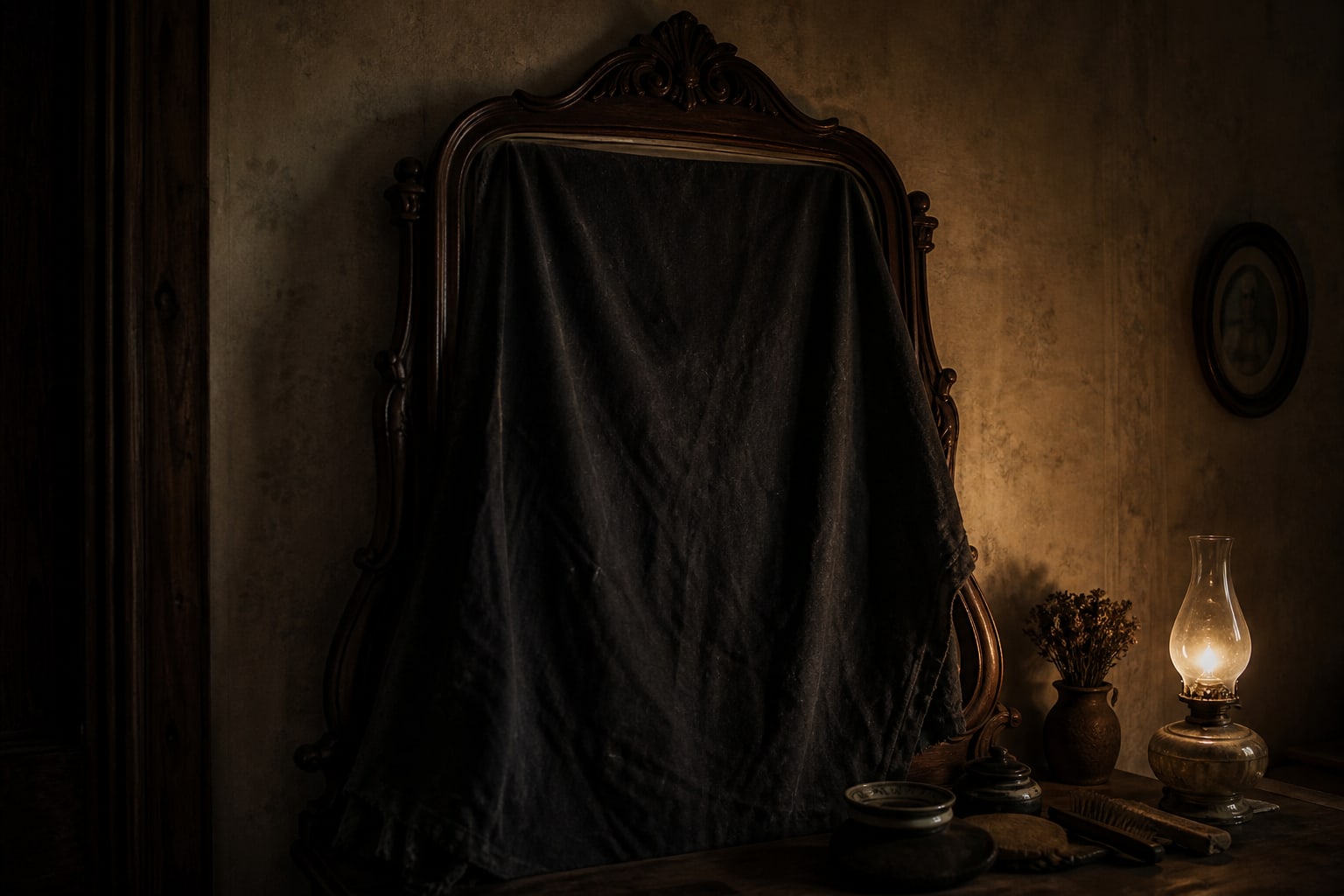
Case accounts describe oil lamps with their glass chimneys removed and wicks turned low, enough to give the killer light without flooding the rooms. The faces of victims were covered with bedding or clothing. Mirrors and reflective glass in the house were draped or obscured.
Those details have carried the case for more than a century because they feel deliberate.
Maybe the killer could not bear reflection. Maybe he was trying to avoid being seen, even by himself. Maybe the covering of mirrors echoed older mourning customs. Maybe he wanted to control what the house looked like after the victims were dead.
The honest answer is that no one knows.
The record can show the cloth. It cannot safely explain the mind beneath it.
The Objects Left Behind
The Villisca crime scene also contained objects that seemed almost designed to frustrate explanation.
Case accounts describe a slab of bacon left near the axe, wrapped or placed in cloth. A plate of food and a bowl or basin of bloody water were reported in the kitchen, suggesting the killer may have paused long enough to wash and perhaps prepare food. Reports also describe a broken keychain or key-related object that did not clearly belong to the family.
These details are the kind that make a cold case feel haunted even without any ghost story attached.
Not because they prove a supernatural atmosphere. They do not.
They are unsettling because they suggest time.
The killer did not simply strike and flee in blind panic. The scene implies movement after the murders: washing, covering, arranging, looking around, perhaps eating or considering food, perhaps checking doors and windows. The house was not only the site of the attack. It was a space the killer occupied after the family was gone.
That is the psychological wound of Villisca.
The violence was fast. The aftermath was not.
A Town Looking Inward
When a small town cannot find an outsider, it begins searching itself.
Suspicion eventually settled on Frank F. Jones, a powerful Villisca businessman and Iowa state senator. Josiah Moore had once worked for Jones and later opened a competing business, taking valuable farm-equipment business with him. Rumors also claimed personal resentment between the men, including allegations involving Jones' family.
The Jones theory was pushed aggressively by James Newton Wilkerson, a Burns Detective Agency investigator. Wilkerson argued that Jones had hired William Mansfield, sometimes called "Blackie" Mansfield, to kill the Moore family.
It was a theory with drama, motive, and a villain the town could recognize.
It was not enough.
Mansfield produced payroll records placing him hundreds of miles away in Illinois at the time of the murders, and he was released for lack of evidence. Jones was never charged, and later summaries describe him as exonerated regarding the murders, even though the accusations damaged his public life.
That is one of the cruel side effects of an unsolved case. Suspicion becomes its own weather. It settles over people, businesses, churches, friendships, and family names. Even when the law clears someone, the town may not know how to stop whispering.
Villisca was not only searching for a killer.
It was tearing at itself.

The Preacher Who Confessed
The most dramatic suspect was Reverend Lyn George Jacklin Kelly.
Kelly was a traveling English-born minister who had been in Villisca for the Children's Day services. He left town early on June 10, before the bodies were discovered. Iowa Cold Cases reports that he allegedly told fellow travelers there were dead people back in Villisca before the crime had been publicly found.
That detail alone made him difficult to dismiss.
Kelly also developed an obsession with the case, writing letters to investigators and others. His behavior was strange enough that authorities had to ask whether he knew details because he had been involved, or because a mentally unstable man had attached himself to a horror he could not stop imagining.
In 1917, after many hours of interrogation, Kelly confessed. He later recanted. His confession included the phrase "slay utterly," a religiously charged line that made the case even more disturbing in the public imagination.
The state tried him twice.
The first trial ended with a hung jury. The second ended in acquittal.
Kelly's confession did not become truth in the eyes of the law. It became another locked room inside the case: possible, strange, damaging, and ultimately insufficient.
The Killer Near The Tracks
While Villisca focused on local suspects, another theory widened the map.
What if the Moore house was not the work of a neighbor, rival, or preacher?
What if it was part of a larger series?
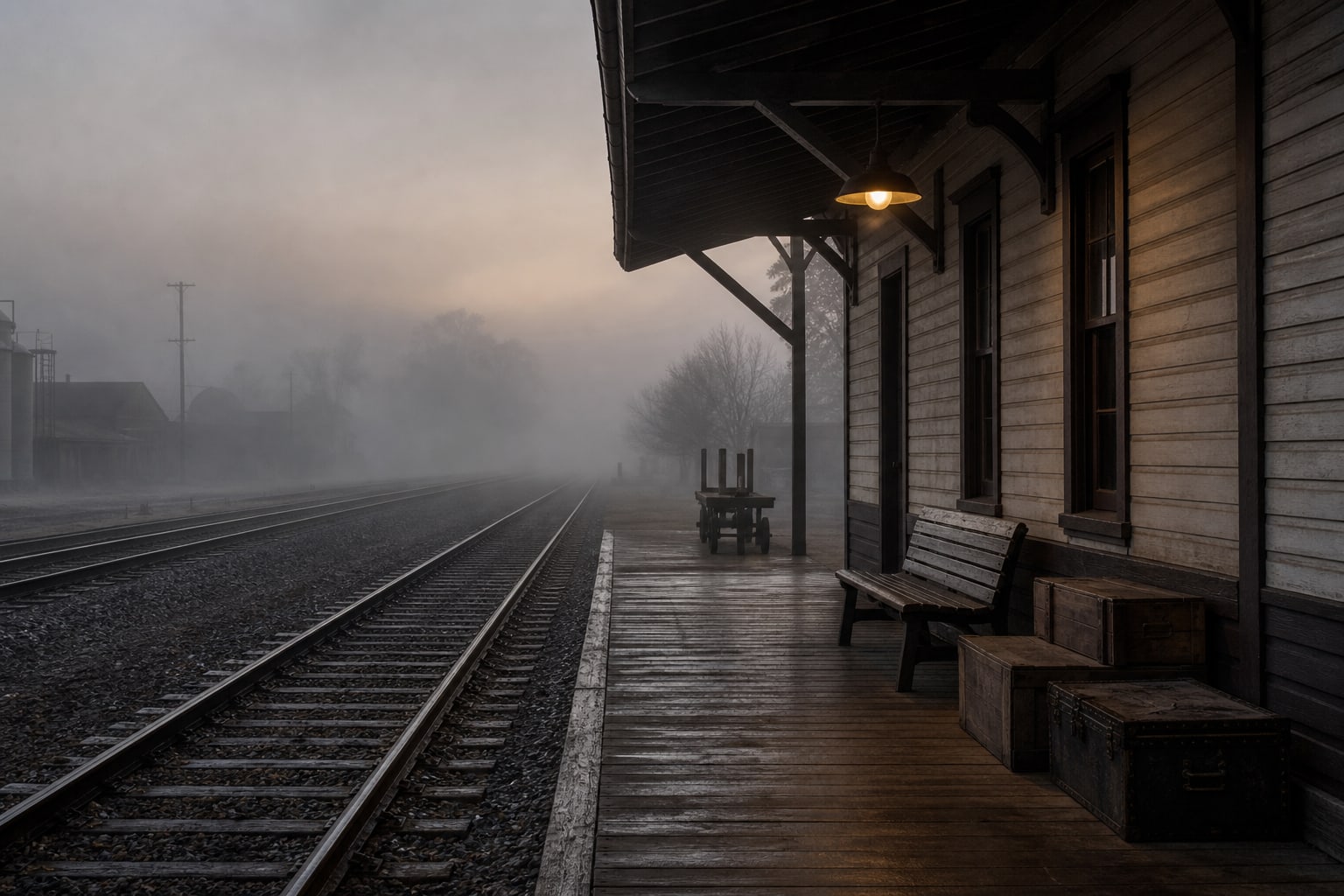
The early twentieth century saw a string of family axe murders across the Midwest and beyond. Some shared unsettling similarities: homes near rail lines, attacks at night, families killed in bed, axes taken from the victims' property, bodies or windows covered, lamps altered or left burning low, and killers who disappeared before morning.
That pattern has never been proven as one man's work.
But it has never fully disappeared either.
Modern authors Bill James and Rachel McCarthy James revived and expanded the rail-linked theory in The Man from the Train, arguing that a transient killer, possibly Paul Mueller, moved by rail and committed multiple family murders across the country. Their theory is compelling enough to matter, but it remains a historical hypothesis, not an official solution.
The theory's power is not just that it offers a suspect.
It explains why Villisca feels both intimate and anonymous. The killer knew the inside of one house well enough to move through it in darkness, but he may have belonged to no one in town. He could have arrived by rail, selected a home, and left before the first neighbor noticed the silence.
If that theory is true, Villisca spent years staring inward while the answer had already gone down the tracks.
If it is false, then the killer was even closer than the town could bear to admit.
Either way, the same truth remains.
The house kept the secret.
What The House Became
No one was convicted of the Villisca Axe Murders.
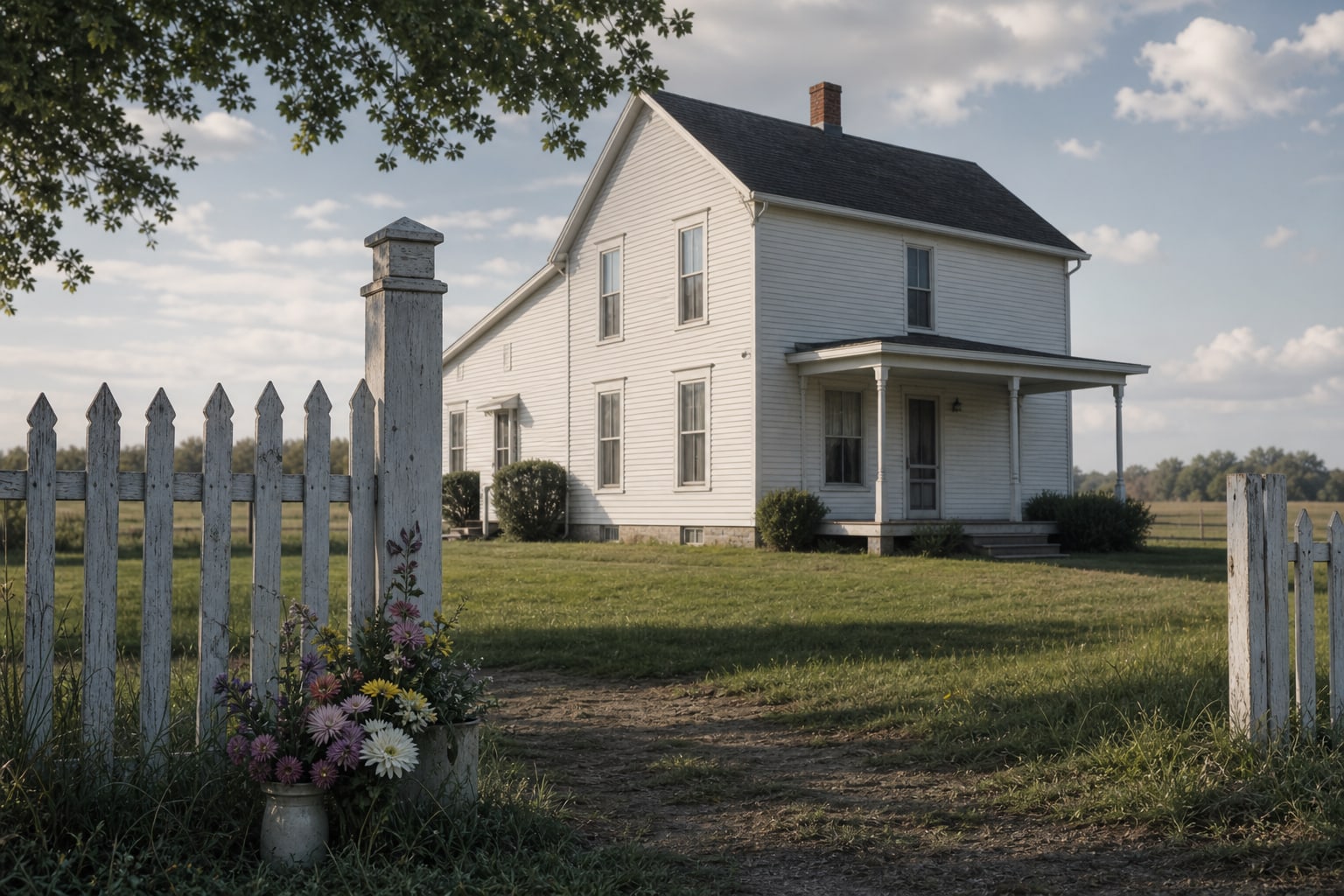
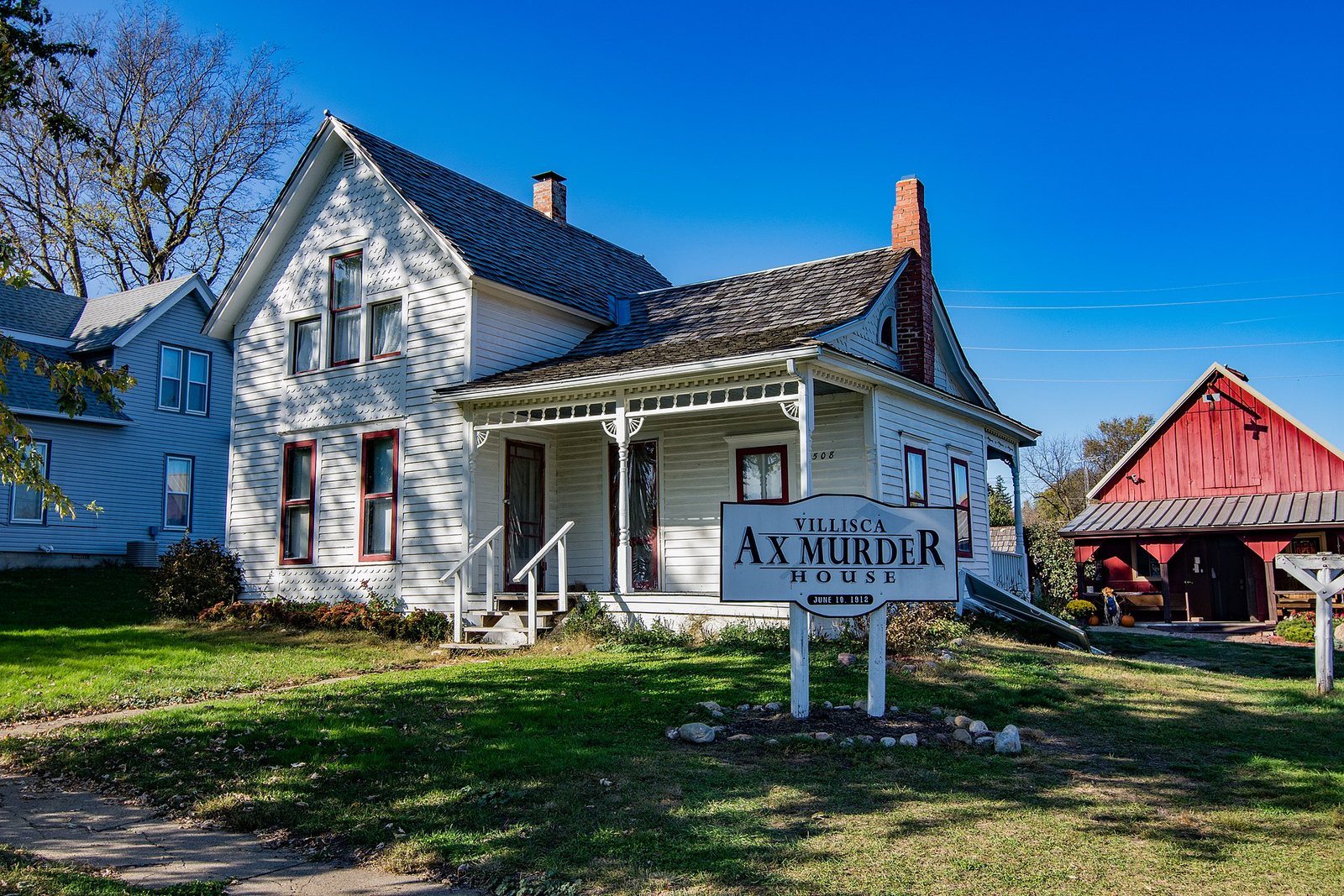
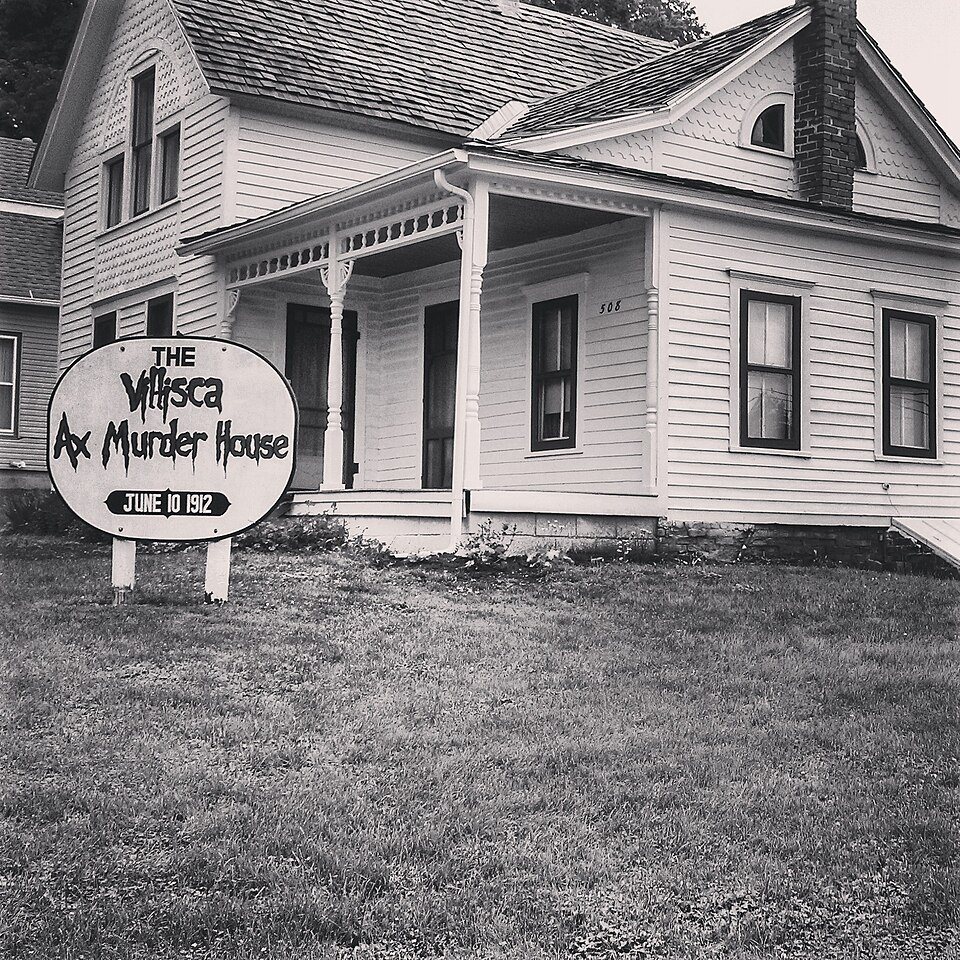
The house at 508 East Second Street still stands. Restored in the 1990s to resemble its 1912 condition, it has become a historic site, a true-crime destination, and, for some visitors, a place folded into America's haunted-house mythology.
That modern afterlife should be handled carefully.
The house is not famous because it is creepy.
It is famous because eight people went to sleep after a church program and never woke up. It is famous because a town lost its certainty, because an investigation lost its cleanest evidence, because suspects rose and fell, because a preacher confessed and walked free, because a rival was ruined by suspicion, because a rail-line theory still pulls at the edge of the map.
It is famous because the ordinary failed.
That is the real horror of Villisca. Not that the house looked unusual. Not that it stood on some cursed road or beneath some supernatural sign. It was a normal home in a normal town, filled with normal sounds: children settling down, adults ending a long Sunday, a lamp low in the dark.
Then someone came through the night and left without a name.
The victims rest in Villisca Cemetery. The case remains open in the only way a century-old case can: preserved in records, arguments, photographs, books, tours, and the ache of an answer that never arrived.
The house on Second Street still stands.
And somewhere in its silence is the fact every theory has to face.
The killer did not need to become a legend.
He only needed to leave before morning.
Archival Case Gallery
Sources & Case Notes
Last updated: May 17, 2026.
Primary sources and case notes: This article was built from the Iowa Legislative Services Agency's Pieces of Iowa's Past summary on the 1912 Villisca Axe Murders, the Iowa Cold Cases Villisca case summary, the Villisca Axe Murder House historical pages on the murders, and Radio Iowa reporting on the modern Man from the Train theory. Suspect language remains cautious because no one was convicted, Frank Jones was never charged, William Mansfield's alibi led to his release, and Reverend George Kelly was acquitted.
Correction policy: If you have source corrections, family-approved context, or image-rights concerns, contact Anonymous369 Media through Contact & Media Inquiries.
Image credits: Feature and section images are documentary-style recreations created for Anonymous369 Media. They are not archival photographs and do not depict actual victims, suspects, crime-scene evidence, or official police records. No archival image is reproduced in this article at publication. Archival Case Gallery uses Wikimedia Commons exterior images of the Josiah B. and Sara Moore House, including CC BY-SA 4.0 photography by Jason McLaren and CC BY 2.0 photography by Ryan Moomey.
Content warning: This article discusses a historical mass murder involving children and blunt-force trauma in restrained, non-graphic terms.