
Why the Floating Whirlindas Never Stop Dancing in Luigi's Mansion
The Floating Whirlindas were local waltz champions until death took the floor from under them. In Luigi's Mansion, the masked opening act, spinning tiles, and forced final dip reveal a couple so addicted to applause that even capture cannot make the dance end.


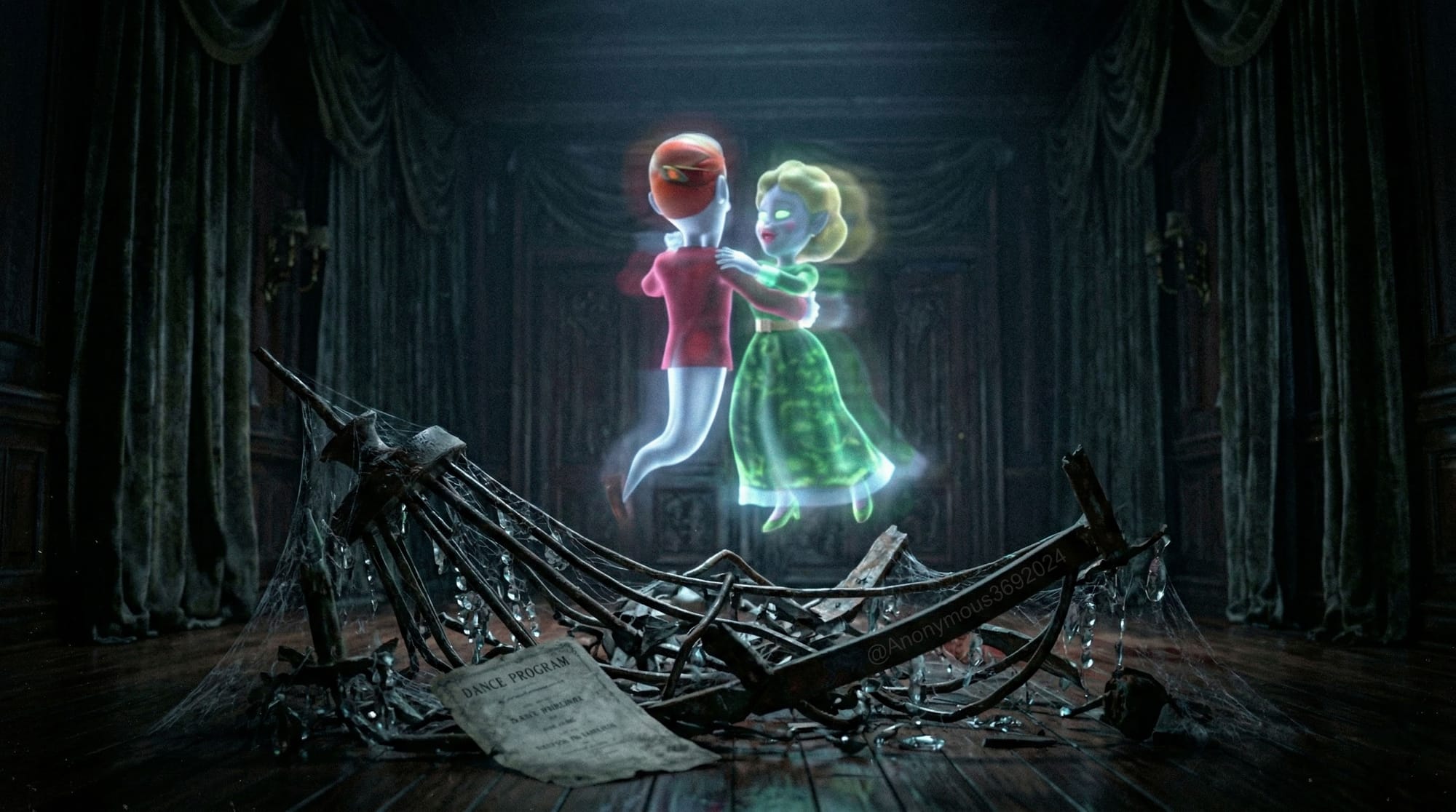
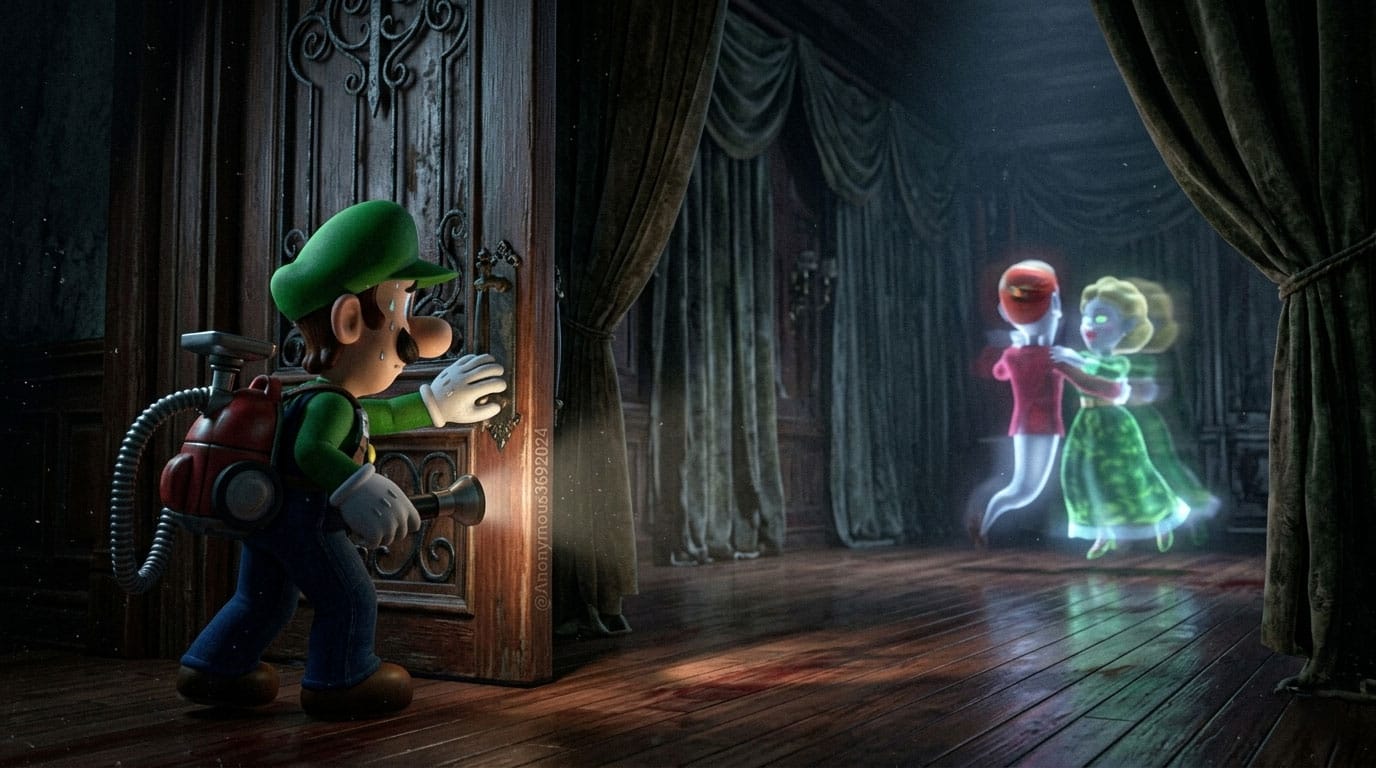
The air inside the Ball Room on the first floor of the towering gothic estate is suffocating. It smells of polished mahogany, decaying velvet, and the metallic tang of static electricity. When the trembling green clad plumber slowly pushes open the heavy wooden doors, he is not greeted by the silence of a tomb. He is greeted by a chilling, repetitive waltz echoing from a phantom source. For decades, players of the two thousand and one GameCube masterpiece viewed this room merely as a stepping stone, a simple puzzle meant to unlock the next corridor. But strip away the cheerful Nintendo aesthetic and conduct a forensic examination of the environmental lore, and a profoundly disturbing psychological tragedy emerges. The entities waiting in the dark are not just dancing ghosts. They are The Floating Whirlindas, a couple trapped in a narcissistic, perpetual loop of their former glory, completely detached from the rotting reality of the mansion around them. Luigi steps onto the polished floorboards, completely unaware that he has just walked onto a stage bathed in blood and obsession.
The Champions Stripped of Their Stage
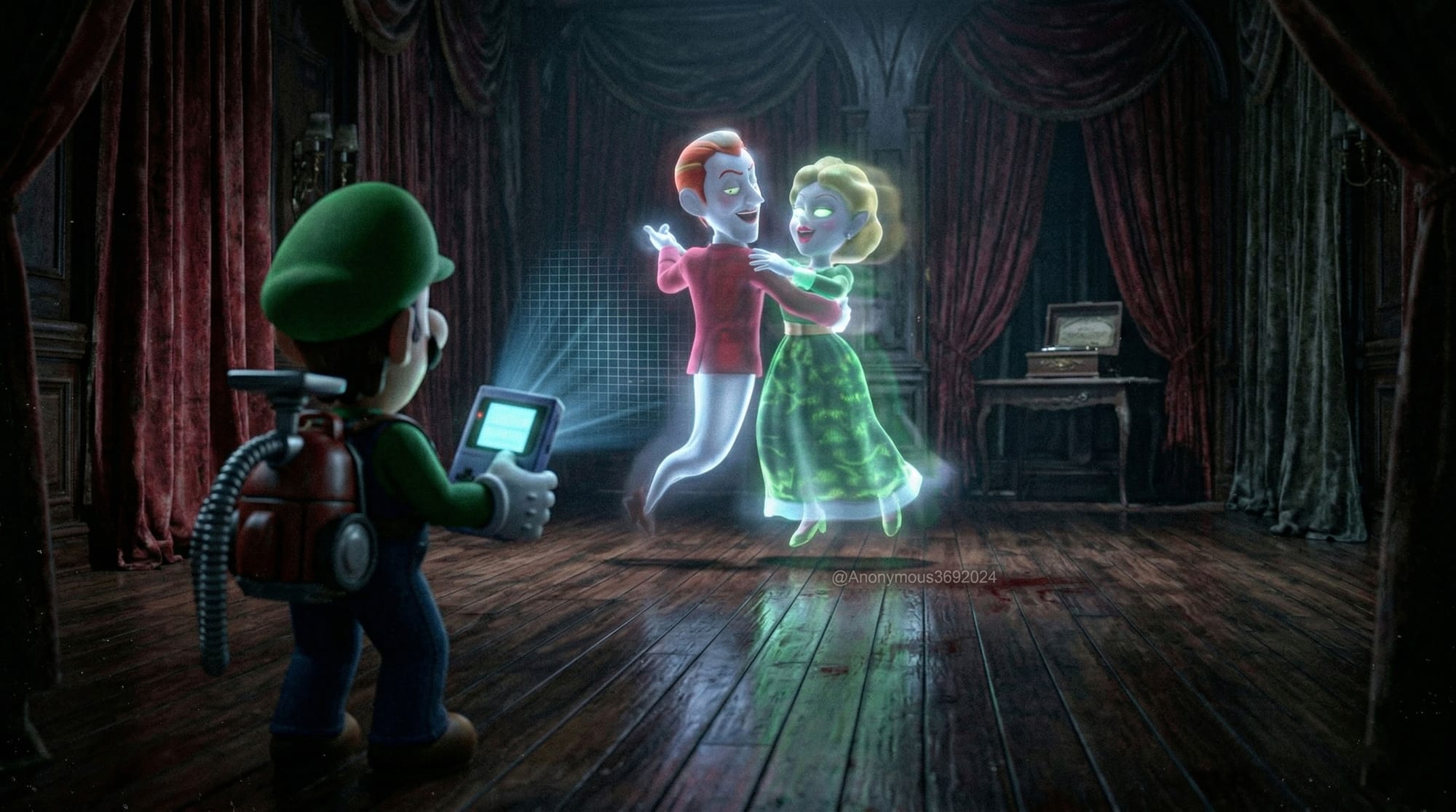
To understand the profound tragedy of Tim and Mary Whirlinda, we must first examine the fragmented history they left behind in the world of the living. The internal biography registered within Professor Elvin Gadds Game Boy Horror scanner reveals a singular, defining trait. They were once the local waltz champions, but they can no longer compete because their feet do not touch the floor. This single sentence unlocks a terrifying psychological profile. The Whirlindas are defined entirely by their physical ability to perform. In life, they were celebrated. They were the absolute center of attention. But death stripped them of their physical mass, rendering their greatest talent entirely obsolete in the mortal realm.
Forensic lore analysts and deep dive theorists have long debated the exact nature of their demise. The game refuses to provide a clean answer, but the dark implications of their isolation speak volumes. Did a jealous rival, desperate for the championship trophy, sabotage the couple in the dead of night? Rumors within the dark lore community suggest a violent end, perhaps a sudden, fatal strike by a competitor while they slept, ensuring they would never dance on a physical stage again. Some even speculate they were crushed by a falling chandelier mid performance. Whatever the cause, their death was sudden and deeply traumatic, locking their minds into a state of absolute denial. They do not wander the halls searching for peace. They do not mourn their passing. They simply continue to dance in the pitch black dark, desperate to recapture a feeling of adulation that is forever lost to the grave.
The Opening Act of the Damned
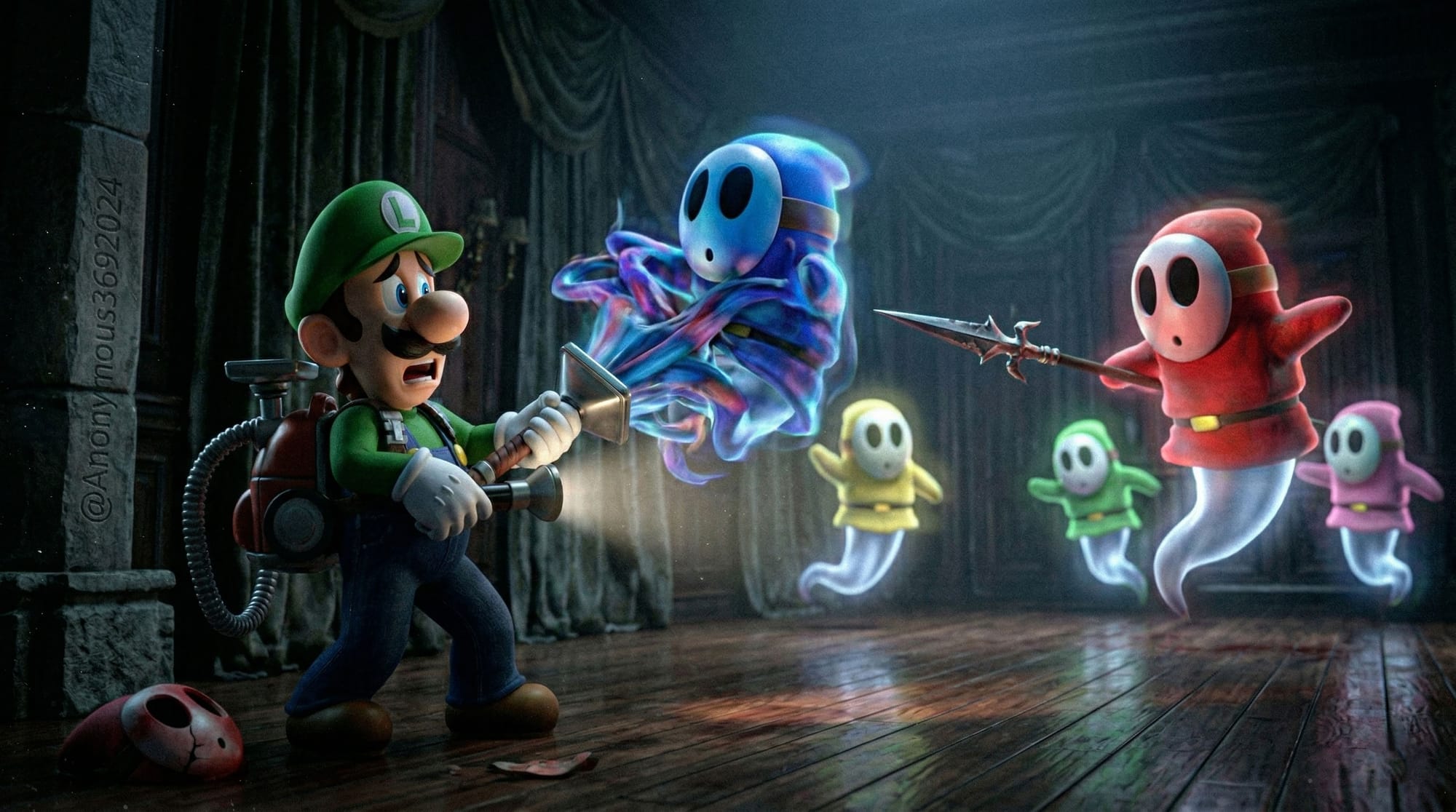
The psychological isolation of the Whirlindas is brilliantly illustrated by the entities that guard them. Before the waltz champions even manifest in the Ball Room, Luigi must navigate a terrifying gauntlet of spectral enforcers. The room is occupied by dancing Ghost Guys, spectral manifestations wearing multi colored, iconic Shy Guy masks. These lesser spirits twirl and jab with sharp spears, forcing the terrified plumber to rip off their red and white masks before sucking their exposed, vulnerable forms into the cold metal nozzle of the Poltergust 3000.
These masked entities are not random, wandering enemies. They serve as the macabre opening act for the main event. The Whirlindas are so consumed by their own towering arrogance that they absolutely refuse to appear in an empty room. They demand a prelude. They demand a loyal audience to warm up the floor. Only after Luigi violently clears the area of these lesser spirits does the music shift to a haunting melody. The atmosphere drops ten degrees. The floorboards groan under an unseen weight, and the true masters of the Ball Room finally materialize from the ether. This structural design proves that the Whirlindas view the entire supernatural war raging across the estate as nothing more than a theatrical production, with themselves cast as the undisputed, untouchable stars.
The Arrogance of the Dead
The true horror of the dancing couple lies in their chilling dialogue. When Luigi manages to scan their spectral hearts, their inner thoughts are broadcasted into the world of the living. The female dancer, Mary, scoffs at the intruder, stating "I don't think this gent can even see us!" Her husband, Tim, is even more arrogant, mocking the green clad hero by declaring "So, you can see me? Well, that may be, but you will never find my weakness!"
These quotes are dripping with blind condescension. The Whirlindas do not view Luigi as a threat. They do not fear the roaring, industrial engine of the ghost hunting machine strapped to his back. They view him as a peasant, a lowly spectator who is entirely unworthy of their presence. They are completely insulated by their vanity. In a mansion filled with mourning fathers like Neville, neglected infants like Chauncey, and weeping servants like Shivers, the Whirlindas stand apart as pristine monuments to pure ego. They are so obsessed with their eternal routine that they refuse to acknowledge the mortal danger they are in until the very last second.
A Prison of Spinning Tiles
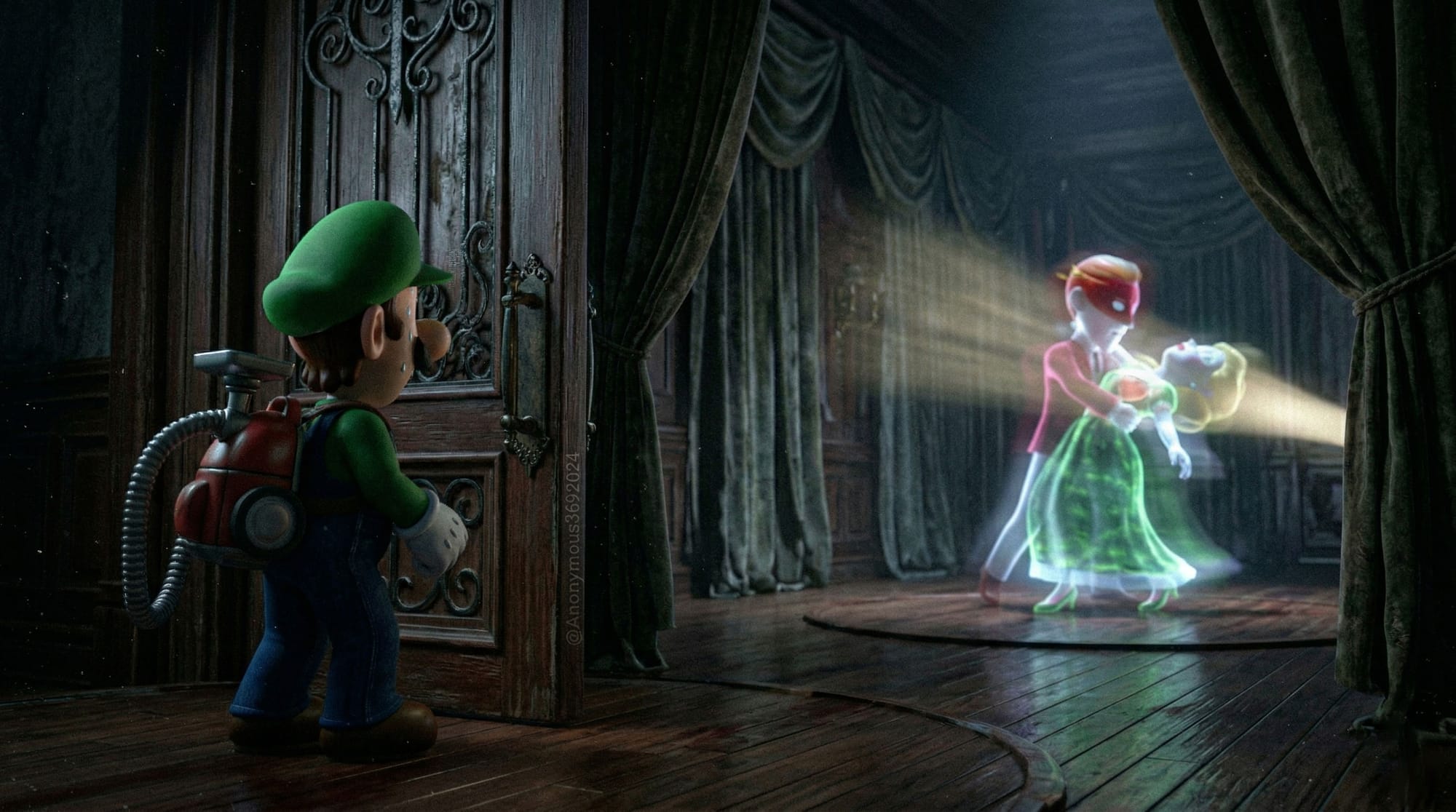
The battle mechanics required to capture the waltz champions represent a masterclass in ludonarrative resonance and psychological manipulation. Luigi cannot simply blind them with his flashlight and drag them screaming into the vacuum. The Whirlindas are entirely immune to direct, aggressive confrontation. To expose their vulnerability, the player must engage in a terrifying game of spatial awareness and submission. Luigi must stand perfectly still on one of the rotating, spinning floor plates and physically turn his back to the entities. He must look away from the danger.
This mechanical requirement forces the player to submit to the Whirlindas strict theatrical rules. You must become the passive, obedient audience member. You must wait in the terrifying darkness, listening to the swelling music and the sweeping of their ghostly garments as they glide across the floorboards. The tension is palpable. Finally, the male dancer exclaims the word "Dance!" and violently dips his partner backward. It is in this specific, dramatic pose that their spectral hearts are laid bare. Their greatest moment of performative vulnerability becomes the exact catalyst for their absolute destruction. The blinding beam of the flashlight pierces the gloom, paralyzing them and shattering their eternal performance in a single, terrifying instant.
Captured as One
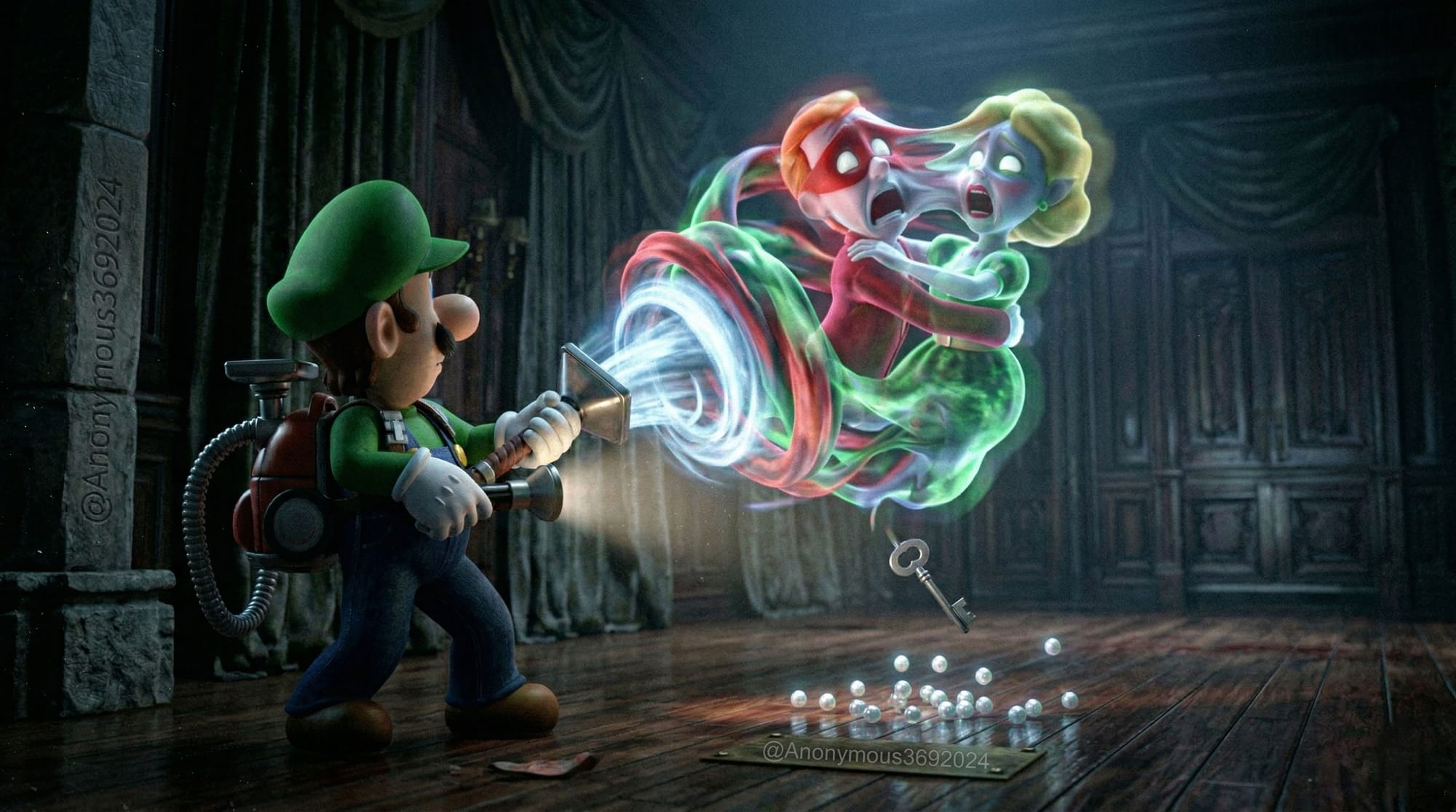
When the light strikes, the illusion of their grand ballroom completely collapses. The mechanical roar of the Poltergust 3000 drowns out the elegant waltz. The Whirlindas hold a unique, deeply unsettling distinction within the lore of the two thousand and one classic. They are the only Portrait Ghosts in the entire sprawling estate that are captured simultaneously as a single, intertwined unit. As the crushing suction of the machine pulls at their ethereal tissue, they thrash and scream, their faces twisting in absolute terror, but they do not separate.
They drop a cluster of spectral pearls onto the hardwood floor before being violently ripped from the physical plane. They are sucked screaming into the suffocating, lightless vortex of the containment chamber together. Their codependency is absolute and horrifying. They lived for the dance, they died together, and they are dragged into the dark together. The player is left standing in a silent, empty room, having extinguished the last flickering spark of their artistic passion. The key to the Storage Room drops from the ceiling, a cold, metallic reward for dismantling a tragedy.
The Canvas of Eternal Paralysis
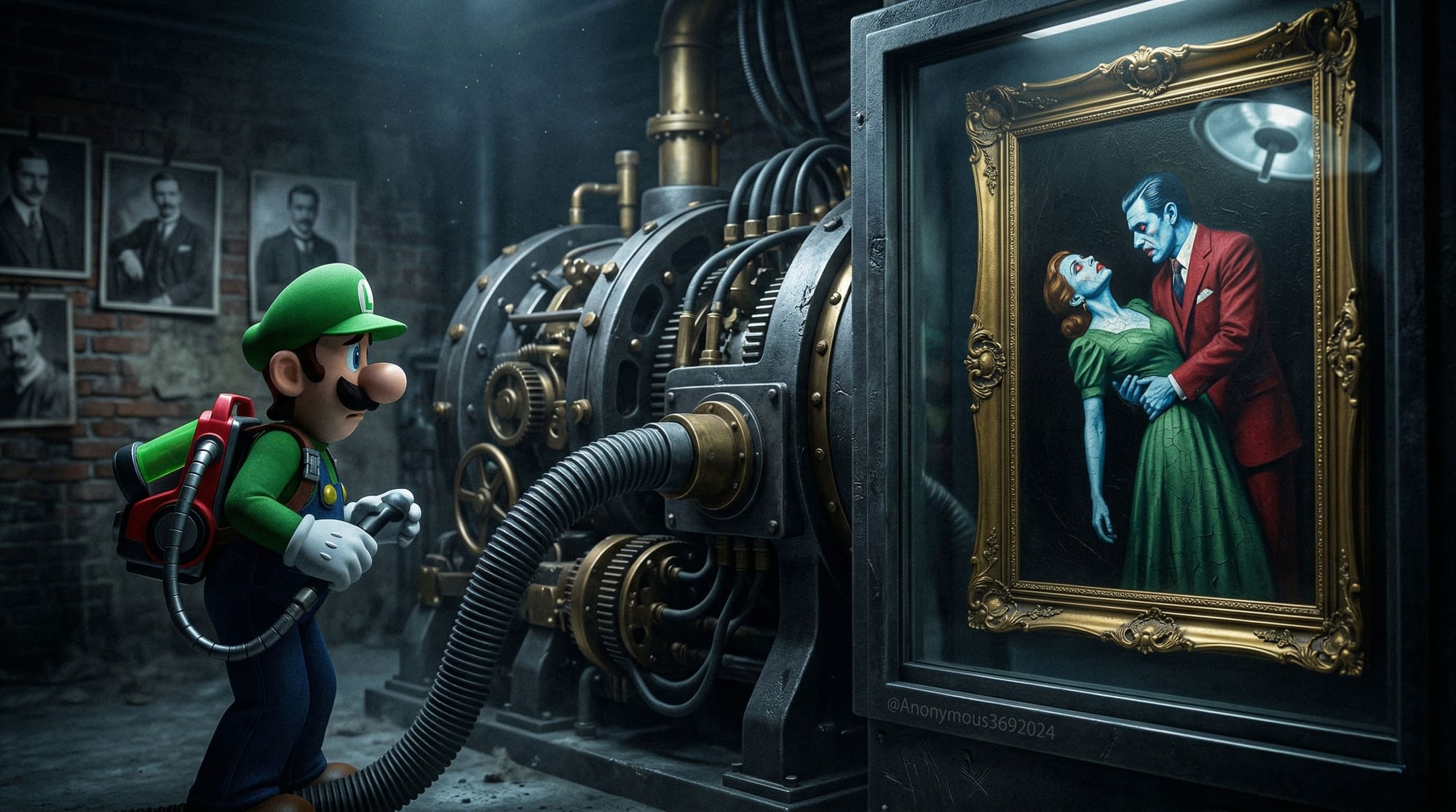
The psychological torment of Tim and Mary Whirlinda concludes deep underground, in the cold, sterile laboratory of Professor Elvin Gadd. Down in the lab, Luigi connects the heavy vacuum to the Ghost Portrificationizer and lets the machine grind its cruel work into motion. The machine, designed maliciously to compress sentient souls into static oil paintings, subjects the couple to a flattening, agonizing paralysis. They are converted from roaming spirits into dry paint and sealed permanently behind thick museum glass.
In their ultimate, golden frame, the couple is depicted mid dance, forever locked in the exact pose that caused their downfall. The husband dips the wife, their faces frozen in a state of perpetual performance. Even in eternal imprisonment, they refuse to look out at the viewer. They are completely absorbed in each other, perfectly content to be locked in a canvas prison as long as the dance never officially ends. They are a monument to the destructive power of obsession, a couple who ignored the collapse of the world around them just to hear the music play one more time.
Throughout the mansion, in the Parlor and the Ball Room itself, old black and white photographs of a man strongly resembling the male dancer can be found hanging on the dusty walls. These silent images serve as a grim reminder that these entities were once breathing, living humans who walked the halls before the darkness took over. They were masters of the floor, reduced to nothing more than ink and canvas in a mad scientists gallery.
What happens to a mind that spends eternity waiting for an audience that will never arrive, forever spinning on a floor that no longer exists?
Continue the Mansion File
The mansion works best as a chained dossier. Step back if you missed the previous room, or keep going to follow the next piece of Luigi's Mansion lore.
Previous file: Why Chauncey Was Born a Ghost in Luigi's Mansion Next file: Why Shivers Runs From Fire in Luigi's Mansion