
Luigi's Mansion's Generic Ghosts Were Never Alive
The Gold Ghosts and hallway stranglers were never lost souls. In Luigi's Mansion, Vincent Van Gore's painted swarm, masked Ghost Guys, elemental shells, and greedy Speedy Spirits reveal an artificial ecosystem built from one failed artist's rage.


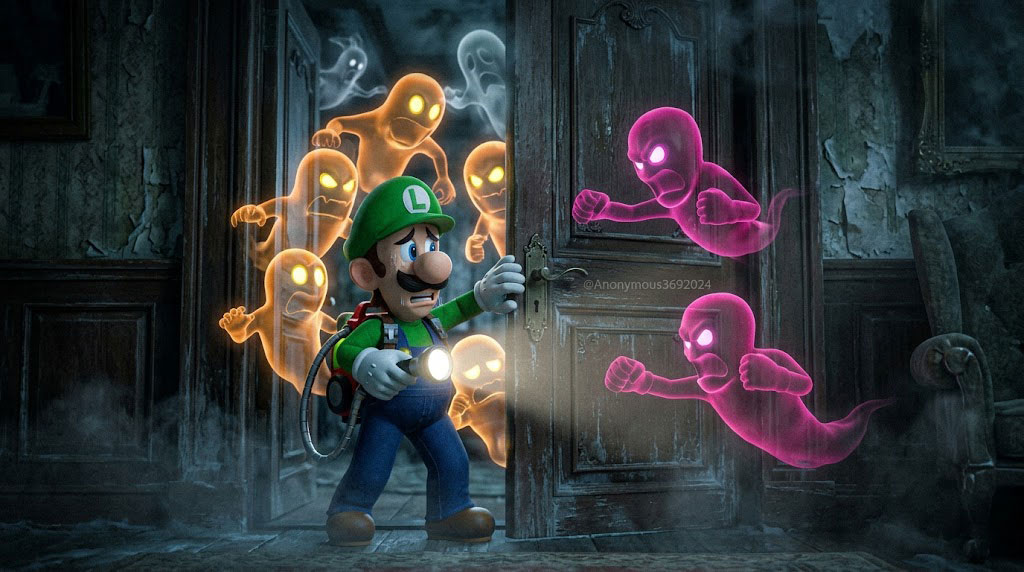
The air inside the endless corridors of the towering gothic estate is thick, suffocating, and dripping with an unnatural chill. As the trembling green clad plumber slowly pushes open the heavy wooden doors of the Parlor, he is not greeted by a single, tragic human soul. He is immediately swarmed by a chaotic, shrieking mass of brightly colored entities. For over two decades, casual players of the two thousand and one GameCube masterpiece viewed these generic ghosts as nothing more than simple video game fodder. They were the basic enemies, the standard obstacles designed to train the player before the real battles began. But when you strip away the cartoonish presentation and conduct a meticulous forensic examination of the environmental lore, a profoundly disturbing psychological thriller emerges. The Gold Ghosts, the Purple Punchers, the invisible stranglers, and the hoarding spirits are not the lingering souls of deceased humans. They are an artificial, synthetic swarm of nightmares, a terrifying ecosystem of living wet paint born from the absolute darkest corners of a broken mans mind.
The Necromantic Factory of the Starving Artist
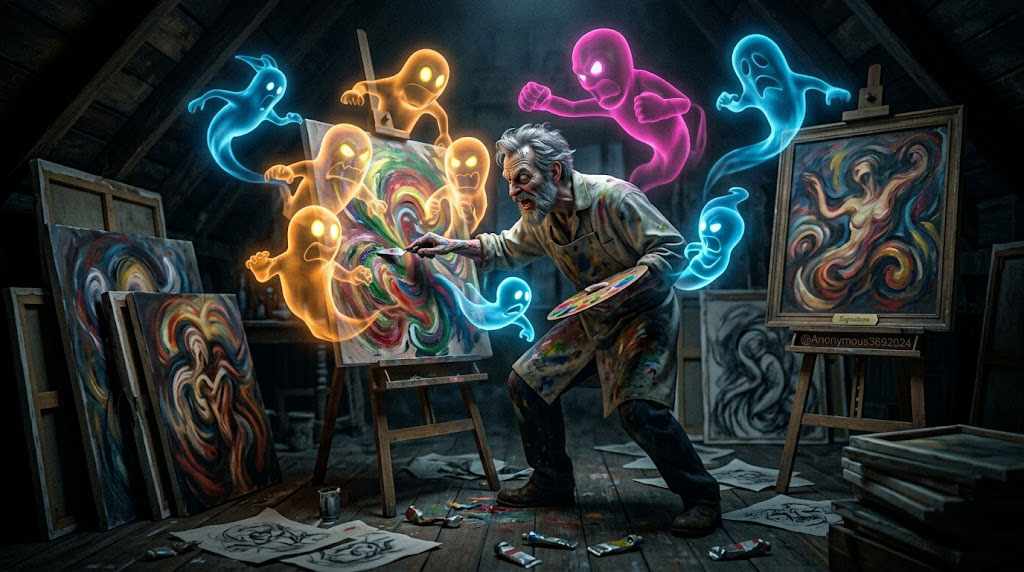
To fully comprehend the sheer psychological horror of the generic ghostly swarm, we must first identify their terrifying ontological origin. The internal lore registered within Professor Elvin Gadds Game Boy Horror scanner confirms a staggering reality. The standard ghosts haunting the estate were never alive. They possess no tragic backstories, no forgotten families, and no graves in the cemetery. They are the physical, ectoplasmic manifestations of Vincent Van Gore, the Starving Artist who resides in the third floor studio.
Following his release from his portrait prison by King Boo, Van Gore barricaded himself in the pitch black attic. Armed with a mastery of paranormal necromancy, the fifty nine year old painter used his brush to mass produce an entire army of spirits. Every single Gold Ghost that ambushes Luigi, every ceiling dropping nightmare, and every invisible strangler is a direct product of Van Gores thirty years of bitter, soul crushing rejection in the mortal realm. He poured his hatred, his inadequacy, and his manic obsession into his canvases, creating a standardized military force designed specifically to overwhelm intruders through sheer numbers and physical intimidation. When Luigi fights these colorful entities, he is not fighting the dead. He is fighting the weaponized, living emotions of a madman.
The Brutal Hierarchy of the Punching Phylum
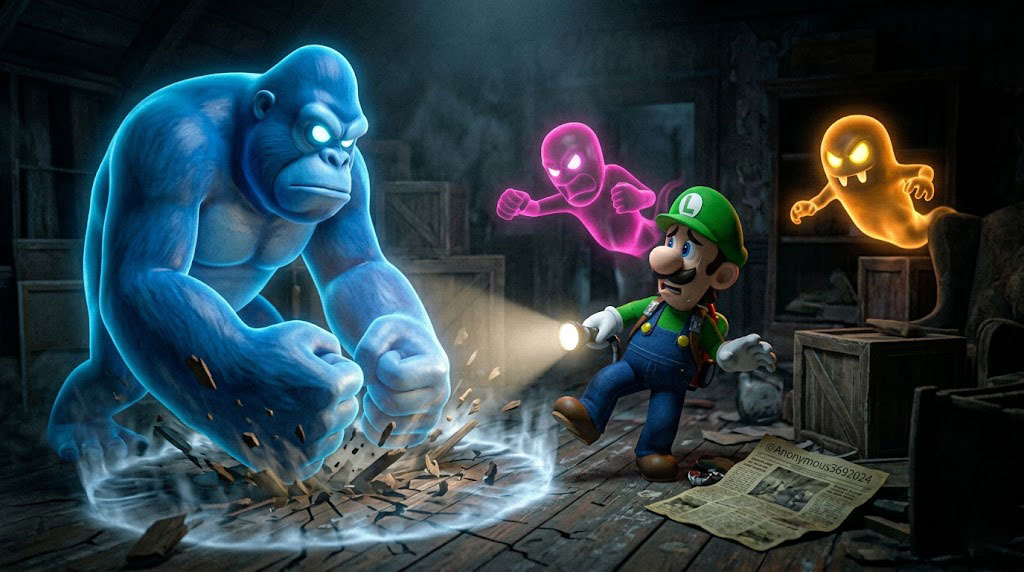
The most prevalent species within the synthetic swarm belongs to a classification known as the Punching Phylum. These entities form the strategic infantry of the Ghost Kings forces, designed to inflict blunt force physical trauma upon the green clad hero. The baseline unit of this phylum is the Gold Ghost. Despite the name, these entities are bright orange, possessing glowing yellow eyes and two small, prominent teeth. They are opportunistic ambushers with a mere ten health points. They utilize the darkness to sneak up behind Luigi, delivering a spinning punch that knocks the wind out of him.
Stepping up the hierarchy is the Purple Puncher. These magenta colored enforcers possess twenty health points and move with a terrifying, erratic swiftness. They do not simply ambush. They aggressively pursue, utilizing a long range uppercut that can catch Luigi completely off guard. But the true terror of the physical combatants is the Blue Twirler. This massive, heavy blue entity possesses thirty health points and moves with a slow, menacing deliberate pace. The Blue Twirler does not punch. It uses its oversized, gorilla like fists to violently slam the floorboards, generating localized seismic shockwaves that ripple across the room. If the trembling plumber is caught in the blast radius, the sheer concussive force threatens to shatter his bones. They are the heavy artillery of the painted army, completely devoid of mercy.
The Gluttonous Trap and the Strangling Dark
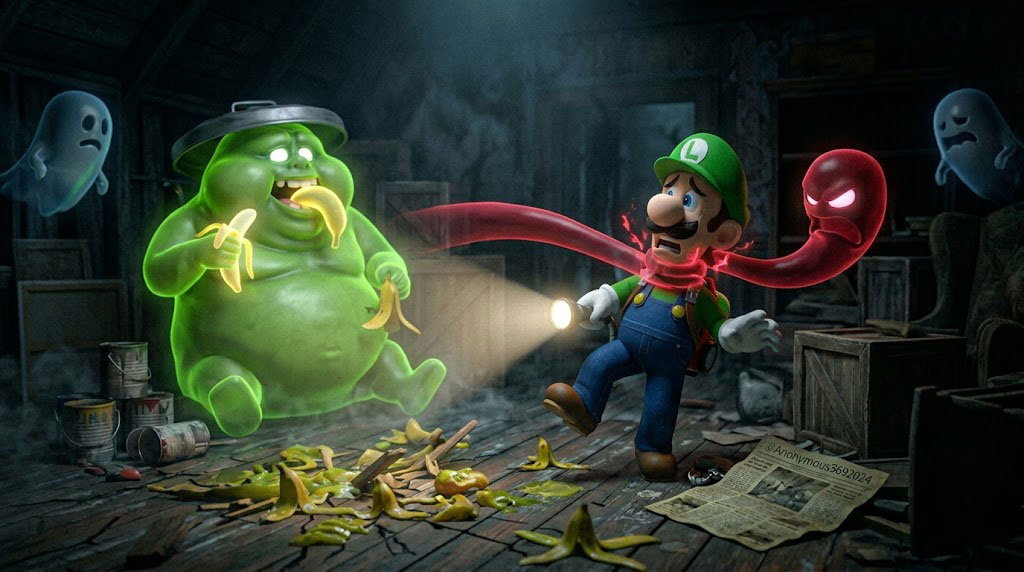
Vincent Van Gore did not just paint physical brawlers. He designed specialized operatives meant to inflict psychological and environmental torment. The Garbage Can Ghost is a massive, lime green entity with a body shaped entirely like a waste receptacle. Unique among the generic population, this ghost possesses forty health points, making it the sturdiest of the standard painted creations. But it does not attack directly. It is completely consumed by gluttony. It spends its existence eating ethereal bananas and discarding the peels across the floorboards. This is a calculated tactical trap. The peels act as environmental hazards, causing Luigi to slip and violently crash to the floor. In a dark room filled with aggressive spirits, a single slip can easily become a fatal, bone breaking mistake.
Even more terrifying is the Grabbing Ghost. These long, horizontally shaped spirits do not punch or throw objects. They sneak up behind their victim and violently choke them. The weakest variant, the white grabber, possesses ten health points and merely restrains Luigi, holding him completely paralyzed so the other painted monsters can attack him freely. The red grabber possesses twenty health points and actively crushes Luigis throat, draining his life force directly. But the true horror lies in their invisible variants. The cyan Mirror Ghosts can only be seen as reflections in the glass of the Wardrobe Room, forcing the player to look away from the actual physical threat to track them. The purple Cinema Ghosts are entirely invisible in the physical world, revealing their presence only as dark shadows cast against the movie screen in the Projection Room. They are the ultimate stealth assassins, choking their victims in the absolute dark.
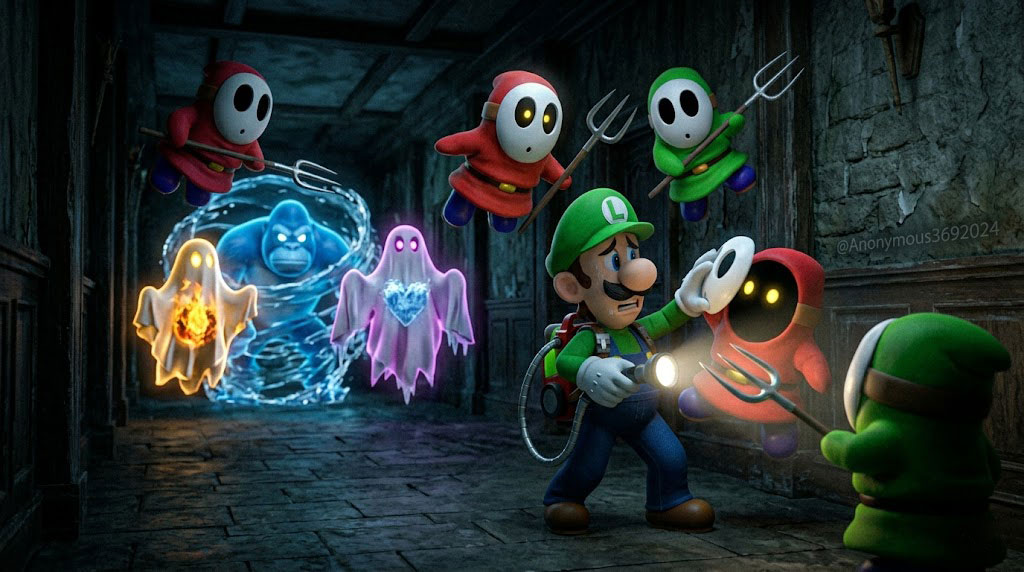
The Masked Phantoms and Elemental Shells
The artistic depravity of Vincent Van Gore is fully showcased in his creation of the Ghost Guys. These entities are spectral, corrupted derivatives of the classic Shy Guy species. They wear colorful red or green robes and hide their faces behind eyeless white masks. They float through the dark corridors, violently jabbing and twirling long, sharp pitchforks. The mask acts as a supernatural shield, rendering them completely immune to the blinding beam of the flashlight. To capture them, Luigi must use the roaring suction of the Poltergust three thousand to violently rip the mask away, revealing two small, glowing yellow eyes suspended in a dark void. In the Ballroom, specialized dancing variants twirl across the floor in pairs, turning a beautiful waltz into a lethal, synchronized execution.
Furthermore, Van Gore painted three highly specialized variants designed to counteract Luigis elemental arsenal. The Temper Terror is a white sheeted Gold Ghost with a core of active, burning fire. The Flash is a white sheeted Purple Puncher with a cryogenically frozen, icy heart. The Blue Blaze is a massive Blue Twirler protected by a swirling shield of liquid water. These elemental mutants are entirely immune to standard light stunning techniques. Luigi must weaponize the opposing forces of nature, using water to extinguish the terror, fire to melt the flash, and ice to freeze the blaze. They represent a terrifying evolution in the painted army, adapting to the environment to ensure the destruction of the living.
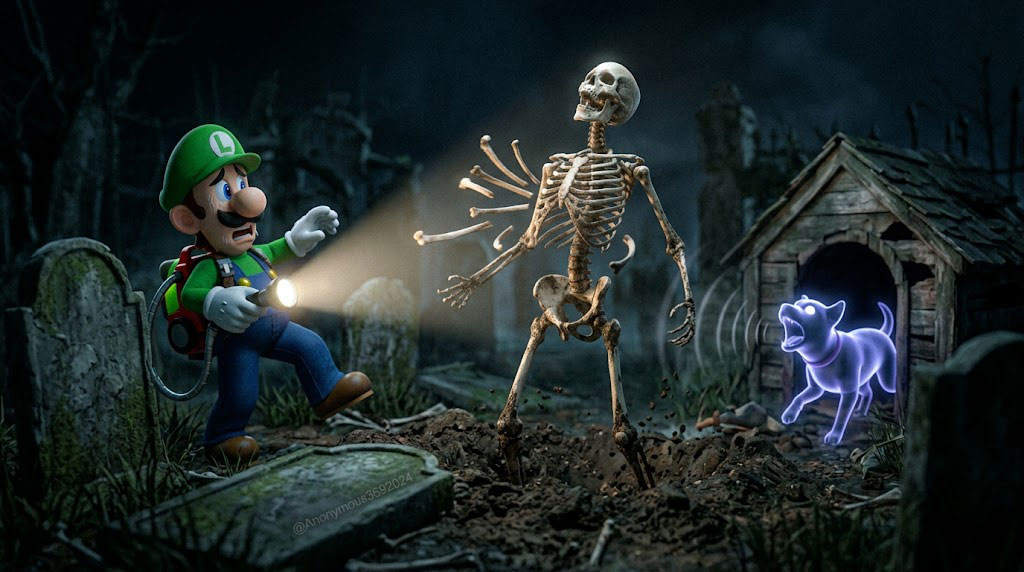
The Anatomical Anomaly of the Skeletal Dead
Amidst the endless waves of painted, synthetic ghosts, there is one generic entity that completely shatters the established lore of the estate. Mr Bones is a terrifying, skeletal anomaly. Unlike every single creation of Vincent Van Gore, Mr Bones possesses a visible, physical bone structure. He does not taper off into a wispy, ethereal tail. He has actual, physical legs. But the most horrifying detail of his existence is that he is fully capable of human speech.
When Luigi enters the Boneyard and disturbs the sleeping guard dog Spooky, the loud barking pierces the silent night. Suddenly, the earth shifts, and Mr Bones rises directly from the dirt. He angrily shouts into the air, demanding that the yappy dog be quiet. This is a staggering revelation. Mr Bones is not a wet painting. He is the actual, reanimated remains of a human being buried in the cursed soil of the mansion. He is highly territorial and deeply irritable, retaining a conscious awareness that the mindless painted drones entirely lack. He attacks by literally ripping his own ribcage apart and hurling his bones at the trembling plumber. To defeat him, Luigi must overpower the skeleton, reducing him to a pile of dust and marrow. He is a grim, physical reminder that while the mansion is filled with artificial art, the ground beneath it is packed with very real corpses.
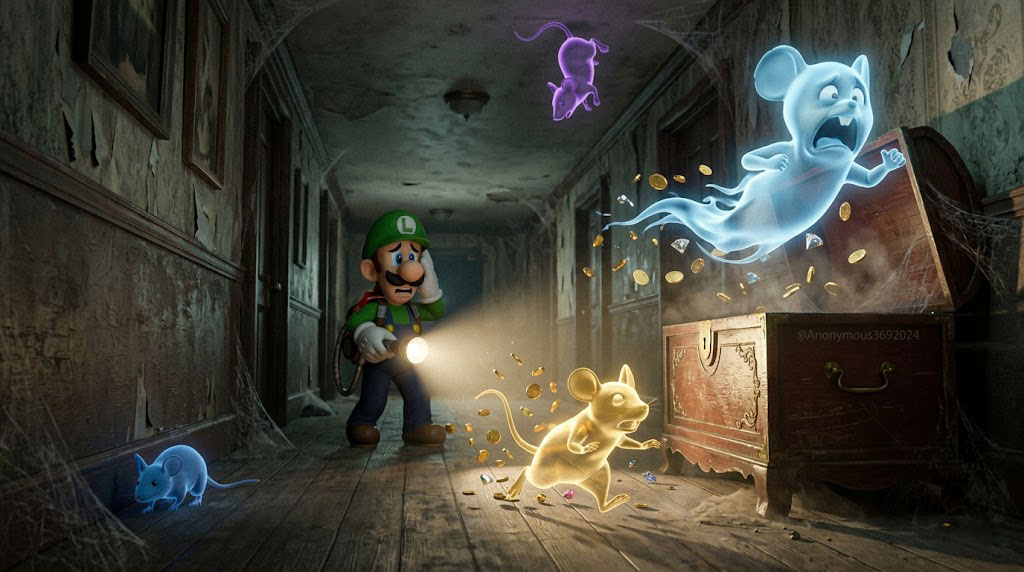
The Spectral Rodents and the Hoarders of Wealth
The haunting of the estate extends even to the vermin scurrying across the floorboards. Ectoplasmic mice infect the dark hallways and abandoned rooms. The Blue Mouse slowly wanders the ground, while the Purple Mouse possesses the terrifying ability to scurry straight up the walls and across the ceiling. They are ambient pests, dealing minor damage to the terrified hero. But among this spectral infestation hides the Gold Mouse. This entity is completely non hostile, running with frantic, desperate speed the moment a light shines upon it. If captured, it bursts into a shower of coins, bills, and precious stones. They are the hidden vaults of the mansion, often requiring Luigi to scan blocks of cheese with his Game Boy Horror just to lure them out of hiding.
This obsession with hoarding wealth is perfectly mirrored in the elusive Speedy Spirit. This entity is a pale blue variant of the Gold Ghost, but it possesses absolutely no desire for combat. It hides inside dusty furniture, waiting in absolute silence. The moment it is uncovered, it shrieks and flees wildly across the room. It is a creature defined entirely by cowardice and greed. If Luigi manages to stun and capture this evasive spirit, it drops a massive fortune in gold and diamonds. However, if the Speedy Spirit manages to escape into the walls, it vanishes permanently, taking its hoarded wealth into the ether forever. They represent the ultimate manifestation of the mansions underlying theme of extreme, toxic materialism.
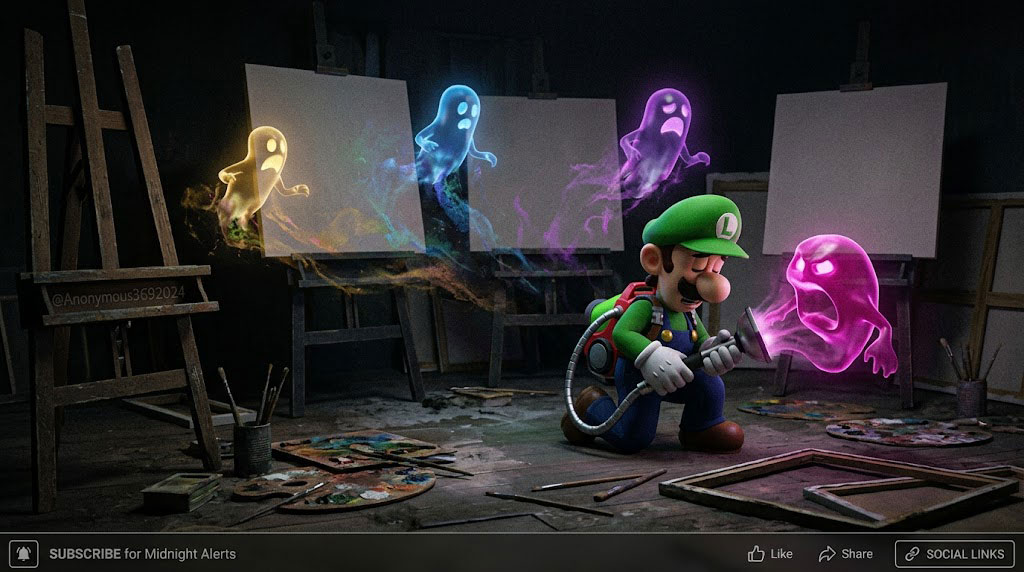
The Erasure of the Canvas
The terrifying reign of the generic ghost species comes to an abrupt and absolute end on the third floor of the estate. When Luigi finally breaches The Artists Studio, he systematically dismantles the final creations of Vincent Van Gore. As the last Purple Bomber is sucked screaming into the suffocating containment chamber of the vacuum, the room falls dead silent. The magical link is permanently severed.
With the capture of the Starving Artist, the factory is completely shut down. The endless swarms of Gold Ghosts, Purple Punchers, and Blue Twirlers instantly cease to manifest in the dark hallways. The artificial ecosystem collapses entirely. Luigi realizes that the overwhelming majority of the horrors he faced throughout the long, agonizing night were nothing more than an elaborate, colorful illusion painted by a man who simply wanted the world to notice his art. The generic ghosts were never alive, and now, they have been erased from existence entirely, reduced to nothing more than dry, forgotten pigment on a blank canvas.
What happens to the fabric of a haunted dimension when the artist responsible for painting the nightmares is finally locked inside a canvas of his own?
Continue the Mansion File
The mansion works best as a chained dossier. Step back if you missed the previous room, or keep going to follow the next piece of Luigi's Mansion lore.
Previous file: Vincent Van Gore Painted Rejection Into Luigi's Mansion's Army Next file: The 50 Boos Are the Nervous System of Luigi's Mansion