
Mr. Luggs Died at Thirty Hiding His Hunger in Luigi's Mansion
Mr. Luggs died at thirty because the feast became stronger than shame. In Luigi's Mansion, the dark dining room, ghost waiters, empty plate, and Spooky's starvation reveal a glutton who fed one appetite while the loyal dog outside wasted away.


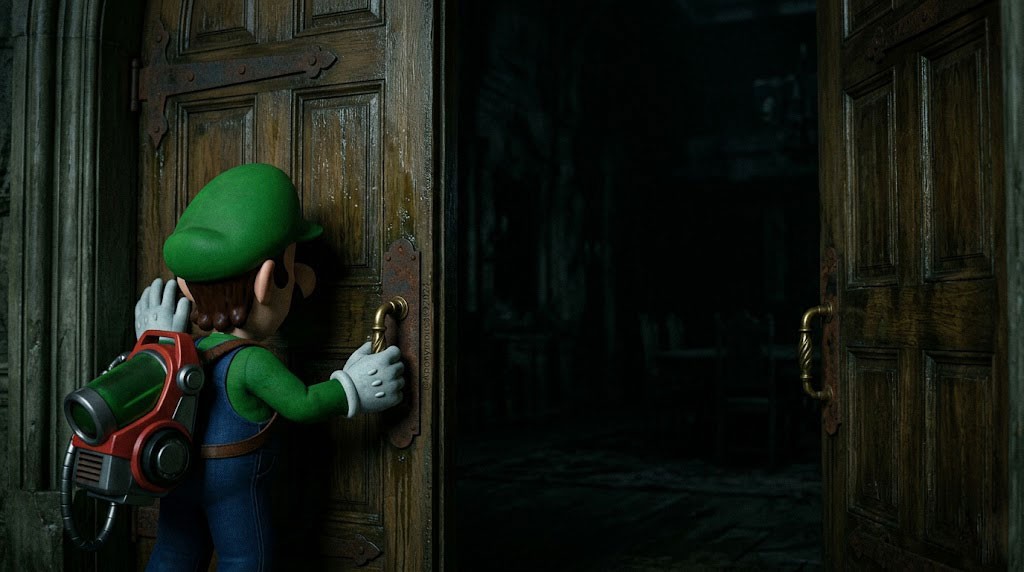
The air inside the first floor Dining Room of the towering gothic estate does not smell of decay or ancient dust like the rest of the mansion. It smells of rancid grease, heavy spices, and rotting meat. When the trembling green clad plumber pushes open the heavy wooden doors, he is met with an oppressive, suffocating darkness. The silence of the house is broken by a wet, sickening sound. It is the rhythmic, sloppy noise of jaws chewing, meat tearing, and greedy swallowing echoing through the pitch black chamber. For decades, players of the two thousand and one GameCube masterpiece viewed this optional encounter as nothing more than a gross out joke, a quirky battle against a fat ghost eating a plate of glowing food. But when you strip away the cartoonish presentation and conduct a forensic examination of the environmental lore, a profoundly disturbing psychological thriller emerges. The entity waiting in the dark is Mr Luggs. He is not just a hungry ghost. He is a tragic monument to the horrors of unchecked addiction, a man who consumed himself to death out of pure shame, taking the innocent lives around him down into the grave with him.
The Anatomy of a Thirty Year Old Glutton
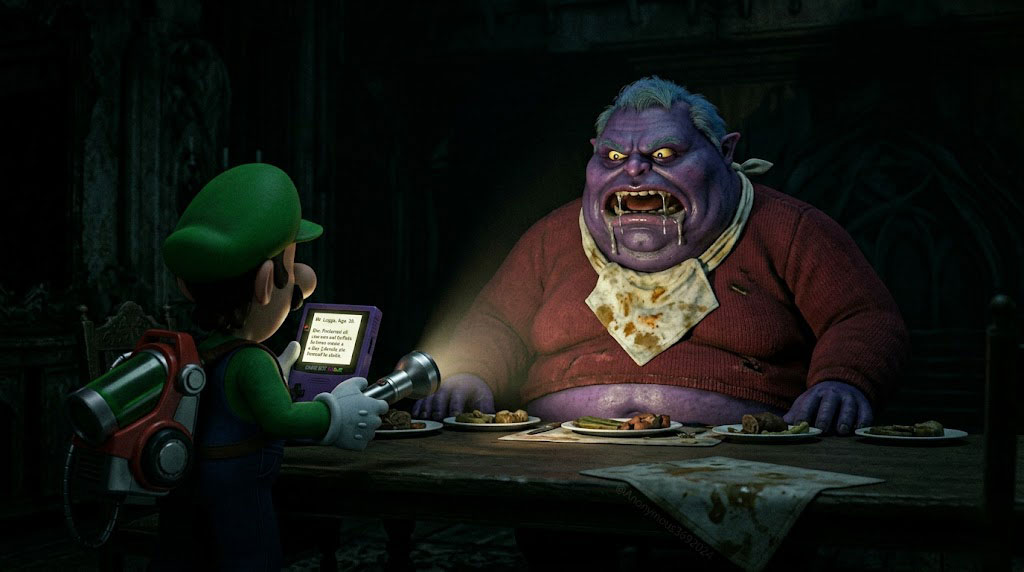
To comprehend the sheer horror of this spectral glutton, we must first examine his physical manifestation and the chilling details hidden within his internal biography. When Luigi finally illuminates the room, the form of Mr Luggs is deeply unsettling. He possesses deep purple skin, small yellow eyes that dart around with paranoid aggression, and a patch of blue gray hair. His mouth is extra wide and perpetually slobbering. He wears a dark red sweater stretched to its absolute breaking point across his massive, bloated frame, and a filthy, food stained napkin is tied tightly around his neck.
But the true psychological terror lies in his age. The Game Boy Horror scanner reveals that Mr Luggs died at the incredibly young age of thirty. This single detail completely recontextualizes his existence. He did not die of old age. He did not die in a tragic accident. His biography explicitly states that he preferred all you can eat buffets to three meals a day and literally ate himself to death. To suffer complete organ failure from overeating at the age of thirty implies an addiction so severe, so mind breaking, that his entire existence was reduced to the physical act of chewing and swallowing. He was a prisoner of his own insatiable appetite, a man who destroyed his own body piece by piece while the world watched. But as the lore reveals, he did not want the world to watch.
A Prison of Darkness and Shame
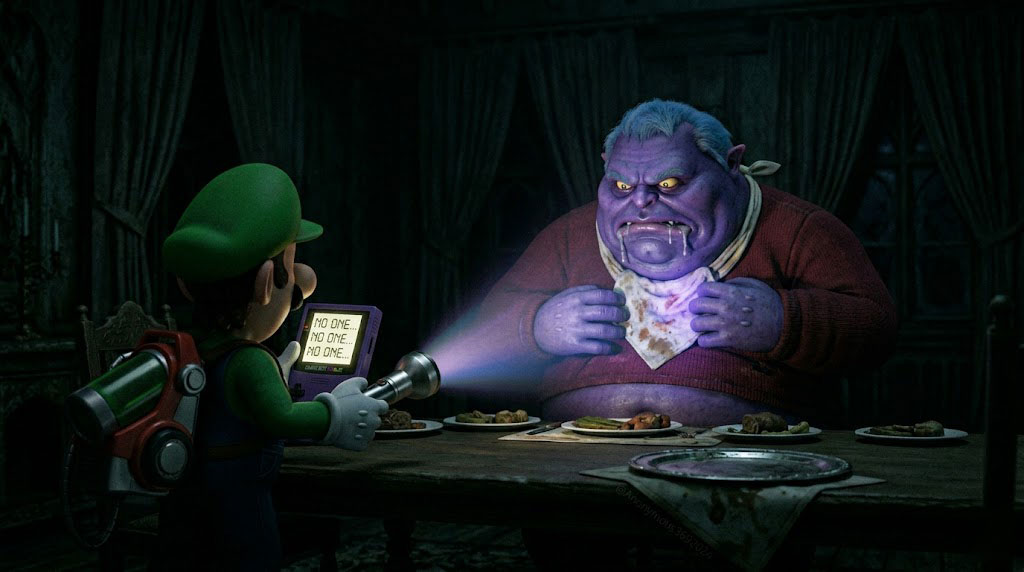
The mechanics of the Dining Room encounter reveal a heartbreaking layer to Mr Luggs. Unlike other ghosts who roam the halls or haunt specific objects, Mr Luggs sits at a massive dining table in absolute, pitch black darkness. He does not produce his own light. He does not want the windows open. When Luigi scans his spectral heart before lighting the candles, the device broadcasts his inner thoughts into the world of the living. Mr Luggs frantically thinks to himself that no one can see him in this darkness. He repeats the phrase "no one" over and over again, his internal monologue dripping with a desperate, pathetic relief.
This is a man completely consumed by shame. In life, he ballooned to a massive weight, likely becoming the subject of ridicule, disgust, and whispered insults from the other residents of the estate. He was so humiliated by his own grotesque lack of self control that he retreated into the darkest room of the house. He turned off the lights and drew the heavy curtains so he could gorge himself in secret, hiding his addiction from the judging eyes of the world. He chose to die in the dark, surrounded by plates of food, completely alone. Even in death, his fractured mind remains anchored to this shame. He sits in the unlit Dining Room of the illusionary mansion, chewing on spectral food, terrified of the light because the light brings judgment.
The Starving Hound in the Backyard
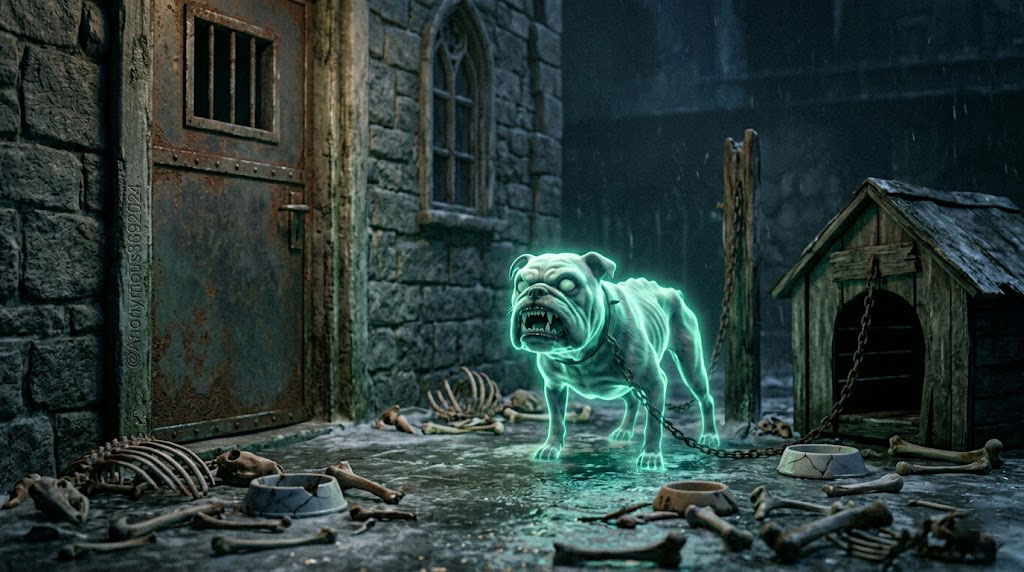
The collateral damage of this horrifying addiction extends far beyond the walls of the Dining Room. To understand the true cruelty of Mr Luggs, we must look just outside his door. In the Boneyard, situated directly adjacent to the Kitchen and the Dining Room, rests Spooky, the four year old guard dog of the estate. Spooky is a phantom bulldog who is aggressively hostile to Luigi. The internal biography for the dog states that this creepy canine will sink its chops into any seemingly edible thing in sight.
Why is the dog so ravenously hungry. The environmental storytelling paints a gruesome picture. Spooky was the pet of the household, perhaps even belonging to Mr Luggs himself. While the thirty year old glutton sat inside the house, consuming enough food to kill a fully grown man, he refused to spare a single scrap of meat for the dog outside in the freezing rain. Mr Luggs was so obsessed with hoarding and consuming every ounce of food that he allowed the family pet to slowly and painfully starve to death mere feet away from an endless banquet. The dog died of severe malnutrition, its stomach empty, listening to the wet, sloppy chewing of the master inside. Now, Spooky roams the Boneyard as a hostile spirit, forever searching for the meal he was denied in life, a tragic victim of a gluttons bottomless greed.
The Spectral Enablers of the Feast
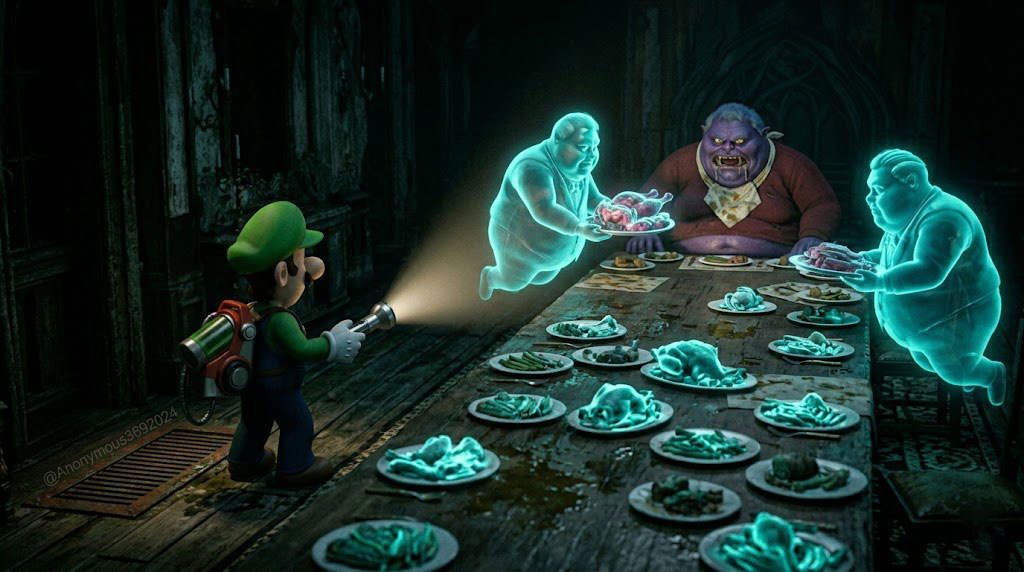
When Luigi braves the darkness of the Dining Room, he realizes that Mr Luggs is not entirely alone. He is being served. Hovering around the massive wooden table are two Waiter ghosts. These are stocky, cyan colored apparitions carrying silver platters of glowing, ethereal food. Their only purpose in the afterlife is to shuttle endless piles of supernatural meat to the gluttonous entity sitting at the head of the table. They completely ignore Luigi, focused entirely on their task.
Who were these servants in life. Were they staff members of the original mansion, forced to cook and serve food around the clock to satisfy the demands of a man eating himself into the grave. Perhaps they died of sheer exhaustion, collapsing in the Kitchen from the endless, grueling labor of feeding a human black hole. In death, they are permanently tethered to the object of their torment. They are enablers trapped in a supernatural loop, forced to feed a man who can never be full. To progress, Luigi must use the Poltergust to violently rip these servants from the physical plane, sucking them screaming into the vacuum. Only by removing the enablers can Luigi finally interrupt the eternal feast.
The Illumination of Guilt
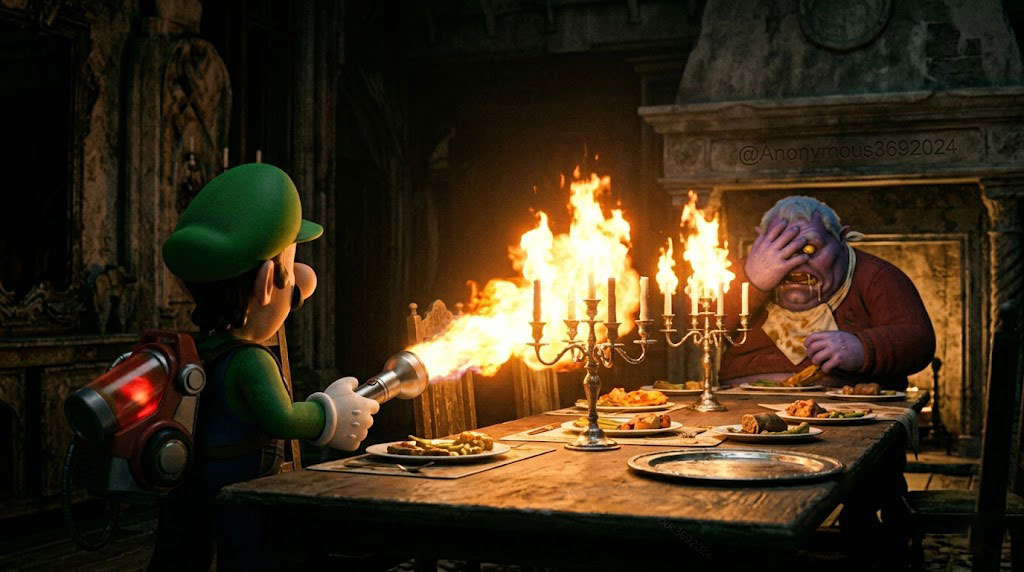
The method required to expose the vulnerability of Mr Luggs is an act of psychological warfare. Luigi cannot simply blind him with a flashlight. He must weaponize the very thing the glutton fears most. The light. Luigi must seek out a Fire Elemental Spirit, draw the roaring flames into the nozzle of his machine, and shoot fireballs at the unlit candelabras resting on the dining table.
When the candles burst into bright, illuminating flame, the illusion of the secret sanctuary is instantly shattered. The pitch black room is bathed in harsh, unforgiving light. The internal monologue of the ghost violently shifts from relieved isolation to sudden, panicked exposure. Mr Luggs cries out in his mind, realizing it is so bright and that everyone can see him eat. The shame of his addiction washes over him, a phantom echo of the humiliation he felt in life. But the addiction is too strong. His mind fractures further as he declares he does not care and will just keep eating. He chooses the food over his own dignity, doubling down on the grotesque behavior that killed him. It is a chilling display of a soul completely broken by its own vice, choosing eternal humiliation over stopping for even a single second.
The Wrath of the Deprived
With the room fully illuminated, Luigi commits the ultimate offense. He aims the roaring, industrial suction of the Poltergust directly at the massive plate of glowing food resting in front of the ghost. As the ethereal meat and spectral puddings are sucked away into the machine, Mr Luggs begins to panic. He realizes his plate is empty. The Waiter ghosts have been vanquished. There is no more food coming from the Kitchen.
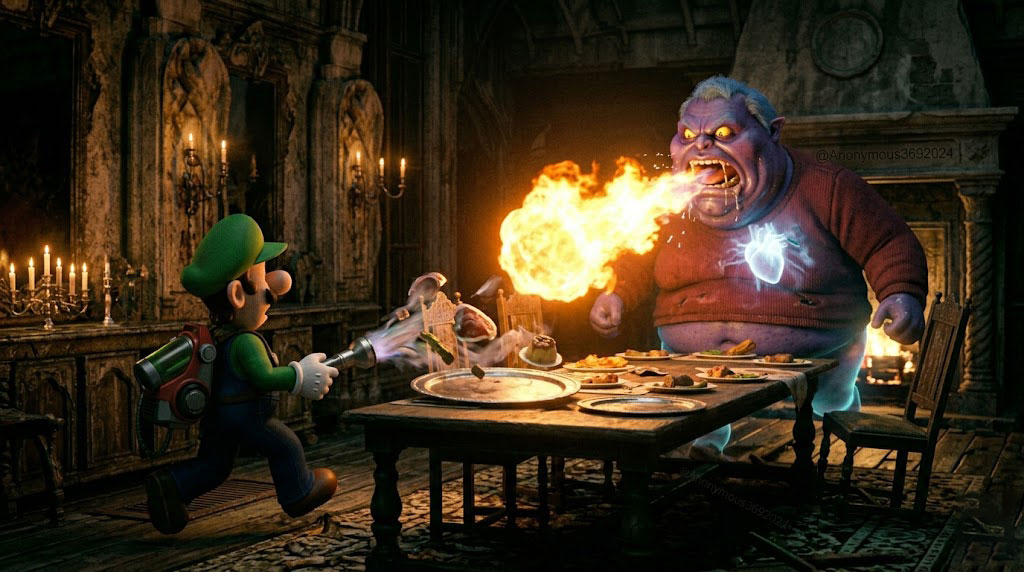
The reaction is explosive. Deprived of his singular reason for existing, the glutton flies into a state of absolute, blinding rage. He rises from his heavy wooden chair, his yellow eyes burning with pure malice. He inhales deeply and begins to belch massive, scorching fireballs directly at the terrified green plumber. This is not a man defending his home. This is the violent withdrawal of a severe addict denied their substance. The fireballs crash against the walls and scorch the hardwood floors, forcing Luigi to sprint desperately around the massive table to avoid being incinerated. The sheer physical exertion required to maintain this fiery assault takes a heavy toll on the bloated spirit. He was not built for combat. He was built for consumption. Eventually, his massive, ethereal chest heaves. He runs out of breath, panting and sweating, his face twisting in absolute exhaustion. His spectral heart is finally exposed to the cold, unforgiving light.
A Canvas of Eternal Hunger
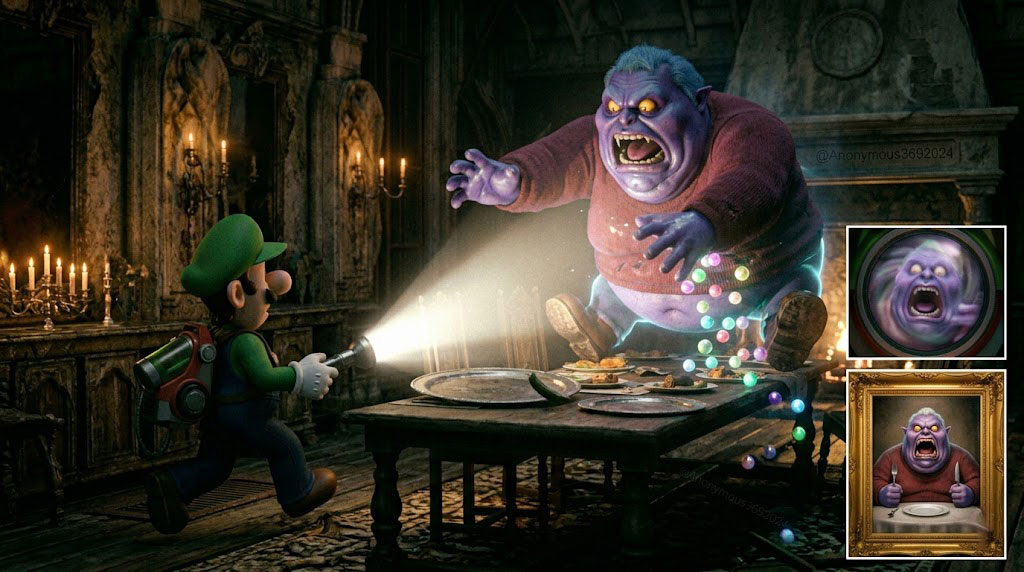
When the blinding beam of the flashlight strikes the exhausted glutton, the battle is brutally swift. Luigi unleashes the crushing suction of the machine. Mr Luggs thrashes wildly, his massive arms reaching out toward the empty dining table, desperately grasping for a final morsel of food that does not exist. His heavy boots drag across the polished floorboards, dropping a cluster of valuable spectral pearls as his body is violently ripped from the physical plane. He is sucked screaming into the suffocating, lightless containment chamber on Luigis back. The Dining Room falls dead silent, the smell of rotting meat slowly fading into the ether.
The psychological torment of Mr Luggs concludes deep underground, in the cold, sterile laboratory of Professor Elvin Gadd. Down in the lab, Luigi connects the heavy vacuum to the Ghost Portrificationizer and lets the machine grind its cruel work into motion. The machine, maliciously designed to compress sentient souls into static oil paintings, subjects the massive ghost to a flattening, agonizing paralysis. What remains of him is not freedom, but paint, frame, and a display case.
In his ultimate, golden frame, Mr Luggs is depicted sitting at a small table, holding a fork and knife, his mouth wide open in anticipation. But his plate is completely empty. Even in eternal imprisonment, he is denied his one true desire. He will never taste food again. He will never feel the satisfaction of a full stomach. He is reduced to a mere decorative trophy, a bloated monument to the destructive power of gluttony, locked forever in an underground gallery where no waiter will ever come to serve him.
What happens to a mind completely consumed by addiction when it is forced to spend eternity staring at an empty plate behind a pane of impenetrable glass?
Continue the Mansion File
The mansion works best as a chained dossier. Step back if you missed the previous room, or keep going to follow the next piece of Luigi's Mansion lore.
Previous file: Melody Pianissima's Silent Piano Exposes Luigi's Mansion's Loneliest Prodigy Next file: Spooky's Empty Bowl Exposes What Luigi's Mansion Left Outside