
The Stranger Who Stayed: The Unsolved Setagaya Family Murders
On a winter night in 2000, the Miyazawa family was murdered inside their Tokyo home. The person responsible left blood, fingerprints, clothing, and hours of strange behavior behind, but Japan's most evidence-rich cold case still has no name.


By the winter of 2000, part of Kamisoshigaya in Tokyo's Setagaya Ward had been hollowed out by progress.
The city was expanding Soshigaya Park. Houses had been purchased, families had moved, and the familiar density of the neighborhood had thinned into an eerie pocket of absence. According to Tokyo Metropolitan Police materials, there had once been roughly 200 households in the area. By the night of the murders, only four houses remained, including the home of the Miyazawa family.
At night, that kind of emptiness changes a street.
The ordinary sounds of residential life fade first: television through windows, bicycles rolling home, neighbors talking at the gate, children returning from lessons. What remains is the shape of domestic life without its usual protection. A house can still be warm inside. Dinner can still be made. A child can still watch television with a grandmother next door. But outside, the surrounding darkness begins to feel less like weather and more like distance.
Mikio and Yasuko Miyazawa lived in a two-story home at the edge of the park with their children, eight-year-old Niina and six-year-old Rei. Yasuko's mother lived in the adjoining unit. The family was close enough to be ordinary in the best sense: meals, school, work, lessons, small routines, the steady choreography of four lives built around one another.
On the morning of December 31, 2000, Yasuko's mother could not reach them.
When she entered the family's side of the home, she found the aftermath of one of Japan's most haunting unsolved crimes. Mikio, 44, Yasuko, 41, Niina, 8, and Rei, 6, had been killed sometime between the late hours of December 30 and dawn on December 31.
The horror of the Setagaya family murders does not come only from the violence, though that violence was severe. It comes from what happened afterward.
The person responsible did not vanish cleanly into the night. He lingered. He moved through the house. He used the family's things. He left behind clothing, blood, fingerprints, traces from his body, and objects that should have made him findable.
More than twenty-five years later, the evidence still surrounds an empty name.
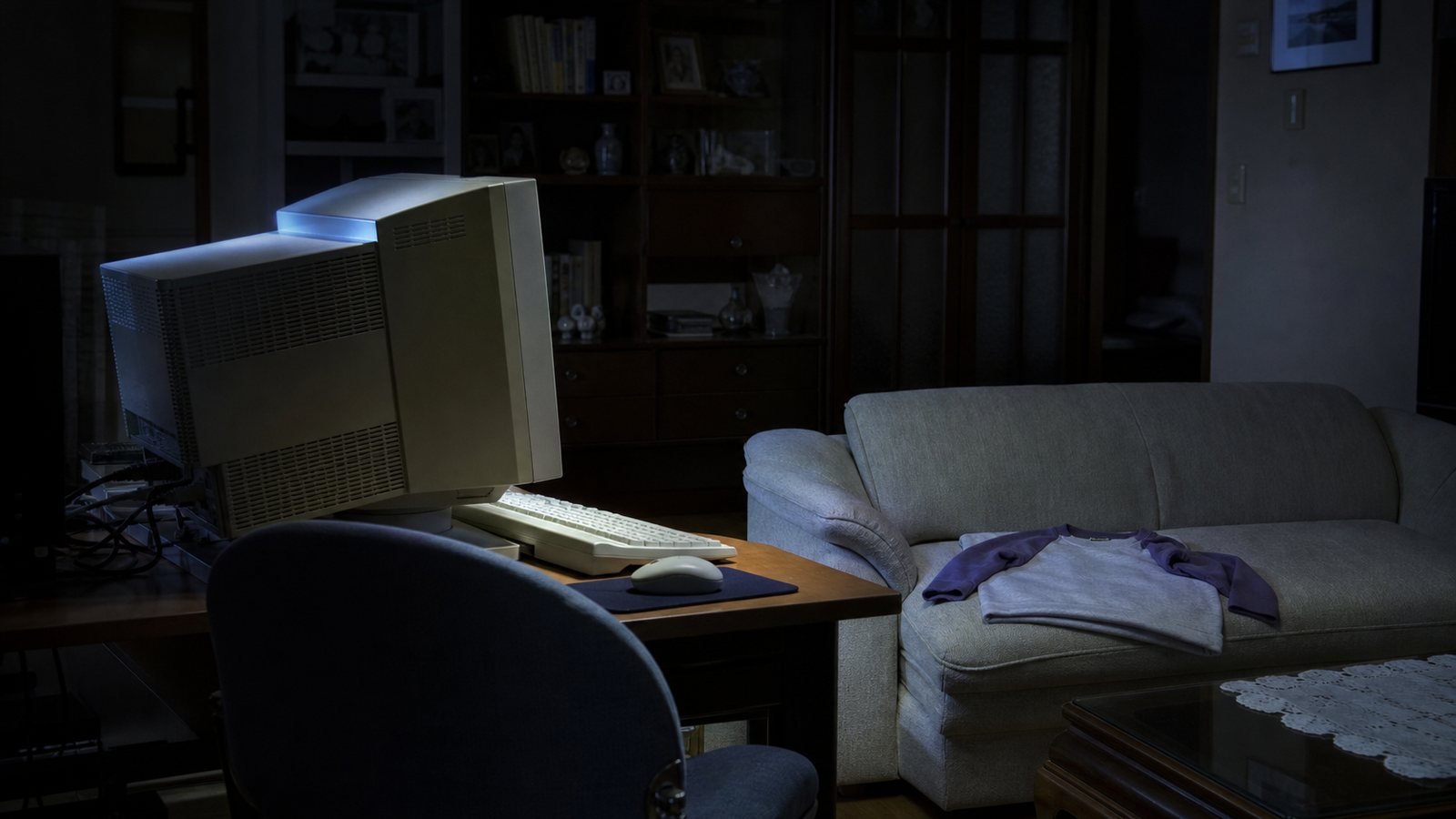
The Life Inside The Duplex
Before the house became evidence, it was a family home.
Mikio Miyazawa worked for a foreign-affiliated company and specialized in corporate identity, the careful visual language that makes a business recognizable to the world. The official police case material also preserves a gentler part of him: he loved animation, and he had been active in puppet and theatrical play during school. It is a small detail, but it matters. It places a creative life inside the file, not just a victim line inside a case summary.
Yasuko ran a cram school from home. Children came to learn under her guidance, bringing the noise and discipline of study into the same rooms where her own family lived. She was not only a wife and mother in the public record. She was a working woman with students, responsibility, and a daily rhythm that made the house part school, part home, part shelter.
Niina was in second grade. She enjoyed ballet and piano. Rei attended kindergarten. The public record does not need to turn either child into symbolism. Their ages say enough. They were at the stage of life where days are still built out of lessons, favorite foods, bedtime, small fears, drawings, songs, train interests, school bags, and the absolute assumption that adults will make the world safe enough to wake up in tomorrow.
On December 30, police materials say the family went shopping near Chitose Karasuyama Station and spent a relaxed evening at home eating dinner and watching television together.
Nothing in that sentence knows it is the last ordinary sentence.
That is part of the cruelty of cases like this. The final day never announces itself. It arrives disguised as routine. A family shops. A meal is made. A child crosses into a grandmother's side of the home and comes back. A father uses a computer. The park outside grows colder. The remaining houses sit in the dark.
Then routine stops being protection.
The Violence In The Dark
Tokyo Metropolitan Police place the offense between around 11 p.m. on Saturday, December 30, 2000, and dawn on Sunday, December 31.
The exact point of entry has been discussed for years. Some reporting has described the intruder climbing near the rear of the home and entering through a second-floor bathroom window after removing a screen. Former investigators have also cautioned that the precise entry route has not been publicly settled with absolute certainty. That distinction matters, because the house backed onto Soshigaya Park and gave the killer more than one possible approach.
What is clear is that the intruder entered a family home at night and killed all four people inside.
The attack began in the darkness of the private rooms. Public reporting and case summaries have long stated that Rei died by strangulation, while Mikio, Yasuko, and Niina were attacked with a knife. Police materials identify a sashimi knife sold under the trade name "Seki Magoroku, Ginju" as one of the key objects left or connected to the crime. They also report that the killer probably injured his hand or hands during the offense.
This article will not linger on graphic mechanics.
The important truth is not spectacle. It is proximity. The killer moved through a sleeping household and crossed the boundary between ordinary family safety and irreversible violence. Mikio appears to have encountered the intruder in the house. Yasuko and Niina were found upstairs. Rei, the youngest, never had a chance to become old enough for the world to explain itself.
The Miyazawas did not disappear from an isolated road or vanish into a distant landscape. They were taken from within their own home, while a grandmother lived next door, while the park outside waited in winter silence, while the rest of Tokyo moved toward New Year's Eve.
Through the adjoining wall, the world did not understand what was happening.
That is the terror of a house: how completely it can contain a disaster before anyone outside knows the air has changed.
The Stranger Who Stayed
In most home-invasion murders, the violence creates flight.
Panic takes over. The offender grabs what can be grabbed or runs before police, neighbors, witnesses, or simple chance can close the distance. But in the Setagaya case, the killer appears to have behaved with a disturbing domestic calm after the family was dead or dying.
The house became less like a scene he wanted to escape and more like a place he felt entitled to occupy.
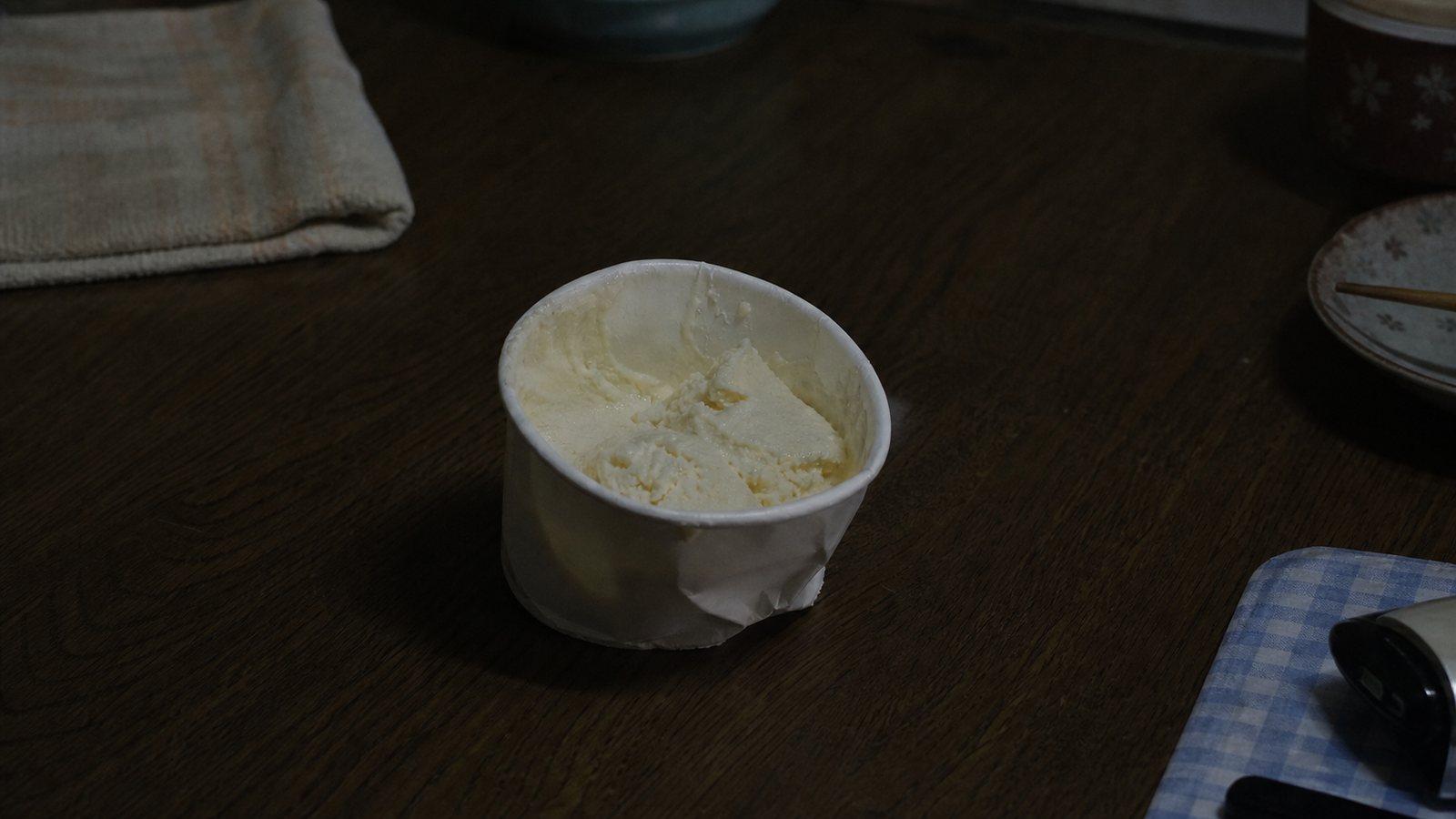
Investigators found evidence that the offender used items in the home after the attack. Reporting has long described him treating his injured hand or hands, eating food from the kitchen, drinking from the refrigerator, using the toilet and not flushing, and accessing the family's computer. Some accounts have suggested he remained inside for hours.
One part of that timeline deserves caution. Computer activity after the killings has been central to the case's mythology, especially the idea that the killer may have stayed until late the next morning. Later analysis and reporting have raised another possibility: that some morning computer activity could have been caused accidentally after Yasuko's mother discovered the scene and moved through the house in shock. The safer reading is narrower but still chilling. The offender appears to have remained inside after the violence and used the family's space in ways that most killers would not.
That behavior is why the case refuses to feel like a simple robbery.
Some money was reportedly taken, but other valuables and obvious opportunities were left behind. Drawers were disturbed. Papers were handled. Items were displaced. The scene suggested not one clean motive, but several possible motives breaking into one another: theft, search, rage, curiosity, staging, psychological compulsion, or something investigators still have not named.
The killer's lingering also created the central paradox of Setagaya.
He stayed long enough to leave the kind of evidence police dream of finding. He bled. He touched things. He abandoned clothing. He left footprints. He left biological material. He left behind the physical outline of himself.
And still, he disappeared.
A Mountain Of Evidence
The official case materials read like a strange inventory of absence.
Police have the killer's blood. They have fingerprints. They have footprints. They have a profile from clothing, body shape estimates, and the objects abandoned in the house. Their public materials describe him as male, Type A blood, around 170 centimeters tall at the time, probably slim, probably right-handed, and possibly injured during the crime.
Those are unusually specific clues for a case with no arrest.
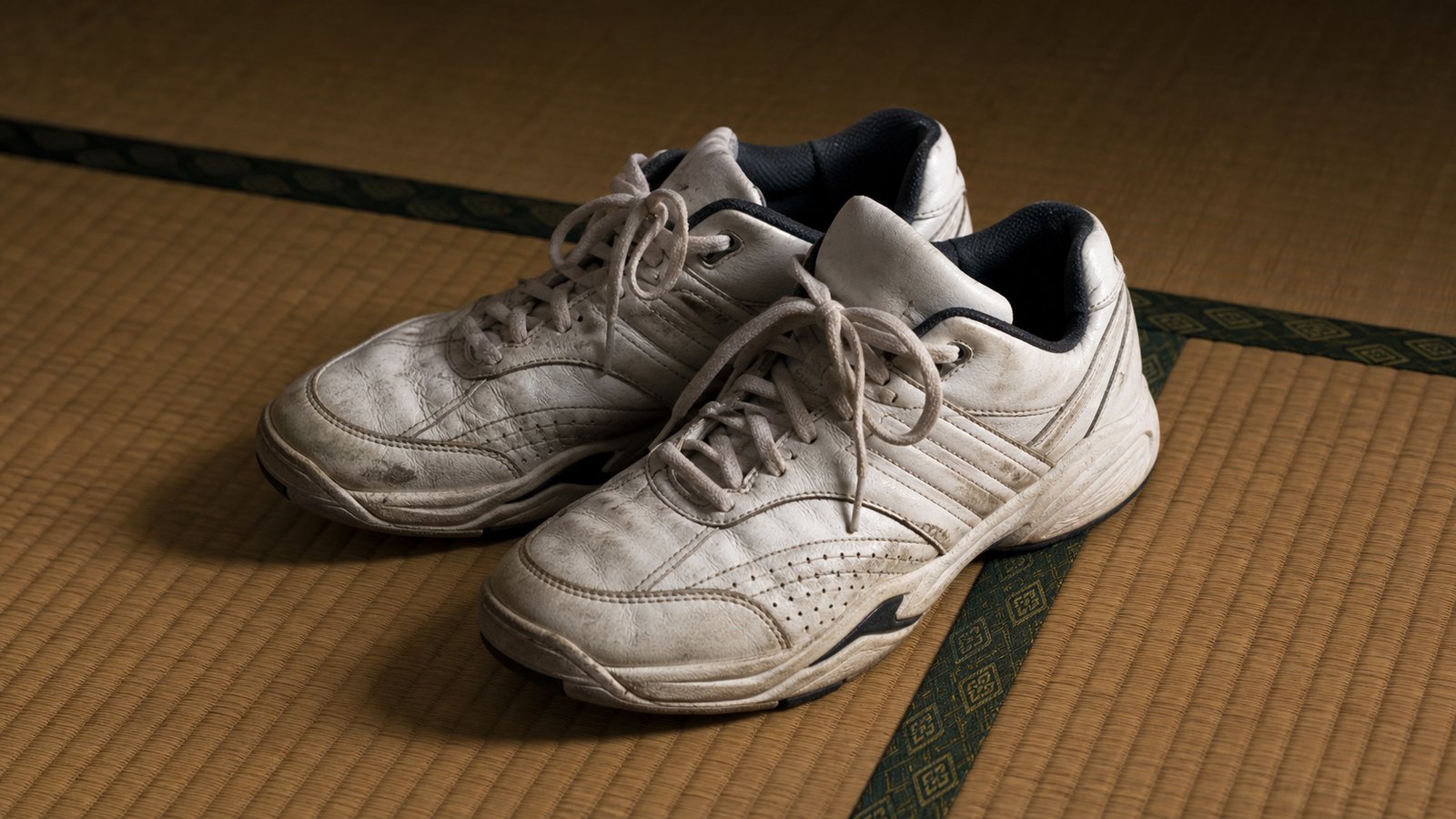
The shoes were identified from footprints as Slazenger athletic shoes, 27.5 centimeters in Japanese sizing, or size 280 in Korean sizing. Tokyo police say that size of the same shoe was manufactured in South Korea but was not sold on the Japanese market. That fact has fed years of speculation about whether the killer had a foreign connection. It should be treated as a clue, not a conclusion. Shoes travel. People travel. Clothing can be bought, borrowed, gifted, discarded, or carried across borders without revealing a passport.
The sweatshirt was even more striking.
Police materials identify it as a large raglan-style shirt with light purple sleeves and a light gray body. Only 130 pieces of that type were sold across listed stores. Purchasers for only a small number had been identified in the police appeal. In a case with no face, the shirt became a kind of surrogate witness: specific, traceable, stubbornly incomplete.
Other abandoned items created the same frustration. Gloves. A crusher hat. A scarf. A hip bag produced in Osaka. A Uniqlo Air Tech jacket. A bottle scent connected to Drakkar Noir detected in the bag and on handkerchiefs. The kind of details that should narrow the room, then somehow keep opening doors.
Two black handkerchiefs became their own line of inquiry. TMPD materials state that one had a roughly three-centimeter hole near the center and that investigators suspected the offender may have used it in a pouch-like way around a knife handle. Police also noted that similar handkerchief use had been found in marine product processing factories in China, where workers need a steadier grip on knives and equipment when cleaning fish.
Even that clue refuses to behave simply.
It may point to work history. It may point to imitation. It may point to someone who learned a technique indirectly. It may mean nothing beyond the killer's private preparation. In Setagaya, every object seems to speak, but none will say a name.
The DNA Paradox
The biological evidence should have been the key.
Tokyo police had blood from the offender, clear enough to establish Type A blood and male sex markers. They had fingerprints that did not produce a public match. They had DNA evidence that could narrow ancestry, but not identify a person.
That is where the Setagaya case becomes both modern and maddening.
Later reporting has described the offender's paternal-line DNA as less common in Japan and more suggestive of roots associated with China or Korea. FNN reported in 2025 that more than 2,000 men had been checked for a Y-STR match without a domestic match being found. But ancestry evidence must be handled carefully. A paternal marker is not nationality. It is not citizenship. It is not motive. It cannot tell the public whether the killer was Japanese, foreign-born, mixed ancestry, a visitor, a resident, or someone whose family history carried older migrations that the person himself may never have thought about.
The maternal-line reporting has been similarly easy for the internet to overuse. Some secondary summaries have emphasized possible European or southern European maternal ancestry. That may be useful to investigators, but for public writing it should stay in its lane: lineage can help direct investigative strategy, not assign guilt to a population.
The more recent and potentially important development came in July 2025, when FNN reported that Tokyo police had asked a specialist institution to analyze the offender's DNA and that the resulting age estimate suggested the killer may have been in his 30s at the time of the murders. FNN described the method as DNA methylation analysis, an epigenetic approach that estimates age by examining methylation changes associated with aging.
That update matters because older public police materials had leaned toward a relatively young man, partly from clothing and body-shape clues. If the 2025 reporting reflects the active investigative view, the psychological picture shifts. The offender may not have been a teenager or very young adult acting out with chaotic bravado. He may have been an adult man who chose youthful clothing, moved through the house with intent, and left behind a performance of disorder.
But even here, caution is necessary.
The FNN report is significant reporting, not an arrest warrant. Age estimates are investigative tools, not names. The DNA did not suddenly become a confession. It simply changed the shadow's shape.
The Theories That Could Not Become Answers
Setagaya has produced theories because evidence without identity creates a vacuum.
Some people see robbery. The official case is described by TMPD as a robbery and quadruple murder, and money appears to have been taken. But that theory struggles with the offender's lingering, the violence against all four family members, and the reported valuables or opportunities left behind.
Some see a personal grudge. Mikio's reported disputes with young people using the park or skate area have appeared in reporting as one possible investigative avenue. The clothing, shoes, and early age profile made a local youth theory feel plausible for years. But plausible is not solved.
Some see a foreign connection because of the shoes, DNA-lineage reporting, handkerchief use, and claims in secondary reporting about trace material from places outside Japan. That line of thought requires special restraint. A foreign-made shoe does not identify a foreign killer. A genetic marker does not identify nationality. A secondhand bag can carry sand from places its final owner has never visited.
Some theories go much further.
One disputed book and later public speculation suggested the possibility of organized-crime involvement or a contract killing linked to money from park expansion. That theory has never been established publicly by police. It should not be treated as fact. At most, it belongs in the category of theories generated by a case whose evidence is abundant but unresolved.
The same caution applies to military speculation connected to reports of sand or trace material linked to areas near the Mojave Desert and Edwards Air Force Base. Even if such trace reporting is accurate, it does not make the killer military, American, or connected to any base. Objects move through ordinary channels. People buy used goods. Bags pass through hands. Trace evidence can preserve a journey without explaining who made it.
The most honest sentence remains the simplest:
Investigators do not publicly know who killed the Miyazawa family.
The theories are not useless. They show where the evidence has pointed, where the public mind has wandered, and where investigators may have had to spend time. But no theory has yet become a person in handcuffs.
The Stone By The River
One of the strangest public leads arrived not on the night of the murders, but one hundred days later.
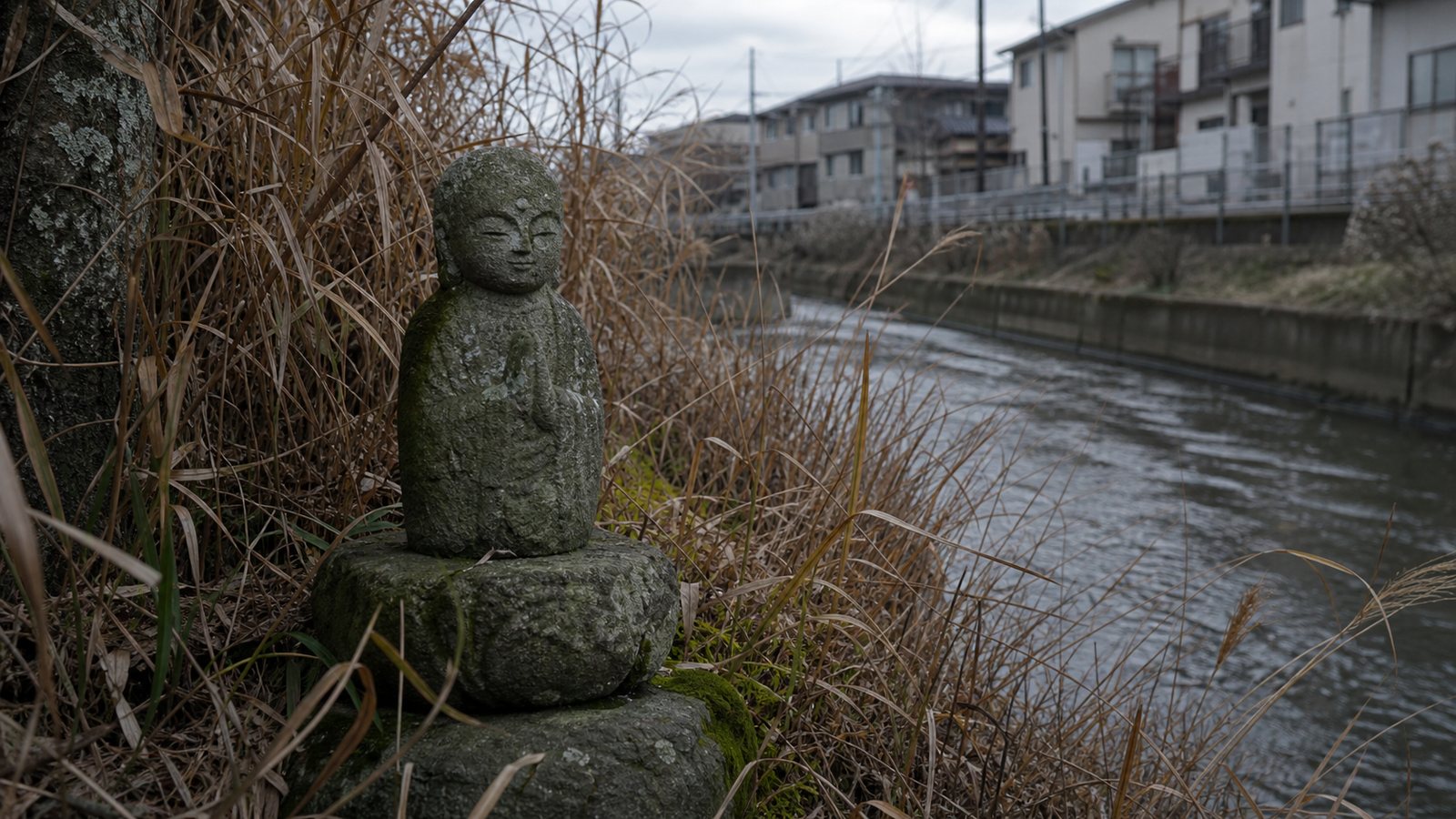
On April 9, 2001, according to TMPD materials, an Ojizosan stone Buddhist statue was found on the opposite side of the Senkawa River, west of the crime scene. The police appeal described it as white granite and asked for information about its manufacture, import, or sale. The department also stated that it was not known whether someone had placed it there with good intentions, whether the killer had placed it there, or whether someone close to the killer was responsible.
That official uncertainty is important.
The statue is eerie because of where it appeared and because Jizo figures carry cultural associations with children, protection, travelers, and the dead. But eerie is not evidence by itself. The stone may have been an act of grief. It may have been an act of guilt. It may have been a message. It may have had no direct connection to the killer at all.
In another case, the statue might have become folklore and nothing more.
In Setagaya, it entered an evidence landscape already crowded with objects. A sweatshirt sold in tiny numbers. Shoes in an unavailable size. A hip bag. Handkerchiefs cut in a strange way. A scent. A knife. A river. A park. A house preserved under police attention.
The result is not clarity.
It is accumulation.
The Long Freeze
The Miyazawa house still stands.
That fact has become part of the case's weight. The home is not just a former crime scene. It is a preserved wound in a city that otherwise keeps rebuilding itself. For years, police have guarded or monitored it while the investigation remains open. Visitors, journalists, neighbors, and the curious have all had to reckon with the sight of a family home that has not been allowed to fully return to ordinary time.
In May 2026, that vulnerability surfaced again. Nippon.com, citing Jiji Press, reported that two Vietnamese construction workers were arrested on suspicion of trespassing and attempted theft at the house. Both reportedly said they did not know it was the site of the 2000 murders. Public reporting connects those arrests to an alleged break-in at the preserved property, not to the Miyazawa family murders themselves.
That distinction has to be said plainly.
The 2026 arrests do not solve the 2000 case. They only show that even the place where evidence once overwhelmed investigators can still be physically violated by people with no apparent connection to the original crime.
The case remains active. The reward connected to official and cooperating sources stands at up to 20 million yen. Japan abolished the statute of limitations for murder and other death-resulting crimes in 2010, so the clock that once threatened cold homicide cases no longer closes the legal door in the same way.
But legal possibility is not the same as an answer.
The Setagaya family murders are often described as one of Japan's most evidence-rich cold cases. That description is accurate, but it can also hide the human center. Evidence did not die in that house. People did.
Mikio, who worked in design and loved animation. Yasuko, who taught children from home. Niina, who practiced ballet and piano. Rei, who went to kindergarten and should have had years left to become himself.
The killer left a near-perfect outline: blood type, sex marker, fingerprints, footwear, clothing, body estimate, habits, movements, and traces that seem to cross borders and industries and family histories. He left enough to become almost visible.
Almost is the cruelty.
Twenty-five years later, the silhouette remains empty.
Archival Case Gallery
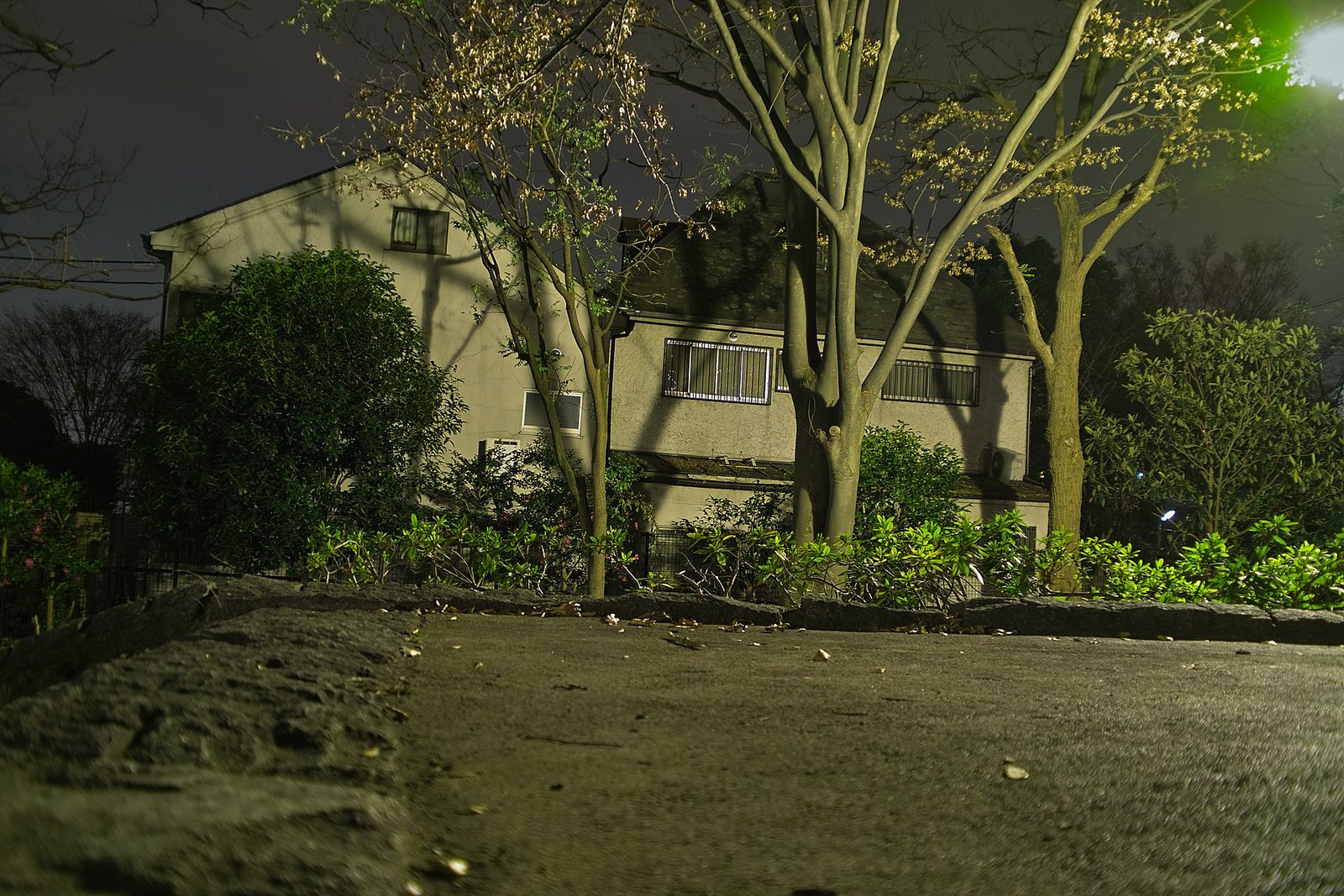
Archival case gallery: the Setagaya family murder scene area beside Soshigaya Park, photographed by 珈琲牛乳 and shared through Wikimedia Commons under CC BY 3.0. This is non-graphic location context, not a crime-scene detail image.
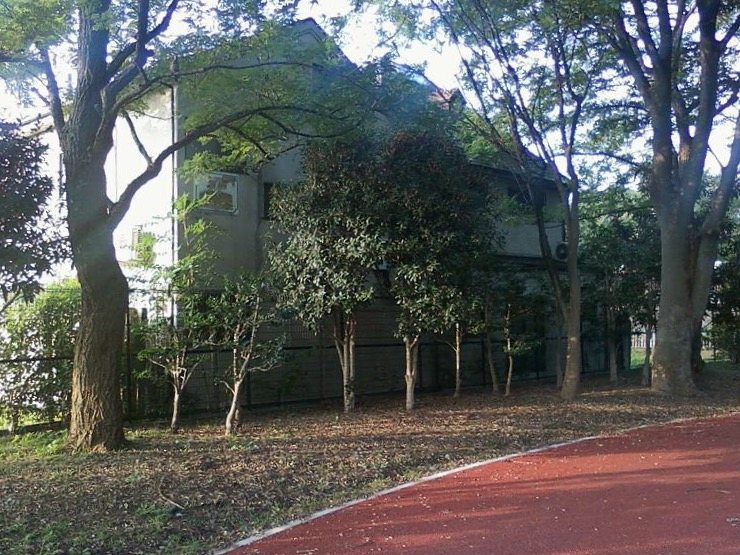
Archival case gallery: the park side of the Miyazawa home area, photographed by Thirteen-fri and shared through Wikimedia Commons as CC0/public-domain dedicated material. This is exterior location context.
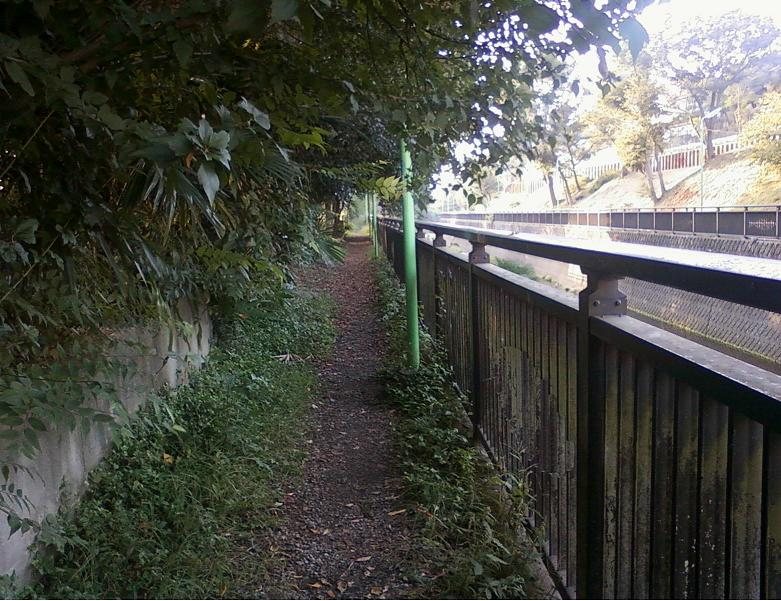
Archival case gallery: the Senkawa side road near the case geography, photographed by Thirteen-fri and shared through Wikimedia Commons as CC0/public-domain dedicated material. This is geographic context for the later public leads and river-area discussion.
Sources & Case Notes
Last updated: May 22, 2026.
Primary sources and case notes: This article is based on the Tokyo Metropolitan Police Department English case page for the robbery and quadruple murder in Kamisoshigaya 3-chome; the TMPD English case detail PDF documenting the victims, location, four remaining houses, reward, clothing, shoes, knife, blood type, and offender-profile appeals; the TMPD handkerchief appeal on the cut handkerchiefs and possible knife-handle use; the TMPD Jizo statue appeal PDF; FNN's May 2025 DNA-investigation analysis on Y-STR investigative limitations and lineage reporting; FNN's July 2025 reporting on DNA methylation age analysis suggesting the offender may have been in his 30s at the time of the murders; ABC Australia reporting on the preserved house, former investigator Takeshi Tsuchida, entry-route uncertainty, fingerprints, DNA, clothing clues, and skater-grudge investigative avenue; Nippon.com/Jiji Press reporting on the May 2026 arrests for alleged trespassing and attempted theft at the preserved murder site, framed here as unrelated to the 2000 murders; and the Library of Congress Global Legal Monitor on Japan's 2010 abolition of the statute of limitations for murder and other death-resulting crimes. Motive, entry route, trace-material theories, military speculation, organized-crime speculation, and offender nationality theories are treated as unresolved leads or public speculation unless directly attributed to official materials or named reporting.
Correction policy: If you have source corrections, family-approved context, or image-rights concerns, contact Anonymous369 Media through Contact & Media Inquiries.
Image credits: Feature and section images are Anonymous369 Media documentary recreations based on the Setagaya home environment, reported abandoned clothing, computer-use timeline, footwear evidence, food-consumption reporting, and Jizo lead. They are not archival photographs, official evidence images, depictions of the Miyazawa family, or images of an identified offender. The Archival Case Gallery uses Wikimedia Commons case/location images: a CC BY 3.0 Soshigaya Park scene image by 珈琲牛乳 and CC0 Setagaya/Senkawa context images by Thirteen-fri.
Content warning: This article discusses a home invasion, the murder of two adults and two children, restrained non-graphic crime-scene facts, and unresolved theories in a long-running homicide investigation.