
The Rain at Camp Scott: How Tent 8 Became the Oklahoma Girl Scout Murders
In 1977, three girls arrived at Camp Scott for a summer session in the Oklahoma woods. By morning, Tent 8 was empty, a storm had hidden the night, and one of the state's most painful cold cases had begun.


On the evening of June 12, 1977, the buses turned off the highway and carried 140 Girl Scouts into the Oklahoma woods.
Camp Scott sat near Locust Grove, tucked inside hundreds of acres of rugged timber, dirt roads, and summer-camp ritual. The girls had come from the Tulsa area for a session that was supposed to mean campfires, letters home, badges, songs, new friends, and the small brave independence that comes from sleeping outdoors for the first time.
Then the sky broke open.
By early evening, a hard thunderstorm had pushed across the camp. Rain struck the canvas tents. Plans shifted indoors. Girls wrote letters, arranged sleeping bags, learned the strange noises of a wet forest, and tried to turn fear into adventure because that is what summer camp asks children to do.
In Tent 8, at the remote edge of the Kiowa Unit, three girls were settling into their first night: Lori Lee Farmer, 8; Michele Heather Guse, 9; and Doris Denise Milner, 10. They had not come to Camp Scott as a legend. They were children with families, bedrooms, pets, anxieties, favorite things, and ordinary plans for the next day.
By morning, they would be dead.
The case would become known as the Oklahoma Girl Scout murders, a crime that split open questions about camp security, race, jurisdiction, forensic uncertainty, and how a community survives when the place built to make children feel brave becomes the scene of their worst fear.
The Blind Spot in Kiowa
Camp Scott had operated for decades as a place where girls could learn confidence outdoors. Its purpose was wholesome, even idealistic: cabins, tents, trails, songs, camp names, counselors, and the belief that nature could make children stronger.
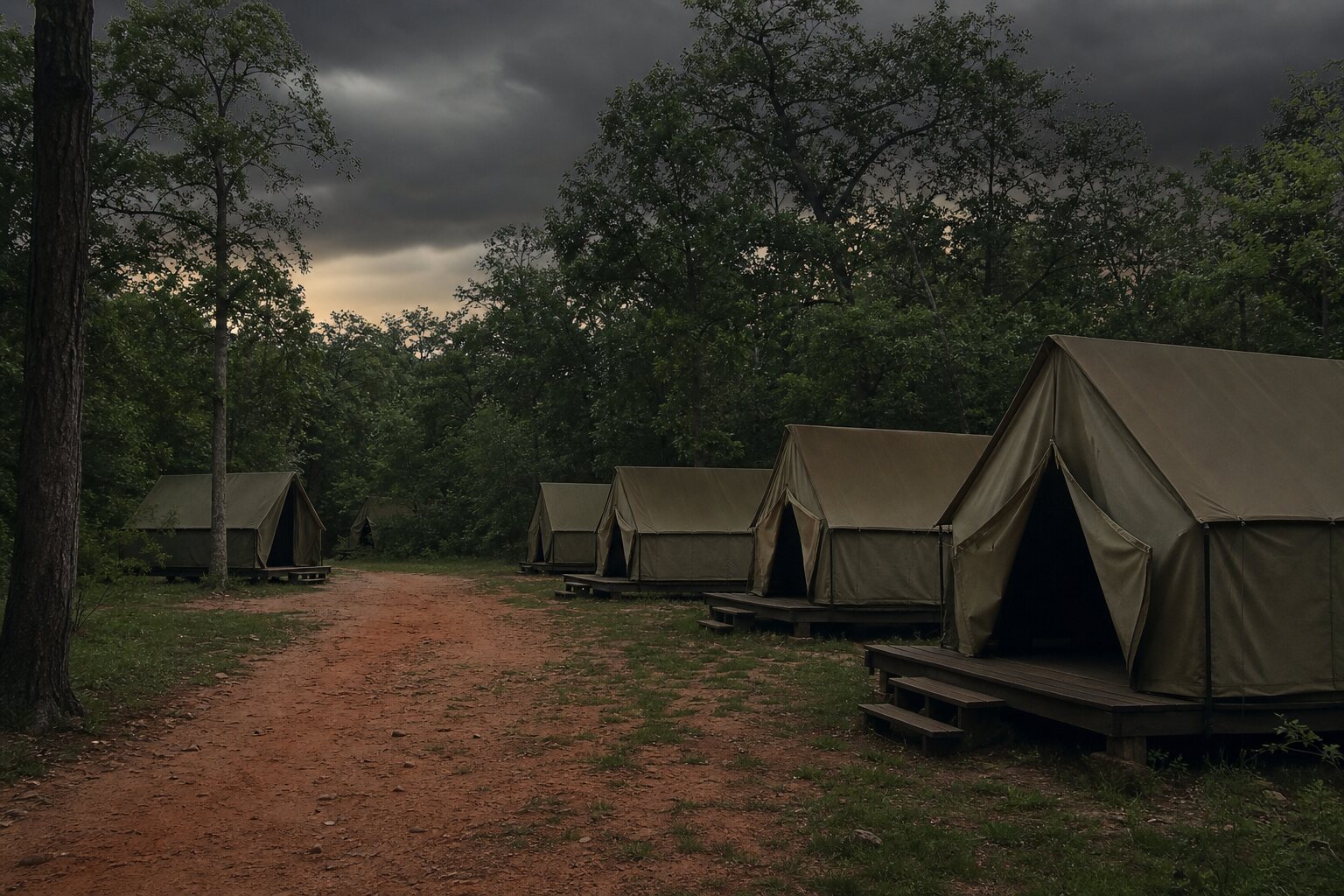
But the Kiowa Unit sat far from the camp's center. Tent 8 was positioned near the end of the unit, separated from the nearest counselors and partly shielded by the camp layout. Like many camp structures of the era, it was not a locked cabin. It was a canvas tent on a wooden platform, vulnerable by design because the culture around it assumed the woods were safe enough.
That assumption had already been challenged before the girls arrived.
Less than two months earlier, during camp preparation, a counselor reportedly found her belongings disturbed and a box of doughnuts emptied. Inside the box was a note warning that someone was on a mission to kill three girls in a tent. The note was treated as a prank and discarded. Other reports over the years have described odd noises, disturbed property, and signs that someone may have been moving through the camp before the opening session.
Those details are difficult because they sit between hindsight and warning. A strange note at a camp can be a cruel joke. A noise in the woods can be an animal. A slashed tent or missing item can become a story people tell differently after tragedy.
But after June 13, every small disturbance looked like the camp trying to warn itself.
The Storm Over Tent 8
The rain mattered.
A storm in a canvas camp changes the whole world. It flattens sound. It turns footsteps into mud. It makes every branch knock and every animal noise feel close. It gives children a reason to stay inside and adults a reason to assume the camp is simply restless.
Around the early morning hours, several accounts place strange sounds or sightings in and around the units. Counselor Carla Sue Wilhite later became central to the story of that night. Other campers reported hearing a scream or a child's cry. One camper reportedly heard a voice calling for a mother. Another account describes a figure or light near a tent.
None of it triggered a full alarm.
That is the unbearable part. Not because the children were ignored by monsters in a fairy tale, but because the sounds of a camp at night are already confusing. Adults were trained to expect homesickness, nightmares, animal calls, thunder, wind, and girls frightened by the dark. The very normality of camp noise gave the intruder cover.
Just after dawn, Wilhite walked toward the showers and saw something near the trail. At first, the shapes did not resolve into what they were. Then the morning became irreversible.
The bodies of Lori Farmer, Michele Guse, and Denise Milner were found outside their tent area. They had been removed from Tent 8 during the night. Medical findings documented blunt-force violence and sexual assault. The details are devastating enough without lingering on them. What matters for the case is the violation of place: three children had been taken from a summer-camp tent while an entire camp slept around them.
The surviving girls were evacuated. Many were sent home without being told what had happened. Camp Scott, which had opened for summer on Sunday, was effectively over by Monday morning.
The Flashlight and the Cave
The physical evidence seemed to point somewhere, but never cleanly enough to end the argument.
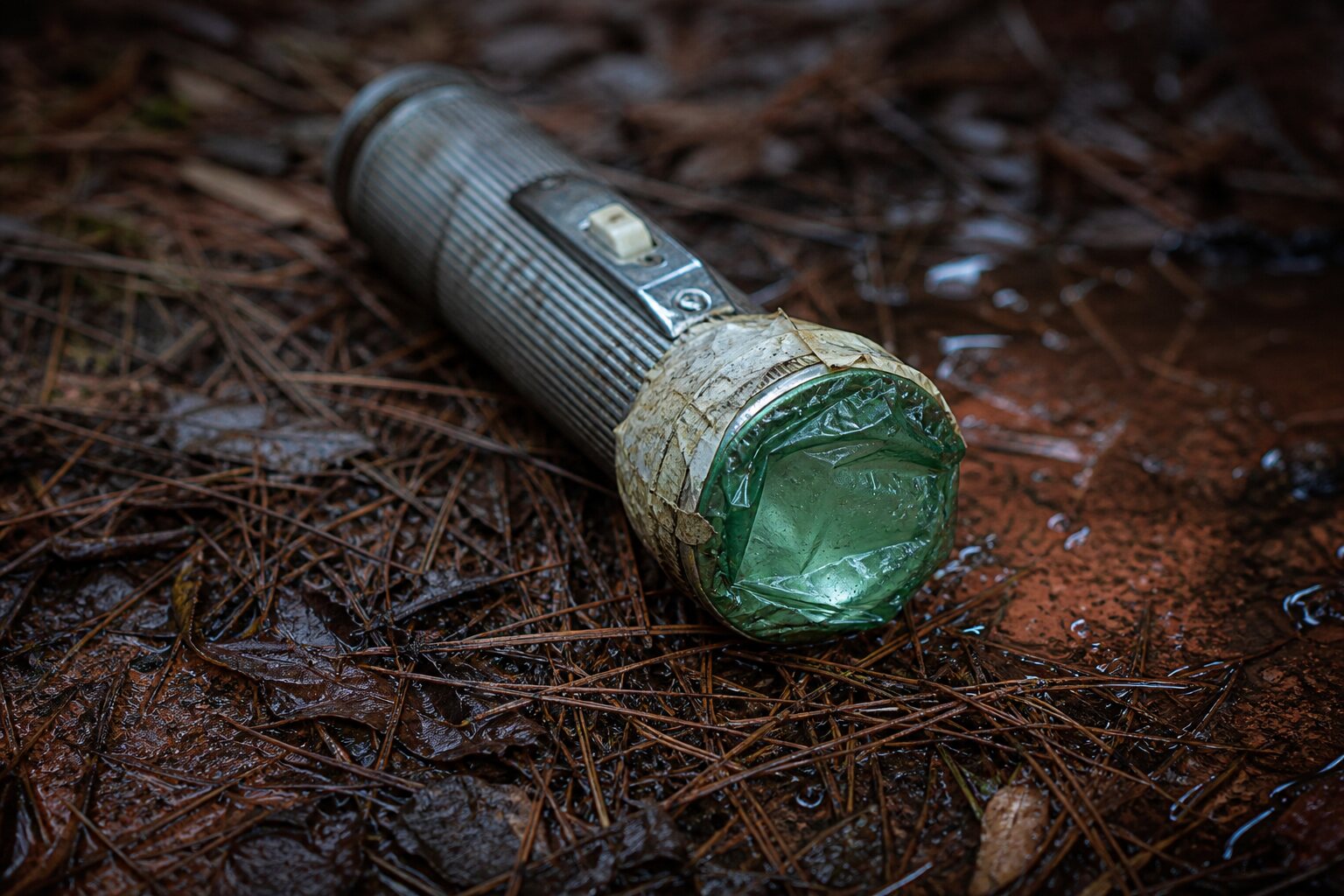
Investigators recovered a flashlight connected to the scene. Its lens had reportedly been altered with green plastic and tape, creating a dim filtered beam. Newspaper material was found with the flashlight, and investigators later connected similar newspaper pages and other items to a cave several miles from the camp.
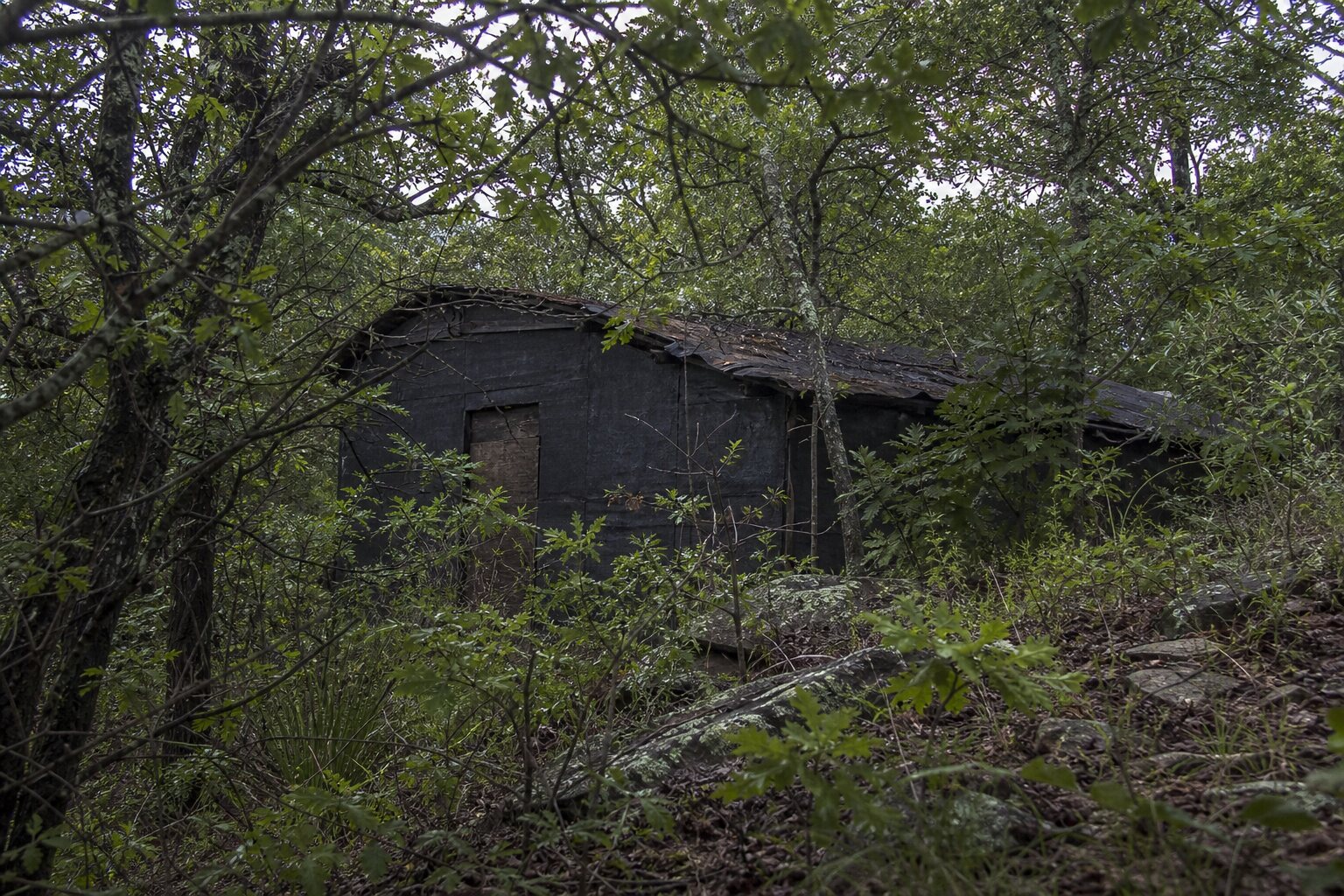
That cave became one of the case's most important and most contested spaces. Searchers found items including tape, green plastic, newspaper pages, and sunglasses identified as having been taken from a counselor. They also found photographs of women. Investigators linked those photographs to a prison darkroom where Gene Leroy "Sonny" Hart had worked.
The bridge was circumstantial, but powerful. Hart was not a random name.
He had grown up in the region. He knew the terrain. He was Cherokee. He had been a promising athlete before his life turned violent. He had previous convictions for kidnapping and rape, and he had escaped from the Mayes County Jail in 1973. By the time Lori, Michele, and Denise were killed, Hart had been a fugitive for years in the same broad landscape surrounding Camp Scott.
To investigators, the cave looked like the shadow of a man who knew how to hide in the hills. To Hart's supporters and defense attorneys, it looked like a case being built around a convenient fugitive whose guilt was assumed before it was proved.
The trial would turn on that divide.
The Fugitive in the Hills
The manhunt for Hart lasted roughly ten months and became one of the defining images of the case.
Law enforcement searched the Cookson Hills and surrounding communities with dogs, aircraft, tips, informants, and enormous public pressure. Hart's ties to the area complicated everything. He had family, friends, and sympathizers. Some people believed he was dangerous. Others believed he was being framed by a system that had already decided a Cherokee fugitive was easier to convict than to understand.
That racial and cultural fracture cannot be treated as background noise. It shaped the investigation, the courtroom, and the public response.
In April 1978, Hart was captured in a remote shack after investigators acted on a tip. He was charged with the murders of Lori, Michele, and Denise. For the families, that arrest seemed like the first solid shape in a nightmare. For Hart's supporters, it confirmed their fear that the state had chosen its suspect and would make the evidence fit.
Both realities entered the courthouse.
The Acquittal of Gene Leroy Hart
Hart went to trial in 1979.
The prosecution argued that the cave evidence, the photographs, biological evidence, and other circumstantial links pointed to him. The state presented experts who testified about hair and sperm evidence. Prosecutors also pushed back against alternative-suspect theories raised by the defense.
The defense, led by Garvin Isaacs and Gary Pitchlynn, attacked the state's case as flawed, racially charged, and vulnerable to evidence problems. They highlighted discrepancies that still haunt the case: a bloody shoeprint in Tent 8 that did not match Hart's shoe size, a fingerprint or print evidence on the flashlight that was not tied to him, and broader questions about how the investigation handled evidence. Claims that evidence had been planted were defense allegations, not established fact, but they became central to the public debate.
On March 30, 1979, the jury found Hart not guilty of the murder charges.
That verdict remains the legal center of the case. Hart was tried and acquitted. He was never convicted of killing Lori Farmer, Michele Guse, or Denise Milner.
After the verdict, he returned to prison to continue serving time on earlier convictions. On June 4, 1979, just over two months after his acquittal, Hart collapsed and died of a heart attack while exercising in the prison yard. He was thirty-five.
For one side, his death meant the suspected offender had escaped earthly accountability. For another, it meant a man acquitted by a jury died under the weight of a case many believed had been forced onto him.
The law had spoken. The doubt did not leave.
The DNA That Could Not Testify
For decades, the Oklahoma Girl Scout murders remained officially unresolved.
Science kept circling the evidence. In 1989, early DNA testing reportedly matched Hart on some markers but did not produce the kind of conclusive identification modern readers expect. Later testing in 2008 was reported as inconclusive because the samples had deteriorated. The case had evidence, but time had been working against it from the beginning.
Then newer testing shifted the public conversation again.
In 2022, Mayes County Sheriff Mike Reed announced that later DNA work and a broader reinvestigation pointed strongly toward Hart. News 9 reported that investigators said the recent DNA review ruled out other suspects raised over the years and left Hart as the person Reed believed was responsible. Reed also said the analysis went beyond DNA, including a larger review of the case file and information not presented to the 1979 jury.
That does not erase the acquittal.
It creates a modern law-enforcement position beside an old legal verdict. The evidence may persuade Sheriff Reed and some families. It may persuade many readers. But Hart cannot be retried, cannot defend himself in court, and cannot be convicted posthumously. The case remains, in the formal sense, unresolved by a conviction.
The jurisdictional picture also changed after the U.S. Supreme Court's 2020 decision in McGirt v. Oklahoma, which altered criminal jurisdiction across large parts of eastern Oklahoma involving Native people and tribal land. In 2022, Cherokee Nation Marshal Service leadership said an investigator had been assigned to look into information related to the Girl Scout murders. In 2023, KOSU reported that Cherokee Nation law enforcement had opened a fresh look at the case after McGirt.
As of May 17, 2026, no public final announcement closing that Cherokee Nation review was found.
So the case sits in a strange modern posture: old evidence, new science, tribal jurisdiction questions, a dead acquitted suspect, and families who have spent a lifetime trying to live with answers that never become whole.
Ashes from Camp Scott

The aftermath of Camp Scott did not stay inside police files.
The families changed Oklahoma's victim-rights landscape. Sheri and Bo Farmer helped found the Oklahoma chapter of Parents of Murdered Children. Richard Guse became part of the push for victims' rights and compensation structures in Oklahoma. The work was born from grief, but it moved outward into law, support, and public memory.
Camp Scott itself never reopened. The property was eventually sold. The civil case against the Girl Scout council ended in the council's favor, but the questions it raised about supervision, warning signs, and remote-unit security never really disappeared.
The surviving girls also carried the night with them.
For decades, many spoke little about it. That silence was not emptiness. It was a survival method. Then, in 2018, former Camp Scott Girl Scouts gathered in Broken Arrow for what scholars later described as a History Harvest and songfest. They brought photographs, diaries, scrapbooks, uniforms, artifacts, and memory back into the room.
One woman brought ashes from an old campfire. In Girl Scout tradition, ashes can be carried from one fire to the next, a small continuity of friendship and belonging. After everything Camp Scott had come to mean in public, that gesture mattered. It was not an erasure of what happened to Lori, Michele, and Denise. It was a refusal to let the murders become the only memory the camp was allowed to keep.
That may be the deepest wound in the Oklahoma Girl Scout murders. A summer camp is supposed to teach children that the dark can be entered safely if you have songs, friends, counselors, and a flashlight. Camp Scott taught an entire state the opposite lesson in one night.
The rain stopped. The buses left. The tents came down.
But Tent 8 never really emptied. It remained in the record as a place where innocence met failure, where evidence met doubt, and where three girls who came to camp for a week of adventure became the center of a question Oklahoma still cannot fully put to rest.
Sources & Case Notes
- Last updated: May 17, 2026.
- Primary sources and case notes: public reporting from News 9 on the 2022 DNA/reinvestigation update, KOSU on the post-McGirt Cherokee Nation review, ICT/Cherokee Phoenix on the Cherokee Nation Marshal Service assignment, The Washington Post's 1979 report on Hart's acquittal, and Amy C. Sullivan's Camp Scott History Harvest discussion in Digital Community Engagement.
- Case-status note: Gene Leroy Hart was charged and tried, but a jury acquitted him in 1979. Later DNA and investigative reviews have been reported by law enforcement as strongly pointing toward Hart and excluding other suspects, but he was never legally convicted of these murders.
- Correction policy: For corrections or media inquiries, contact Anonymous369 Media.
- Image credits: Article visuals are Anonymous369 Media documentary recreations based on the documented camp, evidence, terrain, and memorial context. Public archival materials were reviewed but not reused where rights status was unclear.
- Content warning: This article contains non-graphic discussion of child homicide, sexual assault, and blunt-force violence.