
The Police Vest That Hid Missy Bevers' Killer in Creekside Church
Before dawn in Midlothian, Texas, Missy Bevers walked into a church to set up a fitness class. A person in police-style tactical gear was already inside, and ten years later the hallway footage still has no name.


The hallway had already been waiting for her.
Before sunrise on April 18, 2016, storms moved through North Texas and pushed a routine fitness class out of the parking lot and into Creekside Church of Christ in Midlothian. Terri Leann "Missy" Bevers had planned a 5 a.m. Camp Gladiator workout. Rain changed the room, not the habit. Her students still expected her there. Her truck still pulled toward the church in the dark. Her equipment still had to be carried inside before anyone else arrived.
Missy was forty-five, a mother of three, a former special education teacher, and a fitness instructor whose work depended on a specific kind of morning faith: the belief that people can get stronger if someone keeps showing up before dawn and asks them to try again.
At about 4:18 a.m., according to search-warrant reporting, she entered the church.
What she could not know was that another figure had already been moving through the building for nearly half an hour.
The exterior cameras that might have shown the approach were not functioning that morning. The interior cameras were. They did not capture the killing. They captured something almost as haunting: a disguised person walking through a quiet church in police-style tactical gear, turning a place built for ordinary faith into a corridor of rehearsal, damage, and waiting.
Ten years later, the video still has no name.
The Person In The Police Vest
Midlothian police released portions of the church surveillance footage within days of the murder. The images turned the case national almost immediately.
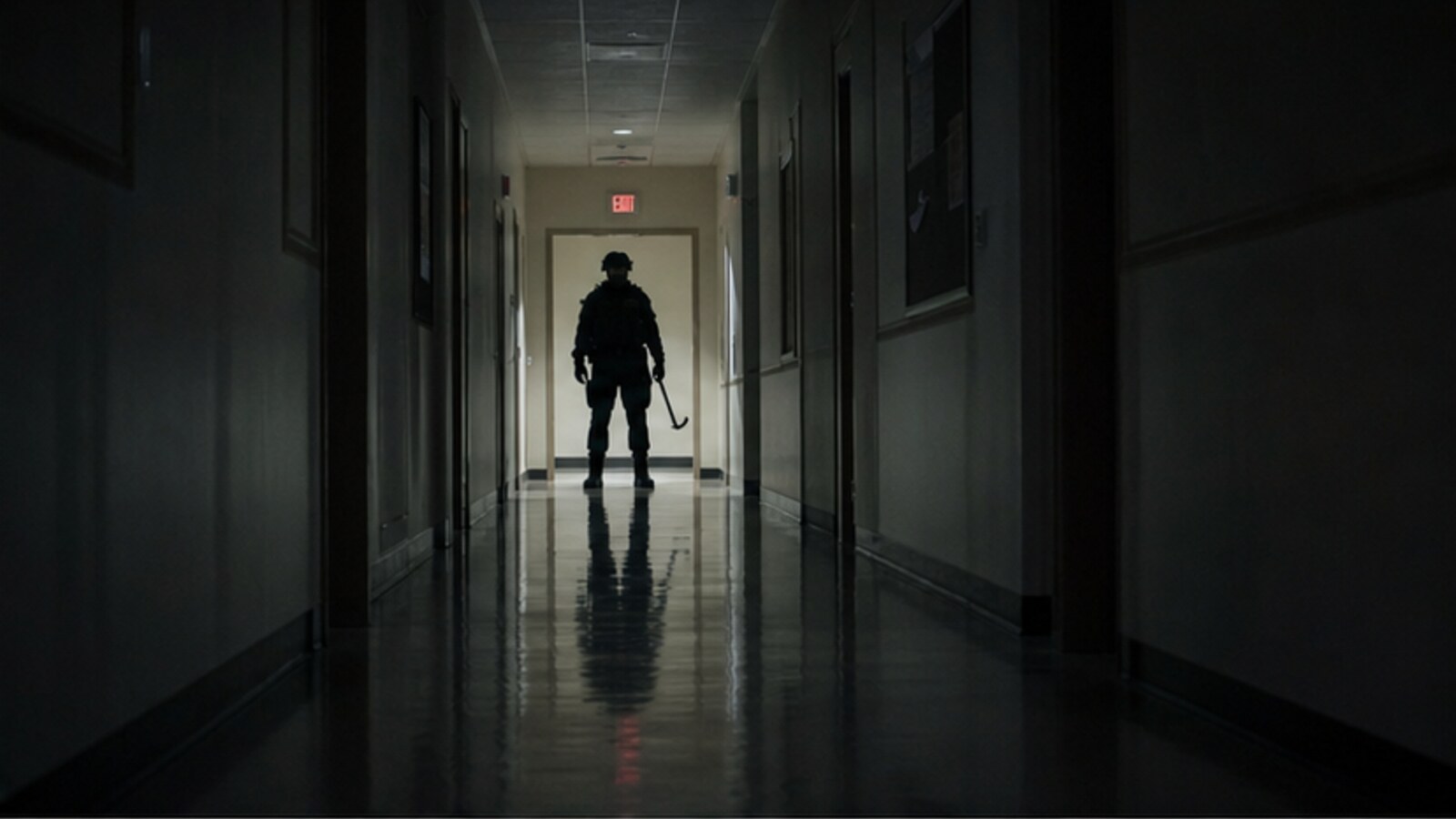
At about 3:50 a.m., an unidentified person appeared inside Creekside Church. The figure wore dark clothing, gloves, a black helmet or head covering, and a vest marked with the word "POLICE." Investigators described the outfit as police-style tactical gear, not a uniform tied to a specific agency. That distinction matters. The clothing looked official enough to confuse a person in a dark hallway, but it did not identify the wearer as law enforcement.
The intruder carried what police described as a hammer-like tool. On video, the person moved from door to door, breaking glass, opening or trying to open rooms, and drifting through the building with a strange calm. There was no sprinting panic. No quick grab and escape. No obvious search for cash, electronics, or valuables.
That is part of what made the footage so disturbing.
The figure did not behave like someone surprised by the building. The movements were slow, almost patient. The person seemed less like a burglar racing against time than a presence trying to make the scene say something.
In the early days, burglary remained one public possibility. There was forced entry. Glass had been broken. The building had been entered before Missy arrived. But the theory began to bend under its own weight. Police later said the suspect did not steal from the church, and reporting has noted that Missy's own belongings, including her wedding ring, were not taken.
Earlier local reporting, citing law-enforcement sources, said investigators believed Missy may have been targeted and that the break-in may have been staged to look like a burglary. Because no one has been charged, that remains an investigative theory rather than a courtroom finding. Still, the behavior on the tape leaves the same cold question hanging over the floor.
If the person came to steal, why leave with nothing?
And if the person came for Missy, how did they know to be there before she walked in?
The Moment The Routine Broke
The public does not have the full surveillance record.
That restraint is important. Police have held back details that could still matter if a suspect is identified, a confession is tested, or a lead finally becomes evidence. What is publicly known is enough to establish the terrible shape of the morning without pretending to know every second inside the church.
Missy arrived before class, as she usually did, to set up. Students were due at 5 a.m. She had moved the workout indoors because of weather, and her schedule was visible online, as fitness instructors often make schedules visible when their work depends on getting people to show up.
Later reporting from CBS Texas described an unreleased portion of video reviewed by forensic podiatrist Dr. Michael Nirenberg. He said he saw Missy turn her head as if she had heard something off-camera. It is a small image, and that is what makes it hard to shake. A woman alone in a church hallway. A sound outside the frame. The ordinary instinct to look.
The confrontation happened off-camera.
Around 5 a.m., the first class participants arrived. Instead of warmups, music, and the early-morning noise of people trying to wake their bodies up, they found Missy unresponsive on the church floor.
Emergency responders came, but there was no rescue left to perform.
Search-warrant reporting said Missy suffered multiple puncture wounds to her head and chest, injuries described as consistent with the tools the suspect had been seen carrying through the building. That is as far as this article needs to go. The violence was close, physical, and fatal. The important fact is not graphic detail. It is proximity.
Whoever killed Missy did not simply destroy a life from a distance. They waited inside a place she trusted, crossed into her routine, and left before the people who loved her could even understand that the morning had become permanent.
The Family Under The Spotlight
Missy Bevers was not a mystery object. She was a person whose life had texture before the surveillance footage consumed the public imagination.
She was born Terri Leann Strickland in Graham, Texas. She became a teacher, then a fitness instructor. Friends and family described her as warm, driven, generous, and serious about helping people believe they were stronger than they felt at 5 a.m. She was married to Brandon Bevers and was the mother of three daughters: Allie, Hannah, and Sarah.
The murder took their mother. The public aftermath took privacy.
In homicide investigations, spouses and relatives are often examined first because investigators have to rule out the closest circles before they can trust the wider map. That necessary investigative habit can become brutal when the case becomes famous. Brandon Bevers had to grieve while strangers studied him. Randy Bevers, Missy's father-in-law, became a target of speculation after he brought blood-stained clothing to a dry cleaner four days after the murder.
The public version of that incident deserves precision because careless phrasing keeps innocent people trapped in old rumor.
Randy told authorities the blood came from a family dog that had been hurt in a fight with another dog. Lab testing later confirmed the blood on the shirt was animal blood. That finding supported his explanation and removed the shirt as evidence of human violence in Missy's case.
The broader family-suspicion story is more nuanced. In 2016, reporting said police did not consider Missy's family members, friends, or co-workers suspects, and separate reporting said Brandon and Randy had alibis checked during the investigation. In 2026, the Midlothian Police Department made a broader official point: no individual is completely excluded as a suspect until the case is closed.
Both truths can sit together.
The shirt did not implicate Randy. The early family scrutiny hurt real people. And the official investigation remains open enough that police avoid closing doors publicly.
For Missy's daughters, the case is not a theory board. It is birthdays, graduations, weddings, errands, family photographs, and the ache of wanting a mother in rooms where she should have been. In a 2026 family interview, the sisters described grief that still appears in ordinary moments: seeing other people shop with their mothers, looking at old Facebook posts, thinking about milestones that will arrive with an empty place beside them.
That is the part online speculation often fails to understand.
Every accusation lands somewhere.
The Digital Doorways

Once the immediate family circle failed to produce a public answer, investigators looked outward through Missy's communications.
The digital trail was complicated, not because it proved a killer, but because it opened more doors than it closed. Search-warrant reporting said Missy and Brandon had financial and marital strain, and that messages referred to intimate or personal relationships outside the marriage. That information belongs in the case only for one reason: investigators considered whether jealousy, exposure, rejection, or private conflict could connect to motive.
It does not give the public permission to invent details.
The warrants also described a LinkedIn message less than three days before the murder. A friend told law enforcement that Missy had shown her a private message from a man neither of them knew, and both women found it unsettling. Investigators identified a person of interest who had communicated with Missy through LinkedIn since January 2016. Public reporting says that person's alibi held up, and no charge followed from that lead.
Another warrant sought cell tower information, raising the possibility that the killer may have used a phone to monitor Missy's posted schedule or possibly record something connected to the attack. That language should stay exactly where it belongs: inside an investigative possibility. No public source reviewed for this approval draft establishes that a recording of the killing was ever found.
The digital trail gives the case a modern unease.
Missy's schedule was not secret. Her work required visibility. A public class time, a changed indoor location, a social feed, a professional networking account, a phone moving through cell towers, messages that may or may not matter: all of it creates the same terrible pressure.
In 2016, an ordinary woman could tell her students where to meet for a workout, and someone with the wrong intention could turn that openness into a map.
The Gait That Could Not Name Them
The suspect's walk became its own obsession.
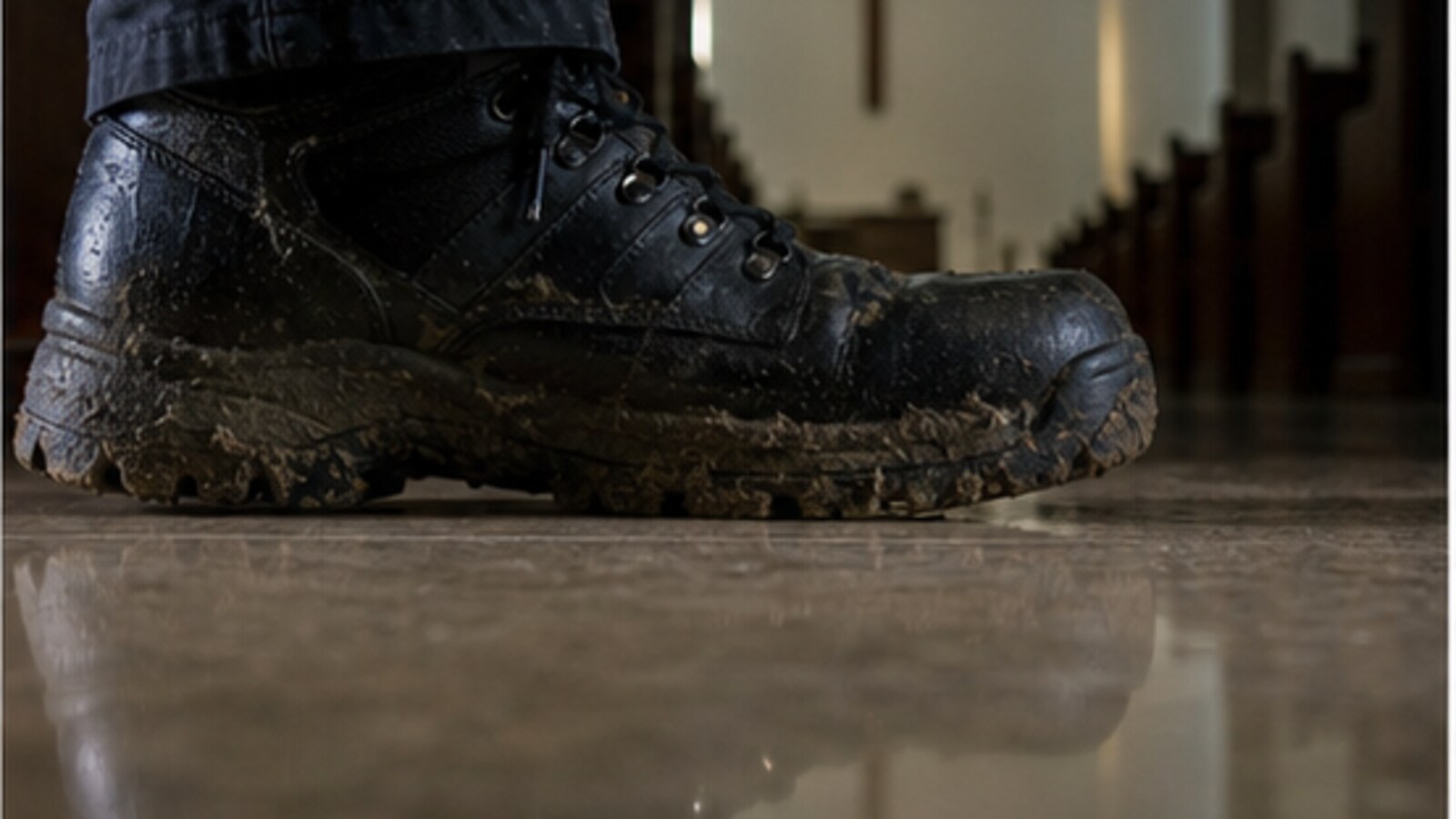
Anyone who has watched the surveillance footage understands why. The person in the police-style gear moves with an unusual, heavy gait. The feet turn outward. The right side appears especially distinctive. The stride looks awkward enough that many viewers feel, instantly, that they are seeing a clue.
But a clue is not the same thing as an identification.
The FBI brought in Dr. Michael Nirenberg, a forensic podiatrist, to analyze the footage. His public comments are some of the most important guardrails in the case. He tested how tactical gear could affect movement. He noted that carrying weight and wearing stiff equipment can alter a person's natural gait. He also cautioned that out-toeing is not rare in the general population.
Most importantly, he said the gait could not determine whether the suspect was male or female.
That warning matters because the internet has often treated the walk like a personality test, a gender reveal, or a secret confession by the body. It is not. The helmet, gloves, vest, boots, and layers did exactly what a disguise is meant to do. They flattened identity. They made height uncertain. They turned sex, age, build, and ordinary movement into arguments instead of answers.
Even the phrase "police gear" can mislead if handled carelessly.
The suspect was not identified as a police officer. The clothing looked like tactical gear and carried police lettering. That could mean access, planning, costume, fantasy, intimidation, misdirection, or simple availability through commercial gear. The public record does not prove which.
The hallway gives us an image.
It does not give us a name.
The Nissan In The Dark
When the church footage could not identify the person inside, investigators widened the frame.
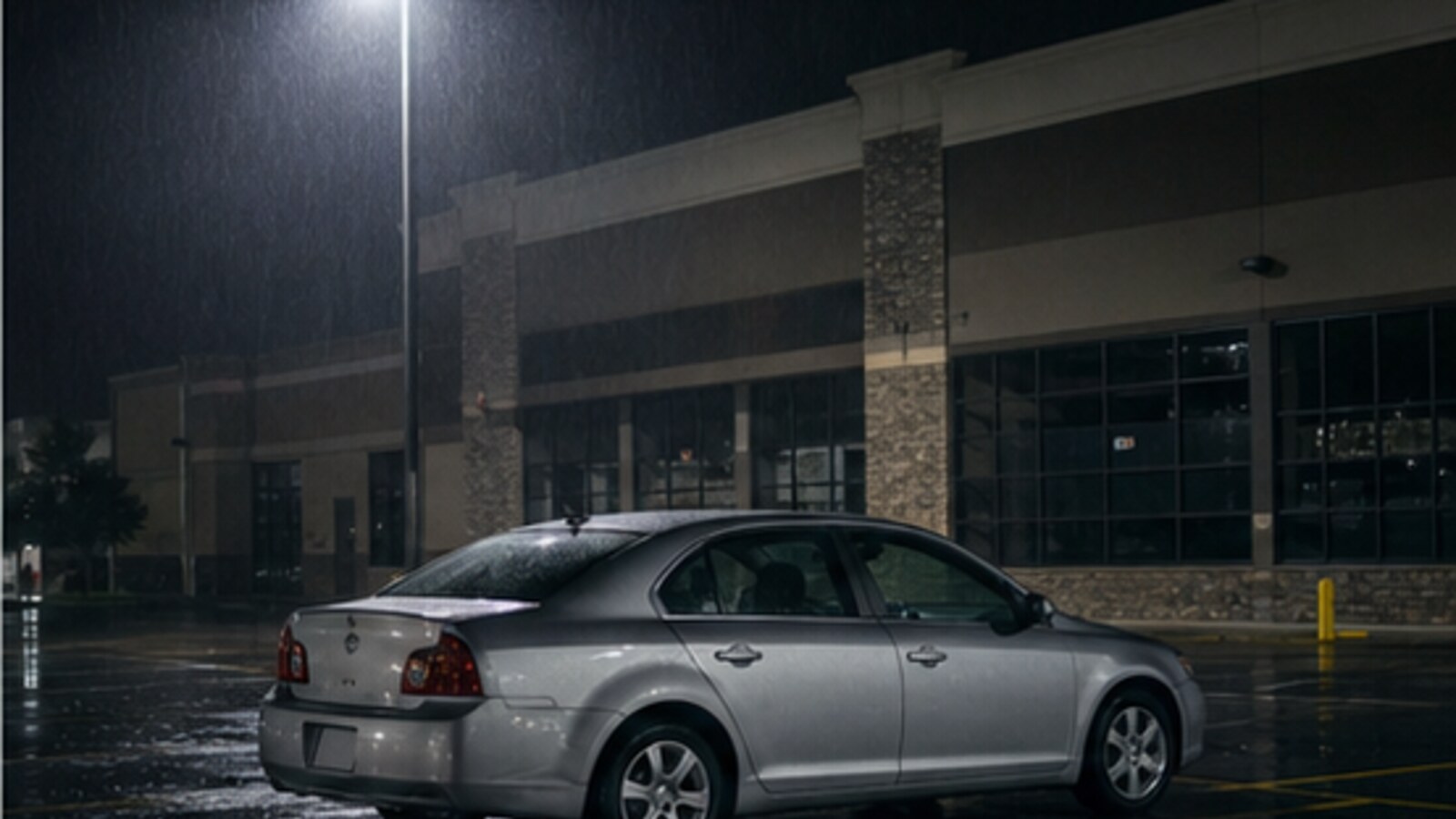
At about 2 a.m. on the morning of the murder, cameras at SWFA Outdoors, a nearby sporting goods business, recorded a light-colored 2010-2012 Nissan Altima with an oval sticker on the bumper. The vehicle pulled into the parking lot, stayed only a few minutes, and left.
Police released information about the car because they wanted to speak with the driver. Assistant Chief Kevin Johnson stressed that the owner or driver was not necessarily a suspect. The person may have seen something. They may have had no connection to the murder at all. Or the car may have mattered in a way police still cannot publicly explain.
That distinction is not decorative. It protects the case from turning a witness into a villain.
The Nissan remains one of the case's most visible loose threads because it belongs to the same geography and the same dark window of time. But proximity is not proof. A vehicle in the area before a murder can be a lead, a coincidence, a witness, a red herring, or the beginning of the road out.
The driver has not become the answer in public.
The car stays on the edge of the frame, its lights passing through a parking lot before the church hallway takes over the story.
Ten Years Without A Name
In April 2026, Midlothian reached the ten-year mark.
The police department's message was direct: the case is active and ongoing, not officially cold. Investigators said they continue to evaluate leads, review credible tips, use advances in forensic technology, and work with partner agencies including the Texas Rangers, the Ellis County District Attorney's Office, and appropriate federal agencies. The department also said it had received more than 100 leads in the prior year and that no individual had been completely ruled out while the case remains open.
For a website category, this belongs under Cold Cases & Crime because it is an unresolved homicide with a decade of waiting behind it. For the investigators, the wording is different and important: not abandoned, not frozen, not closed.
That does not make the waiting easier.
The reward history has also carried its own public confusion. Earlier reporting and Crime Stoppers-linked updates described reward efforts reaching $150,000, including private support. The current 2026 police release is more cautious, saying a cash reward may be available if a tip leads to an arrest and conviction. The safest public wording is this: reward money has been publicly reported as high as $150,000 in prior years, and current tip channels still direct information to Crime Stoppers of Ellis County and the Midlothian Police Department.
Someone may still know why the person entered that church.
Someone may remember a missing set of gear, a changed routine, a vehicle, a bruise, a comment, a sudden fear, a story that never fit, a person who watched the released footage with too much silence.
The case does not need the public to crown a suspect from a walk or a rumor. It needs one piece of real information strong enough to survive contact with evidence.
Missy Bevers walked into Creekside Church to set up a class. She was doing the kind of quiet labor people rarely memorialize: arriving early, carrying equipment, making space for others, trusting that the building around her was empty because it should have been empty.
The person in the police vest had already taken that trust away.
They moved through the hallway, broke glass, left almost nothing behind, and stepped out of the known world before sunrise.
The footage remains. The family remains. The questions remain.
And somewhere beneath all the theories, the simplest truth is still the heaviest one: a mother went to work in the dark, and someone who knew enough to be waiting there has never been made to answer for it.
Sources & Case Notes
Last updated: May 20, 2026.
Primary sources and case notes: This article is based on the Midlothian Police Department April 14, 2026 media release stating that the investigation remains active and ongoing; CBS Texas 2026 reporting on the ten-year status, suspect description, active tips, and police caution that the case is not considered cold; CBS Texas family reporting on the Bevers family's grief and public scrutiny; CBS Texas warrant reporting on the wounds, tools, and surveillance description; CBS News/AP reporting on LinkedIn, marital/financial search-warrant material, and cell-data warrant language; CBS Texas reporting on Dr. Michael Nirenberg's gait-analysis cautions; CBS News reporting on the Nissan Altima vehicle of interest; CBS Texas reporting on the non-functioning exterior church cameras and early burglary/targeted-attack questions; CBS News reporting on the animal-blood lab result connected to Randy Bevers' shirt; NBC 5 DFW 2026 reporting on the active investigation and assisting agencies; and KRLD reporting on the earlier $150,000 reward effort. Suspect motive, targeted-attack framing, burglary-ruse framing, gender speculation, and the Nissan's connection are presented only as investigative theories, public reporting, or unresolved questions unless attributed to official statements.
Correction policy: If you have source corrections, family-approved context, or image-rights concerns, contact Anonymous369 Media through Contact & Media Inquiries.
Image credits: Feature and section images are Anonymous369 Media documentary recreations based on the documented Midlothian church setting, hallway surveillance context, digital-search-warrant trail, gait-analysis/tactical-gear discussion, and SWFA vehicle lead. They are not archival photographs, official evidence, depictions of Missy Bevers, depictions of the unidentified suspect, witness images, family images, police records, or actual surveillance stills. Midlothian Police Department/news surveillance footage, family and Camp Gladiator photographs, reward imagery, Creekside Church exterior images, and Nissan stills were reviewed for context but not reproduced because reuse rights were not clear enough for immediate publication.
Content warning: This article discusses an unresolved homicide, public suspicion of family members, and restrained non-graphic descriptions of a fatal physical assault.