
The Fire in the Office: The Unsolved Las Cruces Bowling Alley Massacre
In 1990, two gunmen entered a New Mexico bowling alley before opening time, forced seven people into an office, set a fire, and vanished. A 12-year-old survivor's 911 call saved lives, but the Las Cruces Bowling Alley Massacre remains unsolved.


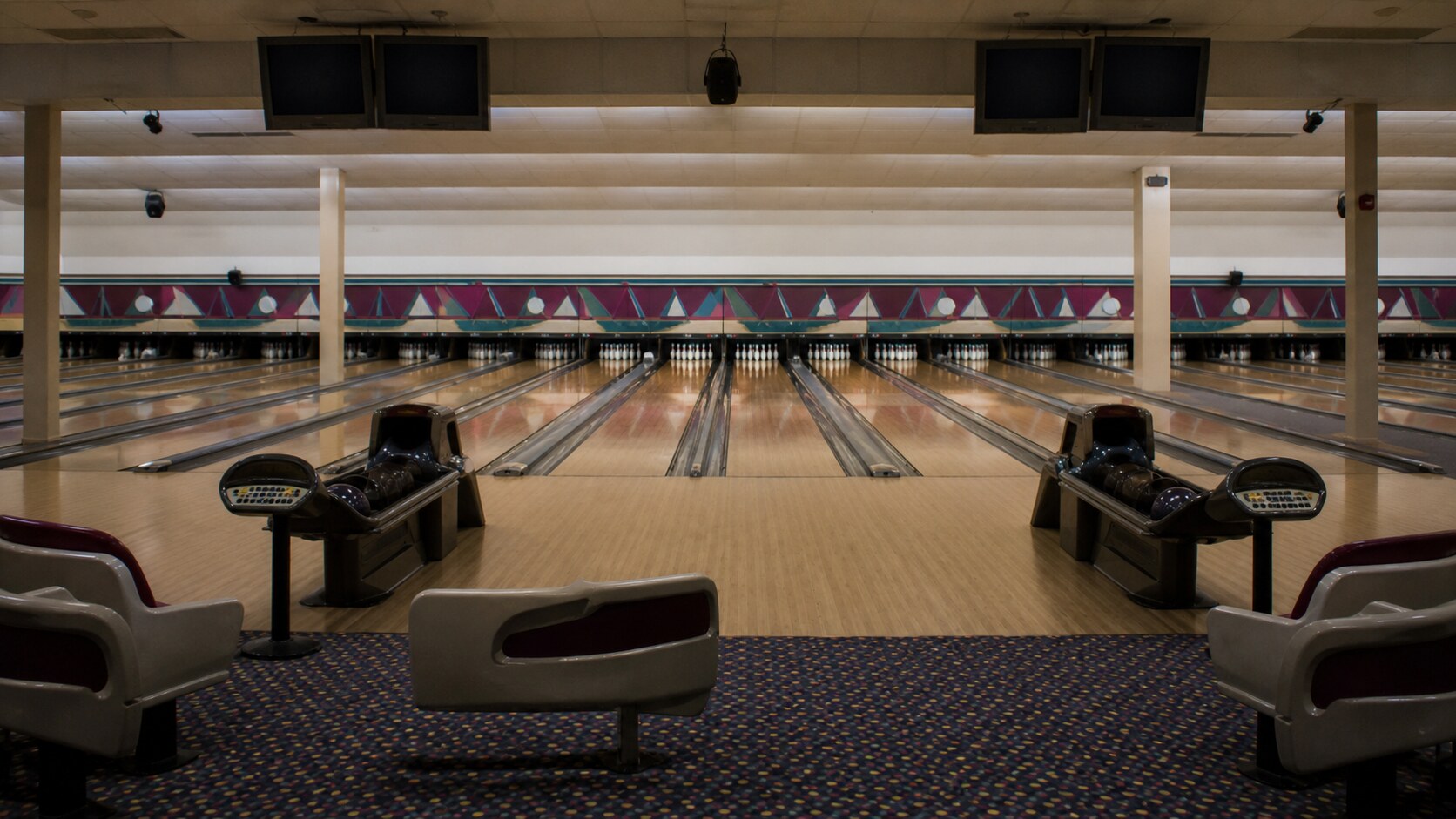
Las Cruces, New Mexico, in 1990 was still small enough to feel personal. It was a college town in the Mesilla Valley, bordered by the Organ Mountains and the Chihuahuan Desert, close enough to the Mexican border that highways, rumors, and fear all seemed to run in more than one direction. On the morning of Saturday, February 10, the Las Cruces Bowl at 1201 East Amador Avenue was getting ready for the day before the public arrived.
Inside, the work was ordinary. The manager, 34-year-old Stephanie C. Senac, was in the office preparing the morning accounts. Her 12-year-old daughter, Melissia Repass, and Melissia's 13-year-old friend, Amy Hauser, were there too, ready to help with the bowling alley's day care. In the kitchen, 33-year-old Ida Holguin was preparing for the breakfast and lunch crowd.
The building should have been protected by routine. The public day had not yet begun. Staff moved through familiar rooms. Children waited for a day that was supposed to be safe because adults were nearby. Then two men entered the bowling alley and turned a Saturday morning into one of New Mexico's most enduring unsolved crimes.
They left with less than $5,000, according to later police summaries. They left behind fire, water, damaged evidence, grieving families, and two faces that investigators have chased for more than three decades without names.
The Office Before Opening
The attack began shortly after 8:00 a.m., while Las Cruces Bowl was still preparing to open. Later case summaries describe two gunmen entering the building and forcing the people inside into the manager's office. Ida Holguin, working in the kitchen, was confronted first and ordered down the hallway. Stephanie Senac, Melissia Repass, and Amy Hauser were already being held.
The office was not built for seven people, fear, and a robbery unfolding at gunpoint. The gunmen ordered the victims down and demanded access to the safe. Investigators later said the men stole an undetermined amount of cash and checks believed to total less than $5,000. Some reporting placed the amount between $4,000 and $5,000, but official 2026 language keeps the number more careful: less than $5,000.
The checks were strange. They were not the kind of thing a straightforward robber could use easily without creating a paper trail. The amount was strange too. It was enough to explain a robbery, but not enough to explain the scale of violence that followed. That contradiction has sat at the center of the case ever since.
Then the morning took its cruelest turn. Steven Teran, a 26-year-old pin mechanic, arrived for work with two young girls: six-year-old Paula Holguin and two-year-old Valerie Teran. Public sources describe both girls as being with Steven when he arrived that morning. What matters most is what happened in the room: he had brought them because he needed child care and expected the bowling alley to be a place where they could wait.
Instead, he walked into a robbery in progress.
Seven People on the Floor
Once Steven and the girls entered the office, there were seven victims inside: Stephanie, Melissia, Amy, Ida, Steven, Paula, and Valerie. The gunmen had already seen their faces. The witnesses had heard their voices. Whatever began as a robbery now moved into something colder.
The two men opened fire at close range. Police and media summaries have long described the victims as being shot execution-style. The wording is harsh, but in this case it serves a factual purpose: the victims had been forced down, controlled, and shot in a way that suggested the attackers were trying to leave no witnesses.
Before fleeing, the gunmen set papers on fire inside the office. Investigators later described the fire as an apparent attempt to destroy evidence. It did not destroy the whole building, but it created enough smoke, heat, water damage, and chaos to complicate the investigation from its first minutes.
Amy Hauser, Steven Teran, and Paula Holguin were found dead at the scene. Valerie Teran was taken to a local hospital and died shortly after arrival. Stephanie Senac, Melissia Repass, and Ida Holguin were gravely wounded but alive.
That any of them survived was not because the gunmen showed mercy. It was because a child did the impossible.
The Call Through the Smoke
Melissia Repass had been shot multiple times. The office was filling with smoke. Around 8:30 a.m., she reached the phone and called 911.
The surviving fragments of that call remain among the most difficult pieces of the case. Melissia told the dispatcher, "They shot me five times," and counted the people hurt around her: seven. She also warned that there was a fire. Those words brought police, firefighters, and medical crews to the building fast enough to save the three survivors.
There is a reason not to reproduce the call at length. Its power does not need to be wrung out of it. A 12-year-old girl, injured and surrounded by devastation, understood that if she did not act, everyone in that room might die. Her call preserved the only thing the attackers tried to erase completely: witnesses.
Melissia later received the G.I. Joe Award for Courage. Awards, of course, are poor containers for trauma. They can recognize bravery, but they cannot carry the weight of what a child had to see in order to be brave.
Evidence Damaged by Fire and Water
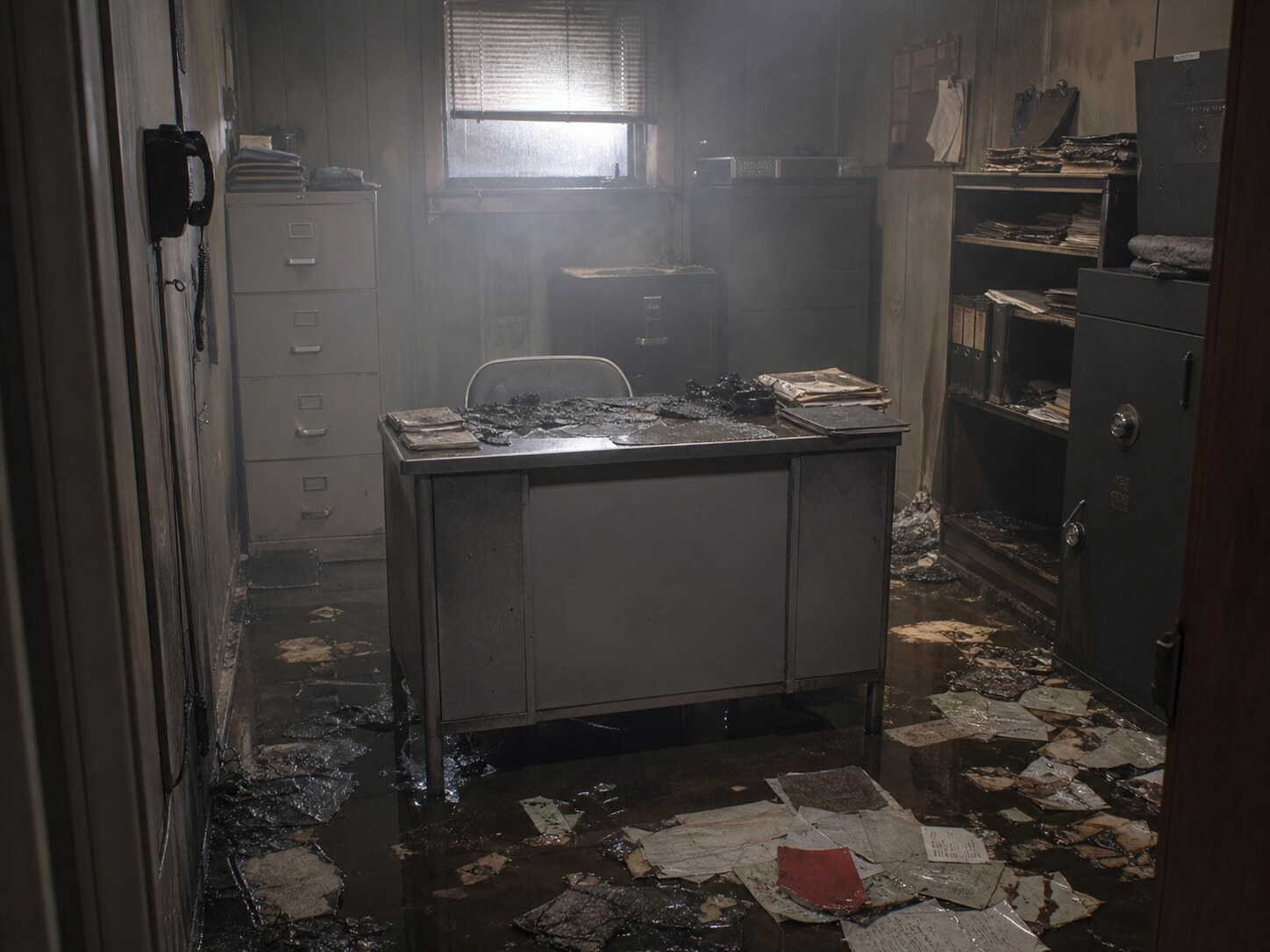
The first responders entered a scene where every second mattered. Firefighters had to suppress flames. Paramedics had to reach the wounded. Officers had to understand, in real time, whether the attackers were still nearby. The emergency response saved lives, but it also meant the office became a damaged, flooded, heavily entered space almost immediately.
That is the cruel physics of this case. The same water that helped stop the fire also complicated the search for fragile evidence. The same movement needed to rescue survivors also disturbed the room. Later investigators and family members would speak with frustration about the condition of the crime scene and the evidence that may have been lost or made harder to read.
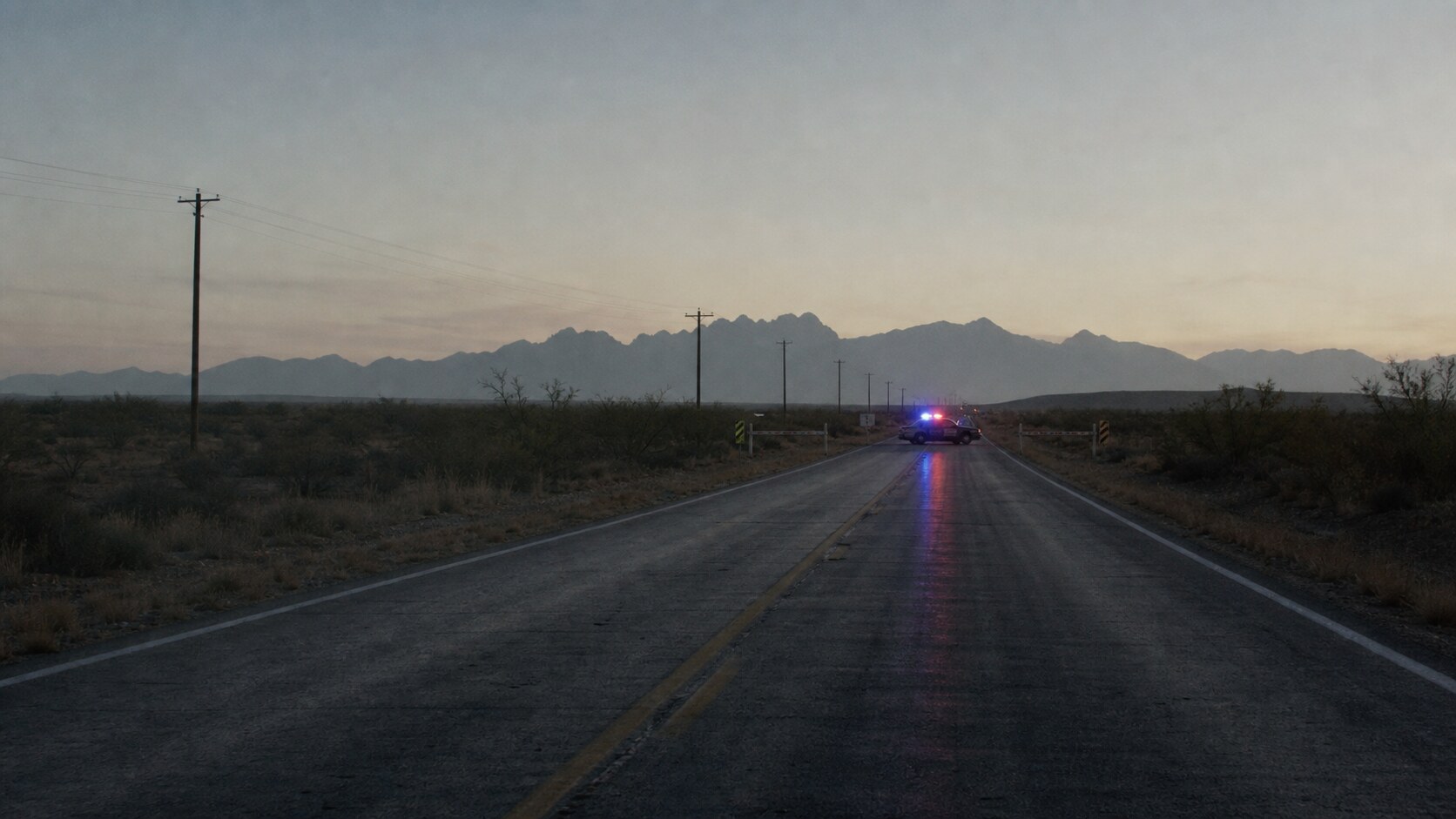
Police quickly moved beyond the building. Roadblocks were set up on routes out of Las Cruces. Tips came in. Witness descriptions produced composite sketches of two Hispanic men with dark complexions who spoke fluent English. One was described as younger, about 5 feet 10 inches tall, roughly 170 pounds, with dark wavy hair and light-colored eyes. The other was older, about 5 feet 7 inches tall and 140 pounds, with thinning salt-and-pepper hair and a slight Spanish accent.
The sketches became the public face of the case. They were detailed enough to haunt the city, but not enough to name the men.
Two Men Without Names
The Las Cruces Bowling Alley Massacre has always resisted a clean motive. Robbery is the simplest explanation, and investigators still describe the theft of cash and checks as part of the crime. But the behavior inside the office has never sat comfortably inside an ordinary robbery frame.
The gunmen took less than $5,000. They left some money behind, according to earlier reporting. They spent enough time inside to create risk. They allowed their faces and voices to be seen and heard. Then they tried to eliminate every witness and burn the room behind them.
That combination has fed decades of theories: a robbery that escalated, a targeted attack disguised as a robbery, a revenge motive, or something connected to criminal activity outside the bowling alley itself. The problem is not a lack of speculation. The problem is that public evidence has never established those theories as fact.
Families and investigators have had to live in that gap. Rumors have circulated around drug deals, borderland crime, and possible grudges, but available public records do not prove that Stephanie Senac, Steven Teran, Ida Holguin, Amy Hauser, Paula Holguin, Valerie Teran, or Melissia Repass were involved in anything that brought the violence to their door. The case record does not give the attackers a motive the evidence has not earned.
What can be said is colder: the men entered before opening, controlled seven people, fired on them, set the office on fire, and disappeared. For thirty-six years, that has been enough to keep Las Cruces looking over its shoulder.
The Years Survival Took
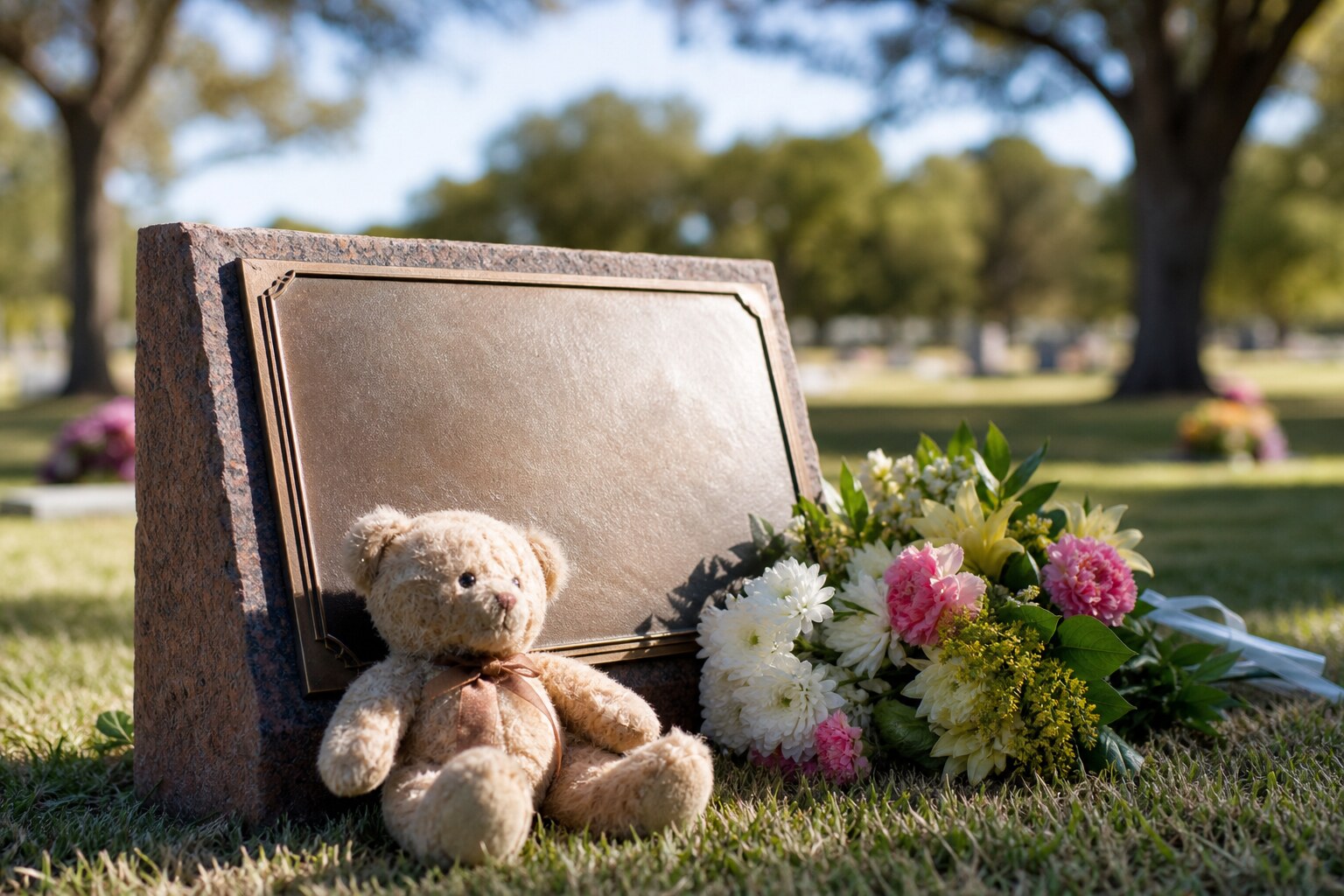
Four victims died in the immediate aftermath of the attack: Amy Hauser, Steven Teran, Paula Holguin, and Valerie Teran. The fifth death came years later.
Stephanie Senac survived the shooting, but she never truly escaped it. Official Las Cruces police summaries state that she died in 1999 from complications related to her injuries. Local reporting has also described her death as being ruled a homicide, making the case a five-fatality mass shooting rather than only the four deaths recorded on February 10, 1990.
Ida Holguin survived too, but survival came with its own sentence. Later reporting described her living with panic, anxiety, and post-traumatic stress. Melissia Repass eventually built a life beyond New Mexico, but the 911 call that saved others also tied her forever to the worst morning of her childhood.
For Steven Teran's family, the wound remained public because the case remained unsolved. His brother, Anthony Teran, became one of the voices that refused to let the story fade. He spoke at anniversary events, appeared alongside screenings of Charlie Minn's documentary A Nightmare in Las Cruces, and kept asking the same question that has followed the case since 1990: how can two men do this in daylight and still remain unnamed?
That question has not softened with time. It has only aged.
The Final Window for Justice
As of February 2026, the City of Las Cruces and the Las Cruces Police Department still list the case as unsolved. Las Cruces-Dona Ana County Crime Stoppers continues to offer a $25,000 reward for information that helps identify the two men believed responsible.
For years, investigators hoped old evidence might yield something modern science could use. The case seemed built for the genetic genealogy era, the same era that has named offenders in cold cases once thought impossible. But hope is not the same thing as a usable DNA profile. In 2025, KVIA reported that recent attempts to recover trace DNA from the remaining evidence had not produced a workable result, with a Las Cruces detective saying even outside testing could not do enough with what remained.
That does not close the case. It narrows the path.
The younger suspect, estimated around 30 years old in 1990, would now be in his mid-60s. The older suspect, estimated somewhere between his 40s and 50s then, would likely be in his late 70s or 80s if still alive. A trial is still possible, but the clock is no longer theoretical. It is biological.
The Las Cruces Bowling Alley Massacre remains a case of ordinary people interrupted at the most defenseless hour of the workday: before the doors opened, before customers arrived, before anyone outside knew the room had changed. The fire was supposed to erase what happened. Instead, it became the image that keeps the case alive: a small office filling with smoke, a child reaching for the phone, and two men walking out into the desert morning with names the city still does not know.
Sources & Case Notes
- Last updated: May 17, 2026.
- Primary sources: City of Las Cruces and Las Cruces Police Department public safety releases from 2026 and 2025; CNN AC360 transcript on the cold case and survivor call; KVIA 2025 anniversary reporting on current DNA limitations; KVIA 2020 anniversary reporting on active leads and family advocacy; Unsolved Mysteries case archive for suspect descriptions and early public composites; and local historical reporting from the Silver City Daily Press.
- Correction policy: Anonymous369 Media welcomes source notes, corrections, and image-rights concerns through the contact and media inquiries page.
- Image credits: Article visuals are Anonymous369 Media documentary recreations based on the documented Las Cruces Bowl setting, fire-damaged office, desert roadblock context, and memorial imagery. Public archival materials were reviewed but not reused where republication rights were unclear.
- Content warning: This article contains non-graphic discussion of a mass shooting involving children, arson, and long-term survivor trauma.