
The Green-Bead Braid: How the Lane Bryant Murders Became a Cold Case
A gunman walked into a Tinley Park Lane Bryant store in 2008, forced six women into a back room, and vanished after killing five. His voice, his sketch, and a braid with green beads remain the clues that never named him.


The store opened into a winter morning.
That is the part that still feels impossible to reconcile with what came after. No abandoned road. No hidden room known only to criminals. No midnight alley folded into rain. Just a women's clothing store in a suburban shopping center near 191st Street and Harlem Avenue, surrounded by traffic, parking lots, errands, receipts, clearance racks, and the ordinary American promise that daylight makes you safer.
On Saturday, February 2, 2008, Brookside Marketplace in Tinley Park, Illinois, was waking up under the cold. Lane Bryant opened at 10 a.m. Inside, the early shift began the way retail work usually begins: lights on, registers ready, hangers straightened, customers expected.
The store manager was Rhoda McFarland, forty-two, from Joliet. She had served in the U.S. Air Force, worked in nursing, and was remembered by people who knew her as someone unusually generous with the small powers of everyday life. She was not a symbol yet. She was a woman at work, responsible for the room.
Within the next hour, five women would be dead. A sixth would survive by inches. The man who did it would leave behind a voice on a 911 call, a composite sketch, a description so specific it should have been impossible to hide from, and no name.
The Lane Bryant murders are not only a story about a mass shooting. They are a story about how a person can enter the most public kind of place, turn routine into captivity, and then disappear into a country full of roads, databases, theories, and silence.
Six Women In A Retail Morning
The women inside Lane Bryant that morning had not come together for any dramatic reason. That is what gives the case its first wound. Their lives intersected through ordinary errands, part-time work, and a Saturday that should have ended in groceries, family plans, lunch, phone calls, laundry, a new outfit, a ride home.
Rhoda McFarland was managing the store.
Another employee, whose identity has been withheld publicly, was working with her. Some accounts refer to that surviving employee under the pseudonym "Martha" to protect her privacy. The most important public fact is simpler: she lived, and because she lived, investigators had a witness.
Jennifer Bishop, thirty-four, had come from South Bend, Indiana. She was an intensive care nurse and a mother of three. She was in the Chicago area while her husband was on a business trip, and later accounts say she had stopped in with the kind of casual intention that makes the case so brutal: to use a birthday gift card, to shop, to return to her family.
Sarah Szafranski, twenty-two, of Oak Forest, had recently graduated from Northern Illinois University. She was preparing for the early shape of adult life, the kind that requires clothes for a new professional world before you have fully become the person who wears them.
Carrie Hudek Chiuso, thirty-three, of Frankfort, worked with students as a high school social worker and counselor. She was newly married, remembered by those around her for advocacy, warmth, and a life still opening outward.
Connie Woolfolk, thirty-seven, of Flossmoor, was a mother of two with a background in finance and mortgage work. Her family has spoken about her strength in the years since, and recent reporting says her father heard she fought the attacker.
Five names. One survivor. Six women in a place built for the harmless work of browsing.
The case hurts because nothing about that morning required them to be there together, except life.
The Delivery Ruse
Shortly after opening, according to police and later reporting, a man entered the store posing as a delivery worker.
That detail matters because it shows the first layer of the crime was not chaos. It was access. He did not burst in waving the weapon immediately. He used a social script, the kind retail workers are trained to absorb: a delivery, paperwork, a small operational question at the edge of a normal day.
Rhoda reportedly checked on the supposed delivery, trying to confirm whether a mix-up had happened. It was a professional reflex. It also gave the stranger time inside the room.
Then the mask dropped.
Police and public reporting have described the weapon as a .40-caliber Glock pistol. The man announced a robbery and forced the employees and customers toward the back of the store. He bound the women with duct tape and ordered them onto the floor. Later accounts say he covered or obscured their faces with clothing from the store, a detail that reads less like robbery than control.
There are crimes where the motive is obvious. This one still resists that comfort.
If the plan was robbery, it was a strange one. The store had opened only minutes earlier. Former employees later told CBS Chicago that little cash was kept on hand. The longer the gunman stayed, the more danger he created for himself. Customers could enter. A phone could ring. A patrol car could pass. A routine retail morning could keep producing witnesses.
And that is what happened.
The room filled with more life than the offender could manage.
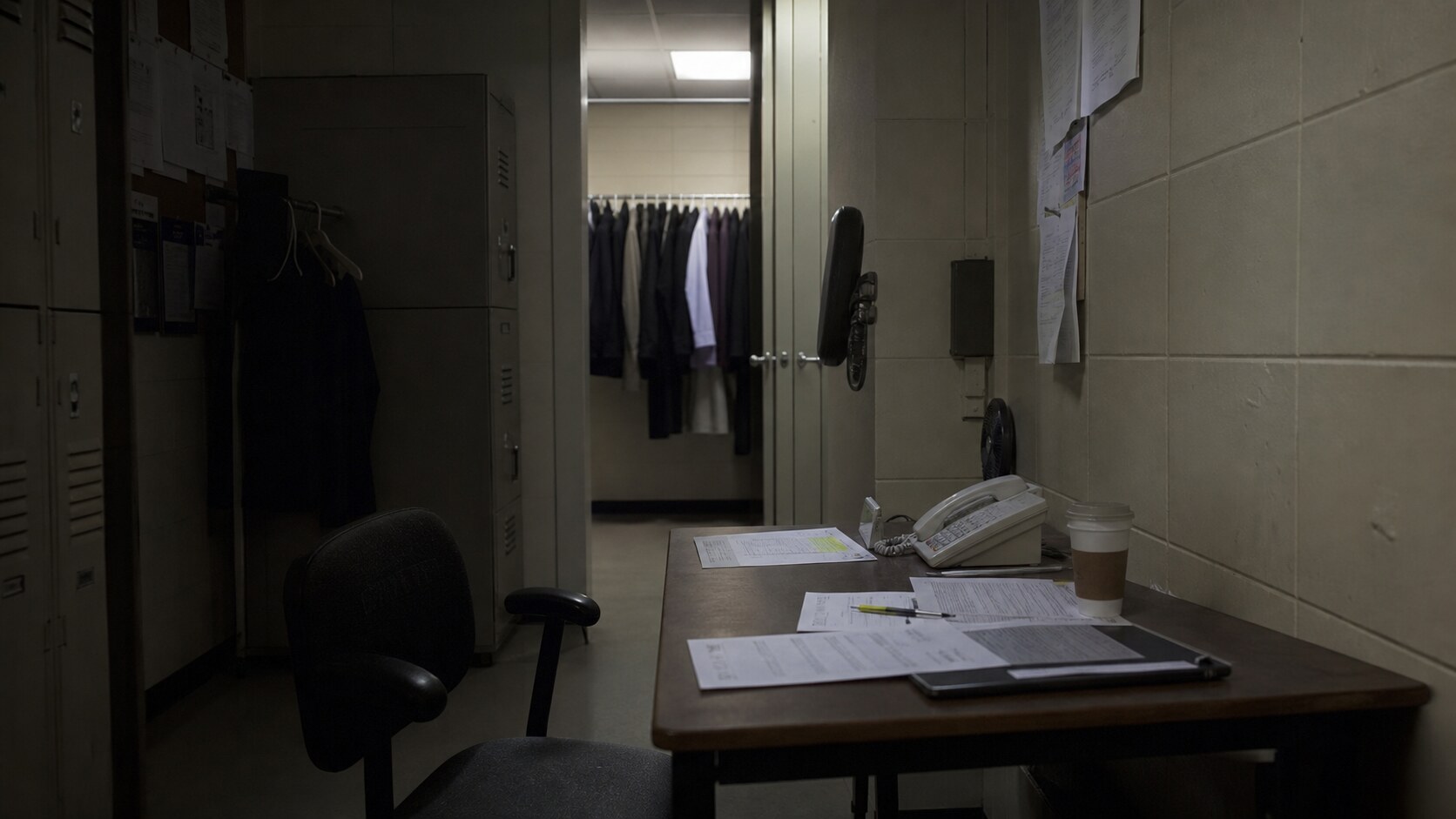
The Back Room And The Breaking Point
The back room became the whole world.
Six women on the floor. Duct tape. Clothing over faces. A gunman moving through purses and demands. A public store with the front of the building still connected to the outside world. No sealed bunker. No perfect isolation. Just drywall, fluorescent light, fear, and the sound of ordinary commerce waiting beyond the door.
Connie Woolfolk's family has said she was a fighter, and later public discussion of the case has often centered on whether biological material from her fingernails may still matter. That possibility should be handled carefully. Law enforcement has not publicly released every detail of the physical evidence. Recent FOX 32 reporting says Connie's family and supporters want items from the original scene, including a coffee cup, duct tape, and possible fingernail DNA, reviewed with newer forensic technology. That is different from saying the evidence has already delivered an offender profile.
The truth, at least publicly, is more restrained and more frustrating: investigators have evidence, the case remains open, and no arrest has been announced.
Still, the behavior inside the back room suggests an offender losing command of the scene. What began as a rehearsed deception had become a living situation he could not freeze. Six people are not objects. Panic moves. Breath changes. A person shifts. A body resists. Courage appears in places where fear should have left no room.
Rhoda McFarland found one of those places.
At about 10:44 a.m., bound and trapped, she used her phone and Bluetooth headset to call 911.
The released recording is short, damaged by terror, and devastating because of its restraint. Rhoda whispered the store name. The dispatcher asked where. Rhoda answered Tinley Park, then told them to hurry.
That call is the narrow bridge between the living room and the crime scene. It is also the moment the offender's voice entered the public record.
In the background, police later isolated audio of the gunman. Public reporting has described him as agitated, appearing to say that he was losing control. The phrase became one of the case's most haunting fragments because it sounds like a confession without a name: a man aware enough to understand the scene was coming apart, but not human enough to stop what he was about to do.
Within minutes, the robbery became a mass killing.
The Call That Almost Caught Him

The gunfire came before help could reach the back room.
Investigators have said five women were killed and a sixth was wounded. Public reporting describes Rhoda McFarland as being shot in the forehead, while the other fatal victims were shot in the back of the head. The surviving employee was struck in the neck and lived after playing dead.
That is the sentence the case keeps returning to: she survived because the bullet missed what it needed to take.
It is easy for a reader to turn survival into a plot device. It was not. It was trauma, luck, instinct, and aftermath. The surviving employee did not only live through the attack; she carried the shape of the offender back into the world. Without her, the case may have had no face at all.
Police arrived within minutes of the 911 call. CBS Chicago and other outlets have reported that six women had been shot inside the store near 191st and Harlem. Officers found five dead and one alive.
The timing has haunted the case ever since. Help was close. The response was fast. But the window was cruelly smaller than the distance between a call and a room.
By the time officers entered Lane Bryant, the gunman had already walked out.
No public arrest. No weapon recovered in a way that solved the case. No name attached to the voice.
Just a survivor, five families, and a suspect description that seemed, at first, like it had to be enough.
The Man With The Green Beads
The surviving employee gave investigators one of the most distinctive suspect descriptions in modern American cold-case history.
Police and news reports describe the offender as a Black male with a medium-to-dark complexion, a husky build, broad shoulders, and an estimated age in 2008 generally placed between twenty-five and thirty-five. Height estimates have varied across public releases, but 2018 police-linked reporting described him as roughly six feet to six-foot-two.
His clothing was just as specific: a dark waist-length jacket, a charcoal gray skullcap or ski cap, and black jeans with embroidery or rhinestones on the back pockets, similar to a cursive letter "G."
Then there was the hair.
The suspect wore braided hair pulled back into several puffy cornrows. One braid hung down the right side of his face, ending in four light green beads.
That detail should have been a key. Hair is intimate. It is seen by barbers, family, neighbors, coworkers, friends, people in the same apartment hallway, people at gas stations and loading docks and jobs and kitchens. A single braid with four green beads is not a generic description. It is the kind of thing investigators hoped would make someone stop cold in front of a wanted poster.
In 2008, police released a composite sketch. In 2018, a more lifelike three-dimensional rendering was prepared to renew attention, with authorities saying the physical description had not changed. The Tinley Park Police Department still keeps the composite, the 911 audio, the tip line, and reward information public.
The man remains at large.
That is where the case becomes psychologically disturbing in a quieter way. The description did not fail because it was vague. It failed despite being vivid.
Somebody may have recognized him and stayed silent. Somebody may have only known him briefly. Somebody may have seen the beads and never connected them to the crime. Or the offender may have left the area so quickly that Tinley Park became one stop in a larger life no one around him understood.
All of those possibilities leave the same emptiness.
The face was public. The name never arrived.
The Highway Theory And The Silence
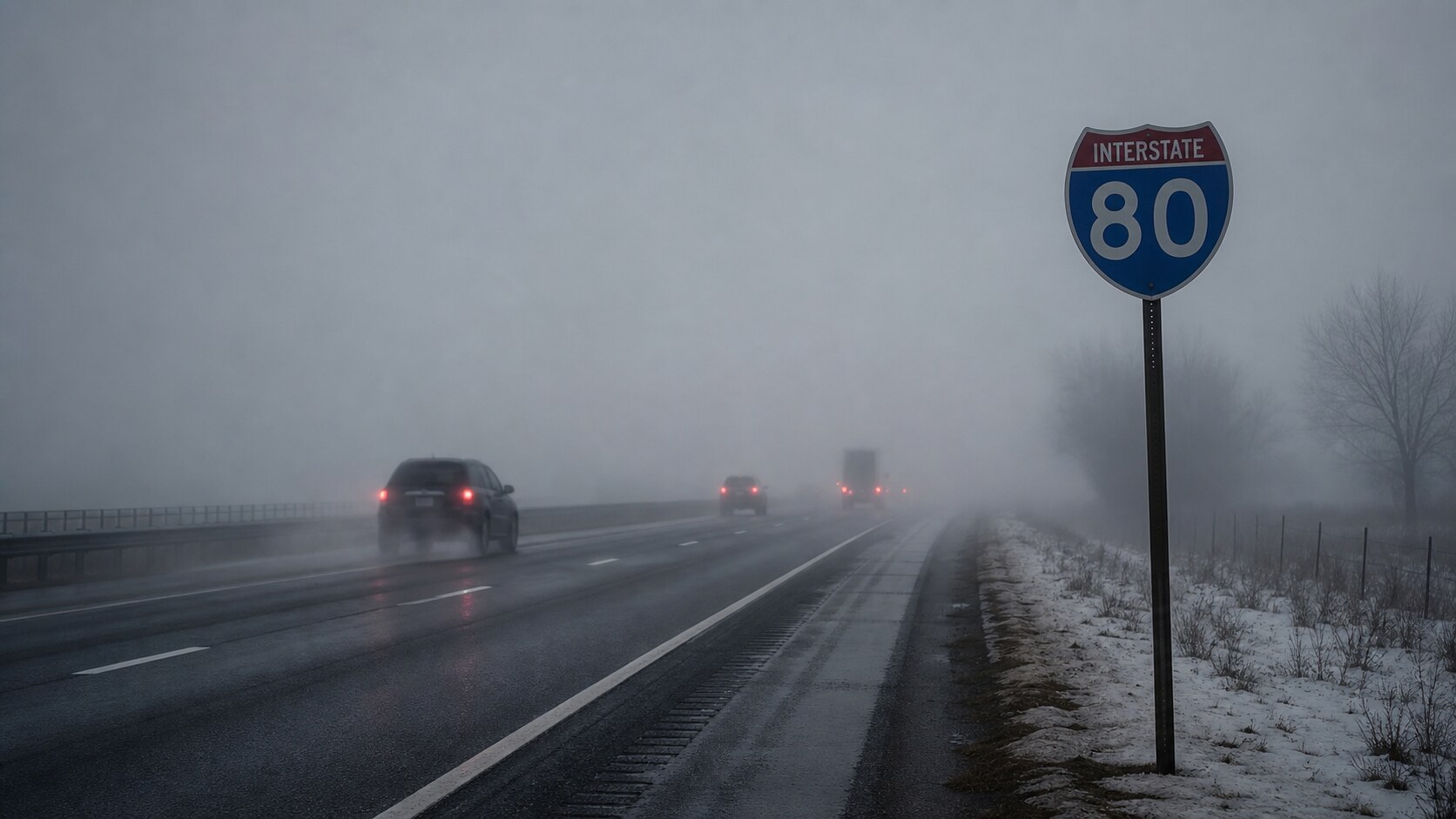
Brookside Marketplace sits near major routes, including Interstate 80, and that geography has shaped public theories from the beginning.
One theory is simple and hard to disprove: the offender may not have been local in any meaningful way. He could have been a traveling worker, a truck driver, a drifter, or someone moving through the region who used the shopping center because it offered quick access in and out. Public reporting has also described surveillance interest in dark vehicles leaving the area, though no vehicle has been publicly confirmed as the killer's.
The theory works because roads can erase people. Interstate systems are built to turn a person into motion. A parking lot becomes an on-ramp. A suburb becomes a blur in the mirror.
Another theory is darker but equally unresolved: the offender may be dead, incarcerated under another name or offense, or otherwise outside the reach of the obvious tip network. Retired Chicago police commander and criminology lecturer Marc Buslik has publicly discussed the possibility that the killer may have died or ended up in jail, while also stressing that someone likely knows something.
Those are theories, not conclusions.
The official status is narrower. Tinley Park police said in 2026 that the investigation remains open and ongoing. Chief Tom Tilton told CBS Chicago that detectives and partners continue to review leads, evaluate evidence, and apply available investigative and forensic tools as they evolve.
That kind of language is careful by design. It does not promise a breakthrough. It does not expose evidence. It does not satisfy the families.
But it does mean the case is not abandoned.
What Science Has Not Yet Named
Cold cases often age in two directions at once.
The witnesses grow older. Memories blur. People move, die, change names, change phones, lose the urgency they once had. A tip that seemed too small in 2008 may feel impossible to reconstruct in 2026.
But the science moves the other way.
The public record around the Lane Bryant murders includes discussion of possible DNA-related evidence, including a coffee cup, duct tape, and material connected to Connie Woolfolk's fingernails. The strongest careful phrasing is this: family members, supporters, and public reporting have urged renewed forensic review of evidence collected in 2008, and police have said newer forensic techniques are being used in the ongoing investigation.
No public source confirms that investigative genetic genealogy has identified the offender. No public source confirms a CODIS match. No public source announces a suspect.
That does not make the evidence meaningless. It makes the evidence private.
If a usable DNA profile exists, modern genealogy could someday turn it into a family tree, then a name, then a door knock. That is what has happened in other cold cases. But the method is not magic. It depends on sample quality, legal access, database matches, genealogy work, cooperation, and the ability to confirm an investigative lead with admissible evidence.
The Lane Bryant case sits inside that tension.
There may be enough.
There may not be.
For the families, the difference is not academic. It is the distance between another anniversary and a phone call.
Eighteen Years Later

The original Lane Bryant store is gone. The space sat vacant for years before becoming something else. The shopping center kept doing what shopping centers do: absorbing the past into leases, signs, repainting, parking lines, customers who may not know what happened beneath the ordinary fluorescent hum of the address.
But the case never fully left Tinley Park.
In 2023, the Village said police had followed up on about 7,500 leads since the murders and that a detective continued reviewing old and new tips with the crime lab. In 2026, CBS Chicago reported that a multi-agency task force remained assigned to the case and that police still consider the investigation active. The official Tinley Park page continues to list a $100,000 reward for information leading to the offender's arrest, not dependent on conviction. In March 2026, FOX 32 reported that Connie Woolfolk's family and supporters were calling for renewed forensic attention and that an added private pledge raised the broader reward discussion to about $200,000 for information leading to an arrest and conviction.
That distinction matters because accuracy matters. The official police reward and the broader family-supported reward effort are not the same sentence.
The families have lived inside those sentences for eighteen years.
Michael Hudek, Carrie's brother, told CBS Chicago in 2026 that the moment still felt frozen in time, and that the offender would not be caught until someone speaks up or identifies who he is. Former Lane Bryant employees have spoken about the aching question of why these women had to die. Connie Woolfolk's father has asked for answers while he is still alive to hear them.
The public often treats unsolved cases as puzzles. For families, they are not puzzles. They are rooms that never stop waiting.
Five women entered a retail morning and never came home.
Rhoda McFarland tried to turn a phone call into rescue.
Jennifer Bishop left behind children who had no reason to understand why a birthday errand became a crime scene.
Sarah Szafranski was standing at the edge of her adult life.
Carrie Hudek Chiuso had built her days around helping young people survive their own hard roads.
Connie Woolfolk, according to family accounts, fought to stay alive and return to the people who needed her.
The man who took them has had eighteen years of borrowed time.
Maybe he is dead. Maybe he is in prison for something else. Maybe he is older now, altered by time, no longer wearing the braids or the beads or the jeans with the cursive "G." Maybe someone still hears his voice in the released 911 audio and feels the old recognition rise in the body before fear pushes it down.
That is the final pressure point of the Lane Bryant murders.
The case does not need the public to invent a monster. It needs one real person to tell the truth about a man who once walked into a store in Tinley Park, carried a gun into a back room, and left five families holding the rest of their lives around an unanswered name.
Sources & Case Notes
Last updated: May 18, 2026.
Primary sources and case notes: This article was built from the Tinley Park Police Department Lane Bryant Homicide Investigation page, the Village of Tinley Park's 2023 anniversary release, the February 4, 2008 Congressional Record tribute identifying the victims and biographical details, CBS Chicago's 2026 report that the case remains open and ongoing, CBS Chicago's 2026 interview with Michael Hudek, FOX 32 Chicago's 2026 report on renewed family calls for forensic review and reward pledges, ABC7 Chicago's 2018 report on the updated suspect rendering, NBC Chicago's 2018 case overview, Daily Herald/AP reporting on the 911 call, and A&E True Crime's case analysis. Suspect-behavior theories, interstate/transience theories, and dead/incarcerated-offender possibilities are framed as theories, not established facts.
Correction policy: If you have source corrections, family-approved context, or image-rights concerns, contact Anonymous369 Media through Contact & Media Inquiries.
Image credits: Feature and section images are Anonymous369 Media documentary recreations based on the documented Tinley Park winter retail setting, back-room evidence context, 911-call detail, Interstate 80 geography, and memorial imagery. They are not archival photographs, official evidence, or depictions of actual victims, witnesses, suspects, or police records. Public suspect composites, police-scene images, surveillance stills, and memorial portraits were reviewed but not reproduced because republication rights were not clear for this production pass.
Content warning: This article discusses a mass shooting, hostage-taking, physical assault, and unresolved homicide in restrained, non-graphic terms.