
The Shredded Canvas: Why the Lake Bodom Murders Stayed Unsolved
In 1960, four teenagers camped beside Finland's Lake Bodom. By morning, three were dead, one was barely alive, and a torn canvas tent became the center of a mystery that decades of suspicion, blood evidence, and an acquittal could not solve.


The canvas was the first thing that looked wrong.
On the late morning of Sunday, June 5, 1960, a carpenter came to swim at Lake Bodom, a quiet lake in Espoo, Finland, not far from Oittaa Manor. Early summer had reached the trees, but northern light has its own strange restraint. It does not always feel warm just because the sun refuses to disappear. Pine and birch stood around the shore. The water held its dark shine. The peninsula looked like the kind of place where teenagers could pretend the city had fallen away.
Then the man saw the tent.
It was collapsed, torn, and sunk into itself. At a distance, it might have looked like bad camping, the aftermath of a careless night, canvas pulled down and belongings scattered in the grass. But the closer he came, the more the scene stopped looking like disorder and started looking like violence.
Three teenagers were dead. A fourth, eighteen-year-old Nils Wilhelm Gustafsson, was badly injured and barely conscious on or near the ruined tent. Maila Irmeli Björklund, fifteen, Anja Tuulikki Mäki, fifteen, and Seppo Antero Boisman, eighteen, had been killed sometime in the early morning hours.
The killer was gone.
The weapons were gone.
And almost immediately, the truth began to disappear too.
The Lake Bodom murders would become one of Finland's most notorious unsolved crimes, not only because of what happened to four young people beside the water, but because of everything that followed: the torn tent, the missing shoes, the blond figure seen leaving the area, the local suspects who became folklore, the evidence trampled before it could speak, and the astonishing decision more than forty years later to put the only survivor on trial.
The lake kept its surface.
The case never got one.
The Night By The Water
The four teenagers arrived at Lake Bodom on Saturday, June 4, 1960.
Gustafsson and Boisman were both eighteen. Björklund and Mäki were both fifteen. The group had motorcycles, a single tent, and the ordinary appetite of young people at the edge of summer: water, food, alcohol, privacy, and the feeling that a night away from home could belong entirely to them.
The place they chose was a small peninsula near the southern end of the lake. It was not impossibly remote, but it was private enough. A path ran through the area. Other people used the lake. Witnesses would later matter. But in the long northern twilight, the campsite could still feel enclosed by trees and water.
They pitched their tent near the shore.
The details of the evening have been reconstructed from survivor memory, later testimony, forensic interpretation, and reporting that does not always agree in every small point. That is the nature of an old case. The further the record travels from 1960, the more carefully each certainty has to be handled.
What can be said safely is this: by the early morning hours of June 5, the four teenagers were inside or around the tent, and someone outside their group had either reached the campsite or, according to the prosecution theory decades later, violence had erupted within it.
The court would eventually reject that prosecution theory.
But in the moment before dawn, there was only canvas, sleep, and the kind of vulnerable darkness that comes when a thin wall of fabric is the only thing between a body and the world.
At some point between about 4 a.m. and 6 a.m., the attack began.
The Attack Through The Tent
The mechanics of the Lake Bodom attack are part of what made the case feel so wrong from the beginning.
Investigators and later court summaries described violence directed from outside the tent, not an ordinary confrontation where someone entered, stood over the victims, and attacked in open space. The tent's guy lines had been cut. The fabric had collapsed. The occupants were attacked through or around the canvas with a knife and a blunt object that has never been recovered.
That image is difficult because it turns shelter into a trap.
Inside a tent, sound changes. Space shrinks. Directions become confusing. If the canvas comes down and violence begins through the fabric, there is no clean line of sight, no easy way to understand where the weapon is coming from, no ordinary room to run through. The teenagers were not just attacked. They were attacked inside a structure that had suddenly stopped being a structure.
Björklund, Mäki, and Boisman were killed. Gustafsson survived with serious injuries, including facial fractures and head trauma. Public accounts have long described his memory of the attack as damaged or absent, and the court later treated his reduced consciousness and impaired capacity as credible.
The body of Maila Irmeli Björklund received the most public attention because the violence against her was especially severe and because some details of her position and state at the scene became part of later theories about motive. Those details have been repeated for decades, sometimes with more appetite than care. For this article, the necessary point is narrower: investigators and prosecutors saw the pattern around Björklund as potentially personal, but no court ever established who caused it or why.
The victims were children and young adults at a campsite, not props in a theory.
The central fact is already harsh enough. Three teenagers died in a collapsed tent beside a lake, and the fourth was left so badly injured that his own survival would later become one of the case's arguments.
The Ground That Lost The Evidence
Before the bodies were officially discovered, witnesses had already seen fragments of the scene.
At about 6 a.m., boys birdwatching in the area reportedly saw the collapsed tent from a distance and a blond male figure leaving or moving away from the campsite. Another young witness in the area later described seeing an unknown blond man coming from the direction of the murder site, dressed in a light jacket and dark trousers, moving quickly and not returning.
Those sightings did not produce an identification.
By late morning, the carpenter's discovery brought police to the peninsula. And then one of the most damaging chapters in the case began.
The crime scene was not preserved with the discipline modern readers expect. The area was not properly cordoned off. Curious civilians, journalists, police, volunteers, and searchers moved through the campsite and surrounding woods. Military personnel were brought in to help search for missing property and possible weapons. The intent may have been urgency. The result was contamination.
Footprints that might have mattered were overwritten. Paths of approach and escape became harder to trust. The exact meaning of disturbed objects became less certain. The lake and forest were searched, but the murder weapons were not found.
Some items were missing from the campsite. The motorcycles remained, but keys and other property were gone. Gustafsson's shoes, and other footwear connected to the group, were later found hundreds of meters from the tent, partially hidden. Reporting and court summaries often place the distance at roughly 500 meters, though different accounts vary in exact measurement.
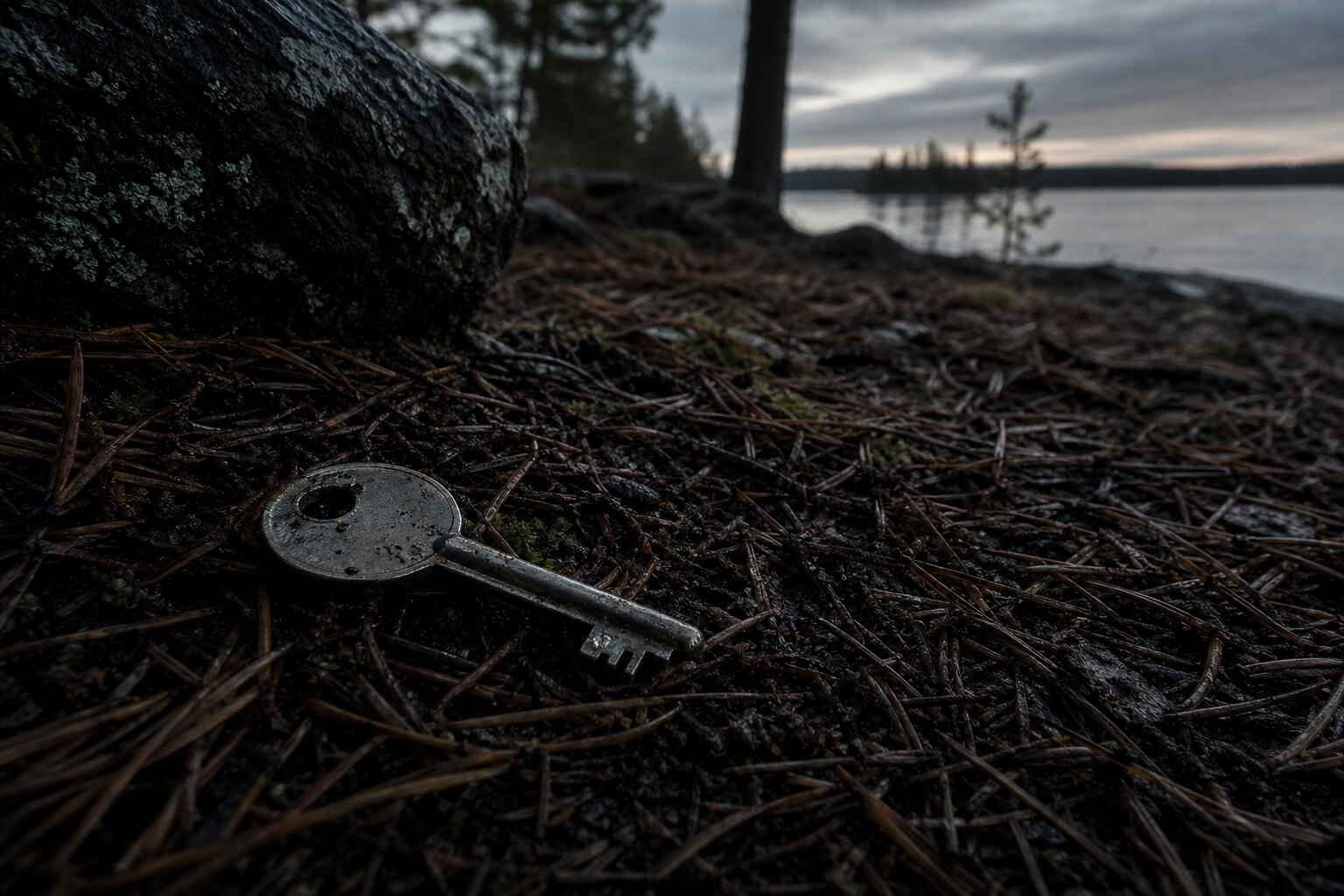
Those shoes would sleep in the case file for decades.
So would the failure around them.
Crime scenes are not just places. They are fragile machines for preserving time. Once strangers walk through them, once prints are crushed into prints, once objects are handled before their context is secured, the machine breaks. You can still collect pieces. You can still test fabric, blood, shoes, soil, and memory. But the original arrangement, the first grammar of the scene, is gone.
Lake Bodom became a case where every later question had to pass through that early damage.
Not just what happened.
What had already been ruined before anyone knew what it meant?
The Men Around The Mystery
Unsolved cases attract suspects the way dark water attracts reflections.
Sometimes a suspect emerges because evidence points there. Sometimes because rumor needs a human shape. Sometimes because a person is strange, violent, unlucky, or near enough to become useful to a frightened community.
Lake Bodom had all of that.
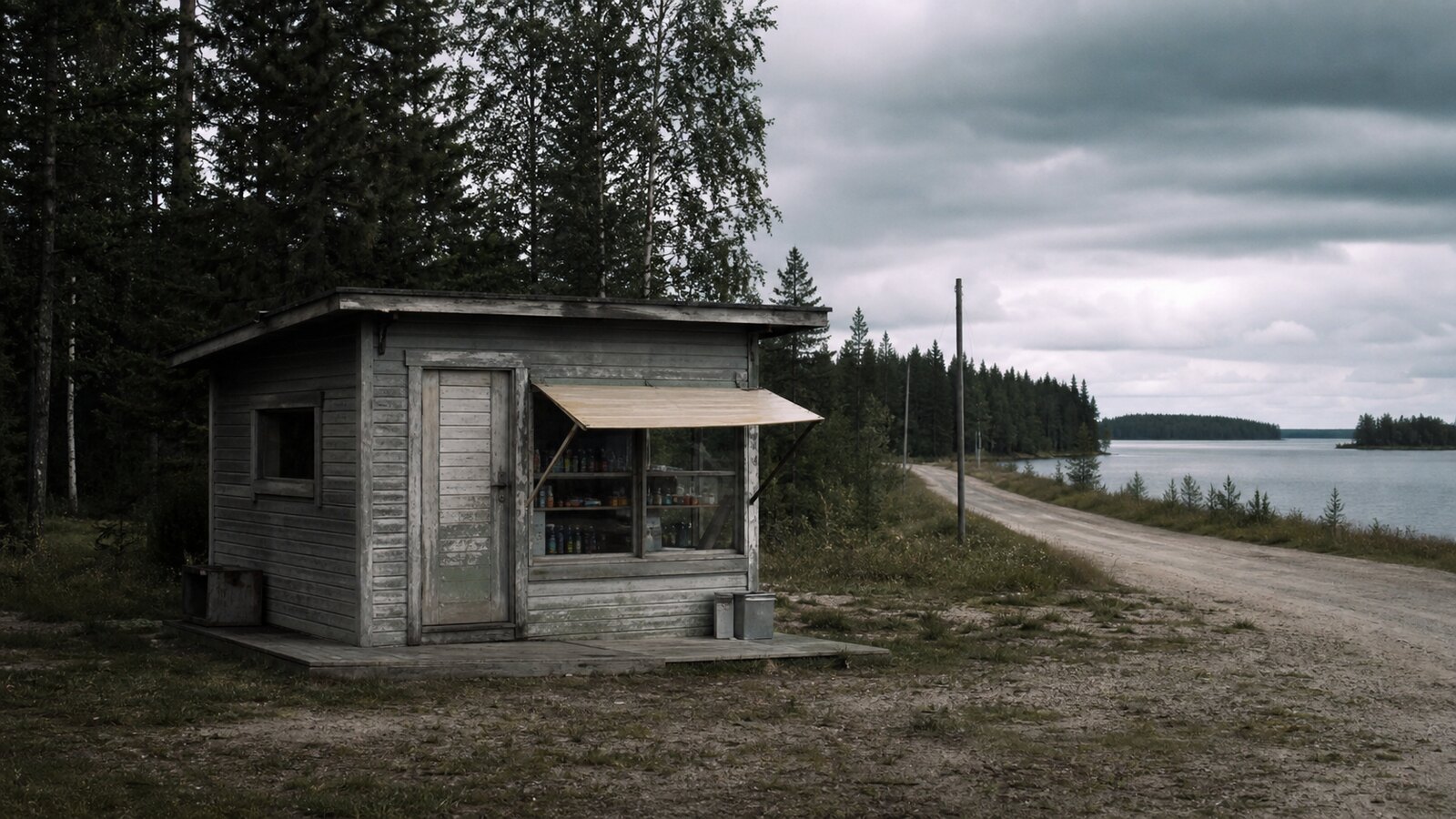
One of the most persistent names was Karl Valdemar Gyllström, often remembered in English-language accounts as the "kiosk man." He operated a kiosk in the area and was widely described as hostile toward campers. Stories attached to him over time: cut tent ropes, thrown stones, threats, a deep dislike of young people using the lake as their weekend escape.
After the murders, suspicion gathered around him. Some accounts claim he made drunken statements suggesting guilt. Others point to the filling of a well on his property soon after the killings and the later claim that his wife had lied about his alibi because she was afraid of him. Gyllström drowned in Lake Bodom in 1969, in what has generally been described as suicide.
Those facts and reports make him a compelling figure.
They do not make him the proven killer.
The same caution applies to Hans Assmann, a German-born man who became one of the case's most notorious suspects. Reporting has long described his strange hospital visit shortly after the murders: agitated behavior, dirty fingernails, and clothing said to be marked with red stains. Later rumors about his background and possible involvement in other crimes turned him into an almost cinematic suspect, the kind of man whose biography can overwhelm the evidence if a writer is not careful.
Police did not build a case against him. He was said to have an alibi. Later DNA-related reporting around old material associated with him has not publicly produced a match strong enough to change the case.
Gyllström and Assmann remain important because they show the atmosphere around Lake Bodom: the local anger, the strange men at the edges, the witnesses who saw a blond figure, the way public suspicion can harden around people who are frightening but not legally tied to a crime.
They belong in the story as theories.
Not as answers.
The Survivor On Trial
For decades, Nils Gustafsson was the survivor.
Then, in 2004, he became the accused.
Finnish investigators reopened the old evidence with modern techniques, focusing especially on blood evidence connected to Gustafsson's shoes. By then, Gustafsson was in his sixties, a retired bus driver who had lived most of his life under the shadow of a night he said he could not remember.
The prosecution theory was stark.
It argued that the violence had not come from an unknown outsider, but from Gustafsson himself. According to the theory presented in court and summarized in Finnish reporting, the group had argued, Gustafsson had been intoxicated, he had been excluded from the tent or fought with Boisman, and he then attacked the others through the canvas. Prosecutors treated the pattern of violence against Björklund as potential evidence of jealousy or personal rage.
The shoes became central.
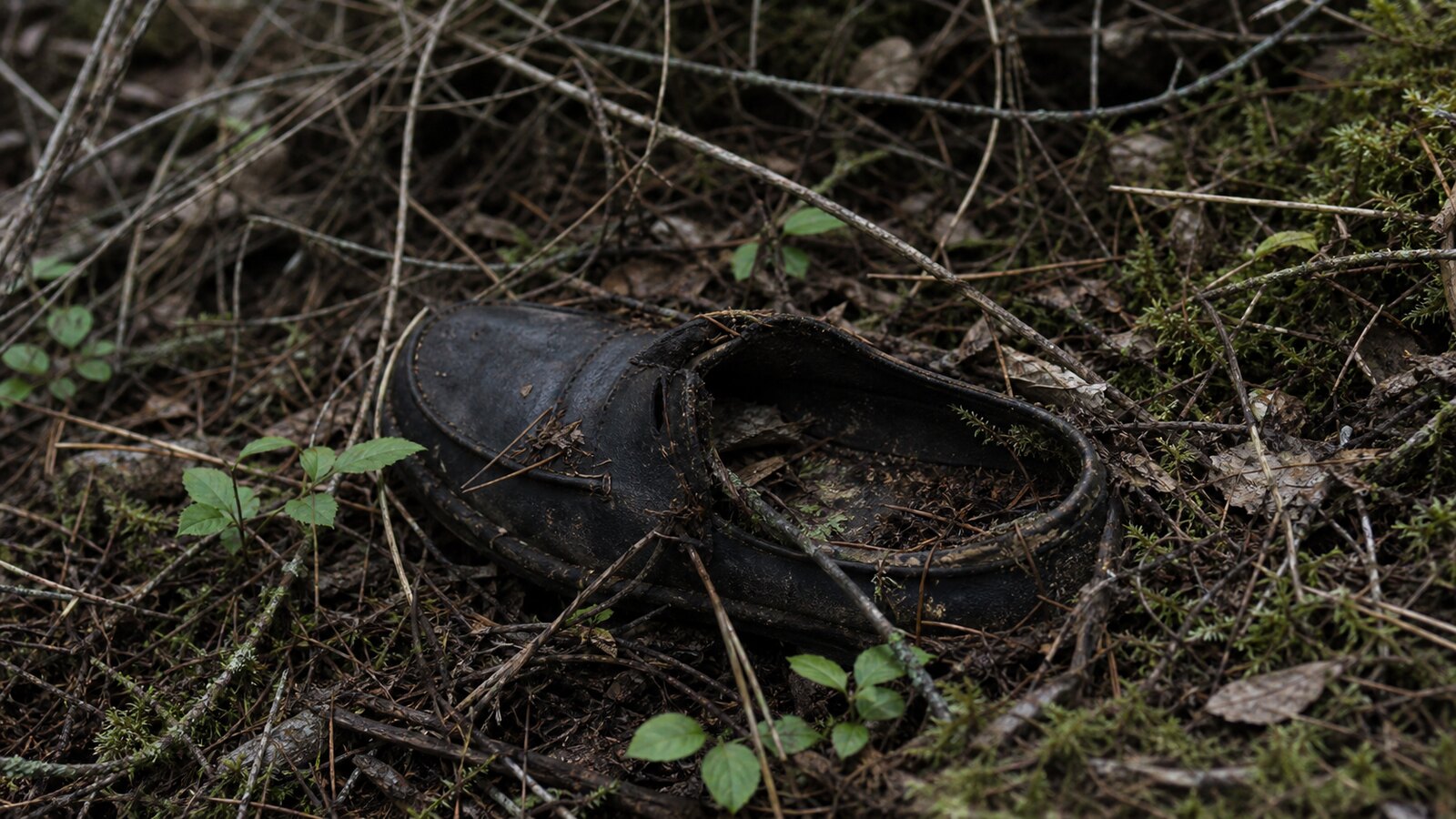
Modern testing found victim blood traces on Gustafsson's shoes, while Gustafsson's own blood was absent or minimal in the way prosecutors considered suspicious. Finnish reporting has described the shoe evidence in varying levels of detail, and at least one Yle account identified blood from one of the murdered girls. The state argued that the killer had been wearing the shoes during or after the attack, then hid them to suggest an outside assailant and missing-property scenario.
That theory had narrative force.
It also had an enormous burden.
To convict Gustafsson, the court had to believe not merely that the shoes were strange, or that the evidence was uncomfortable, or that gaps in his memory were inconvenient. It had to find beyond reasonable doubt that a badly injured survivor had killed three people, staged a chaotic scene, moved property, hidden items hundreds of meters away, returned to the tent, and maintained the posture of victimhood across four decades.
In a clean crime scene, that would have been difficult.
At Lake Bodom, it was worse than difficult. It was built on ground that had been compromised before the word "forensic" could do its modern work.
The Court Refuses The Story
The trial began in August 2005 and drew national attention.
Gustafsson's defense attorney, Riitta Leppiniemi, attacked the prosecution theory from the physical center outward. Her argument was not simply that the old survivor was sympathetic. It was that the state's reconstruction did not survive contact with the evidence.
The court agreed.
On October 7, 2005, the Espoo District Court acquitted Gustafsson of the charges. Finnish reporting on the verdict is unusually useful because it does not reduce the decision to a single technicality. The court found that the evidence was not sufficient. It treated Gustafsson's reduced consciousness as credible. It found that the blood traces did not support the charges in the way prosecutors needed. It also noted that the long passage of time made the case harder to reconstruct.
Several findings were especially damaging to the prosecution.
The court considered it possible that an outside person had committed the attack. It found that Gustafsson's blood inside the tent strongly supported the conclusion that he had also been a victim of the violence. It regarded it as highly unlikely that, after suffering serious injury and reduced capacity, he could have carried or hidden missing property beyond the searchers' reach. It also concluded that the small size of the tent and the pattern of traces made it impossible to treat the violence as something clearly done from inside the tent.
Even the shoes did not carry the certainty prosecutors needed. The court found that the absence of substantial blood inside the shoes, compared with blood traces on the outside, could not prove with certainty that Gustafsson was wearing them when the spatter occurred.
That sentence matters because it is the difference between suspicion and conviction.
Suspicion can live in ambiguity.
Conviction cannot.
The prosecutors did not appeal. The acquittal became final. Gustafsson was later awarded compensation for wrongful detention and mental suffering connected to the case. He remains legally acquitted. In plain language: Nils Gustafsson is not a convicted offender in the Lake Bodom murders. He is the surviving victim whom the state tried and failed to prove guilty.
That legal status is not a footnote.
It is the spine of responsible writing about this case.
What The Lake Keeps
The Lake Bodom murders remain unresolved.
That statement sounds simple, but it contains decades of failure, grief, suspicion, and myth. Three teenagers were killed. One survived. The early scene was compromised. Witnesses saw a possible stranger leaving the area. Property vanished. Shoes were found far away. Suspects came and went. A survivor was accused, tried, and acquitted. No one else has been convicted.
As of the latest public reporting reviewed for this approval draft, no later arrest or conviction has changed the official shape of the case. Finnish reporting in 2020 said police still review genuinely new tips, but that no new investigative work had emerged after the trial strong enough to move the case forward.
That is how a cold case becomes cultural memory.
The lake remains beautiful. The trees still stand. People still swim, walk, fish, and move through summer light. But the place carries a second geography now, one made of missing objects, unreliable memory, contaminated ground, and a tent that collapsed before anyone outside understood what had happened.
Modern forensics can reopen old files, but it cannot restore every lost first hour. It cannot rebuild a trampled footprint or make a crowd unstep where it stepped. It cannot force a dead suspect to answer. It cannot turn a rumor into a verdict. It cannot make a torn canvas speak more clearly than it was allowed to speak in 1960.
Maila Irmeli Björklund, Anja Tuulikki Mäki, and Seppo Antero Boisman were not killed by a legend.
They were killed by a person.
That person walked away from Lake Bodom, leaving behind a survivor, a broken tent, and a country trying to read evidence that had already begun to blur.
Archival Case Gallery
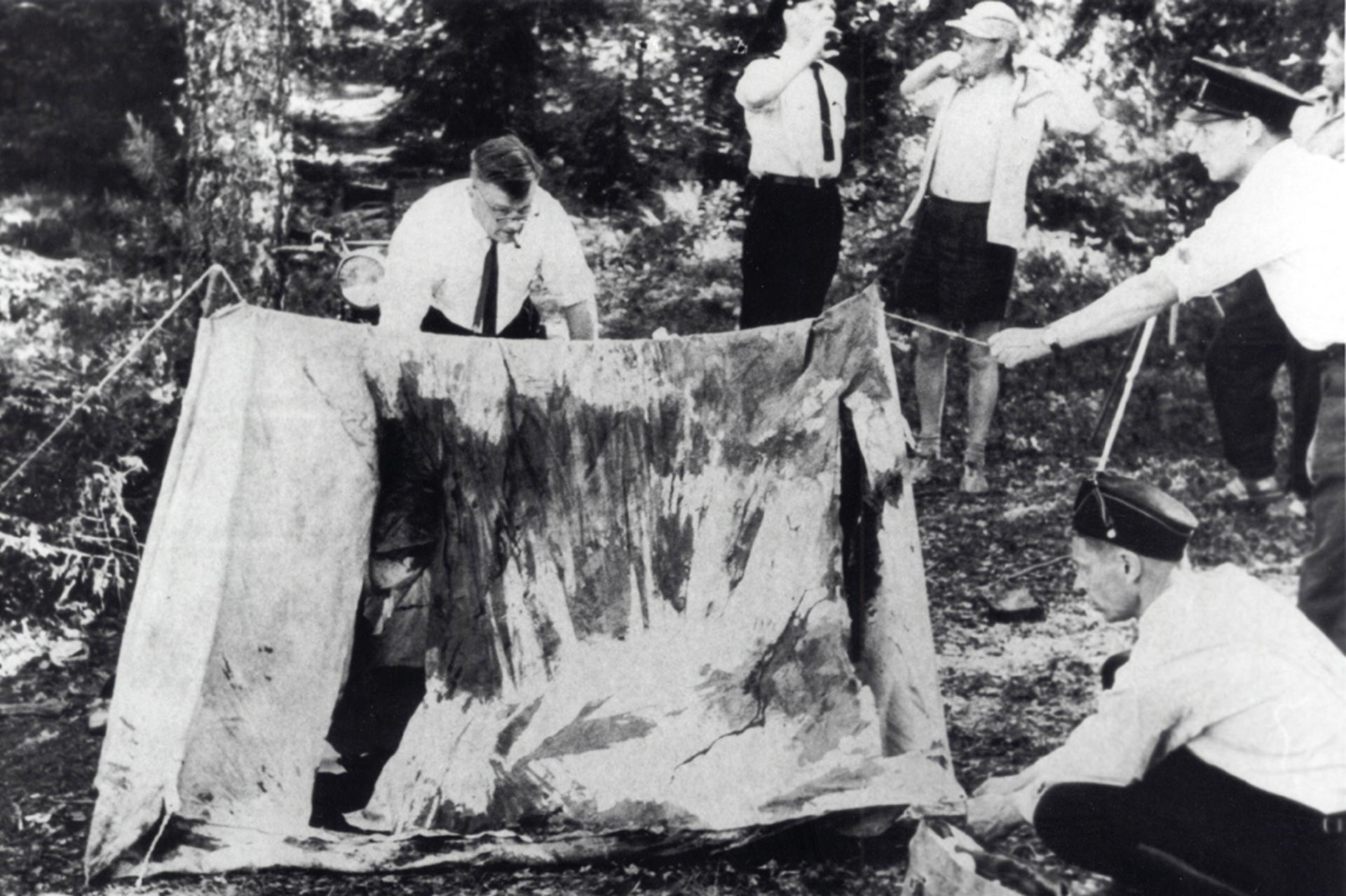
Archival case gallery: public-domain 1960 image of investigators examining the torn Lake Bodom tent, credited on Wikimedia Commons to an anonymous Helsingin Sanomat source. This is non-graphic crime-scene context and is included for historical record, not spectacle.
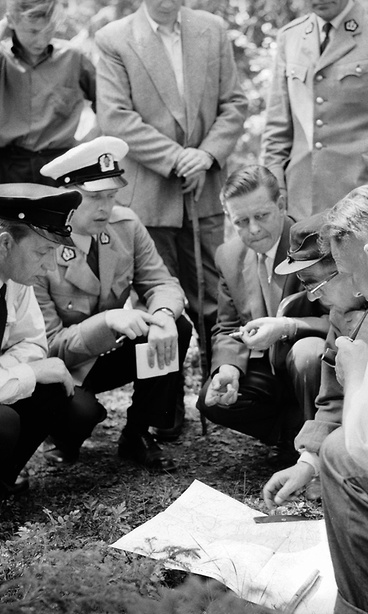
Archival case gallery: public-domain 1960 image of investigators at the Lake Bodom scene, credited on Wikimedia Commons to an anonymous Lehtikuva/MTV source. This is investigation context for the compromised early scene.
Sources & Case Notes
Last updated: May 23, 2026.
Primary sources and case notes: This article is based on Yle's 2016/2025 Elävä arkisto case overview, which summarizes the victims, attack through the tent, Gustafsson's injuries, the 2004 arrest, and the later dismissal of the charges; Yle's archive note on the shoe DNA testing, which is used carefully because public summaries of the shoe evidence vary in specificity; MTV Uutiset's 2018/2020 case retrospective, which summarizes the campsite, tent attack, search, witness sightings, Gustafsson's injuries and memory loss, the 2005 prosecution theory, the court's rejection of that theory, and the post-trial investigative status; MTV Uutiset's October 7, 2005 verdict report, which summarizes the Espoo District Court's findings on evidence limits, Gustafsson's reduced capacity, the blood evidence, missing property, and the possibility of an outside attacker; Edilex's legal-news summary of the district court ruling and Sveriges Radio Finska's acquittal report, both of which emphasize that the court did not find the charges proven and did not rule out an outside perpetrator; MTV Uutiset/STT reporting that prosecutors accepted the acquittal; Kaleva/STT reporting on Gustafsson's compensation; the Wikimedia Commons Lake Bodom tent image record, and the Wikimedia Commons Lake Bodom investigation image record for public-domain archival gallery context. Suspect theories involving Karl Valdemar Gyllström, Hans Assmann, eyewitness descriptions, hypnosis-related sketches, motive claims, and exact crime-scene mechanics are framed as reporting, prosecution theory, defense argument, court findings, or unresolved suspicion rather than established fact.


Correction policy: If you have source corrections, family-approved context, or image-rights concerns, contact Anonymous369 Media through Contact & Media Inquiries.
Image credits: Feature and section images are Anonymous369 Media documentary recreations based on Lake Bodom, Espoo, the canvas tent, missing keys, footwear evidence, and the Oittaa-area setting. They are not archival photographs, official evidence, depictions of the victims, or depictions of an identified offender. The Archival Case Gallery uses public-domain Wikimedia Commons images from the 1960 Lake Bodom investigation: an anonymous Helsingin Sanomat tent photograph and an anonymous Lehtikuva/MTV investigation photograph.
Content warning: This article discusses the homicide of teenagers, a severely injured survivor, non-graphic crime-scene facts, disputed suspects, and a later trial ending in acquittal.