
The Brighton Theater: How the Grimes Sisters Became Chicago's Cold Case
In 1956, Barbara and Patricia Grimes vanished after an Elvis movie in Chicago. Weeks later, their bodies were found near a frozen rural road, leaving behind a disputed autopsy, a broken confession, and one of the city's longest-running cold cases.


The streets of Chicago glittered with crusted snow on the evening of December 28, 1956. Along Archer Avenue, the Brighton Theater glowed against the cold with the particular promise of a Friday night movie house: warm lobby light, popcorn, neon, teenage voices moving briefly out of the wind.
Barbara Jeanne Grimes, fifteen, and her younger sister Patricia Kathleen Grimes, twelve, had come to see Elvis Presley's Love Me Tender. Accounts differ on the exact number of times they had already seen it, but the meaning was never in doubt. They were devoted Elvis fans, ordinary girls caught up in the brightness of a new American idol, and the theater was close enough to home to feel safe.
To anyone watching from the street, nothing about the night would have looked like the beginning of one of Chicago's longest-running cold cases. The sisters had a little money, bought snacks, spoke with at least one classmate, and stayed for the later showing. When the film ended, they stepped back into the bitter winter and began the trip home.
They were expected by midnight.
They never arrived.

The disappearance of Barbara and Patricia Grimes ruptured the illusion of safety that still clung to postwar Chicago. It triggered a massive search, a false confession, a bitter fight over the autopsy findings, and decades of theories that still circle the case like headlights moving across frozen ground.
The Girls Before The Case
Before their names became shorthand for an unsolved mystery, Barbara and Patricia were simply sisters in a working-class Catholic family. They lived with their divorced mother, Lorretta Grimes, and siblings in the McKinley Park area on Chicago's South Side.
Barbara was a high school student. Patricia, who would have turned thirteen on December 31, was still twelve when she vanished three days earlier. Both girls were remembered as close to their family, obedient to their mother, and deeply attached to Elvis Presley in the way thousands of girls were during the first national wave of rock-and-roll celebrity.
That detail would later distort the investigation. Because the sisters loved Elvis, rumors quickly formed around the idea that they had run away to find him. It was an easy story for adults to tell themselves in 1956: two starstruck girls, a movie crush, a runaway adventure.
Lorretta Grimes did not believe it.
When midnight passed and the girls were not home, she sent their older sister Theresa and brother Joey to the bus stop near 35th Street and Seeley Avenue. They watched bus after bus pull up and leave without Barbara or Patricia. By the early morning hours of December 29, Lorretta contacted police and reported her daughters missing.
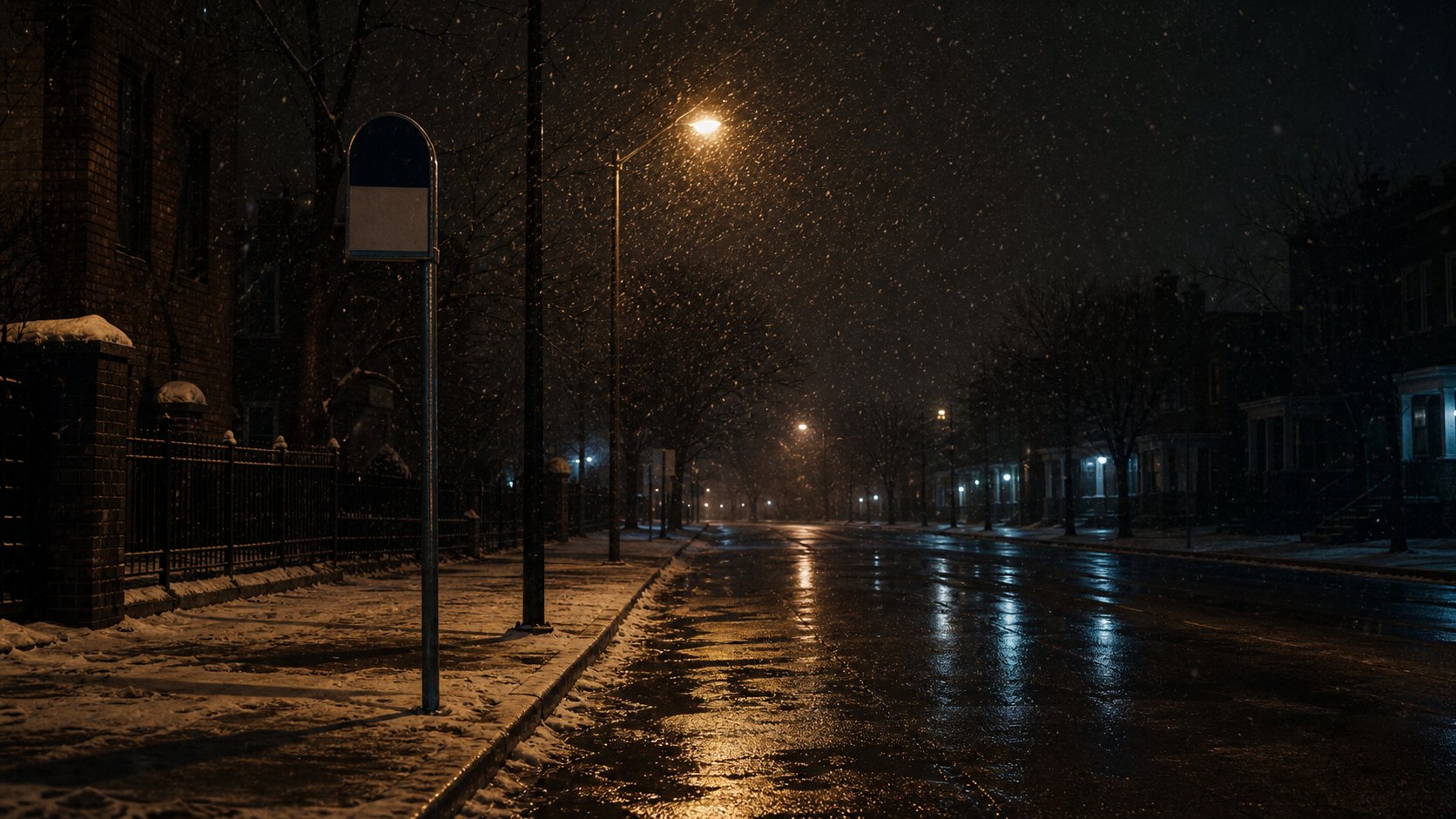
The first wound in the case was not the weather. It was disbelief.
The Search Becomes A Fever
Chicago police initially treated the possibility of a runaway seriously, despite Lorretta's insistence that her daughters would have called or come home. Sightings poured in from around the city and beyond it. People claimed they had seen the girls in buses, restaurants, hotels, stores, and even out of state.
Most leads dissolved almost as soon as investigators touched them.
As the days passed, the search grew enormous. Police, sheriff's officers, volunteers, and family members canvassed streets, checked transit routes, examined canals and vacant lots, and distributed thousands of flyers. The girls' faces became part of the city winter: two sisters in newspaper photographs, two names repeated at kitchen tables, bus stops, churches, and police desks.
The case became famous enough that Elvis Presley himself issued a public plea. In a broadcast appeal, he urged the missing sisters to come home, saying, "If you are good Presley fans, you'll go home and ease your mother's worries."
It was a line meant for two living girls.
By then, the truth was likely already somewhere colder.
German Church Road
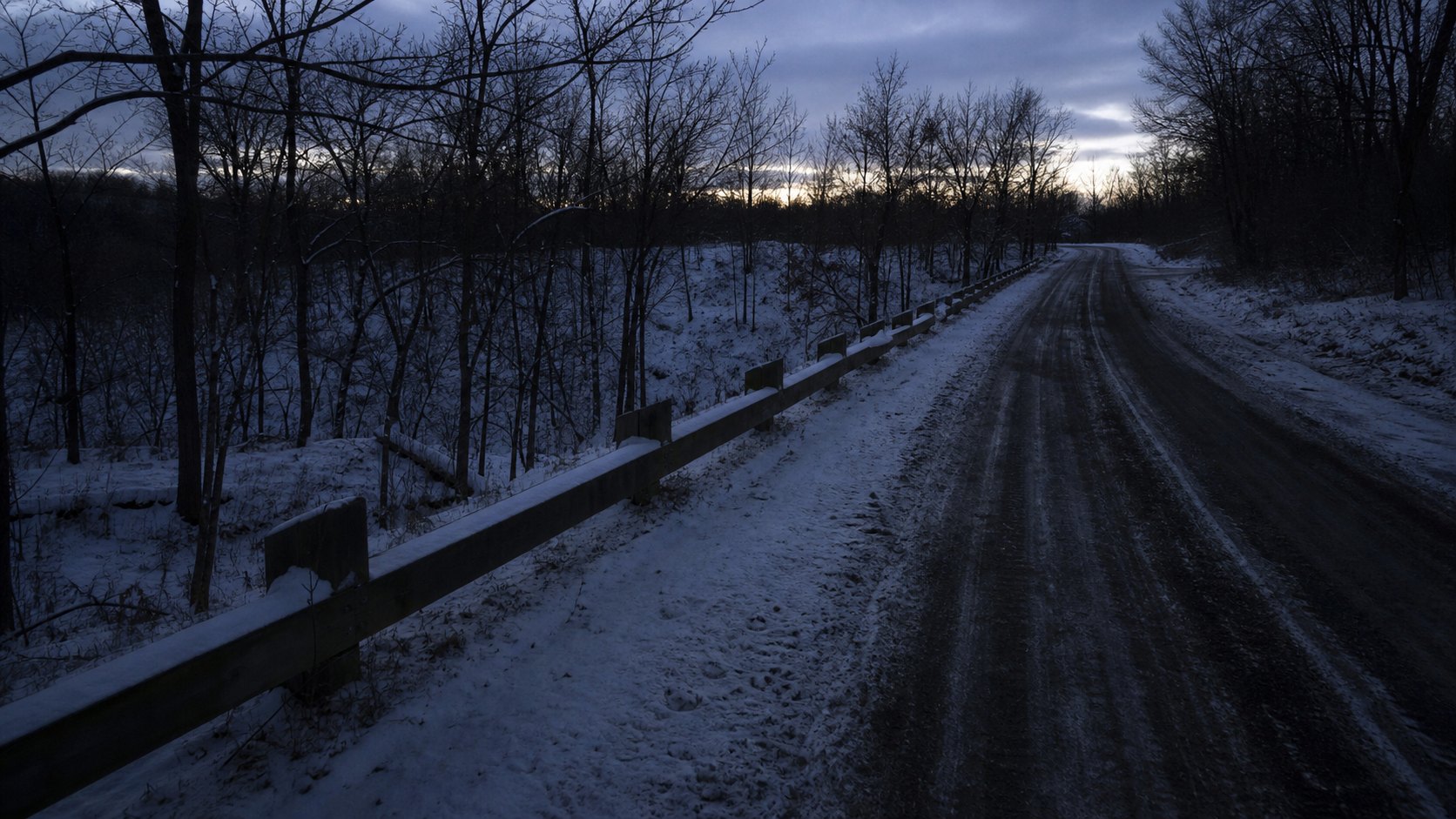
On January 22, 1957, a thaw began loosening the snow that had sealed parts of Cook County in ice. Near German Church Road in unincorporated Willow Springs, construction worker Leonard Prescott noticed what he first thought were mannequins in a shallow ditch near Devil's Creek. He returned with his wife, and the shape of the case changed forever.
Barbara and Patricia Grimes had been found.
The girls were nude, frozen, and positioned near a rural roadside roughly twenty miles from home. This article will not dwell on graphic detail, because the facts are already brutal enough. What mattered immediately was that the discovery scene held potential answers: tire impressions, footprints, fibers, drag marks, anything that might explain how two Chicago sisters ended up beside that road.
Much of that possibility vanished within hours.
Police, reporters, officials, and onlookers converged on the area. The snow around the bodies was trampled. Whatever physical trace the killer or killers may have left was blurred by the crush of people moving through the scene. Like so many mid-century homicide investigations, the Grimes case would spend the next several decades paying for the first day of evidence handling.
The cold had preserved the bodies.
The crowd destroyed the ground around them.
The Autopsy Split
The medical findings became one of the most contested parts of the entire case.
Cook County Coroner Walter McCarron and the official pathologists concluded that the sisters died relatively soon after leaving the Brighton Theater. Their reasoning relied heavily on stomach contents, including food from earlier that evening and popcorn associated with the movie trip. Because no gunshot wound, fatal stabbing wound, or clear poisoning was identified, the official cause of death was ruled as secondary shock resulting from exposure to the cold.
That ruling never sat quietly.
Harry Glos, the chief investigator for the coroner's office, publicly challenged the official timeline. Glos argued that the condition of the bodies and a thin coating of ice suggested the girls may have been warm when left near German Church Road, meaning they could have been placed there later than the official theory allowed. He also pointed to injuries and lab findings that, in his view, supported a violent sexual element and a longer period of captivity.
Those claims must be handled carefully. The official ruling remained exposure and secondary shock. Glos's view was a dissenting professional interpretation, not a final legal finding. Public reporting also noted evidence of recent sexual activity involving Barbara, while pathologists maintained the findings did not prove forcible assault. Because Barbara was fifteen, this part of the record remains deeply serious, but it should not be turned into spectacle.
The dispute damaged the investigation. Glos accused the official office of minimizing the sexual implications of the case; McCarron rejected his challenge, and Glos was fired. From that point forward, the Grimes case no longer had one clean medical narrative. It had competing clocks.
One said the girls died soon after the theater.
The other suggested they may have lived for days.
The case has never fully escaped that contradiction.
The Confession That Collapsed
In the pressure to solve the murders, investigators soon focused on Edward "Bennie" Bedwell, a twenty-one-year-old dishwasher who had been reported near two girls said to resemble Barbara and Patricia. Bedwell signed a lengthy confession after days of questioning.
The confession was sensational. It claimed the girls had spent time with Bedwell and another man, consumed food and alcohol, and were later beaten and left in the snow.
It also fell apart.
The medical evidence did not support key details. Reports noted that the girls' stomach contents did not match Bedwell's story of hot dogs and alcohol. Lorretta Grimes rejected the confession immediately, insisting her daughters would not have gone to the places described. Bedwell later recanted under oath, saying he had been pressured, threatened, and mistreated into signing the statement.
The charges were dropped.
The case returned to its original emptiness, but now with one more wound: the public had been shown a suspect, then forced to watch the accusation collapse.
The Names That Would Not Leave
The Grimes murders have attracted theories for decades, but two strands remain especially persistent: the convicted killer Charles Leroy Melquist, and a local "joy ride" theory tied to neighborhood teenagers and a dark car reportedly seen near the theater.
Melquist was convicted in 1958 for the murder of fifteen-year-old Bonnie Leigh Scott, whose body was found in an Addison forest preserve. The similarities between that case and the Grimes murders have made him a recurring suspect in public discussion: a young female victim, a roadside or preserve setting, sexual violence concerns, and a pattern of cruelty that seemed to fit the fear surrounding the Grimes case.
There was also a reported phone call to Lorretta Grimes. According to later accounts, an anonymous caller claimed responsibility for Barbara and Patricia's deaths and referenced a private detail about Patricia's crossed toes, something said not to have been publicly released. After Bonnie Scott was found, Lorretta reportedly received another call and believed it was the same voice.
Those calls are chilling. They are not proof.
Melquist was questioned but never charged in the Grimes case. No public physical evidence has tied him to Barbara and Patricia. His name remains part of the case because the pattern is disturbing, not because the legal record closed around him.
The second theory is more local and more fragile. Researchers have revisited witness statements placing the sisters near 35th and Seeley after the movie, possible sightings involving a dark late-1940s Mercury, and accounts of neighborhood youths out driving that night. Some versions of the theory suggest the girls may have entered a car with boys they knew or trusted, and that a cruel act or assault escalated into death and concealment.
That theory also remains unproven.
It relies on circumstantial overlaps, later recollections, disputed witness accounts, and secondhand claims. No unnamed teenager from that alleged circle should be treated as guilty. The value of the theory is not that it solves the case, but that it reminds readers how close danger can look to ordinary life: a familiar corner, a neighborhood car, a ride that feels less threatening than walking home in the cold.
What The Cold Preserved
The Grimes sisters case endures because it never settled into one story.
Was the official timeline right, placing the girls' deaths close to the night they left the Brighton Theater? Was Harry Glos right that they survived longer, held somewhere warm before being left in the freezing open air? Was the killer a roaming predator later hidden by another conviction, a local man never named, a group whose silence hardened into history, or someone whose name never entered the file at all?
The case contains too much and too little at the same time. There are sightings, confessions, denials, medical disputes, anonymous calls, rumored cars, neighborhood whispers, and decades of grief. But there is no conviction. No final courtroom account. No answer that Lorretta Grimes could carry to the grave.
She died in 1989 without seeing the case solved.
What remains is a Chicago winter preserved in fragments: the theater lights on Archer Avenue, the bus stop where siblings waited, the Elvis plea meant for girls who could no longer respond, and a rural road where the thaw revealed what the city had failed to find.
Barbara and Patricia Grimes left home for a movie.
The case they left behind is still waiting in the cold.
Archival Case Gallery
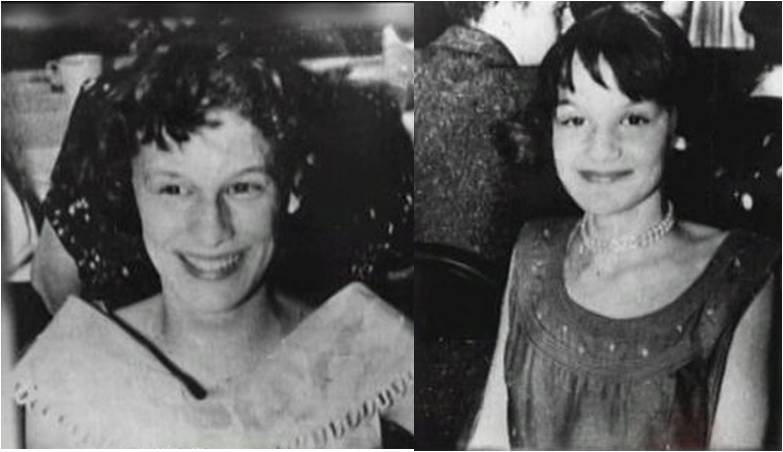
Archival case gallery: public-domain portrait of Barbara and Patricia Grimes from before 1957, shared through Wikimedia Commons as a United States public-domain image due to publication without notice. Included as dignified victim context, not spectacle.
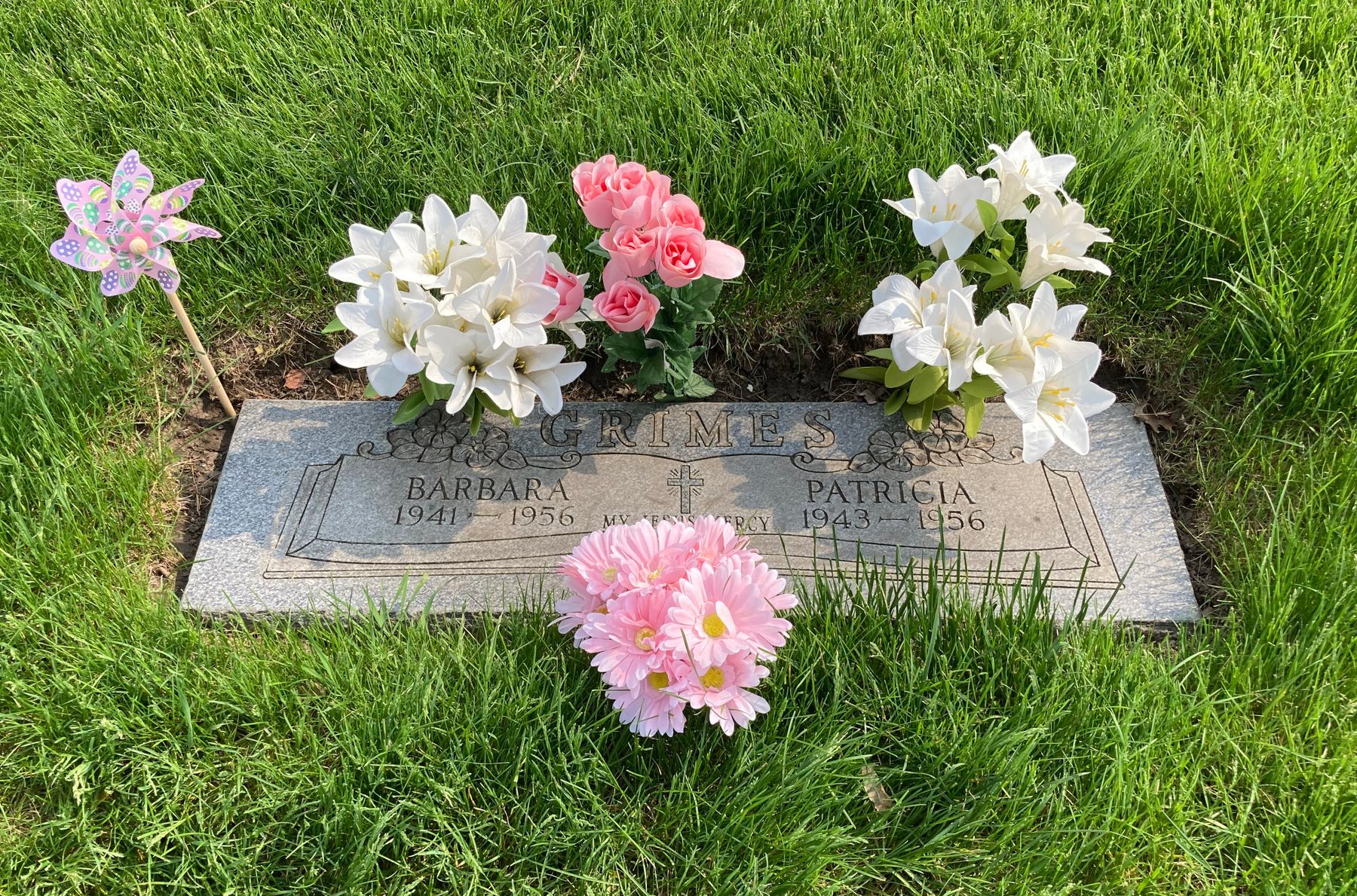
Archival case gallery: the shared graves of Barbara Jeanne Grimes and Patricia Kathleen Grimes at Holy Sepulchre Cemetery in Alsip, Illinois. Photograph by Nick Number via Wikimedia Commons, licensed under CC BY 4.0 and resized for web delivery.
Sources & Case Notes
Last updated: May 23, 2026.
Primary sources: This article was checked against the Cook County Sheriff's Office public case page for Barbara and Patricia Grimes; A&E Real Crime's historical overview; CBS Chicago anniversary reporting; and Ray Johnson's HistoryCop research pages on the Charles Melquist theory and the 35th-and-Seeley "joy ride" theory. The Melquist and "joy ride" material is presented as unproven theory, not as a legal finding.
Correction policy: Corrections, source documentation, and image-rights concerns can be directed to Anonymous369 Media's contact and media inquiries page.
Image credits: Feature and section images are Anonymous369 Media documentary recreations based on the Brighton Theater setting, the winter bus-stop timeline, German Church Road, and disputed physical-evidence theories. They are not archival photographs, official evidence images, depictions of the victims, or depictions of an identified offender. The Archival Case Gallery uses a public-domain Wikimedia Commons portrait of Barbara and Patricia Grimes from before 1957 and a CC BY 4.0 Wikimedia Commons grave photograph by Nick Number, resized for web delivery.
Content warning: This article discusses the deaths of children, disputed autopsy findings, suspected sexual violence, and non-graphic crime-scene facts.