
Jarvis's Porcelain Prison: The Luigi's Mansion Ghost Who Became His Collection
Jarvis looks like a throwaway joke in Luigi's Mansion: a purple head hiding inside antique jars. But his missing body, sealed porcelain world, and unreadable spectral heart point to something colder: a collector who stopped owning his treasures and became one of them.


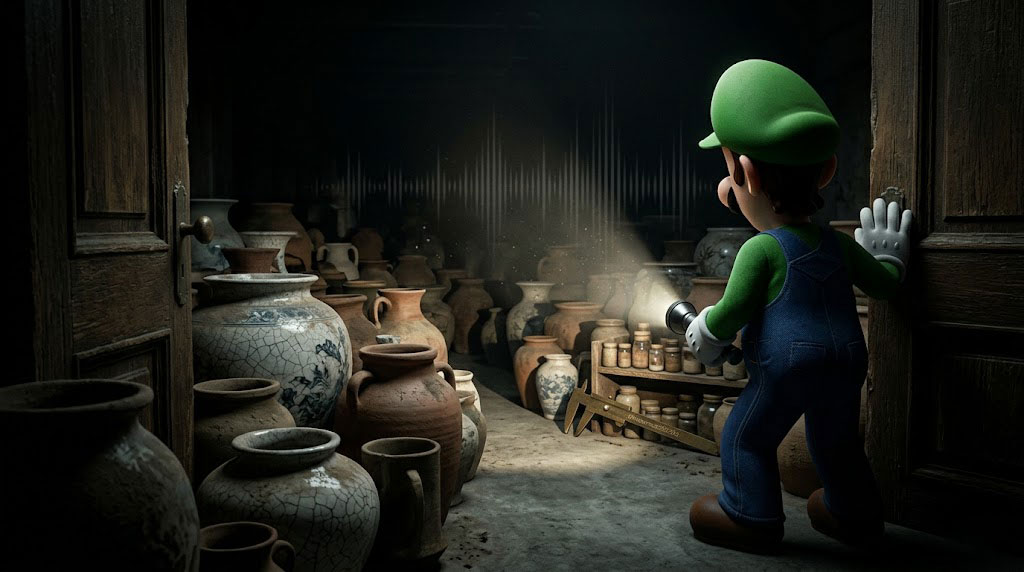
The air inside the third floor Ceramics Studio of the towering gothic estate is suffocatingly dry. It does not carry the scent of rotting wood or the heavy, perfumed dust of the other haunted corridors. Instead, it smells exclusively of baked earth, hardened clay, and the sharp, metallic tang of unpolished brass. When the trembling green clad plumber slowly pushes open the heavy oak doors, he steps into a room entirely dedicated to the preservation of inanimate objects. The floorboards are littered with massive, ornate porcelain pots and antique jars, casting long, terrifying shadows against the walls under the weak beam of the flashlight. The absolute silence of the property is suddenly shattered by a booming, echoing voice laced with a thick Scottish brogue, calling out from the depths of the clay. For over two decades, players of the two thousand and one GameCube masterpiece viewed this optional encounter as merely a quirky, carnival style mini game. But strip away the colorful, cartoonish presentation and conduct a forensic examination of the environmental lore, and a profoundly disturbing psychological thriller emerges. The entity waiting in the dark is Jarvis, the Jar Collector. He is not just a quirky ghost hiding in a pot. He is a terrifying monument to the horrors of extreme hoarding and material obsession, a man who willingly mutilated his own physical and spiritual form just to become one with the inanimate objects he worshipped.
The Anatomy of an Amputated Soul
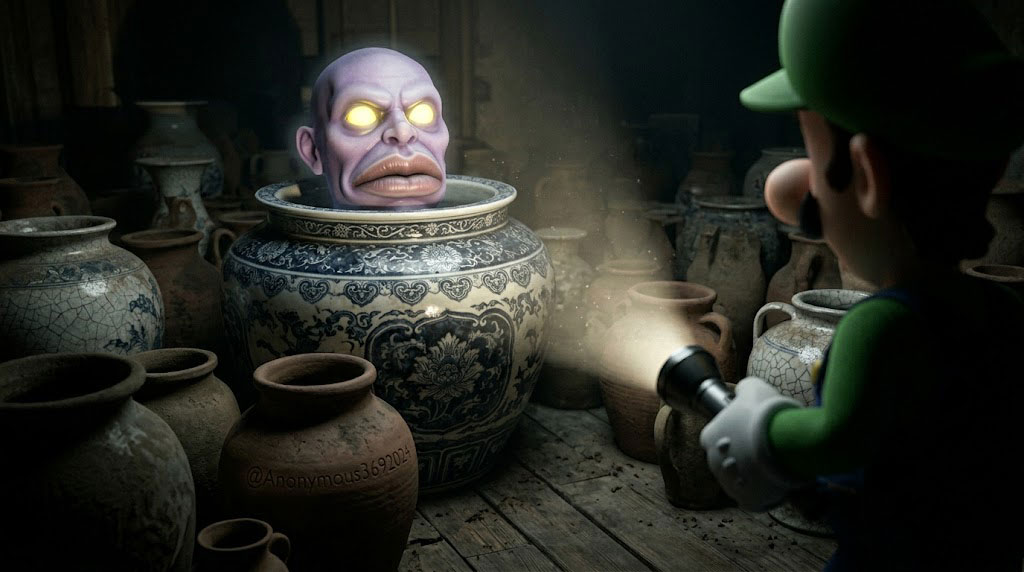
To fully comprehend the sheer psychological horror of this spectral collector, we must first examine his deeply unsettling physical manifestation. When Luigi eventually flushes the entity out into the open, the form of Jarvis defies the standard anatomical rules of the other human spirits residing in the estate. He possesses a pale purple complexion, glowing yellow eyes, and massive, exaggerated lips that dominate his face. But the most horrifying detail is what he lacks. Jarvis has no arms. He has no torso. He has no wispy, ethereal tail. He is entirely reduced to a floating, disembodied head resting perfectly inside the rim of a massive antique jar.
The internal biography registered within Professor Elvin Gadds Game Boy Horror scanner unlocks a terrifying reality regarding his bizarre condition. The device explicitly states that he loves his antique jars so much that he now lives in one. This single sentence implies a gruesome, mind breaking history. Jarvis was a man completely consumed by his collection. He did not merely want to own the jars, he wanted to inhabit them. The psychological implication is that in life, or perhaps in the immediate aftermath of his death, Jarvis literally sacrificed his own limbs and his physical mobility just to fit inside the tight, claustrophobic confines of a porcelain pot. He amputated his own humanity to become a piece of antique pottery. He views the human body not as a vessel for the soul, but as an inconvenient, fleshy mass that gets in the way of true, hardened perfection.
The Erasure of Human History
The profound tragedy of Jarvis is further amplified by the glaring gaps in his official biography. Among the elite twenty three portrait ghosts that haunt the illusionary mansion, Jarvis holds a deeply unsettling distinction. He is one of the very few human spirits whose age is completely unknown. Professor Elvin Gadds advanced paranormal scanner can pinpoint the exact age of an infant like Chauncey or an elderly butler like Shivers, but it fails entirely to calculate the chronological existence of the Jar Collector.
This absence of data is a brilliant piece of environmental storytelling. Jarvis has no recorded age because he completely severed his ties to the human concept of time. He stopped living as a mortal man and transitioned into the role of a timeless antique. Antiques do not age in the human sense, they simply exist, gathering dust in the dark. By surrounding himself with ancient relics and forcing his soul into a clay vessel, he erased his own human history. He has no family wandering the halls. He has no connections to the Bookish Father Neville or the Mirror Gazing Mother Lydia. He isolated himself in the Ceramics Studio, shutting out the world of the living and the dead alike, entirely content to let his mind rot away as long as his precious collection remained perfectly intact and undisturbed.
The Void of the Spectral Heart
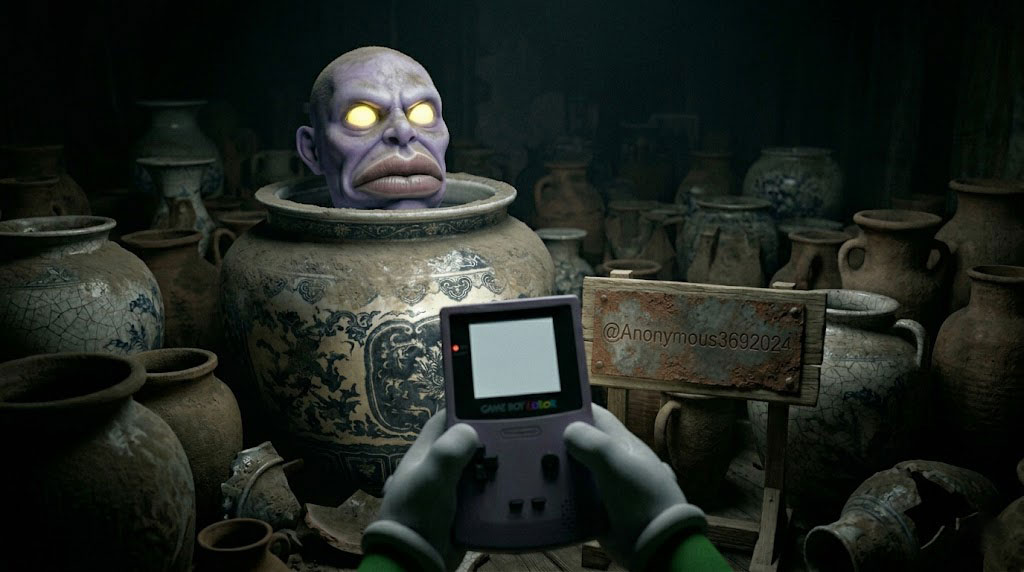
The most terrifying piece of the puzzle surrounding the Jar Collector lies in a deeply obscure mechanical anomaly present only in the original two thousand and one release. Every other portrait ghost in the entire sprawling estate possesses a spectral heart that can be scanned by the Game Boy Horror. When Luigi points his device at these exposed hearts, the machine broadcasts the ghosts innermost thoughts, fears, and regrets into the world of the living. But Jarvis is a complete anomaly.
He is the absolute only non boss portrait ghost in the entire original game whose heart cannot be checked. If the player attempts to scan his glowing chest when he is vulnerable, absolutely nothing happens. The screen remains blank. The radio frequency is dead silent. This is not a mere programming oversight. It is a chilling narrative statement. Jarvis has no inner monologue because his heart is completely empty. There is no lingering guilt over a tragic accident. There is no desperate longing for a lost love. There is no fear of the dark. His obsession with his porcelain collection entirely devoured his soul, leaving behind a hollow, unfeeling void. You cannot read the mind of Jarvis because there is no human mind left to read. There is only the cold, unfeeling clay.
A Freezing Game of Madness
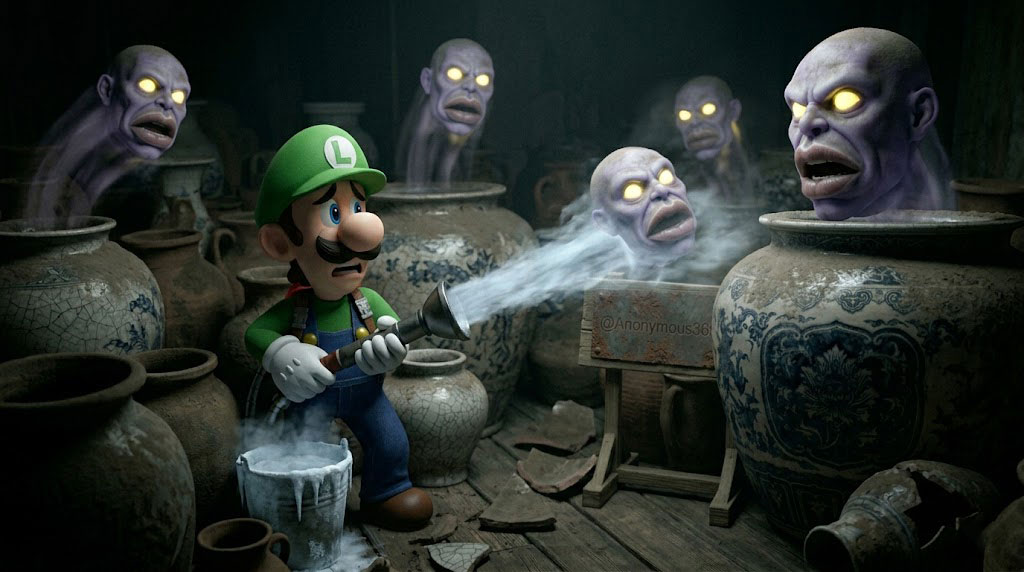
When Luigi finally approaches the collection in the back of the studio, Jarvis pops his head out of a jar and acknowledges the intruder. He speaks with a booming, theatrical Scottish accent, calling the trembling plumber a "boyo" and demanding to know what he thinks of his amazing collection. But Jarvis refuses to simply allow a living human to look upon his treasures for free. He forces Luigi to participate in a sick, twisted carnival game in order to earn the right to view the jars.
The game is a frantic, supernatural variation of Whac A Mole. Jarvis teleports erratically between the numerous pots scattered across the studio, popping his head up for mere seconds before vanishing back into the clay. To win, Luigi cannot use the standard flashlight. He must hunt down an Ice Elemental Spirit from a nearby frozen bucket, draw the sub zero mist into the heavy metal nozzle of the Poltergust three thousand, and violently blast the ghost with freezing air the exact moment he emerges. Luigi must successfully freeze the collector seven separate times. This mechanic forces the player to engage with Jarvis on his own deranged terms. The ghost treats the violent, supernatural war raging across the mansion as nothing more than a childish amusement. He is completely insulated by his own arrogance, genuinely believing that his mastery over the porcelain vessels makes him entirely untouchable.
The Wrath of the Shattered Ego
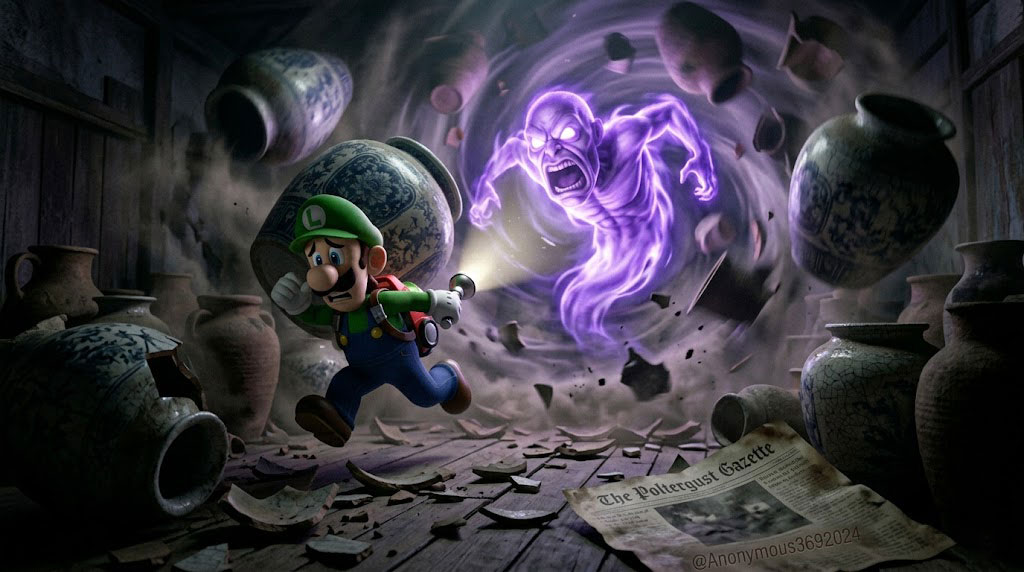
When Luigi successfully blasts the collector with the freezing ice for the seventh time, the illusion of the playful, theatrical host is instantly and violently shattered. Jarvis realizes he has been beaten by a man he views as an uncultured, filthy peasant. His booming laughter is replaced by a shrill, echoing shriek of absolute, blinding fury. He cries out in anger, furiously demanding to know how he could possibly lose to a mustachioed plumber.
It is in this moment of pure, unadulterated rage that Jarvis reveals his true, sadistic nature. He threatens Luigi with a horrifying fate, declaring that he will stuff the green clad hero into one of the antique jars. He wants to force his own claustrophobic, amputated purgatory onto the intruder. To execute this threat, Jarvis utilizes his raw telekinetic power to lift the massive, heavy porcelain jars off the floorboards. The room becomes a chaotic, lethal battlefield of flying pottery. The heavy jars hurl through the air like artillery shells, threatening to crush Luigis bones and bury him under shards of sharp, jagged clay. Luigi must frantically sprint around the studio, dodging the flying debris while keeping his flashlight trained on the enraged spirit. Jarvis no longer plays a game. He intends to murder the plumber and add his broken, bleeding body to the ceramic collection.
The Hollow Reward of the Vault
The sheer tragedy of this violent encounter is underscored by the fact that it is entirely unnecessary. Jarvis is one of the few completely optional portrait ghosts in the game. He does not guard a crucial key required to unlock the next corridor. He does not actively hunt or terrorize the protagonist. He simply wanted to be left alone in his studio to admire his jars in the pitch black dark. Luigi actively chooses to invade his sanctuary, disturb his eternal rest, and systematically dismantle his physical defenses.
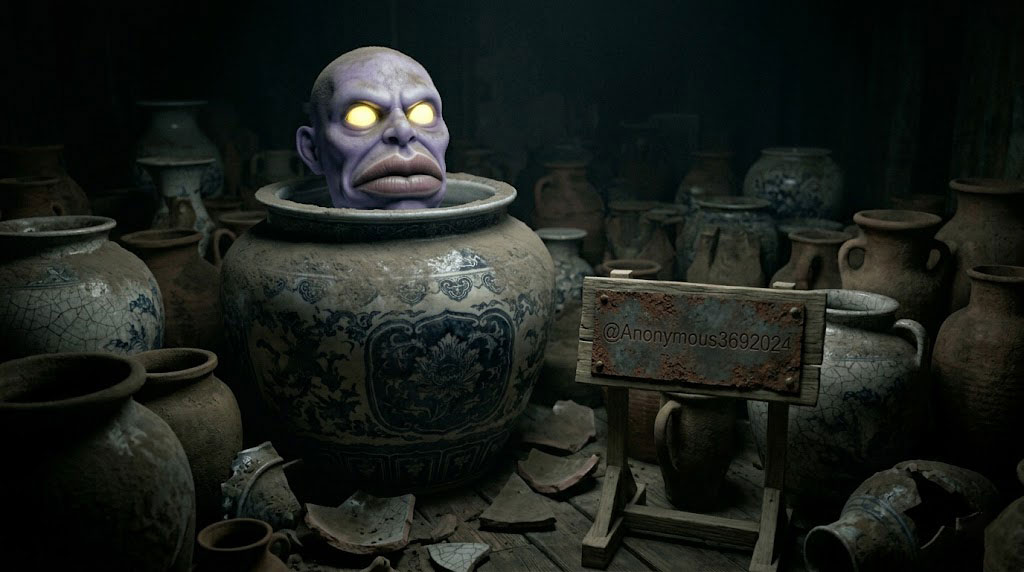
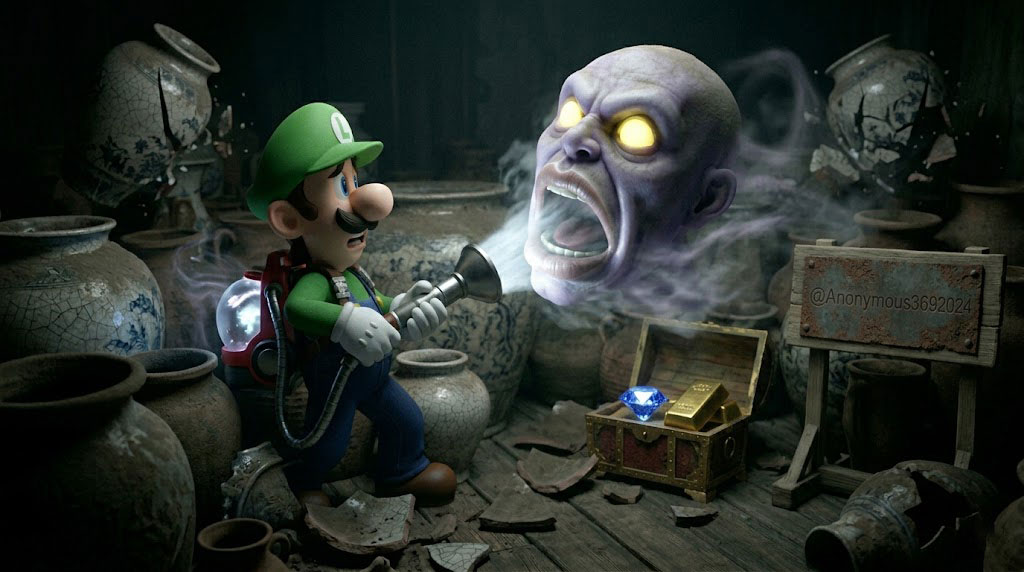
When the blinding beam of the flashlight finally pierces the gloom and strikes the ghost, the mechanical roar of the ghost hunting machine drowns out his Scottish curses. As the crushing suction of the vortex pulls at his ethereal tissue, Jarvis thrashes wildly inside his jar. He fights with the desperate, panicked intensity of a hoarder having his most prized possessions ripped from his grasp. Because he has no limbs, his struggle is entirely localized to his massive head, twisting and stretching in agonizing proportions against the relentless pull of the vacuum. When his health finally depletes, he is violently ripped from the physical plane, sucked screaming into the suffocating, lightless containment chamber on Luigis back. The studio falls dead silent. The levitating jars crash to the floor, shattering into countless useless pieces. In place of a key, a treasure chest materializes, offering a Blue Diamond and two heavy gold bars. It is a hollow, metallic reward for invading a broken mans tomb and destroying the only things he ever truly loved.
The Canvas of the Porcelain Tomb
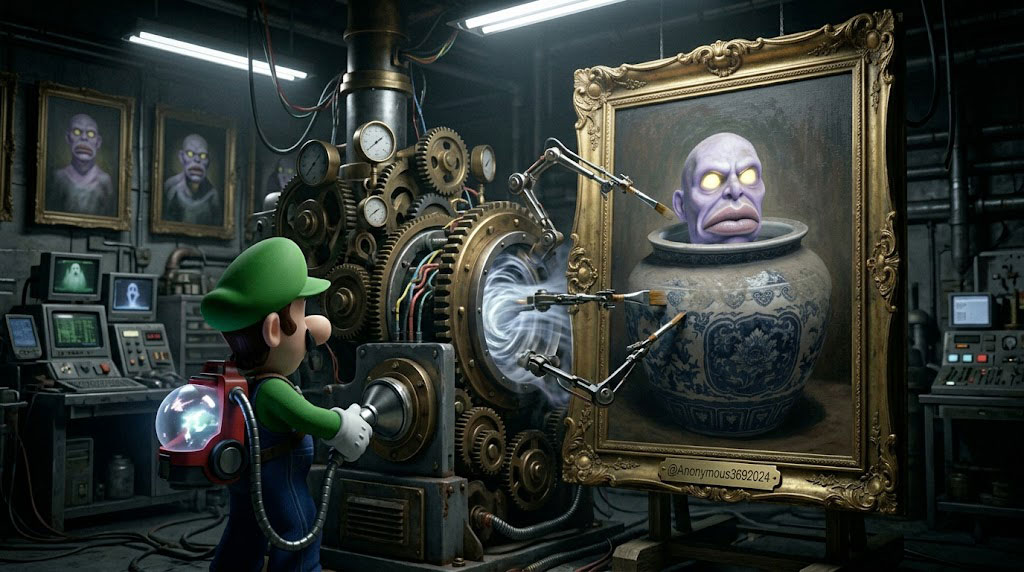
The psychological torment of the Jar Collector concludes deep underground, in the cold, sterile laboratory of the eccentric Professor Elvin Gadd. Down in the lab, Luigi connects the heavy vacuum to the Ghost Portrificationizer and lets the machine grind its cruel work into motion. The machine, maliciously engineered to compress sentient souls into static oil paintings, subjects Jarvis to a flattening, agonizing paralysis. What remains of him is not freedom, but paint, frame, and a display case.
In his ultimate, golden frame, Jarvis is depicted exactly as he lived and exactly as he died. He is nothing more than a floating, disembodied head resting inside a massive antique jar. It is a deeply tragic and ironic image. He has been returned to the exact state of objectification he craved, but he is completely stripped of his autonomy. Even in eternal imprisonment, he is denied any sense of peace or control. He is reduced to a mere decorative trophy, hanging silently in a cold, subterranean gallery for a mad scientist to admire and study. He sacrificed his humanity, his limbs, and his very soul to become an antique, and now he will spend eternity as a painted object on a wall, completely paralyzed in the dark.
What happens to a mind utterly consumed by material possessions when it is forced to spend eternity trapped inside a painted jar, fully aware that its precious collection has been shattered to dust?
Continue the Mansion File
The mansion works best as a chained dossier. Step back if you missed the previous room, or keep going to follow the next piece of Luigi's Mansion lore.
Previous file: Why Sue Pea Sleeps Upside Down in Luigi's Mansion Next file: Why Sir Weston Chose the Ice in Luigi's Mansion