
Professor E. Gadd's Ghost Gallery Exposes Luigi's Mansion's Real Warden
Professor E. Gadd spent sixty years hunting ghosts, then called the prison a gallery. In Luigi's Mansion, the Poltergust, Game Boy Horror, and Ghost Portrificationizer reveal a smiling scientist who used Luigi as bait to refill his walls with screaming souls.


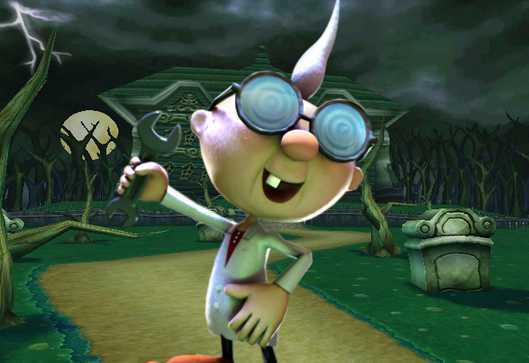
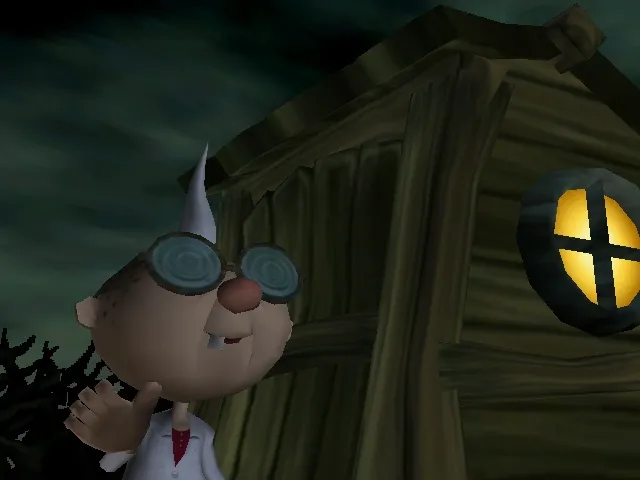
The forest known as Boo Woods offers no warmth to the living. The dead trees twist like broken fingers against a lightless, oppressive sky, and the air always carries the bitter, heavy scent of ozone and decaying leaves. At the very edge of this rotting wilderness, shrouded in perpetual midnight, sits a small, unassuming shack. It hums and vibrates with an unnatural mechanical life, serving as a stark, jarring contrast to the silence of the death that surrounds it. This is the isolated domain of Professor Elvin Gadd. For over two decades, casual players have viewed this diminutive, eccentric scientist as a quirky, benevolent mentor who generously arms a terrified Luigi with the tools needed to save his missing brother. But a careful, forensic dissection of the environmental lore buried deep within the original 2001 GameCube masterpiece reveals a profoundly unsettling reality. Professor Elvin Gadd is not a savior. He is an obsessive, ethically devoid warden of the afterlife. Strip away his cartoonish demeanor, his frantic pacing, and his bizarre gibberish, and you uncover a man who has spent sixty years hunting, compressing, and imprisoning sentient souls for his own twisted amusement.
The Genesis of a Ghost Hunter
To truly understand the dark, calculating mind of Professor Elvin Gadd, we must first look at his profound isolation. By his own proud admission to Luigi, he has lived alone in the suffocating heart of Boo Woods since he was a lad of twenty or so. For six long, uninterrupted decades, he has actively shunned normal human contact, choosing instead to bury his mind in paranormal research. He did not spend his youth building relationships, raising a family, or contributing to the society of the living. He spent every waking hour tracking the dead. He boasts openly about traveling the world in his younger years, discovering unique, powerful spirits and ripping them from their resting places. These were not mindless, feral monsters. These were individuals with tragic, deeply human histories. A heartbroken, starving artist. A mourning father reading in his study. A sleeping child who never woke up. Professor Elvin Gadd did not care about their stories, their lingering trauma, or their right to eternal peace. He viewed them purely as scientific specimens to be conquered. To achieve this, he engineered the Poltergust 3000, a heavy, brutal mechanical vacuum designed specifically to violently strip ghosts of their ethereal forms, sucking them screaming into a suffocating, lightless vortex. The sheer cruelty of treating human souls as collectible insects highlights a profound detachment from all human morality. He built an empire of captured spirits, hoarding them in a secret, sprawling laboratory hidden far beneath the dead earth.
The Prison of Paint and Canvas
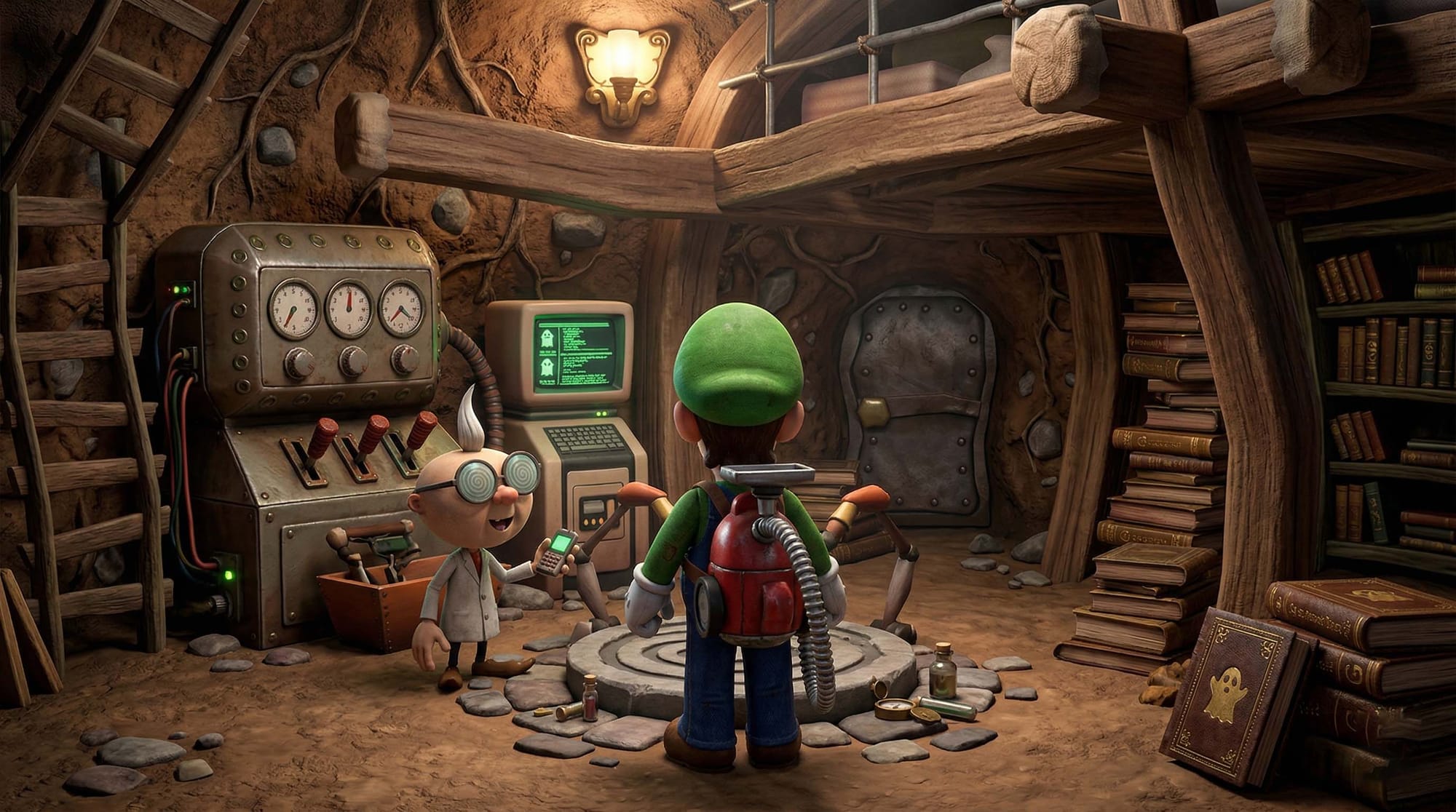
The absolute most horrifying manifestation of the professors lifelong obsession is a hulking, industrial machine he proudly calls the Ghost Portrificationizer. This towering device is an ethical nightmare, a machine that defies the natural laws of life and death. It was not built to exorcise malevolent demons or to send lost, wandering souls to a peaceful, bright afterlife. It was specifically and maliciously engineered to compress supernatural entities into static, two dimensional oil paintings. Professor Elvin Gadd forces screaming, thrashing spirits into the heavy intake valve of this mechanical beast. Inside the grinding gears, the ghosts are violently flattened, their spiritual essence converted entirely into paint and permanently sealed behind thick glass. They are trapped in an eternity of agonizing paralysis, fully conscious and aware of their surroundings, but completely unable to blink, move, or speak out. The professor then takes these tortured, paralyzed souls and hangs them in his private gallery, a dark, silent hall where he can simply stare at them for his own personal gratification. He calls them his "Famous Ghost Collection" and admires the painted agony as if they were mere decorative trophies. The absolute horror of this process is glossed over with upbeat, jazzy music, but the narrative implications are staggering. He is a warden of an inescapable supernatural prison, keeping living consciousnesses locked in canvas for his own selfish pleasure.

The Hubris that Doomed a Kingdom
Like all mad scientists who play god with forces beyond their comprehension, the towering hubris of Professor Elvin Gadd eventually brought total destruction to his own doorstep. His insatiable, reckless greed for unique specimens led him to capture Boolossus, a massive, terrifying entity composed of fifteen lesser Boos. This act of blatant aggression drew the immediate wrath of the spectral plane itself. King Boo, the vicious monarch of the shadows, launched a full scale, devastating invasion of the underground laboratory. The Ghost King did not just come to rescue his captured friend. He came to utterly dismantle the twisted, torturous prison the professor had built. The Boo army overwhelmed the old man, forcing the Ghost Portrificationizer into a violent reverse sequence. The machine shattered the canvas prisons and liberated every single tortured soul the professor had hoarded over his entire sixty year career. King Boo then used his dark magic to conjure a towering, illusionary mansion right outside the laboratory doors, providing a massive, labyrinthian safe haven for the freed spirits. The professor lost his entire life's work in a single, humiliating night. He was left entirely alone, powerless, and furious. He was far too frail to fight the ghosts himself, and his mechanical arsenal was useless without someone strong enough to wield it.
The Perfect Green Pawn
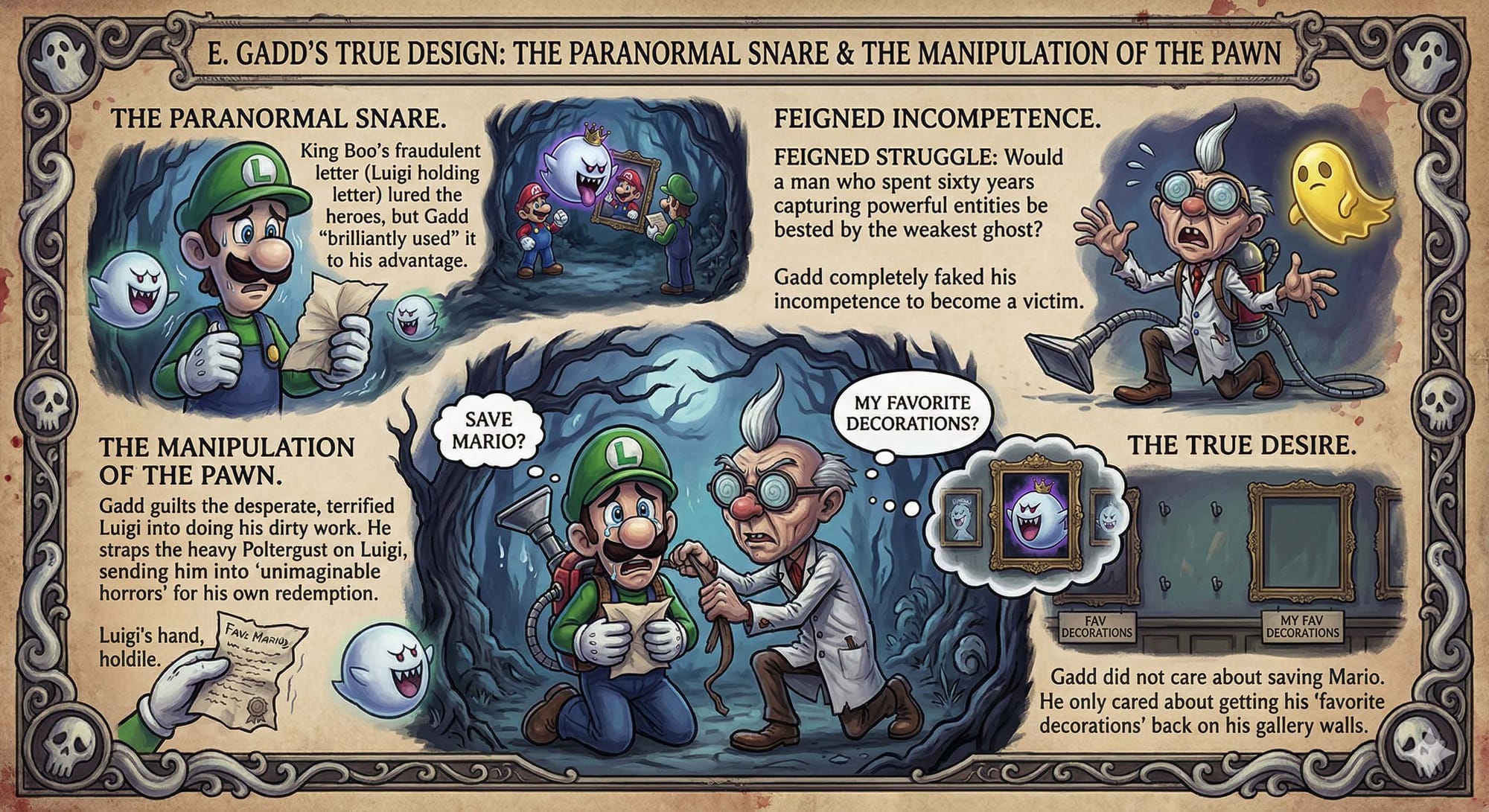
The sudden arrival of the famous Mario brothers in Boo Woods was not a mere coincidence. It was a golden opportunity. King Boo had sent a fraudulent letter to lure the heroes into a trap, but the professor brilliantly used this paranormal snare to his own advantage. When the fearless Mario charged into the haunted mansion blindly and was swiftly captured, the professor did not intervene. He waited patiently in the shadows, biding his time. When Luigi finally arrived, trembling, crying, and absolutely terrified, the professor saw his ultimate chance for redemption. The game deliberately presents their initial meeting as a daring rescue, with the professor attempting to vacuum a lowly Gold Ghost before his machine supposedly fails him. But one must stop and ask a logical question. Would a man who spent sixty years successfully capturing powerful, god like entities truly be bested by the weakest, most basic ghost in the entire estate? It is highly probable that the professor completely faked his incompetence. He needed the green clad plumber to believe he was a helpless old man. By playing the frail victim, he guilted the terrified, desperate brother into doing his dirty work. He strapped the heavy, dangerous Poltergust 3000 to Luigis back and sent him directly into a house of unimaginable horrors. The professor did not actually care about saving Mario. He only cared about manipulating a pawn to get his "favorite decorations" back on the cold walls of his gallery.
Eyes in the Dark
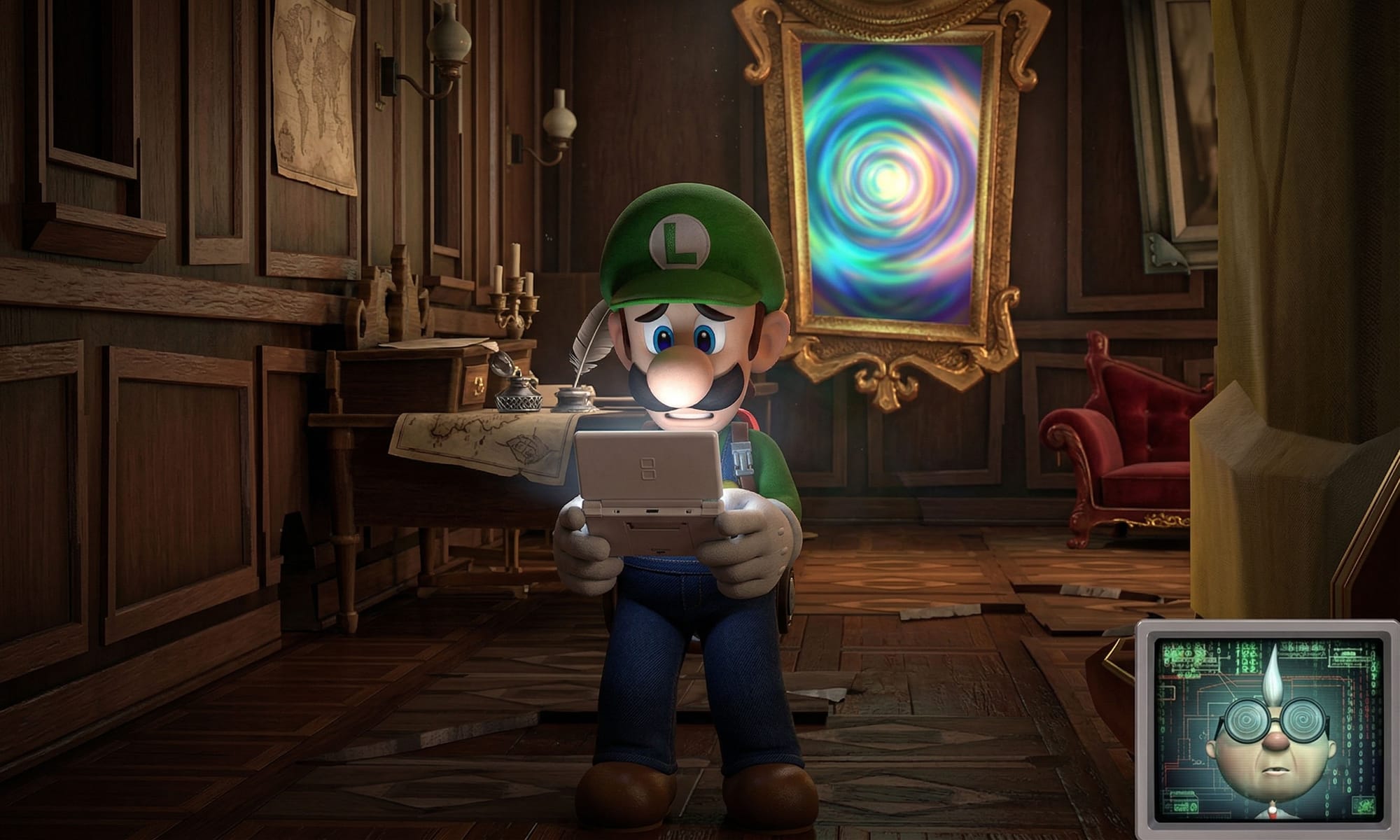
Once Luigi bravely steps over the threshold and into the pitch black mansion, he is never truly alone. Professor Elvin Gadd is always watching his every single move. He gives Luigi the Game Boy Horror, a device cleverly disguised as a helpful map and communication tool. In reality, it is a highly advanced mobile surveillance system. The professor tracks Luigis every frantic movement, monitoring his terrified heart rate and his exact location within the illusionary walls. When Luigi is being brutally strangled by grabbing ghosts, or desperately chased by a furious, fiery elemental entity, the professor sits comfortably and safely in his fortified underground bunker. He occasionally chimes in through the device, laughing his signature, unsettling "Heh heh heh" while offering cryptic, sometimes useless advice. He watches Luigi suffer debilitating psychological terror and treats it like a fascinating, entertaining experiment. He constantly refers to Luigi as a "youngster" or a "sonny", speaking to the traumatized man with the cold, clinical detachment of a researcher observing a lab rat running through a deadly maze. If Luigi successfully captures a ghost, the professor eagerly praises the data he receives. If Luigi is severely injured, the professor merely tells him to go wash his face in the washroom. The total lack of genuine human empathy is profoundly chilling.
The Physiology of Madness
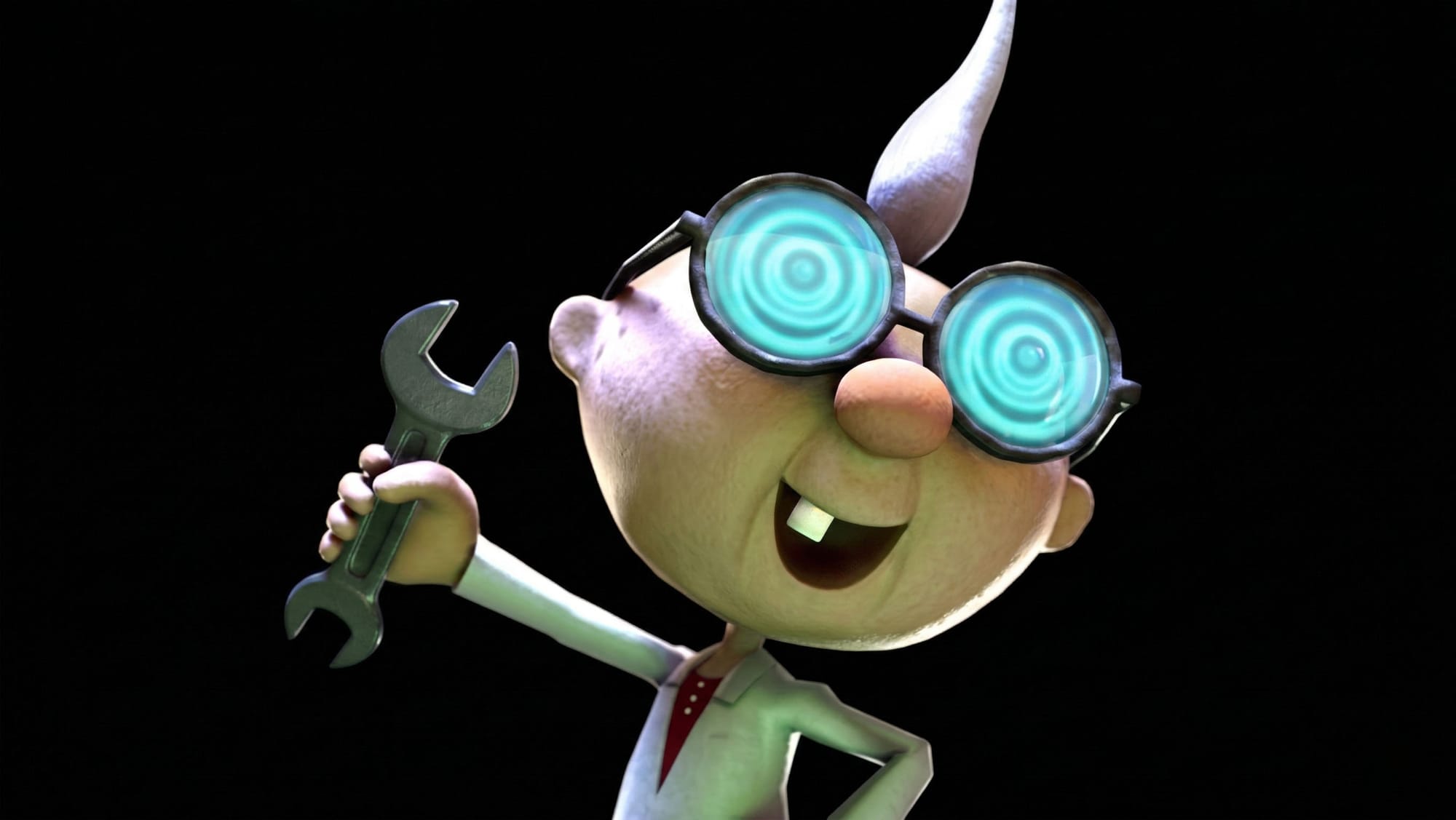
The prolonged, extreme isolation in the dead center of Boo Woods has severely deteriorated the professors grip on reality and his basic human functions. His daily diet alone is a horrifying testament to his madness. In a brief, easily missed moment of dialogue, he happily invites Luigi back to the lab for a celebration dinner, enthusiastically describing an old family recipe. He plans to serve pickled dandelions with barnacles in a diesel marinade. The willing consumption of highly toxic engine chemicals and rotting weeds suggests that the professors internal physiology has been permanently, drastically altered by his toxic environment. Furthermore, he speaks in a strange, warbling gibberish that barely resembles any known human language, forcing the Game Boy Horror to translate his bizarre vocalizations into readable text. He seems more aligned with the strange monsters he aggressively hunts than the humans he supposedly protects. His joy does not come from warm companionship or the feeling of sunlight. It comes exclusively from the mechanical whir of his machines and the sight of a newly captured ghost writhing helplessly inside the containment glass. He is a man who has completely surrendered his humanity to his dark obsession with the macabre.
The Final Canvas
When Luigi miraculously survives the mind breaking ordeal and drags the captured King Boo back to the underground laboratory, the professor finally reveals his true, selfish colors. He does not express heartfelt relief that the terrifying nightmare is over. He expresses pure, unadulterated joy that his twisted collection is complete once again. He eagerly shoves the screaming Ghost King into the Portrificationizer, laughing aloud as the monarch is flattened into a permanent, agonizing state of paralysis. Only after his gallery is fully restocked does the professor allow Luigi to use the machine to save his brother. The illusionary mansion violently vanishes into the ether, and Luigi uses the physical riches he found to build a new, safe home. The game attempts to present this as a bright, happy ending, but a lingering, heavy dread remains in the air. Luigi may have escaped the nightmare with his life and his brother, but Professor Elvin Gadd got exactly what he wanted all along. His secret laboratory is full once again. The screams of the dead are permanently silenced behind heavy glass and thick layers of oil paint.
The professor remains hidden in his shack, drinking diesel fuel and staring lovingly at his paralyzed prisoners. He is the true master of Boo Woods, a sociopathic warden waiting patiently in the dark. One must ask themselves a chilling question. When the professor inevitably desires new, exotic specimens for his pristine gallery, who will be the next unfortunate soul to receive a fake contest letter in the mail?
Continue the Mansion File
The mansion works best as a chained dossier. Step back if you missed the previous room, or keep going to follow the next piece of Luigi's Mansion lore.
Previous file: Why Toad Can't Stop Crying in Luigi's Mansion Next file: Luigi's Mansion's Happy Ending Is Built on Captured Souls